



What is Responsible Dolphin & Whale Watching?
1. Welfare
In responsible dolphin and whale watching, the whales’ and dolphins’ (and other cetaceans’) welfare is the priority. That means respecting their space as wild animals, being careful in how they are approached and left, and how much time is spent with them, ensuring they are not disturbed, caused to change behaviour or stress.
2. Respect
A responsible dolphin and whale watching tourism operation will also respect other wildlife, the environment of the ocean and shores, and educate on the issues, helping people understand the every day actions they can take to make a difference.
3. Conservation
Whale and dolphin watching tours in the wild, when done responsibly, can play an important role in the conservation of marine mammals and actively enhance the health of our oceans and the economic and social sustainability of local communities, as well as providing inspiration and often life changing experiences to millions of tourists each year.
Here’s what the World Cetacean Alliance had to say about it:
What is Irresponsible Dolphin & Whale Watching?
Dolphin and Whale watching, with increasing evidence, is a highly sought-after tourist activity that can actually have a negative effect on the very animals that people love to see.
When poorly managed, whale and dolphin watching tourism in all its forms can negatively impact cetaceans, compromising welfare, and potentially even causing declines in populations, with likely implications for the health of associated marine ecosystems.
Tourism practices that disturb, harass, or endanger dolphins, whales, and other marine mammals during viewing activities can include chasing, crowding, loud noises, and unsafe boat maneuvers that disrupt their natural behaviors, pose risks to their health, or threaten their environment.
The World Cetacean Alliance
The World Cetacean Alliance, an international marine conservation partnership representing responsible whale watching businesses across 30 countries, is on a mission for a World where cetaceans are only found in the wild, are respected and fully protected, and live in sustainable habitats and in harmony with people everywhere’ and to improve whale and dolphin watching around the globe. The WCA believes in protecting both human and cetacean communities, and their environments, from the detrimental impacts of tourism (including compromising animal welfare and over-tourism).
“Whale and dolphin watching tourism can be one of the most powerful forces driving ocean conservation and sustainable change for coastal communities. To achieve this the industry must be sustainable itself, and that means having a minimal impact on dolphins and whales whilst maximising the environmental message for both tourists and local communities.” Dylan Walker, CEO, The World Cetacean Alliance.
In February 2019, the WCA created a ‘responsible whale watch’ certification programme to ensure that all certified tours achieve the highest standards of animal welfare, sustainability, and customer experience.
Under the programme, each tour operator donates $1 per ticket sold to national and international marine conservation and education programmes run by the WCA and its partners. With 13 million people taking whale and dolphin watching trips every year, it’s a massive boost for the oceans at a time when they need it most.
The programme helps shift long-term strategy and demand away from captive attractions to more sustainable, natural encounters and follows the WCA’s Global Best Practice Guidance published in July 2018 to significantly reduce any negative impacts of tours.
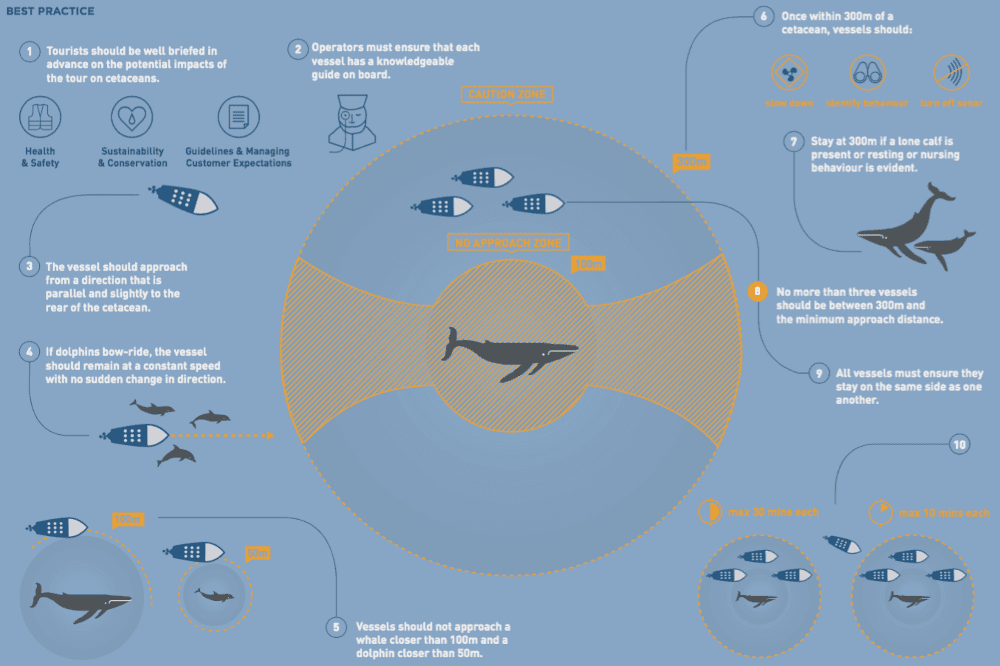
Responsible Whale and Dolphin Watching: Global Best Practice Guidance
WCA’s guidelines ensure that future whale and dolphin watching trips offer an incredible experience for tourists whilst actively helping to protect whales, dolphins and our oceans through marine conservation initiatives, community education projects, and research.
Author of the guidelines, Sophie Lewis, said:
“Tourism constitutes 10% of the global economy with significant impacts on society and the environment. It has the potential to benefit cetaceans and our oceans by investing in sustainable, high quality experiences.”
Through the Global Best Practice Guidance for Responsible Whale and Dolphin Watching, the WCA explains that a responsible whale or dolphin watching tour must:
- Publicise and use guidelines for safe approach to whales/dolphins
- Be valuable as a learning experience
- Meet the expectations of customers
- Minimise any impact on the marine environment
- Emphasise research work undertaken or support for marine conservation efforts
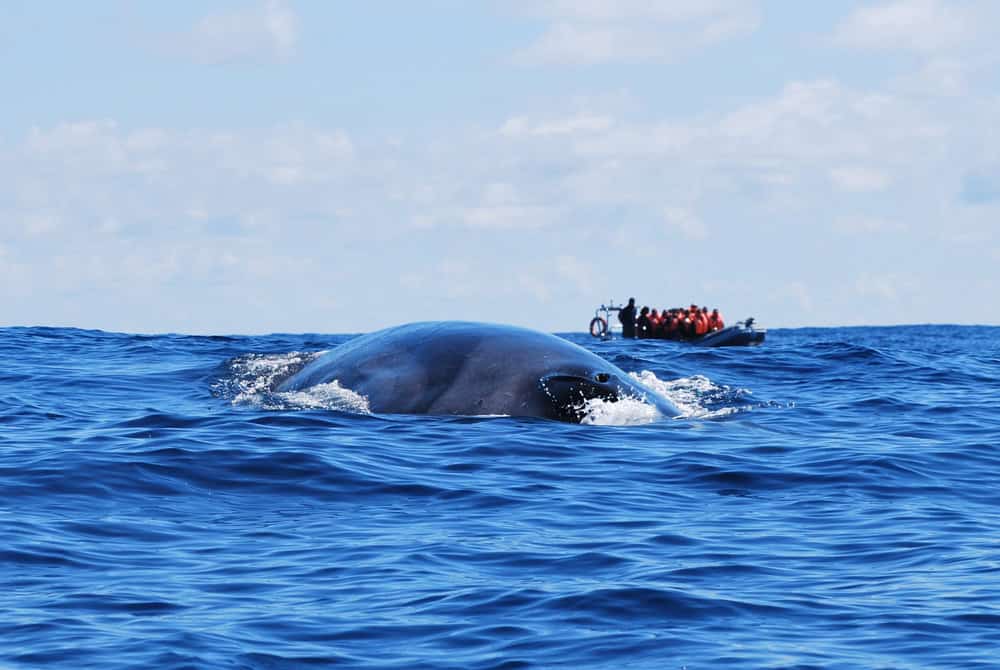
The responsible whale and dolphin watching Global Best Practice Guidance also sets out detailed operational instructions for whale and dolphin watching activities, including:
-
There should be no more than three vessels within 300 metres of a whale or dolphin at any one time.
-
The time spent around a whale or dolphin must not exceed 30 minutes.
-
Lone whale calves should not be approached closer than 300 metres.
Swimming with Dolphins and Whales in the Wild
Importantly, the responsible whale and dolphin watching Global Best Practice Guidance also addresses the often controversial subject of swimming with wild whales and dolphins. This is arguably a more invasive form of tourism than observing from boats. This is partly because boats often attempt to get closer to the animals to place swimmers in the water, and because the act of entering the water can disturb animals that were previously engaged in other activities.
Previously, guidelines for ‘swim-with’ activities have gained less attention and refinement than for boat-based whale and dolphin watching activities. This may be due to the fact that many swim-with activities have developed relatively recently, and because there are a lack of long term studies to help support the development of responsible guidelines.
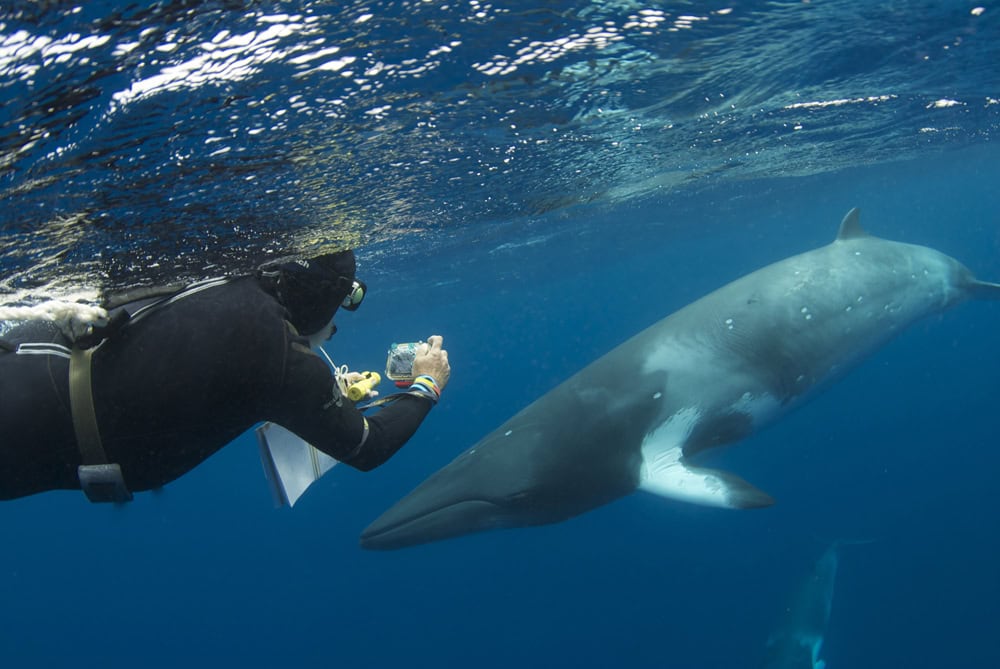
While this research is in its infancy, the WCA has provided strict yet practical guidance for those businesses offering swim-with tours, including:
- A maximum of four people swimming with whales and a maximum of eight people swimming with dolphins.
- Swimmers must hold on to a surface rope while in the water with a whale or dolphin.
- Swimming must not be allowed in the water with whale calves or nursery groups of dolphins.
- No selfie sticks during in water encounters with whales or dolphins.
Dolphin & Whale Watching:The Future
World Cetacean Alliance CEO Dylan Walker said,
“We talked to a lot of stakeholders around the world and felt that there was increasing concern for whales and dolphins involved in swim with activities. Rather than closing the door to these activities, we have created a comprehensive set of best practice guidelines to ensure that any impacts are minimised. These include some key lessons learnt from best practice whale and dolphin watching businesses from across the WCA partnership. These companies have led the way in designing minimum impact tours focused on marine conservation and research.”
The WCAs unique partnership of stakeholders, including NGOs and scientists, whale and dolphin watch tour operators, tourism associations, and educational institutes, gives it an appreciation of the need to balance the protection of marine mammals with the practical requirements of running a tour business, so that the recommendations in the guide are adopted widely by the travel industry.
“Whales are critical to ocean health. They reinvigorate ecosystems by bringing food and nutrients to the surface, which even helps our oceans absorb more carbon from the atmosphere. For this reason, while we acknowledge that some of these guidelines may pose a challenge to tourism providers, the responsible whale watching community and the World Cetacean Alliance recognises that we must step up to protect these incredible animals and ensure the sustainable development of whale and dolphin watching tourism in future. – Sophie Lewis, WCA
Where can you watch whales and dolphins with Earth Changers?
The Osa Peninsula, Costa Rica, The Galapagos Islands, our partner lodge in South Africa and our partner Ocean expeditions.