

UN Sustainable Development Report
Red List Index
Global Gender Gap Rank
Climate Change Performance Index
Human Development Index
Population: 17.5 million (Galapagos 30,000)
Capital: Quito
Language: Spanish
Currency: US$
Tourism contribution to GDP: 5-10% GDP
All You Need is Ecuador
Ecuador is a compact South American country roughly the size of Colorado that packs in incredible biodiversity, rich culture, and stunning landscapes thanks to diverse regions, including the Amazon rainforest, the Galápagos Islands, and the Andes Mountains, with a wealth of tourism experiences to match!
20% Ecuador’s total area has protected area status (including marine), or 23% land territory.
It is home to more than 70 protected areas, 2,477 species and five UNESCO World Heritage Sites.
Quito the capital city is a UNESCO World Heritage site with well-preserved colonial architecture.
Amazon Rainforest offers exploration of one of the most biodiverse regions on Earth.
The Andes Mountains are for you if you like hiking, climbing and scenic trains through dramatic landscapes. Andean cloud forests are some of the most biodiverse and enchanting ecosystems in the world with unique climate.
Cuenca, another UNESCO site is known for its historic centre and cultural attractions.
Otavalo market is world-renown for handicraft shopping.
The Pacific Coast is great for surf spots, beaches, diving and laid-back coastal towns.
The Galapagos Islands is perhaps the most famous for an extraordinary, unparalleled adventure for nature lovers and wildlife enthusiasts. This UNESCO World Heritage site is home to diverse ecosystems and unique species that inspired Charles Darwin’s theory of evolution, thanks in part to its location. The Galapagos archipelago is found one degree south of the equator and approximately 1000 kilometres off mainland Ecuador. More below!
Ecuador has a tropical climate that varies significantly with altitude and region.
Being situated on the equator, Ecuador does not have traditional seasons (spring, summer, autumn, winter), but rather two primary seasons: rainy and dry, influenced by the distribution of rainfall.
Climate variations are primarily driven by altitude and regional influences, leading to distinct microclimates.
Ecuador Weather Variations
Ecuador’s Coastal Region (Costa) and a tropical climate with warm temperatures, with average temperatures around 25°C (77°F).
Dec-May is the Rainy Season with heavy rainfall.
June-November is the Dry Season, though temperatures remain warm.
In the Andean Highlands (Sierra), it’s a temperate climate with significant altitude-related variations.
Daytime temperatures average ~21°C (70°F) in cities like Quito, dropping to ~10°C (50°F) at night.
October to May is the Rainy Season, with afternoon showers.
June to September is the Dry Season with clear skies and cooler temperatures
The Amazon Region (Oriente) has a humid tropical rainforest climate.
Temperatures average ~21°C (70°F) throughout the year with year-round rainfall.
The Galápagos Islands’ Climate is a mix of tropical and subtropical climates influenced by ocean currents. Misty rains, locally known as ‘garua,’ are common, particularly in the highlands where the tortoises reside.
December to May sees warm, humid days when temperatures range from 22°C to 27°C.
January to March sees rain common, often early mornings or overnight, contributing to humidity.
February to April, temperatures range from 30-35°C, both day and night, with humidity levels around 80%-85%.
June to November is the cooler and less humid Dry Season, when, average temperatures drop to between 18°C and 24°C due to the influence of the cold Humboldt Current.
Ecuador Climate Change Trends
From 1960 to 2010, Ecuador experienced an average temperature increase of 1.4°C.
Projections indicate further increases, potentially reaching 2.0°C by the end of the century.
The country’s glaciers, particularly in the Andes, have lost about 50% of their surface area due to climate change, affecting water resources.
Ecuador is vulnerable extreme weather events, particularly related to the El Niño Southern Oscillation (ENSO), which can lead to severe droughts or floods, impacting agriculture and infrastructure.
Rising sea levels and increased coastal erosion pose significant risks to the coastal regions, necessitating adaptation measures.
In the Galapagos Islands Surface Air Temperatures have warmed by approximately 0.6°C since the early 1980s, and Sea Surface Temperatures (SSTs) increased by 1.2°C in the 21st century (nature.com).
The islands have become drier, with a reduction of around 45% in total precipitation compared to the 1980s. The onset of the wet season is currently delayed by about 20 days.
Climate models suggest that mean annual precipitation may increase by 20-70% in the future, potentially reversing the current drying trend. However, these projections are uncertain due to the poor capacity of climatic models to capture Eastern-Pacific ENSO dynamics.
El Niño events, occurring approximately every seven years, significantly affect the marine ecosystems of the Galapagos. Warmer sea temperatures during El Niño reduce the growth rate and abundance of algae and seaweed, crucial food sources for species like marine iguanas and Galapagos penguins. This leads to starvation and reduced reproduction rates among these species (Galapagos Conservation Trust).
Galapagos’ remote nature makes it a destination not for a quick trip! Two islands have airport access Santa Cruz (on Baltra Island) and San Cristobal, accessible via Quito/Guayaquil, and time to other islands such as Floreana can take hours in a speedboat.
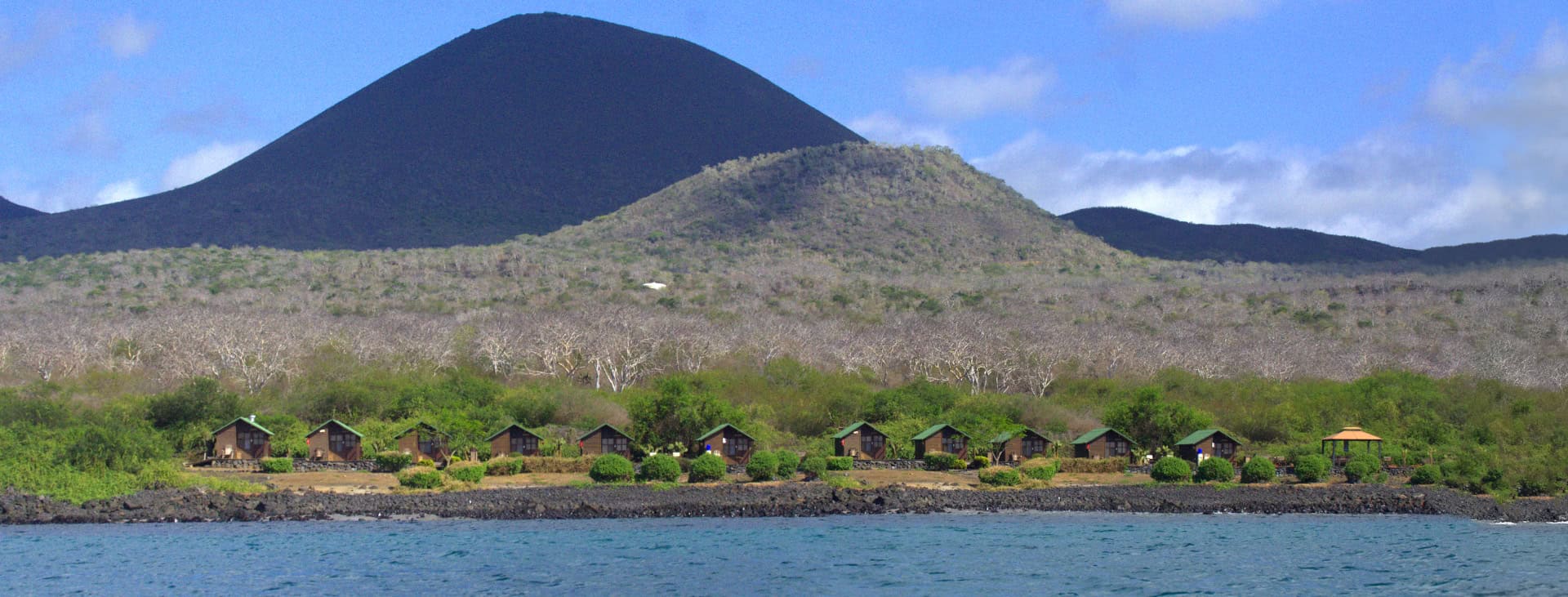
Floreana is the smallest of the inhabited islands. It was the first Galapagos Island inhabited, due to its natural fresh water spring, cave shelter and local food sources providing the most beneficial stop in the archipelago for passing whalers, a pirates’ lair, and a fascinating natural and social heritage:
Early European expatriate settlers in the 1930s included a German vegetarian nudist couple, the Wittmer family and a baroness with three lovers who wanted to rule the island and turn it into an exclusive resort. A series of unsolved disappearances and deaths (including possible murder) brought mystery to the island, made into a film in 2013, The Galapagos Affair. The Wittmer family live and remain on the island.
The other islands include: (inhabited, where residents live and guests would stay – or on a boat)
Santa Cruz (Indefatigable): home to Puerto Ayora, the largest town in the archipelago.
San Cristóbal (Chatham): The easternmost island, with Puerto Baquerizo Moreno, the capital of the Galápagos.
Isabela (Albermarle): The largest by area, the island’s population concentrated in Puerto Villamil.
Floreana (Charles): A small population, notable historical significance, its only village, Puerto Velasco Ibarra.
The first crude maps including the islands date back to 1570, drawn by Belgian cartographer Abraham Ortelius and Flemish mathematician and cartographer Gerardus Mercator. They showed the islands as “Insulae de los Galopegos”, or ‘Islands of the Tortoises’.
Until 1832, the Galapagos Islands were owned by Spain, which showed little interest in the islands. In 1832, Ecuador claimed the islands, naming them the “Archipelago of Ecuador,” and in 1892 renamed them the “Archipelago de Colon”, which, although seldom used, remains the official name.
In the Galapagos, top attractions include:
Tourism within Galapagos National Park (96% of Galapagos) is tightly controlled to protect the fragile ecosystem:
Ecuador is home to various indigenous groups, mestizos, Afro-Ecuadorians, and descendants of European immigrants. This ethnic diversity contributes to a rich cultural tapestry across the country.
There are 14 recognised indigenous nationalities in Ecuador, spread across four regions: the Amazon, Galapagos, Andes, and the coast.
Some of the prominent indigenous groups include the Quichua in the Andes, and the Huaorani, Achuar, and Shuar in the Amazon.
Many indigenous communities maintain their traditional languages, customs, and ways of life.
Ecuadorian culture is thus a blend of indigenous traditions and Spanish colonial influences, resulting in unique expressions in art, music, dance and cuisine: the country’s “Comida Criolla” or Creole food, combines indigenous ingredients with Spanish cooking techniques.
Many communities, especially indigenous ones, also maintain traditional practices of sustainable living and respect for nature.
“El Turismo Violeta” is a growing trend (community-based tourism) which allows visitors to experience immersive cultural experiences led by local communities, first-hand.
Ecuador celebrates numerous religious and secular festivals throughout the year, often blending Catholic traditions with indigenous customs. Important celebrations include Quito’s Founder’s Day, Guayaquil’s Independence Day, and the Festival of San Juan Bautista in the northern highlands.
As such, community and family play a central role in society, with strong emphasis on extended family relationships and fictive kinship (godparents) and important life events like baptisms, quinceañeras (15th birthdays for girls), and marriages as significant community celebrations.
While Spanish is the official language, many indigenous languages are still spoken, including Quichua, Shuar, and Awapit, of which the government recognises importance of preservation of this cultural heritage.
Ecuador has a rich tradition of handicrafts, including textiles, ceramics, and Panama hats (which, despite the name, originate from Ecuador!) Each region has its distinctive artistic styles, often reflecting local indigenous influences. Otovolo market is a centre of trade popular with tourists.
As well as community ties, there’s a strong sense of national pride, with people identifying strongly with their local regions as well as the country as a whole.
While traditional cultures remain strong, Ecuador is also experiencing rapid urbanisation and modernisation, leading to a dynamic interplay between traditional values and contemporary global influences.
Despite a small population of about 25,000, Galapagos Islands have a rich cultural diversity shaped by various ethnicities, customs, and traditions from Europe, the U.S., and mainland Ecuador, also influenced by tourism, whereby the islands have also become multilingual, with many locals speaking English, German, and French as well as Spanish.
There’s also an enhanced culture of love and respect for nature, sustainable practices, environmental conservation, and (as per Darwin’s recognition of species) focus on the islands’ unique identity and culture, combined with historical fishing culture and more latterly tourism influences.
The Galapagos National Park Directorate also organises cultural events to strengthen identity and good cultural practices, connecting cultural managers, educators, students, and researchers to share knowledge and experiences, and continuing the legacy of Charles Darwin’s work and emphasising the community’s role in scientific endeavours.
Food reflects the islands’ location with fresh seafood, as well as dishes similar to mainland Ecuador.
Unique traditions also exist, such as the Post Office Bay on Floreana Island, where visitors can participate in a historic mail delivery system by leaving their destination mail for a passing local to pick up and deliver.
Ecuador is divided into four main regions: the Costa (coastal lowlands), Sierra (Andean highlands), Oriente (Amazon rainforest), and the Galápagos Islands; this diversity creates a wide range of ecosystems within a relatively small area.
As a Biodiversity Hotspot, Ecuador is considered one of the world’s 17 megadiverse countries.
It hosts about 8% of the world’s animal species and 10% of plant species, despite covering only 0.2% of the Earth’s surface.
The Andean Ecosystem is characterised by the Andes mountains which run through Ecuador, creating diverse highland environments, including páramo (high altitude grasslands), which play a crucial role in water regulation.
Cloud Forests: Located on the slopes of the Andes, these unique ecosystems known for their high humidity, frequent low-level cloud cover creating a lush, green environment teeming with numerous endemic species, both flora (epiphytes, orchids, bromeliads, ferns, mosses) and fauna (bears, pumas, jaguars, sloths, howler monkeys, numerous reptiles and amphibians. and 550 species of birds, including many hummingbirds).
The Ecuadorian Amazon Rainforest covers about 40% of the country’s land area.
Ecuador’s marine ecosystems on the Pacific coast and the waters around the Galápagos support important fisheries and are a rich home to species like whales, dolphins, and turtles.
The Galápagos Islands are home to species like giant tortoises, marine iguanas, and various bird species found nowhere else on Earth, as observed by Charles Darwin, and the inspiration for his theory of evolution.
The uninhabited Galapagos Islands include:
Genovesa (Tower): Known for its diverse bird population and unique geological features.
Española (Hood): One of the oldest islands, famous for its wildlife, including the waved albatross.
Pinta (Abingdon): Historically significant as origin home to Lonesome George, the last Pinta tortoise.
Marchena: Actively volcanic with endemic Marchena Lava Lizard and southwest coast frequented by fur seals, plus historical significance due to the mummified bodies of Lorenz and Nuggeröd, associated with the Baroness of Floreana, being found on its beach in 1934. Faced challenges with eradication of feral goats (1979) and the invasive Little Fire Ant. Goats, first found in 1988 and a remaining a concern.
Santiago (James): Known for its volcanic landscapes and diverse marine life.
Baltra (South Seymour): Primarily serves as an airport, mostly uninhabited.
Santa Fe (Barrington): Unique flora and fauna included the Santa Fe land iguana.
Daphne Major and Daphne Minor: Two small islets known for their ecological significance.
Leon Dormido (Kicker Rock): A striking rock formation off the coast of San Cristóbal.
Challenges in Ecuador include deforestation and oil extraction, particularly in the Amazon region, leading not only to environmental degradation but also conflict with indigenous communities. Climate change is affecting various ecosystems, particularly glaciers in the Andes and coral reefs around the Galápagos.
Ecuador’s economy has transformed significantly since the 1960s, shifting from a predominantly agricultural base to include substantial contributions from industry. The discovery of oil spurred rapid growth and improvements in health, education and housing.
Ecuador’s GDP now is 59% service-based, driven by sectors like construction, trade education, and health. Manufacturing contributes 17%, other industrial activities 15% and agriculture 9%, with significant products including bananas, shrimp, and other food.
Tourism is Ecuador’s fourth-largest nonpetroleum export and its largest service export, contributing $1.5 billion in exports equivalent to 6% of global exports for Ecuador, or 5% of the country’s GDP, expected to expected to reach USD 3.6 billion (2.5% of GDP) by 2033 (direct), USD 7.5 billion (5.2% of GDP) (indirect) (assets-global).
The Galapagos Islands serve as Ecuador’s largest service export and fourth-largest non-petroleum export.
Tourism provides significant employment opportunities. 10% jobs in Ecuador are related to tourism, directly or indirectly.
78.35% of the total economic effects of increased tourism are acquired by households, reflecting strong links between the industry and local communities.
A 10% increase in international tourism correlates with economic growth for almost 31% of Ecuador’s lower-income population (hir.harvard.edu).
Galapagos Islands Economy
The main economic activities on the islands are tourism, farming, and fishing. However, all these activities have also damaged the islands.
Tourism generates more than half of all money in the Galapagos and as the largest employer employs nearly half of the population. Before the Covid-19 pandemic, tourism accounted for about 80% of the Galapagos economy (hir.harvard.edu).
The tourism boom led to over 200 hotels built between 2006 and 2017. This resulted in lower prices and decreased profits for native islanders.
With annual tourist visitation to the Islands now ~200,000, up to three airlines twice a day bringing passengers to the Galapagos’ two airports, cruise arrivals, tourists dwarf the total resident population which has increased from 4000 in the early 70s to about 30,000 today.
There’s an ongoing trade-off between economic development and environmental conservation, with concerns about the impact of increased tourism on the unique ecosystems. What might appear a boom for local economies is seeing the old Galapagos way of life, culture and community disappearing.
“Since tourists are a source of income, and a very good one, there will always be pressure to increase their numbers. But there comes a point when the wildlife and the environment begin to suffer, and the tourists destroy the very thing that attracted them in the first place.”- David Attenborough, The Telegraph, 2013
Conservation in Ecuador
Naturalist Charles Darwin visited The Galapagos Islands in 1835, two years after the first significant settlement was established. It was here, at Post Office Bay, where seafarers left messages for passing ships to pick up and forward on (and tourists still continue the tradition to this day) where the Acting Governor of Galapagos told Darwin he could tell from which island a tortoise came by the shape of its shell, helping Darwin form his theory of natural selection, and Floreana’s and the Islands’ consequent popularity with tourists following in his footsteps.
It is perhaps no surprise that the Galapagos became Ecuador’s first established national park. In 1959, the Ecuadorian government passed a new law making Galapagos National Park, covering all of Galapagos except for those areas owned by existing colonists. This amounted to 97% of the total surface (7,665,100 ha). The remaining 3% is distributed between the inhabited areas of Santa Cruz, San Cristóbal, Baltra, Floreana and Isabela
1959 also saw the Charles Darwin Foundation also established, and The Charles Darwin Research Station opened in 1964, focusing on reversing environmental damage and conservation efforts.
The new National Park law banned the capture of species, such as iguanas and tortoises, and made the port captains the authority for implementing the new rules, which began operating in 1968.
Cayambe Coca National located along the Equator about 38 km/24 miles from Quito was then established in 1970, includes two very different regions of Ecuador: the high altitude sierra with Cayambe volcano and the hot, humid rainforest of the Amazon basin as well as the intervening temperate cloud forest. (Wikipedia).
In 1971, the Galápagos National Park Service had its first Superintendent, 2 officers and 6 park rangers on Santa Cruz Island. In 1974, its first management plan and a team of officials.
Biodiversity conservation work in mainland Ecuador then began in 1974 with a United Nations forestry and nature conservation project (Parks and Tribes.com).
Cotopaxi was the third National Park, created in 1975. Situated in the Cotopaxi, Napo and Pichincha provinces, roughly 50 km/31 miles south of Quito. The Cotopaxi volcano (meaning ‘smooth neck of the moon’ in Quechua; Quechua q’oto ‘throat’ + Aymara phakhsi ‘moon’) is located within the park’s boundaries, together with two others: dormant Rumiñawi to its north-west and historical volcano Sincholagua (last major eruption: 1877) to the south-east. Cotopaxi volcano, an almost perfect snow cone that rises to 5,897 meters is unique in the world and, next to Galapagos, is seen as a great symbol of Ecuador’s natural geography and heritage, recognised worldwide.
In 1978, UNESCO recognised Galapagos as a World Heritage Site, declaring the Galápagos Islands Natural Heritage for Humanity, making the Park Service through the Superintendent of the Park responsible for performing permanent park conservation and guarding the islands.
The Galápagos Marine Reserve of 70,000 square kilometers of ocean around the islands was created in 1986, the same year Galápagos National Park was included in the list of Biosphere Reserves because of its unique scientific and educational worth that should be preserved for perpetuity.
In 1998, the Galapagos Marine Reserve was expanded to 138,000 square kilometers, becoming one of the largest protected areas in the world. (eosecuador).
There are now 35 National Parks, Ecological Reserves, Biological Reserves, Geobotanical reserve and Wildlife refuges as well as many other Private Reserves.
But the government historically hasn’t always been strong in environmental conservation. Several protected areas, including Yasuní National Park and the Cuyabeno Fauna Production Reserve, were created arbitrarily by the state, often violating the territorial rights of indigenous nations like the Waorani, Siekopai, and Kichwa (ecuador.com)
Limited government support meant international conservation groups stepped in to provide expertise and economic support for conservation efforts, and many small, grassroots organisations formed with support from local communities. In the Amazon, conservation groups aligned with indigenous organizations to secure land rights and protect forests. (ecuador.com).
However this means indigenous communities have increasingly taken an active role in conservation efforts. Eg., in 2017 the Cofán people established “la guardia” to patrol and protect their ancestral lands within Cayambe Coca National Park.
Deforestation has been a major issue, with roads built for oil exploration paving the way for logging and cattle ranching in the Amazon. Along the coast, mangrove forests have been removed for shrimp farming. About 95% of forests on the western slopes and lowlands have been converted into agricultural areas, mostly banana plantations.
In the Galapagos, internationally managed conservation programs have supported specific initiatives, such as Floreana Mockingbird conservation, but these had not helped promote local awareness of issues, and detached locals’ responsibility for the environment: Local people were not historically been involved in determining local priorities. A key and increasing requirement has thus been to foster and empower local support and responsibility, the Islands being residents’ home and vitally the land they live off.
In 2007, UNESCO added the Galapagos to their World Heritage in Danger list due to issues with invasive species, uncontrolled tourism, and overfishing but was removed from that list by 2010, thanks to increased efforts by the Ecuadorian government.
In 2008, Ecuador actually the first country in the world to recognise the rights of nature in its constitution, reflecting a deep cultural connection to the environment. Under President Rafael Correa, Ecuador adopted a new constitution that enshrined the “Pachamama,” granting ecosystems the inalienable rights to exist, flourish, and regenerate, and giving people the authority to petition on behalf of nature and requiring the government to remedy violations of these rights.
Since 2008, the Socio Bosque Program, a voluntary incentive-based scheme with combined environmental and socioeconomic targets pays the poorest private and communal landowners to protect forests. It hopes to protect 4 million hectares, nearly 16% of Ecuador’s total land mass, and help between 500,000 and 1 million people.
In August 2023, Ecuador held a referendum where citizens voted to preserve Yasuní National Park by keeping its oil untouched, and to stop mining in the biodiverse Chocó Andino region, marking a significant victory for conservation efforts.
But there’s still tension between conservation efforts and economic interests, particularly regarding oil drilling and mining in ecologically sensitive areas.
Overall in Ecuador, in addition to grappling with balancing economic development and environmental protection, there is a complex interplay between government policies, international NGOs, local communities, and indigenous rights in shaping Ecuador’s environment.
Tourism in the Galapagos began slowly in the early 20th century, with interest sparked by William Beebe’s book “Galapagos: World’s End” in 1924.
The islands began to receive immigrants from Europe, the United States, and Ecuador, among them families who now operate tourism and hospitality operations on the islands.
Organised tourism in the Galapagos really started in 1970, with 1,000 visitors that year.
In the past, increasing and often exclusive premium (non-Ecuadorian) cruise-based tourism, and the imports it brings, has meant a leap in the number of alien species arriving (such as cats, dogs, pigs, goats, cattle) and invasive plant species, with their consequent negative environmental impacts: Native crop and vegetation devastation and habitat degradation, resulting in the gravest danger to the fragile ecosystems which have evolved over millions of years in natural isolation. Boats’ litter or fuel pollution washes ashore, killing wildlife and affecting fragile breeding grounds such as turtle nesting sites; food supplies are decimated; over- and illegal fishing leads to drastic decrease in catch volumes and fishermen’s livelihoods; and predation of young and eggs threaten protected species such as the Marine Iguana and Floreana Mockingbird, or the now-extinct Floreana Galapagos Tortoise, historically taken in droves by seafarers to keep alive on board for months for fresh meat, oil and water.
Thankfully, sustainable, regenerative tourism has really followed Ecuador’s conservation efforts: from the establishment of National Parks, UNESCO recognition, Biosphere and Marine Reserve, to pioneering the rights of nature, whilst still trying to balance with extractive industry and tourism.
The Galapagos National Park Directorate (GNPD) has set specific limits on the number of visitors allowed on the islands at any given time, eg. with occupancy limits of 1,660 people on boats, 180 people on day-cruises per day and ship capacity of 100 passengers, ensuring that the islands are not overwhelmed by large groups of tourists.
A permit system allocates time slots to tour operators for each visitor site, ensuring that tourists are spread around the islands and do not overcrowd any single location. This system allows travellers to feel like they have the destination to themselves during their visits each site has carrying capacity limits established by the GNPD. If a site shows signs of damage, the number of tourists allowed to visit can be reduced.
Historically however tourists haven’t been offered insight or immersion into the real community, culture and conservation of the Galapagos, because to stay on the islands (not a liveaboard boat), is rare. The islands’ resident population have thus not been able to enjoy passing-through tourism’s benefits, but had to cope with increasing costs – of all kinds.
Now, many eco-lodges and sustainable tourism projects in Ecuador also combine conservation efforts with visitor experiences, numerous community-based tourism initiatives, particularly in indigenous areas, support local economies while preserving traditional cultures, and the Galapagos Ecological Airport runs solely on solar and wind power, with 80% of its infrastructure made from recycled materials.
Tourism is a crucial part of the economy for most of the 26,000 residents of the Galapagos, with most people directly or indirectly involved in the industry, accommodating an estimated 275,000 visitors annually (Travel + Leisure).
Despite a history of oil extraction, Ecuador’s 2008 Constitution explicitly mandates the promotion of clean and alternative energy sources.
As of 2022, Ecuador’s total energy generation capacity saw 39% from fossil fuels, primarily oil and natural gas, and 61% coming from renewable sources: 95.68% of renewable capacity from Hydropower; 2.66% from Biomass; 1% from Wind; 0.5% from Photovoltaic (Solar) and 0.15% from Biogas. (trade.gov).
Despite the progress, Ecuador faces challenges in electricity generation and distribution, leading to scheduled rolling blackouts and increased reliance on imported electricity.
Galapagos Islands Energy
Energy Transition Plan: The Galápagos Islands are undergoing a significant transition to reduce greenhouse gas emissions and reliance on fossil fuels. This includes reconfiguring the electricity generation mix, optimising energy consumption, overhauling electricity infrastructure and transforming the islands into “smart islands” through automation and digitalization.
Tourism and hospitality, like elsewhere in the world, is driving community-driven renewable energy projects, where accommodation uses renewables to meet their needs.
The target is to generate 85% of the islands’ power from renewable sources by 2030 and 100% by 2040, aiming for carbon neutrality by 2050.
Ecuador has achieved several notable sustainable successes with its Constitutional Recognition of Nature’s Rights; 30% of the country under some form of protection as one of the world’s most biodiverse countries for its size, home to 6% of the planet’s species of flora and fauna; the Socio-Bosque programme investing $61 million to date reducing net deforestation in Ecuador from 77,000 to 44,000 hectares, also lowering Ecuador’s greenhouse gas emissions, helping it meet its Paris Agreement pledge; and The Galapagos Islands as a model for sustainable tourism, with strict regulations on visitor numbers and activities to protect the unique ecosystem.