

Carbon impact
Recommended duration
Price per night per adult
Regular people can join a crew at sea to observe, document, learn and communicate about marine exploration and conservation on these expedition sailing trips.
All trips stem from an ethos of conservation and education, whether adventure sailing, citizen science-based, or hard science with institutions. On Sea Dragon, the expedition vessel, professional leaders work alongside visiting crew as one team, providing valuable manpower, skills and financial support for the broader mission.
While not all legs now collect data, the conversation, lifestyle aboard and way of tourism is never separate from the broad term of marine conservation.
Pangaea Exploration shares a strong belief with marine conservation leader J.Y. Cousteau,
“Il faut aller voir” – “We must go and see for ourselves”
Hands-on adventure & learning in sailing expedition, marine exploration & conservation
Unique places: Experience marine environments unreachable in other ways
Conservation Focus: Be part of something bigger than just a sailing trip
Fully equipped for exploration, research, telecommunication & medical needs
Prior sailing experience helpful, but not required to support expert crew.
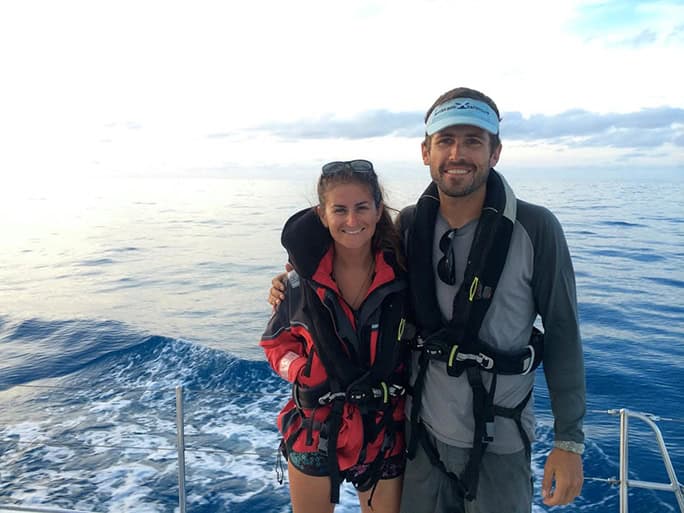
Safe in the hands of expert crew: Highly experienced pros & Ocean Yacht Masters
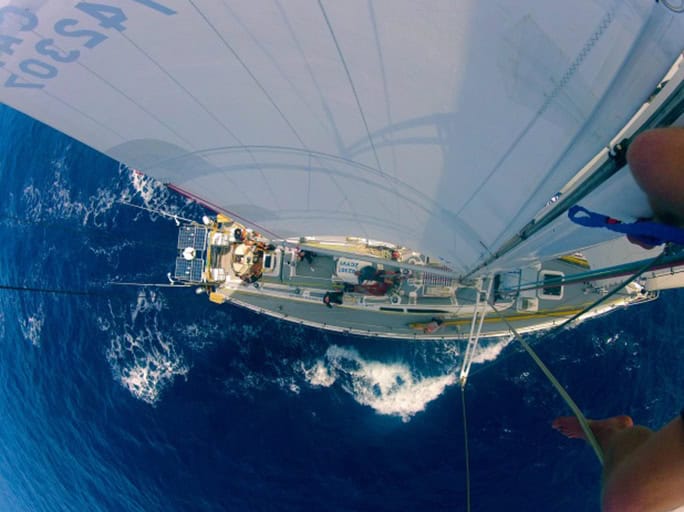
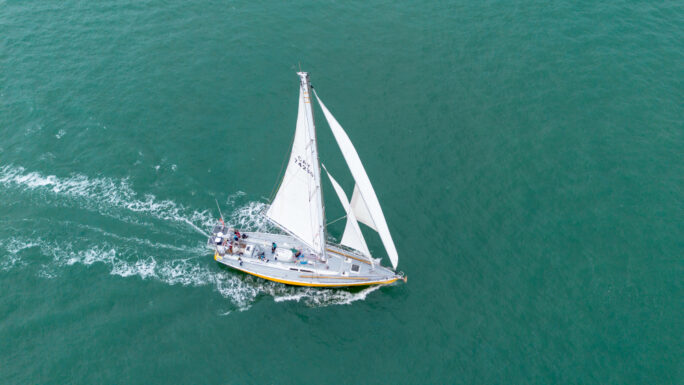
The boat is designed to support a full crew for months, can transit any of the world’s oceans and can travel to and operate in remote unsupported locations.
All trips have limited availability due to limited number of berths so sign up quick!
Not all legs have formal conservation content, though all trips carry the general ethos and conversations.
*If running, the top marine conservation trips are: North Pacific Gyre (plastics) and Palmyra Explorer. North West coast US trips can also offer great marine mammal sightings.
Schedules change annually.
What’s Included?
– Trip nights accommodation on board
– All meals (vegetarian fish if caught), snacks, and drinks on board
– Sailing Instruction
– Safety equipment and foul weather gear
– Use of paddle boards in port
– Mask, snorkel, fins
What’s not included?
– Transportation to or from starting and end dock points.
– Transportation from or to airports local to starting or end docks.
– Additional nights spent ashore
– Personal expenses
– Personal travel insurance
– Personal visa or medical requirements
– Cross-border trips require a passport with at least 6 months validity and potentially visas from your home country.
– Many nationalities which can enter the US by air on the ESTA visa waiver program need a B1/B2 visa to enter by sea (likely if you are NOT from USA, Canada or Bermuda).
– You must have appropriate paperwork completed before joining the vessel, or you will not be allowed to board.
– You are responsible for ensuring that you have insurance to cover shore-based medical treatment, rescue, and medical evacuation if required. You may want to check with your provider to ensure you will be covered for offshore sailing and in international waters (if applicable to your expedition) and cover for medical emergency.
– The deposit is usually $1,000, non-refundable. If you can no longer make it, or if the trip needs to be cancelled or modified, your deposit will either be refunded or applied to a different trip. The remaining balance is due 90 days before the trip begins. The full price will be required to pay if you book within 90 days of the trip start date.
– Full terms and conditions supplied when booking.
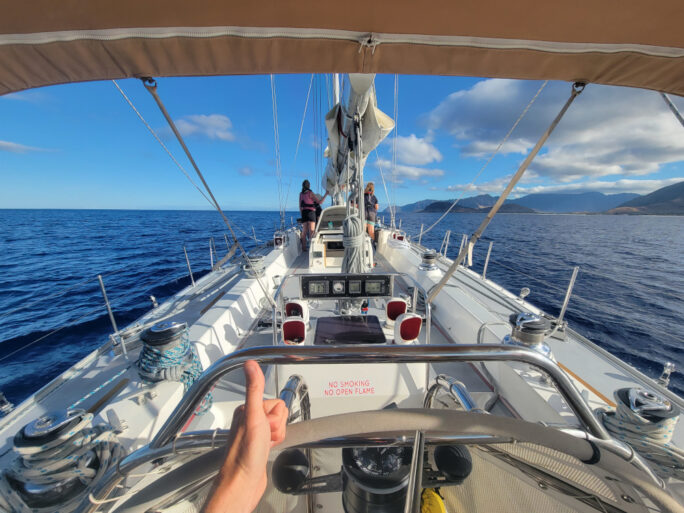
Accommodation for up to 10 guest passengers in single berths. There are two heads (toilets) with showers, a large well stocked galley, and a comfortable salon with seating for 14 people.
Air conditioning makes life down below very pleasant in the tropics, while a drying room sorts out any wet clothes.
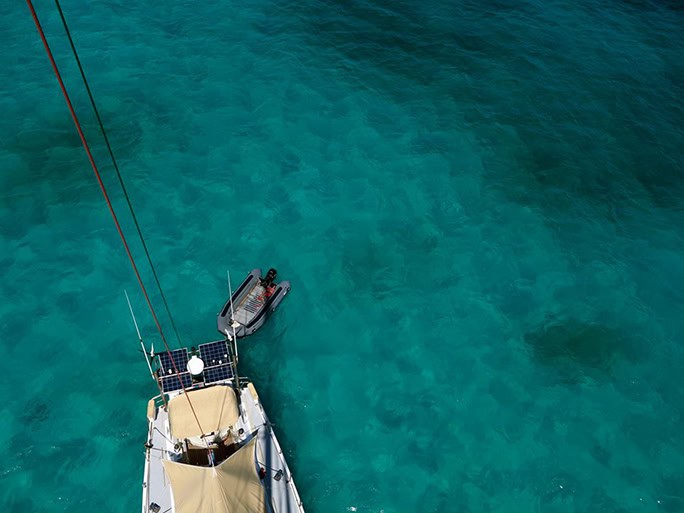
Exploration: The boat is equipped for coastal exploration with two Avon inflatable boats and a scuba compressor with diving equipment.
Research vessel: Lab space, dissecting microscope, surface net trawling capability, and working deck space.
Power: With extensive sails, extended fuel reserves and almost 1kw of wind/solar power long-range unsupported journeys are substantially lower cost than traditionally shared research voyages on large motor vessels and ships.
Communications: The vessel is equipped with twin iridium satellite phones, HF radio, and all the modern navigation equipment to keep you safe and connected despite being well offshore.
Medical: There is extensive on board medical capability and remote expert support through Medical Support Offshore.
All meals on board are delicious and vegetarian, with the addition of fish if caught along the way.
A refrigerator and freezer keep the crew in fresh food for the duration of the voyage, along with on-board fresh water making.
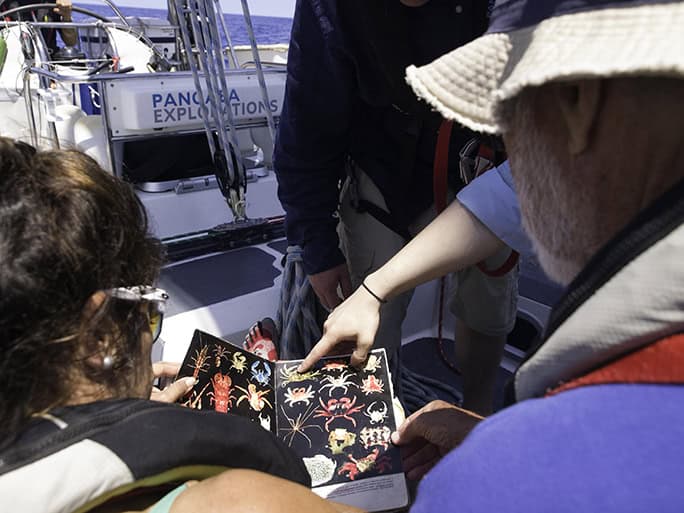
See first-hand how high seas research, coastal conservation, education, marine filming and other work is done.
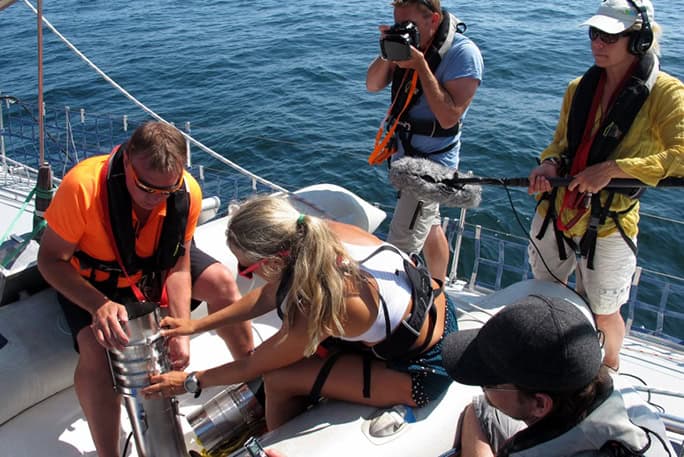
Work conducted on board has included water sampling, remote island surveys of conservation issues, diving and underwater video, offshore plastics sampling and collection, water quality monitoring and student educational trips.
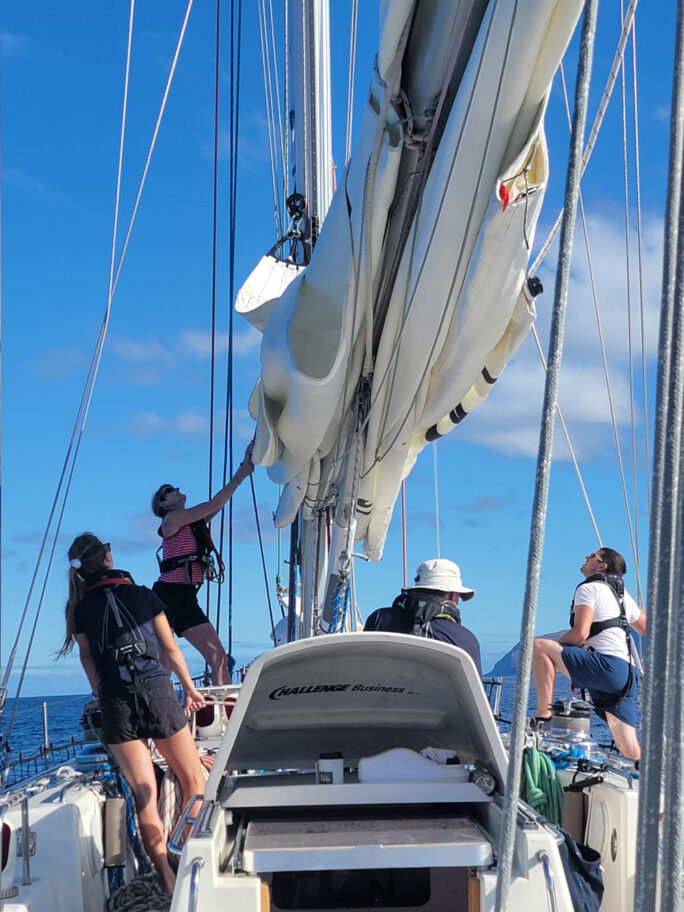
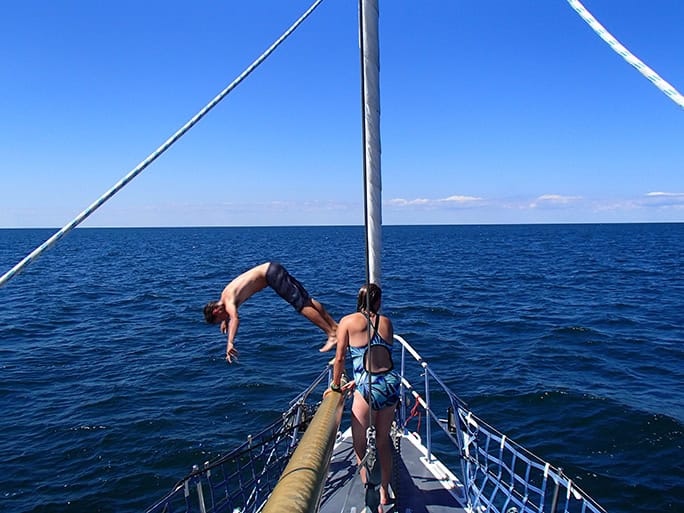
You will be hands-on sail rigging, navigation, watches, route planning, weather analysis, radio communications, maintenance and all the basic duties of running an ocean sailing vessel.
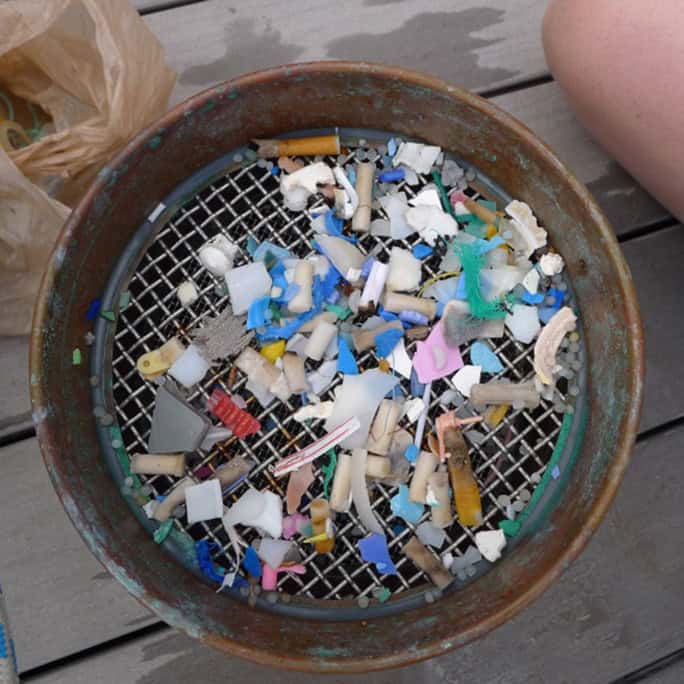
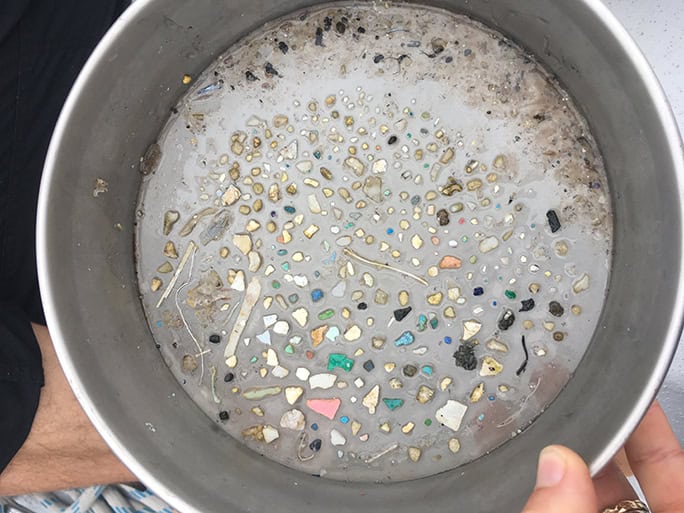
Areas with higher than normal garbage loads are sought and counts on beaches and transects – trawling the sea with a fine net – to analyse volume and categorise the plastic contents.
Partnerships with several international organizations such as eXXpedition, 5 Gyres Institute and Woods Hole Oceanographic Institution as well as universities and research centres are in place to help improve the world’s oceans’ water quality, health, marine life and access.
One aim to inspire and develop a new generation of leaders in conservation science, communication, education, art and policy leadership, as well as provide informative and enjoyable ocean sailing expeditions to guest crew.
Plastic: Sea Dragon is working long-term with organisation ‘5-Gyres’ and their partners to document the amount of floating debris in our world’s oceans:
Weather during expeditions can vary significantly based on the location, season, and specific itinerary.
Generally, here are some factors to consider:
For specific weather details, it’s best to check closer to the departure date or consult weather forecasts for the regions being visited.
On a sailing expedition, you can expect to see a variety of wildlife, dependent on itinerary and location, such as:
Marine Mammals: guests may encounter whales, dolphins, and sea lions during their expeditions.
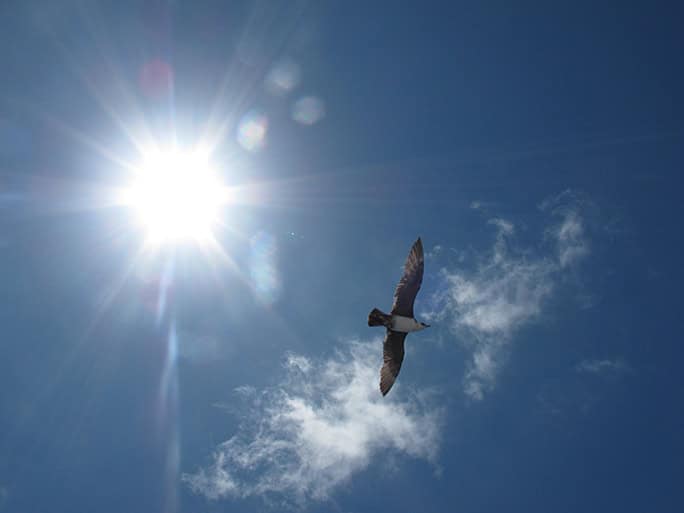
Birds: Various seabirds, such as albatrosses, puffins, and other coastal bird species are often spotted along the sailing routes.
Fish: The waters are home to diverse fish species, and guests may have opportunities to see them while snorkelling or during fishing activities.
Turtles: Sea turtles can be seen in many marine environments, particularly in tropical and subtropical regions.
Unique Land Animals: In specific destinations like Palmyra, guests may encounter land-based wildlife such as giant robber crabs.
Underwater Life: Snorkeling and diving excursions allow guests to observe vibrant coral reefs, colorful fish, and other marine ecosystems.
Coastal Wildlife: While exploring coastal areas, you might see animals like bears, especially in regions like the Pacific Northwest.
Experienced: Sea Dragon and her crew have sailed tens of thousands miles across 2 oceans; the Atlantic and the Pacific; and 3 seas; the Caribbean, Sargasso and Irish, supporting important marine conservation work.
Strong learning environment: They have completed scientific surveys of all these waters and the effect that this build up of waste in our waters has on our ecosystem.
Bespoke trips: A tailored cost-effective support solution for teams of up to 12 on extended journeys can be developed, either exclusively, or opened to paying visitor crew providing valuable support and finances for the work.
Guests are actively involved in sailing operations, regardless of their prior experience. The crew provides patient instruction, making it accessible for everyone from beginners to experienced sailors.
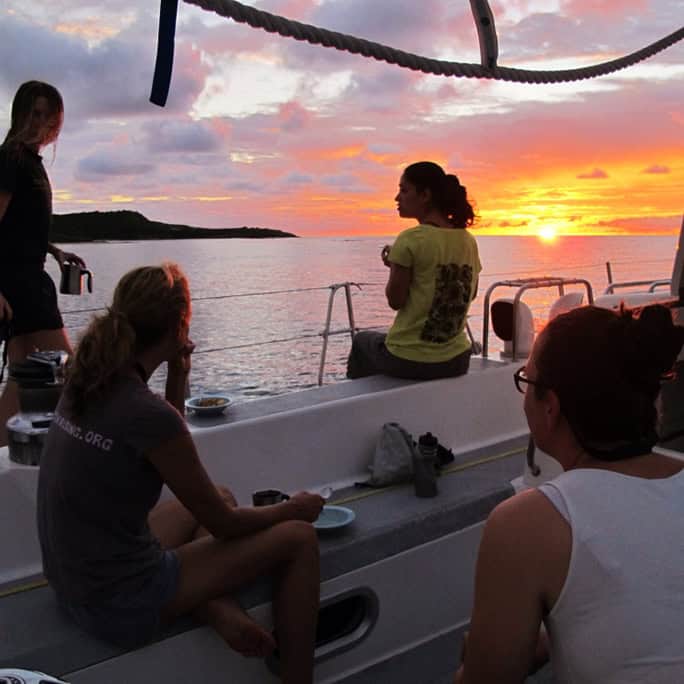
As a member of the crew, you join in all aspects of sailing and life aboard.
Attitude, team skills and commitment are important pre-requisites.
While sailing, the shifts expected are to stand watch for 3 hours out of every 9, then have 6 hours of free time to sleep, read, chat, or just watch the ocean.
Please note: these are not trips for the infirm or physically unfit – you MUST be able to go up and down the companionway and move safely about the boat while in rough conditions, have good balance, and be in reasonably good health.
Two British RYA Yachtmaster certified crew lead the boat
The experienced crew has covered over hundreds of thousands of nautical miles for over a decade building an excellent reputation for safe, effective & efficient sailing expeditions.
Sea Dragon and her crew have sailed tens of thousands miles across 2 oceans; the Atlantic and the Pacific; and 3 seas; the Caribbean, Sargasso and Irish, supporting important marine conservation work with communities world-wide.
There is a three-part mission:
To actively strengthen the health of marine life through Exploration, Conservation and Education work.
To inspire and develop a new generation of leaders in conservation science, communication, education, art and policy leadership.
To provide informative and enjoyable Ocean sailing expeditions to guest crew.
Aside the scheduled trips, a tailored cost-effective support solution for teams of up to 12 on extended journeys can be developed, either exclusively, or opened to paying visitor crew providing valuable support and finances for the work.
“We have powerful options for rejuvenation and restoration: Real choices in our daily lifestyles and consumer behaviour can employ technology, tools and techniques to drastically reduce energy, materials, chemicals and choose to improve ocean policies, governance, enforcement and resource management. The fundamental challenge is our collective will to act. People around the world remain remarkably, tragically, un-informed and un-engaged, and most people have little direct contact with the ocean.”
Projects are across many areas of marine conservation to protect the fundamental health of the world’s oceans which make up the biodiversity of 75% of the planet’s surface and ecosystem services.
The role is to help bring threats to scientists, policy makers, commercial leaders and everyday citizens, and to support, enable, connect and, sometimes, lead the many talented people working on marine conservation worldwide.
Our increasing world population and rise in living standards is pushing species to the brink of collapse. As the world’s production and consumption increase, so does chemical and debris pollution, plastics in particular, interrupting foraging and breeding, and destroying habitats.
Where the local appearance of issues may vary, underlying threats are common worldwide:
People eat fish which eat smaller fish which, along with other plants and animals at the bottom of the food chain, absorb toxic chemicals trickled into the environment from sources such as factories, farms, homes, cars and plastics from every country: Fish studies are thus relevant to environmental and human diet and consequences, including birth defects and toxicity in adults world over.
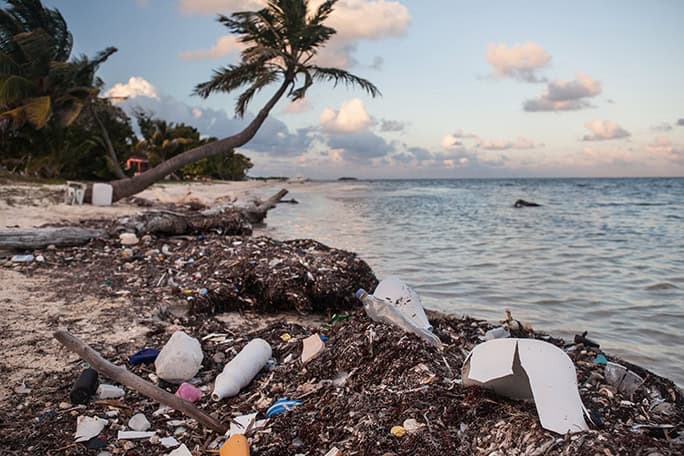
Marine plastics threaten the existence of birds and wildlife, which are caught up in or killed by consumption. The scale of the problem is huge – one estimate is more than 70 million pounds of plastic are spread throughout the world’s gyres, with a million seabirds and 100,000 marine mammals die each year from getting tangled up in, and/or eating plastic.
As Co2 in the planet’s atmosphere grows and is absorbed by the seas, ocean acidification increases, damaging marine ecosystems and threatening species and food chains with likely extinctions.
“The trash we throw in our neighbourhood gutter can devastate rare wildlife half a world away”
SDG4 Quality Education: Offers hands-on learning experiences and skill development in sailing and marine conservation, plus partnerships support marine exploration, research, training and conservation. They aim to inspire and develop a new generation of leaders in conservation science, communication, education, art and policy leadership.
SDG 5 Gender equality: Actively encourages and recruits women in science, technology, engineering and mathematics to get hands-on in ocean conservation.
SDG 7 Clean Energy: Offers an alternative way to explore the world and destinations without high transport emissions.
SDG 9: Industry, Innovation and Infrastructure: Sea Dragon works to support ocean conservation and industry innovation, offering an innovative sustainable tourism model for guest crew to have the opportunity to get hands-on in citizen science.
SDG12: Sea Dragon is working long-term to document plastic debris that accumulates on beaches and in great concentrations in the seas’ “gyres” – the centres of oceanic currents.
SDG 13 Climate Action: Raises awareness about climate change impacts on oceans through first-hand experiences.
SDG 14 Life Below Water: Conducts marine conservation work and research during expeditions, as well as climate and pollutants’ impact.
SDG 15: Life On Land: Explores coastal ecosystems and promotes environmental awareness, including the effect of ocean of carbon sinks and emissions.
SDG 17 Partnerships: Collaborations include several international organizations such as eXXpedition, 5 Gyres Institute and Woods Hole Oceanographic Institution as well as universities and research centres.
Every trip departs and lands at a different place, and itineraries are different yearly. Check the top options below for the coming scheduled trips.
Highly recommend this organization. Aug 2019 Our week in the Gulf islands was outstanding. The crew, the participants and all aspects of the voyage were amazing. I thoroughly enjoyed each moment.

Just returned from trans North Pacific trip aboard Sea Dragon. The primary crew, Eric, Shanley, and Meret, were amazingly courteous and helpful throughout the entire journey as they taught us a great deal about sailing big boats in the open ocean. Their knowledge and the professionalism they displayed throughout the trip were unparalleled. I truly enjoyed living and working aboard Sea Dragon and getting to know the primary crew and other guest crew aboard for the crossing. I felt very well prepared for the trip through early and on-going correspondence from Pangea about how to prep and what to bring aboard. As the trip progressed, we came to appreciate more and more the level of experience and expertise of the main crew and how they worked to maintain such a tight ship! Unforgettable journey!!
2010 Practical Boat Owner Green Award – Winner

Enquire to find out what’s on offer for your trip dates, ensuring you get the best deals and availability tailored to your travel plans. Don’t miss out on exclusive promotions and packages designed to enhance your experience.