



What is Sustainability?
People understand the term in general, that it’s about being able to uphold or maintain something at a certain rate, level or balance, and that an increase doesn’t have a negative, destabilising, impact.
So when applied to tourism, does this just mean global tourism needs to be limited, not increase, because more travel would have more negative impact on the world?
Not quite. Because it’s not just about volume (growth, limits or reductions), but also about relative impacts.
In simple terms, any consideration of sustainability – viable, maintainable balance – looks at the impacts on three things together, called the “triple bottom line”.
Where a commercial organisation’s ‘bottom line’ is singularly its profit – its Economic benefits – any sustainability is considered with an additional two factors, which are Social and Environmental.
So the Sustainability Triple Bottom Line considers a balance of 3 pillars: Social, Environmental & Economic:

What is Sustainable Development?
In 1987, the UN World Commission on Environment and Development (WCED) issued The Brundtland Report, otherwise called “Our Common Future” that had been asked to propose long-term environmental strategies as “A global agenda for change” for achieving sustainable development by the year 2000 and beyond. It defined sustainable development as,
“Development that meets the needs of the present without compromising the ability of future generations to meet their own needs”.
Sustainable development can be brought about by tourism – but how does tourism do that?
Sustainable Tourism
The United Nations World Tourism Organisation (UNWTO) defines sustainable tourism as
“Tourism that takes full account of its current and future economic, social and environmental impacts, addressing the needs of visitors, the industry, the environment and host communities.”
Isn’t “Sustainable tourism” a contradiction in terms?
Aren’t we, just by travelling somewhere, creating a negative impact?
Yes and no. Any industry or sector can have a negative impact, and any industry or sector – tourism included – can be more sustainable. Sustainable tourism isn’t a ‘type’ of tourism (such as cruise or camping), nor does it occur in specific places (like remote jungle or desert), rather it’s the ethos by which an organisation is run and decisions made.
In (more) sustainable tourism, decisions aren’t taken just for bottom line profit, but on a triple bottom line basis which considers costs and benefits environmentally and socially as well as economically, and seeks to find a suitable balance between the three dimensions to ensure long-term sustainability.
So a journey indeed may have a negative environmental impact (depending from/to where and how), but a trip might also make positive contributions economically or socially – which is why it’s not clear cut and simple.
Triple bottom line benefits
It might be argued that putting a halt to global travel could massively reduce the carbon ‘footprint’ of tourism, and the consequent impact on greenhouse gas emissions and man-made global warming.
However, transport isn’t the only thing which creates carbon emissions: accommodations, tours and other trip activities do too. But whilst those can undoubtedly cause a negative environmental impact, to take away tourism from some countries could literally cut their life-line, because of other impacts it can have, including (but not limited to):
Economic Impacts: Foreign earnings via exports, enterprise, jobs & income, inter-industry and sector linkages, procurement, supply chain value, infrastructure, and financial systems.
Social Impacts: Education, health, well-being, accessibility, culture and cultural resources – language, food, dance, arts, dress, heritage, buildings, behaviour – morals, esteem, empowerment, equality, politics, inter-cultural understanding, tolerance and peace.
Environmental Impacts: Natural resources & capital, ecosystems, landscapes, (de)forestation, biodiversity, wildlife, preservation, conservation, waste, water, energy, building, pollution, atmosphere and climate change.
For example, much charitable support for endangered species conservation has its roots in tourism.
Tourism is not just an important contributor to GDP but international value of a country and its culture. It can extend far into a nation’s urban and rural society in a way that many other industries or sectors cannot, for example extractive industries which are focused on and impact a relatively small area, versus tourism which travels throughout a country, often sold as an export.
Tourism’s Value in the Global Economy
The 2024 Economic Impact Report from the World Travel and Tourism Council shows a record-breaking year for travel & tourism in the global economy, despite previous Covid and slow US/China recovery, plus economic uncertainties and geopolitical shake-ups:
-
10% of global GDP: US$11.1 trillion (+12.1% year-over-year; + 7.5%/ $770bn increase from the previous 2019 record pre-Covid). This means a record $1 out of every $10 spent globally in 2024 was on travel, exceeding growth of agriculture or financial services.
-
$3.1 trillion direct global GDP contribution – even automotive, a critical manufacturing base especially in the US (~$1.2t) trails.
-
1 in 10 jobs: 357 million (+13.6 million jobs more than in 2019, the previous record pre-Covid), far exceeding those in mining, financial services, and several other sectors (124 million direct, the remaining 233 million indirect & induced):
-
1 in 4 new jobs 2020-2024, which despite Covid bounce-back is forecast to become close to 1 in 3 new jobs for the next decade.
- Growth forecast of 3.4-3.5%: out-performing the wider economy (2.5%), now the 2nd fastest sector in the world, behind Manufacturing (4%) and ahead of Construction (3.3-3.4%), Retail (3.3%), Healthcare (+3.1%), Agriculture (<2%), Financial Services (+1.7%) and Communications (1.7%)
-
6% of total global exports of goods & services, valued at ~$1.7 trillion.
-
27.2% of total global service exports, the largest single service export globally.
-
71.2% domestic vs 28.8% international tourism spend: the strongest growth is in developing nations.
- +33.1% International spending to reach $2.1TN, a vibrant Covid-comeback for many countries around the world.
+18% Domestic spending to reach almost $5TN. -
Travel spend split: Leisure 78.5% vs 21.5% for business
-
Looking ahead 10 years, by 2034 Travel & Tourism is expected to supercharge the global economy with $16TN, making up 11.4% of the entire economic landscape and providing employment for 449 million people worldwide, nearly 12.2% of the workforce.
For Wildlife Tourism, the latest WTTC Economic Impact of Wildlife Tourism (2019) showed (but no doubt since increased):
-
$120.1 billion / 4.4% GDP contribution to the global economy in 2018: over five times the value of the illegal wildlife trade.
-
$343.6 billion economic contribution taking into account global multiplier effects, equivalent to GDP of South Africa or Hong Kong.
-
21.8 million jobs / 6.8% of total tourism jobs supported, equivalent of the entire population of Sri Lanka.
-
One-third of Africa Travel & Tourism revenue
The Least Developed Countries
Tourism can be evidently important to any country, and its importance can be magnified in Less Developed Countries.
If global tourism were limited (eg. for reasons of carbon impact on global warming), it would arguably be the countries that most need it – the Least Developed Countries – who would most suffer, already suffering from poverty, human resource weakness (health, education literacy issues) and economic vulnerability (production, exports etc):
-
Developing countries account for over 45 per cent of world tourism arrivals and more than 35 per cent of international tourism receipts. (United Nations Conference on Trade and Development, 2013)
Tourism is in the top 3 sectors, if not the top, and certainly for export trade, for many of the world’s Least Developed Countries (LDCs):
-
US$ 21 billion from 29 million international tourist arrivals in 2015 for the 48 LDCs
-
7% of LDCs’ total exports of goods and services, 10% for non-oil exporters (UNWTO, 2016)
-
14% annual growth average in LDC international tourist arrivals, compared to 7% worldwide (2000–2014)
- 85% recovery of pre-pandemic 2019 activity were observed in LDCs in 2023, slightly trailing more developed regions.
Top countries whose visitor exports account for a vast majority of GDP include: 80%+: Aruba and Macau; 60%+ Sao Tome & Principe, Cape Verde, and Small Island Developing States, such as Reunion, Maldives, Bahamas, Tonga, Vanuatu, plus the Gambia (WTTC).
It’s evident to see how tourism can be used as a transformative force for good in less developed and all countries.
“With more than one billion international tourists now traveling the world each year, tourism has become a powerful and transformative force that is making a genuine difference in the lives of millions of people. The potential of tourism for sustainable development is considerable. As one of the world’s leading employment sectors, tourism provides important livelihood opportunities, helping to alleviate poverty and drive inclusive development.”
The Sustainable Development Goals (SDGs)
Sustainable tourism can thus be used as a tool for development. This was recognised by global leaders at the 2012 UN Conference on Sustainable Development in Rio, Brazil (also known as “Rio+20” or “Earth Summit 2012”), a 20-year follow-up to the Rio 1992 Earth Summit / United Nations Conference on Environment and Development (UNCED), and the 10th anniversary of the 2002 World Summit on Sustainable Development (WSSD) in Johannesburg.
At the conference, Member States recognised that “well-designed and well-managed tourism” can contribute to the three dimensions of sustainable development (economic, social, environmental) and decided to launch a process to develop a set of Sustainable Development Goals (SDGs), comprised of 169 targets aimed at promoting sustainable development globally, to build upon the Millennium Development Goals, in the context of the 2030 Agenda for Sustainable Development, for People, Planet, Prosperity, Peace and Partnership.
On 1 January 2016, the 17 SDGs of the 2030 Agenda for Sustainable Development officially came into force.
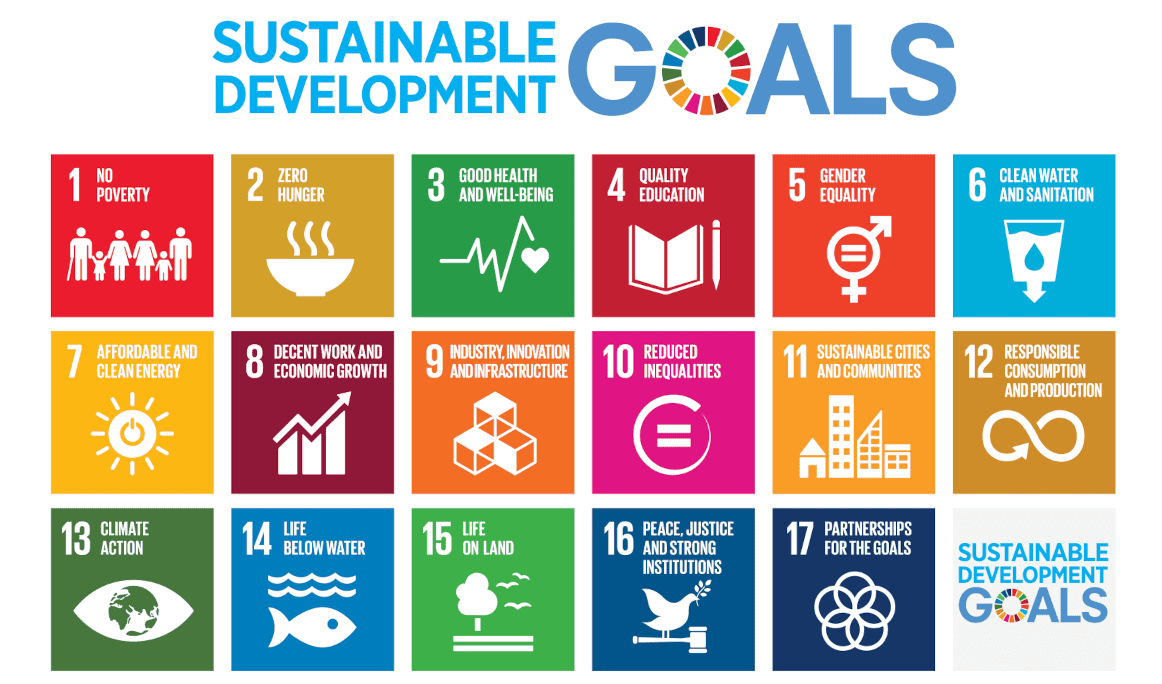
All the SDGs can apply to tourism, though tourism is mentioned specifically in three:
 SDG 8: Promote sustained, inclusive and sustainable economic growth, full and productive employment and decent work for all.
Tourism is one of the driving forces of global economic growth and provides for 1 in 11 jobs worldwide.
 SDG 12: Sustainable Consumption and Production
A tourism sector that adopts sustainable consumption and production (SCP) practices can play a significant role in accelerating the global shift towards sustainability.
 SDG 14: Conserve and sustainably use the oceans, seas and marine resources for sustainable development.
Coastal and maritime tourism, tourism’s biggest segments, particularly for Small Island Developing States’ (SIDS), rely on healthy marine ecosystems.
#IY2017 The International Year of Sustainable Tourism for Development
The International Year aimed to support a change in policies, business practices and consumer behaviour to a more sustainable tourism sector to contribute to the SDGs. This was the year that Earth Changers launched. Was #IY2017 the year tourism for sustainable development went mainstream? more >