

UN Sustainable Development Report
Red List Index
Global Gender Gap Rank
Climate Change Performance Index
Human Development Index
Population: 30.5 million
Capital: Kathmandu
Language: Nepali
Currency: NPR Nepalese rupee
Tourism contribution to GDP: Direct 2.1% GDP; NPR 112.1 billion, / Total 6.6%, NPR 358.9 billion 2023
On Top of the World
Nepal, in the heart of the Himalayas, is a captivating destination offering a blend of natural beauty, cultural heritage, and thrilling adventures.
Nepal is renowned for its stunning landscapes, including the majestic peaks of the Himalayas, lush subtropical jungles, and ancient temples. It is a haven for trekkers, offering some of the world’s best hiking trails. Beyond trekking, Nepal’s cultural tapestry, influenced by Hinduism and Buddhism, adds depth to its allure, and the warm hospitality of the Nepalese people further enhances the travel experience.
Kathmandu: The capital is a bustling city with a rich history spanning over 2,000 years. It is home to significant religious shrines and temples, including the Pashupatinath Temple Complex. The Thamel neighbourhood is a hub for tourists. While it can be chaotic, Kathmandu is a must-visit for its cultural and historical significance.
Kathmandu Valley: Unesco-inscribed in 1979, this cultural site includes seven monument zones, such as Bhaktapur Durbar Square, Boudhanath, Changu Narayan Temple, Kathmandu Durbar Square, Pashupatinath Temple, Patan Durbar Square, and Swayambhunath. These sites are renowned for their historical and architectural significance, showcasing the rich cultural heritage of Nepal.
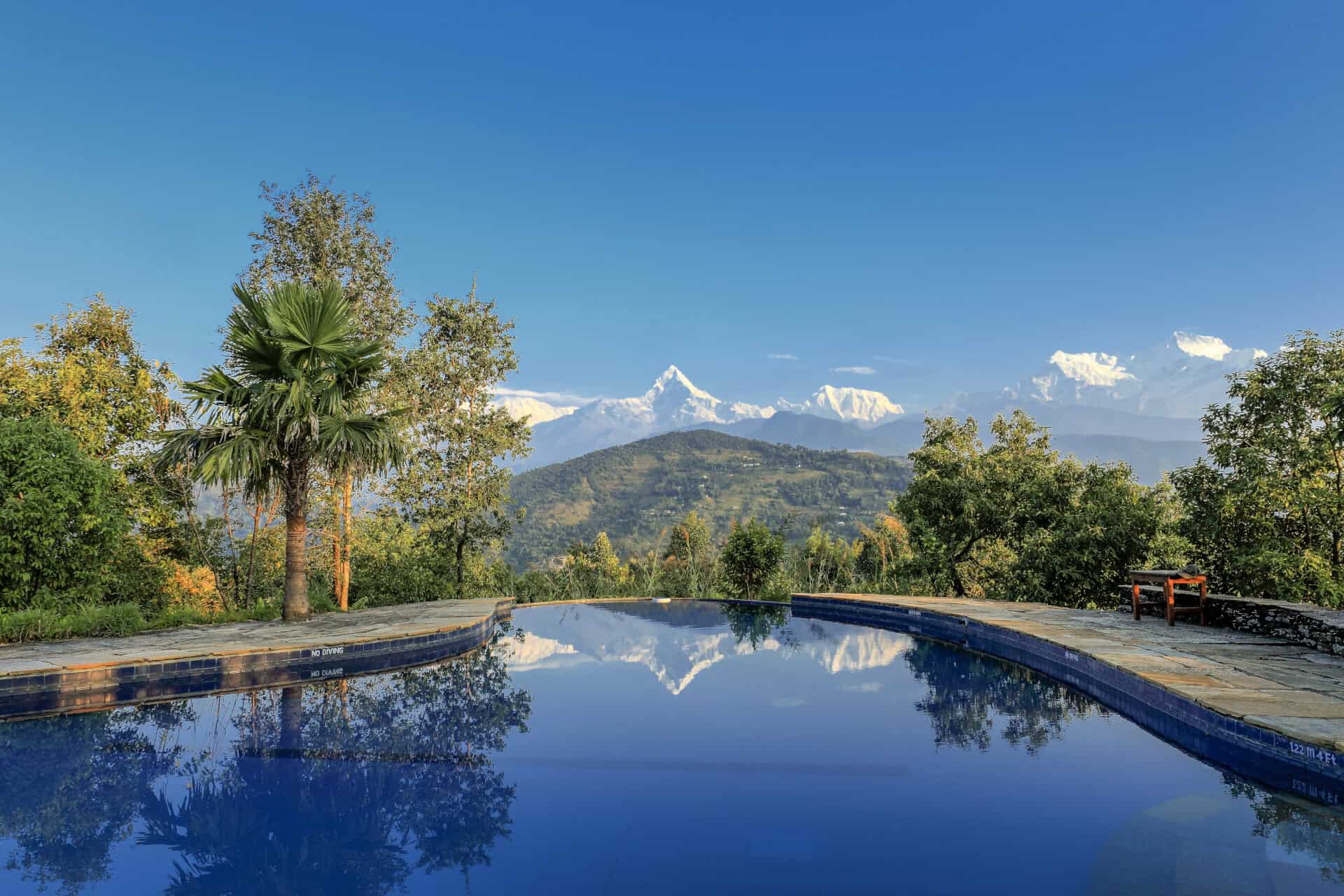
Pokhara: Nepal’s second-largest city, is known for its stunning lakeside views and as a gateway to the Annapurna region. It’s an ideal spot for relaxation and adventure, offering activities like paragliding and boating on Phewa Lake.
The Himalayas: The crown jewel of Nepal, attracting trekkers and mountaineers from around the world. Popular trekking routes include the Everest Base Camp, Annapurna Circuit, and Langtang Valley/National Park. These treks offer breath-taking views and a chance to experience the unique culture of the mountain communities.
Sagarmatha National Park (UNESCO, 1979) encompasses the Great Himalayan Range, including Mount Everest. It is celebrated for its stunning landscapes and biodiversity, providing habitat to species like the snow leopard and red panda
Chitwan National Park: Recognised by UNESCO in 1984, this natural site is located in the subtropical Inner Terai lowlands. It is known for its diverse wildlife, including the Bengal tiger and the Indian rhinoceros, and represents one of the last remaining ecosystems of the Tarai region.
Lumbini: The Birthplace of the Lord Buddha, Unesco (1997) Lumbini is a pivotal pilgrimage site for Buddhists worldwide. It features important landmarks such as the Maya Devi Temple, the Sacred Garden, and various monasteries, reflecting its spiritual and historical importance.
English is widely spoken in tourist areas, les so in rural or remote. Learning a few basic phrases like “Namaste” (hello) and “Dhanyabad” (thank you) can enhance your interactions with locals.
Getting around Nepal can be challenging due to poor infrastructure. Taxis are the best option for city travel, while long-distance buses and domestic flights connect major destinations.
March to May: Spring – Temperatures are rising and flora blooming. It is one of the best times for trekking and sightseeing, with clear skies and mild weather.
June to September: Monsoon: Heavy rainfall, particularly in the eastern and central regions. This can lead to landslides and flooding, especially in hilly areas. The Terai region experiences high humidity.
October to November: Autumn – the joint best time to visit. The weather is mild and the skies are clear, providing optimal conditions for trekking and sightseeing, and the views of the mountains are spectacular.
December to February: Winter – The weather is generally cold, especially in the mountainous regions where temperatures can drop significantly. In the Terai region, temperatures are milder but can still be chilly at night.
Autumn (October to November): Clear skies and cooler temperatures, making it another ideal time for trekking and sight-seeing. The weather is generally stable, and the views of the mountains are spectacular.
Nepal Weather Variations
Terai Region: Experiences a humid subtropical climate with hot summers and mild winters. The monsoon brings significant rainfall, especially from June to September.
Hill Region: This area has a temperate climate, with cooler temperatures than the Terai. Rainfall is common during the monsoon season, and winters can be cold.
Mountain Region: The weather is harsh and cold, with significant snowfall in winter. The climate varies with altitude, and temperatures can drop dramatically at higher elevations.
Nepal Climate Change Trends
Rising Temperatures: The average annual maximum temperature in Nepal has been increasing at a rate of approximately 0.056°C per year from 1971 to 2014. The minimum temperature has also shown a positive trend, though less pronounced.
Temperatures are projected to increase by about 0.9°C between 2016 and 2045 under a medium-range emissions pathway.
The monsoon season has shown an increase in rainfall, particularly in eastern, central, western, and far western regions, with variations due to local topography. However, the overall trend in annual precipitation is unclear, with projections indicating possible changes ranging from decreases of 34% to increases of 80% by the late 21st century.
There is evidence of increased intensity and frequency of extreme weather events, such as intense rainfall and prolonged dry spells, which contribute to floods and landslides, causing significant damage to infrastructure and agriculture. The number of people affected by river flooding is expected to double by 2030.
Climate change impacts agriculture, a critical sector for Nepal’s economy, through altered precipitation patterns and increased temperatures, affecting crop yields and food security.
Although Nepal’s per capita emissions are low, the country has seen a 26.9% increase in emissions between 2012 and 2019, primarily from agriculture and energy sectors.
These trends highlight the pressing need for climate change adaptation and mitigation, particularly in vulnerable sectors such as agriculture and infrastructure.
Nepal is home to 126 castes and ethnic groups, speaking 123 different recognised national languages. The official language is Nepali, spoken by 44.6% of the population as their mother tongue, or 78% including as a second language. Maithili is the second most spoken language while other significant languages include Bhojpuri, Tharu, and Tamang. This linguistic diversity is a testament to the country’s complex social fabric.
The dominant religion in Nepal is Hinduism, practiced by about 81.3% of the population, followed by Buddhism at 9%. The two religions share a harmonious relationship, often celebrating festivals together and sharing places of worship. Lumbini, the birthplace of Lord Buddha, is a significant religious site for both Hindus and Buddhists.
Nepal celebrates numerous festivals throughout the year, reflecting its religious and cultural diversity, including:
Dashain: the longest and most significant festival, celebrating the victory of goddess Durga over evil. It emphasises family reunions and lasts for 15 days.
Tihar: Also known as the festival of lights, it honours animals and involves family celebrations, including the special bond between brothers and sisters.
Buddha Jayanti: Celebrating the birth of Buddha, it is an important festival for Buddhists.
Traditional clothing in Nepal includes the Daura-Suruwal for men and Gunyo-Cholo for women, mainly Newari in Kathmandu Valley – often worn during festivals and special occasions. Elsewhere, sari and kurta are predominant. Unique customs include the Newari practice of Janku, a celebration of significant birthdays, and various marriage traditions that vary across communities.
Nepali society is largely collectivistic, with strong family ties and community interdependence. People often combine resources to ensure economic security for the family unit, and community support is vital, especially in rural areas. Friendship and companionship are highly valued, with a strong emphasis on loyalty and mutual support.
This community engagement, commitment and hospitality has seen Nepal have great success in implementing tourism initiatives that empower local communities and promote cultural experience, immersion and preservation, like home stays, while contributing to the community’s economy and development.
Nepal has a rich tradition of music and dance, with styles varying across different ethnic groups and regions. Traditional dances often accompany festivals and celebrations, reflecting themes from daily life, folklore, and religious stories.
Overall, Nepal’s culture is a vibrant blend of ancient traditions and modern influences, shaped by its diverse ethnic makeup and historical religious practices.
Nepal’s environment is characterised by its diverse and delicate ecology, which includes some of the world’s most spectacular natural areas and biodiversity. The country is home to 118 ecosystems, ranging from lowland region to the towering peaks of the Himalayas and Mount Everest, the highest point on Earth.
Terai Region: This southernmost strip is an extension of the Gangetic Plain of northern India. It is about 15 miles wide and covers approximately 20% of Nepal’s land area. The Terai is characterised by flat, fertile plains and was once heavily forested. It is known for its rich biodiversity, including species such as Bengal tigers, rhinoceroses, and elephants. Bardia National Park, in Nepal’s far Western Terai, is the largest national park in the lowland region, covering 968 square kilometers. Established in 1988, it was initially gazetted as the Karnali Wildlife Reserve in 1976, renamed as Bardiya Wildlife Reserve in 1982, then expanded to its current size in 1984 before being designated as a national park.
Hill Region: Centrally located, this region is about 60 miles wide and includes the Kathmandu Valley. It ranges from 3,000 to 12,000 feet above sea level and covers about 60% of the country’s land area. The hill region is marked by forested hills and terraced farming landscapes.
Mountain Region: This northern region features the high Himalayas, with elevations from 12,000 to 29,000 feet. It includes some of the world’s highest peaks, including the highest, Mount Everest. This area accounts for about 20% of Nepal’s land area and is characterised by rugged terrain and alpine conditions
However, the environment brings some serious challenges.
Nepal is experiencing the impacts of climate change, with rising temperatures and altered rainfall patterns. With lowlands and mountains, these changes are expected to increase the frequency of floods and landslides, affecting both the environment and the economy.
Soil erosion has been significant, threatening native flora and fauna and undermining local biodiversity, and leading to serious degradation in many regions. Thankfully deforestation is no longer rapid as crown cover and forest area have increased due to the expansion of community forestry across all regions of the country.
The country’s emissions increased by 26.9% between 2012 and 2019, primarily due to energy consumption and industrial activities. Though now electricity is over 90% hydropower, and for vehicles’ fuel, EV usage is rising faster than in many developed economies.
Community forests, increasing forest cover, provide crucial ecosystem services such as carbon storage and greenhouse gas sequestration, water provision and quality improvement, biodiversity conservation, and harvested wild goods.
Nepal has also implemented policies like the National Climate Change Policy and the Solid Waste Management Policy to address environmental challenges, to improve systemic resilience, harness hydropower opportunities, and manage urbanisation for better environmental quality.
Nepal is a developing country and economy, transitioning from an isolated pre-industrial society since 1951, and heavily reliant on remittances and agriculture.
As the principal sector, agriculture employs about 65% of the population and contributes 31.7% to GDP. Rice, wheat, and various fruits and vegetables are the main crops.
However, only about 20% of Nepal’s land is cultivable, and the country faces challenges such as low agricultural productivity due to inefficient techniques and shortages of fertilisers and improved seeds.
Remittances from foreign workers are a significant source of income, accounting for about 9.1% of GDP, and play a crucial role in supporting domestic consumption.
The services sector, particularly accommodation and food services, has seen growth due to a rise in tourist arrivals when not affected by natural disasters (such as the 2015 earthquake or Covid, 2020).
Nepal’s industrial sector is small but growing, with key industries including textiles, carpets, and small-scale food processing.
Hydropower is a major export that Nepal is looking to increase and become a major economic driver to to even a trade deficit which has been a concern.
Nepal faces several economic challenges: It is one of the least developed countries, with a high dependency on imports for basic materials and consumer goods. Political instability and inadequate infrastructure further hinder economic development.
Conservation in Nepal
The modern era of conservation in Nepal began in the 1950s, following the overthrow of the Rana regime and the restoration of the monarchy. The first wildlife law was enacted in 1957, providing legal protection to rhinos and their habitats.
The National Parks and Wildlife Conservation Act (1973) marked a significant milestone in Nepal’s conservation efforts, leading to the establishment of Chitwan National Park, home to several endangered species. Initially, the act focused on strict preservation, with limited involvement of local communities in resource management.
Over time, Nepal’s conservation policies evolved to incorporate a more integrated and holistic approach. Amendments to the 1973 act allowed for greater participation of rural villagers and the designation of conservation areas in addition to national parks and wildlife reserves.
WWF has played a significant role since 1967, when it launched its first rhino conservation program in Chitwan, and establishing a formal office in 1993. They also paid a key role in protecting and increasing wild tigers, with the population nearly doubling in nine years, reaching 235 in 2018 and an estimated 355 by 2022.
Conservation strategies in Nepal have increasingly recognised the contributions of local communities. This shift has led to the development of landscape-level conservation models, such as WWF Nepal-supported Terai Arc and Sacred Himalayan Landscapes, protecting, restoring and enhancing habitats, and the designation of multiple-use areas, such as the pioneering Annapurna Conservation Area, aiming to balance conservation with local needs.
WWF Nepal has supported thousands of people through climate change adaptation and alternative energy programs, such as biogas, to help reduce reliance on forest resources, and promoting human rights in conservation standards and policies.
Despite successes, Nepal faces challenges such as staff shortages, financial constraints, and inadequate legal infrastructure outside protected areas. The Nepalese army has been involved in the protection of national parks and wildlife reserves, particularly in combating illegal activities, combining military training with security with what is a war on poaching and safeguarding conservation assets.
UNEP has been involved in ecosystem-based adaptation projects in Nepal, focusing on restoring degraded forests and rangelands to build climate resilience, benefiting more than 56,000 people. The initiatives incorporate traditional knowledge and scientific research to develop adaptation interventions that improve soil fertility, water harvesting, and provide additional livelihood options.
Instrumental in addressing climate-related security risks in vulnerable regions has been an EU-UNEP partnership established in 2018 as a pilot project in the Bardiya and Kailali districts of West Karnali, Nepal. The project’s aim is to improve understanding of climate change risks and to test integrated approaches that address the underlying drivers of insecurity while enhancing resilience to climate change.
The modern era of tourism in Nepal began in the 1950s, with the country opening up to international visitors. Initially, tourism was largely focused on mountaineering and trekking, capitalising on Nepal’s unique natural landscapes and cultural heritage.
2009’s tourism policy marked a significant shift towards recognising tourism as a key vehicle for economic and social development. It emphasised quality improvement, revenue generation, and employment expansion while also addressing environmental sustainability.
Ecotourism emerged as a key focus, with efforts to involve local communities in tourism planning and management. This approach aimed to ensure that tourism benefits were distributed equitably and that local cultures and environments were preserved.
Nepal tourism’s Vision 2020 set ambitious goals for increasing tourist arrivals and employment in the sector, with a strong emphasis on sustainable tourism practices. It envisioned a tourism industry that contributes to economic growth while maintaining ecological and cultural integrity.
Despite policies promoting sustainable tourism, inadequate implementation and the need for better coordination among stakeholders have persisted. The focus has often been on mass tourism, which can lead to environmental degradation and cultural insensitivity if not managed properly.
Nepal has aligned its tourism strategies with the UN Sustainable Development Goals, particularly Goal 12, which focuses on sustainable consumption and production patterns. This alignment underscores the importance of sustainable tourism in achieving broader development objective.
In 2023-24, Nepal became a net exporter of energy, largely thanks to hydropower, plus its use of biofuels and waste. Hydropower it exports to India during the wet season, along with emerging contributions from solar and wind energy.
Nepal has no large-scale fossil fuel reserves so relies heavily on imports of nearly 100% of oil and ~95% of coal, primarily used for transportation and industry.
Nepal’s journey in renewable energy began as early as 1911 with the establishment of its first hydroelectric plant. Now with nearly 100 hydropower plants, significant capacity comes from run-of-the-river projects, and is subject to seasonal fluctuations in electricity supply.
Solar power is gaining traction as a supplementary energy source and Nepal receives substantial solar radiation making it feasible to harness solar energy effectively. The World Bank has funded a solar power plant in Nuwakot, upon completion expected to become Nepal’s largest renewable energy project.
In December 2017, Nepal launched its largest wind-solar power system to serve rural households in the Sindhuli district. This system, along with other mini-grid projects, highlights efforts to diversify energy sources and provide electricity to remote areas.
Nepal is transitioning towards a cleaner energy system, and plans to achieve energy self-sufficiency during the twenty-first century.
Despite the progress and opportunity, challenges such as infrastructure development, investment, and policy implementation remain.
Nepal’s community forestry model has delivered substantial benefits and been crucial for the country’s sustainable development. It contributes significantly to climate change adaptation and mitigation by helping regulate local climates, reduce soil erosion, and enhance water retention, all of which are vital for climate resilience. Socio-economically, it has created local jobs, contributed ~25.4% to household income increases (nepjol.info) and generated funds used for education, health, and other social needs, increasing natural, social, human, and financial capital in rural communities.
Community Forest User Groups (CFUGs) have also meant community forestry has improved governance practice inclusivity, public auditing, and corruption control. The program transforms local communities from “poachers to caretakers,” providing legal and economic incentives for sustainable forest management.
By 2025, community forests occupy nearly 2.3 million hectares—about a third of Nepal’s forest cover—and are managed by over 22,000 community forest groups comprising 3 million households.
The establishment of buffer zones around national parks has been a successful strategy in mitigating human-wildlife conflicts and promoting sustainable tourism. These programs have facilitated income generation and employment for local communities while ensuring conservation efforts, particularly for endangered species like the Asian rhino.
Nepal has successfully implemented community-based tourism initiatives that empower local communities and promote cultural preservation, enabling tourists to experience local culture while contributing to the community’s economy and development, particularly effective in areas like Panauti, Bungamati, and Bardia.
Nepal’s focus on eco-friendly tourism practices includes responsible trekking and conservation of natural and cultural heritage. This approach ensures minimal ecological impact while supporting local economies and preserving cultural sites.
The Nepal Tourism Policy 2009 and Vision 2020 have been instrumental in promoting sustainable tourism. These policies emphasise quality improvement in tourism services, increasing revenue, and expanding employment opportunities, all while adhering to sustainability principles.
Despite these successes, Nepal faces challenges such as the need for better infrastructure, implementation and strategic marketing. The country is at a crossroads to enhance its tourism sector by balancing high-value, low-volume tourism with broader access to ensure benefits reach low-income communities.