

Recommended duration
Price per night per adult
Free private village walk to meet community partners and sustainability insights dinner
Experience a heavenly transformative haven of tranquillity at the trekking centre of Nepal
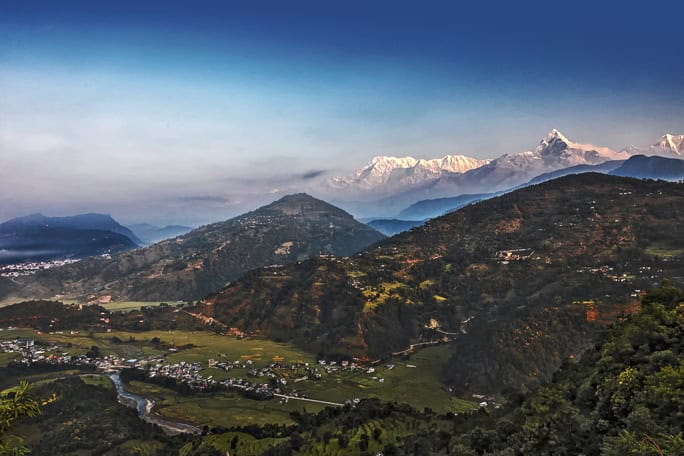
On a mountain ridge 1000ft above the Pokhara valley, the gateway to the famous Annapurna Circuit, the lodge and views are simply stunning. Relax pre- or post-trek, and enjoy the staggering scenery in serenity at this homely retreat.
Tiger Mountain Pokhara Lodge really sets the standard for responsible tourism in Nepal, a real haven, a spiritual sanctuary to restore the soul.
The setting is dramatic: Within 30 kilometres (19 miles) of the valley, the mountains rise from 1,000 to over 8,000 metres elevation (3,300-26,000+ ft) for Annapurna 1. The altitude of the lodge is about 1,220 metres (4,000 ft), a little lower than Kathmandu. Unsurprisingly adventure activities on the doorstep abound.
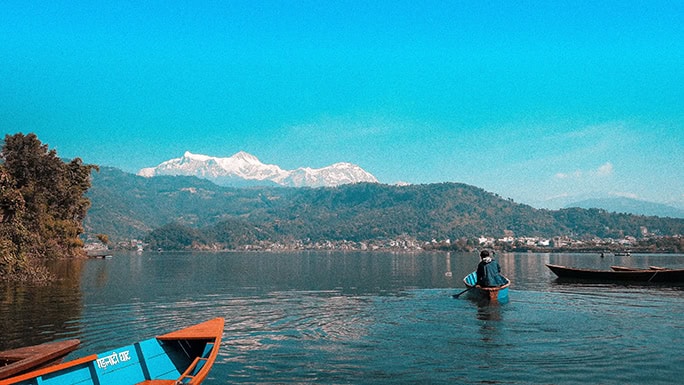
Until the 1970s, Pokhara was a small bazaar town with charming locals largely known only by occasional travellers trekking in the Annapurna Himal. The largest lake in the valley, Phewa Tal, became first a camping ground for trekkers and gradually developed into the tourist hub of this growing city.
Now considered the adventure tourism capital of Nepal, Pokhara’s long lake border is home to a variety of restaurants, bars and shops.
High Season: October to December, February to April.
Low Season: September, January, May, early June.
Please note the lodge is closed mid June to September for the annual monsoon and maintenance.
Comfortable and relaxed boutique eco-lodge a half-hour drive from Pokhara
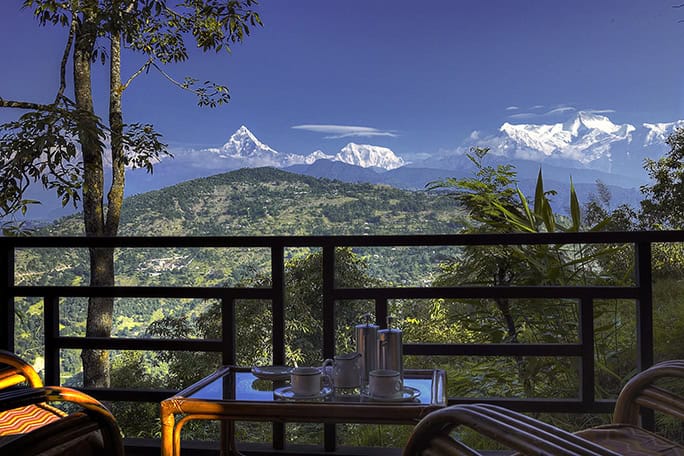
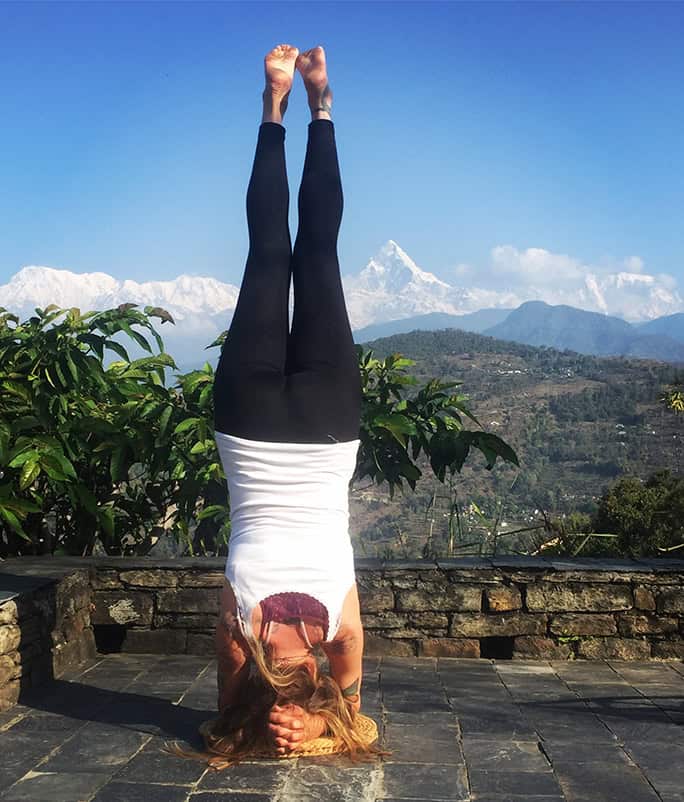
Essence of tranquillity retreat: meditate on majestic peaks in serene hilltop gardens
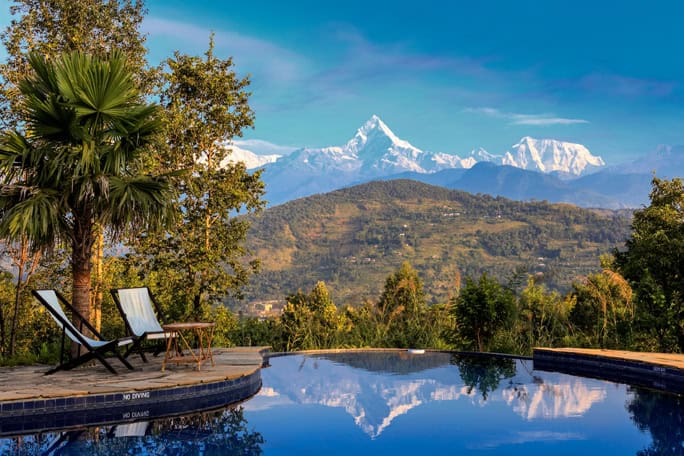
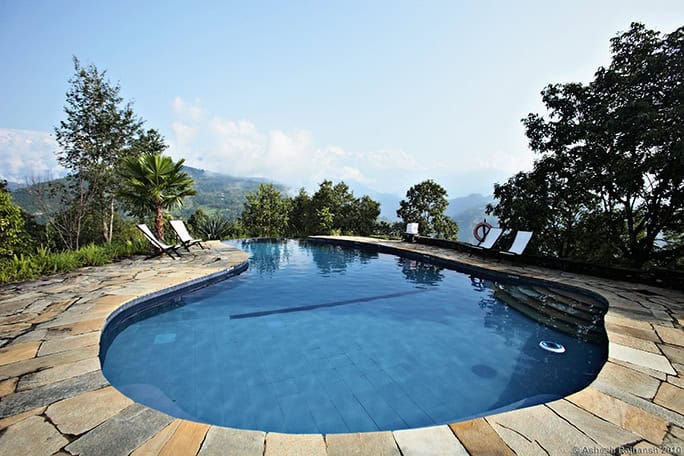
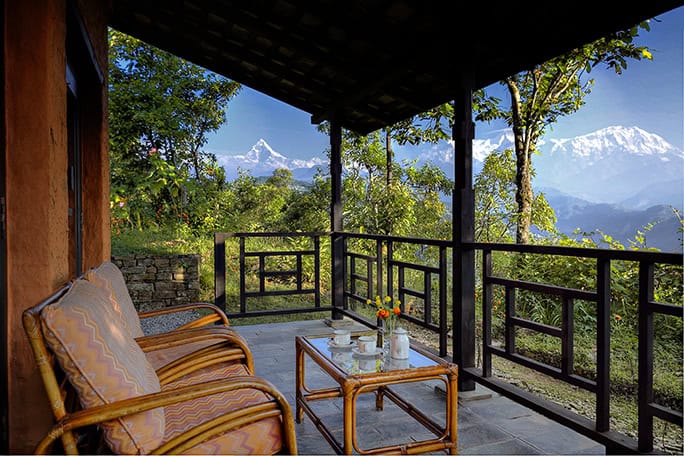
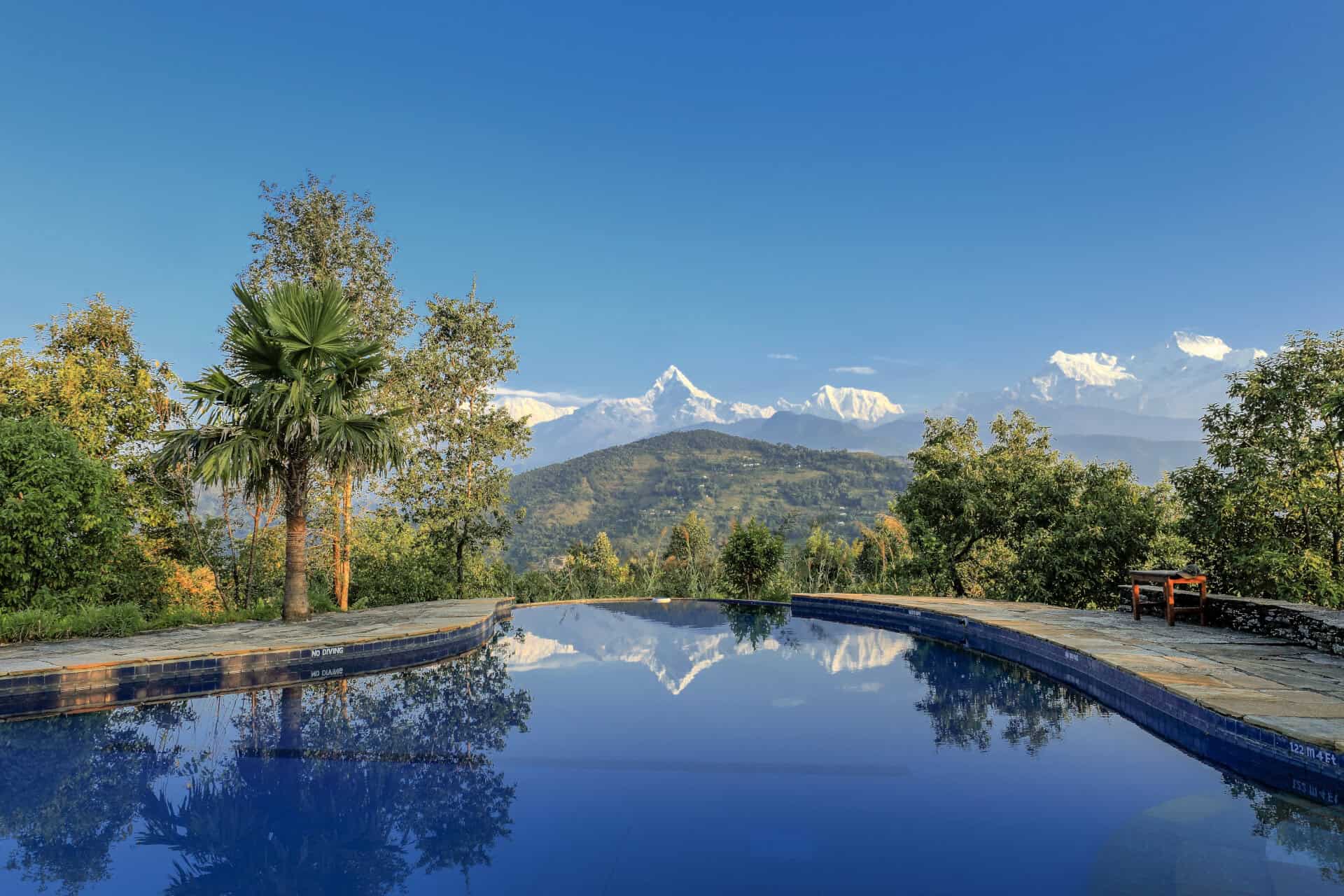
Secluded stunning views: infinity swimming pool reflects the famous Machhapuchhare peak
Colonel Jimmy's Library: eclectic collection of Himalayan mountaineering literature
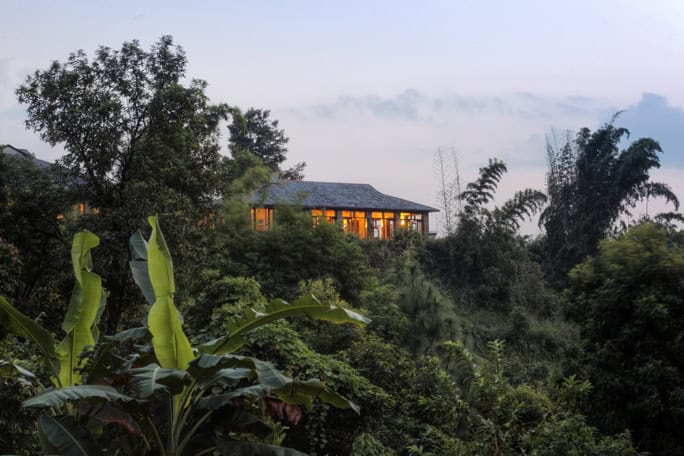
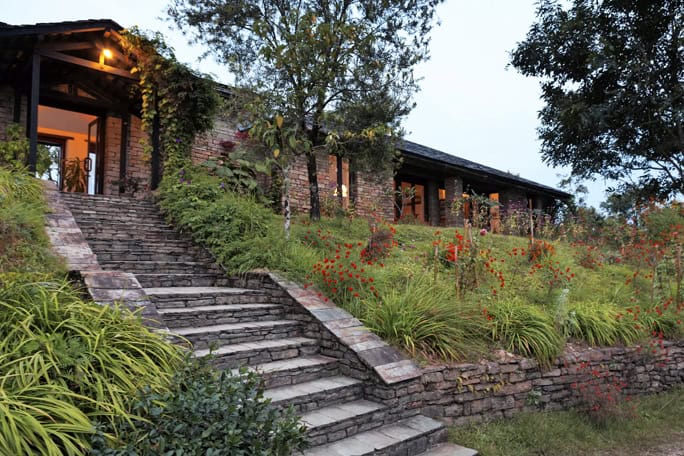
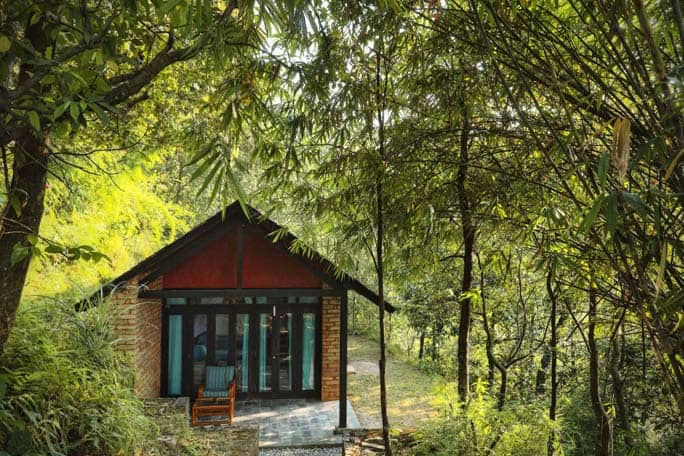
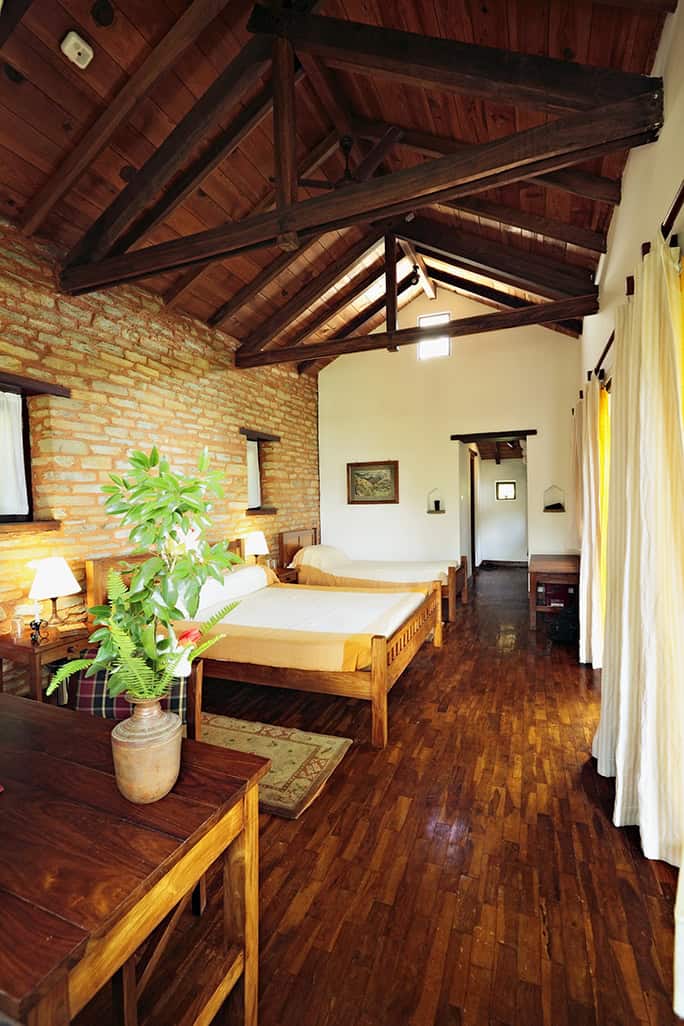
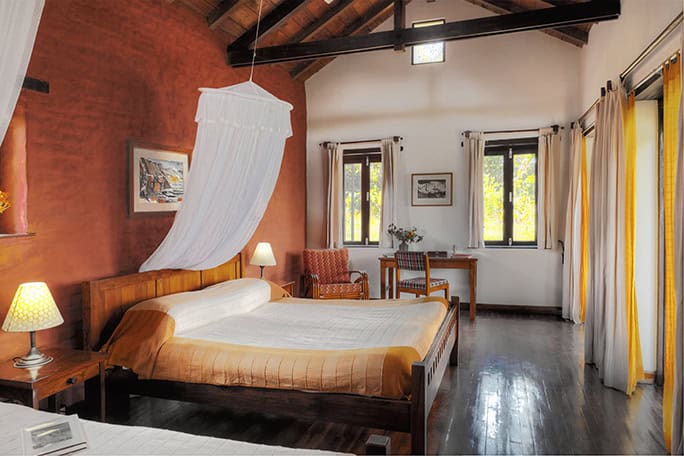
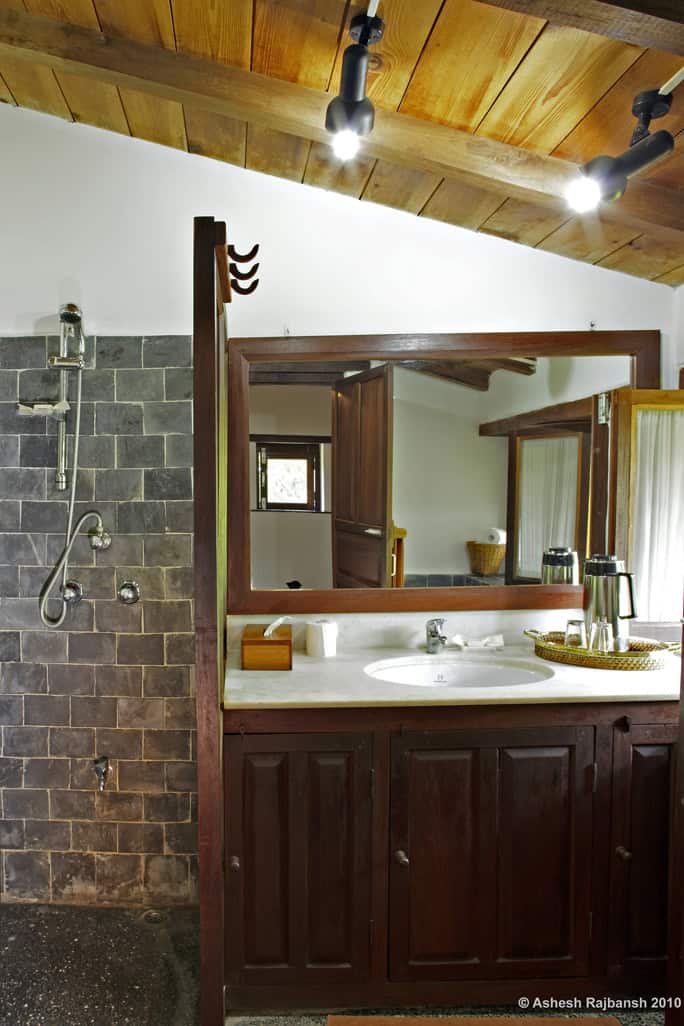
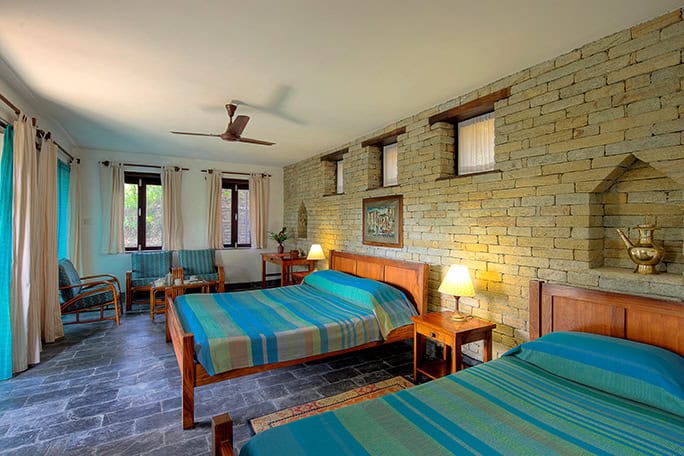
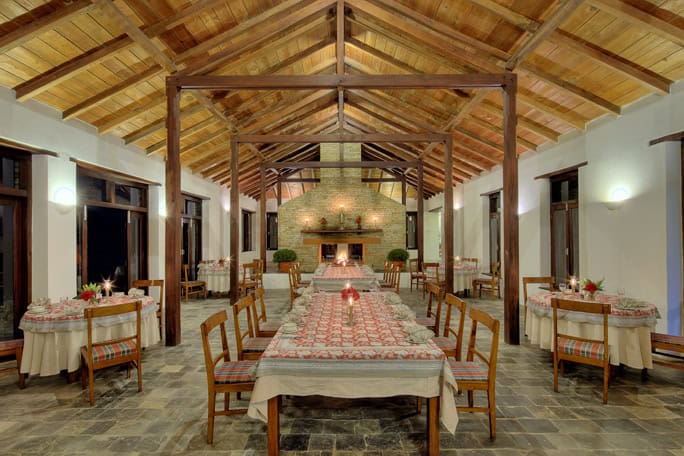
Understated elegance: cool slate, handmade local carpentry, local materials blend into landscape
Responsible regenerative tourism: Sets the bar in Nepal for pioneering practice & contribution to community & conservation
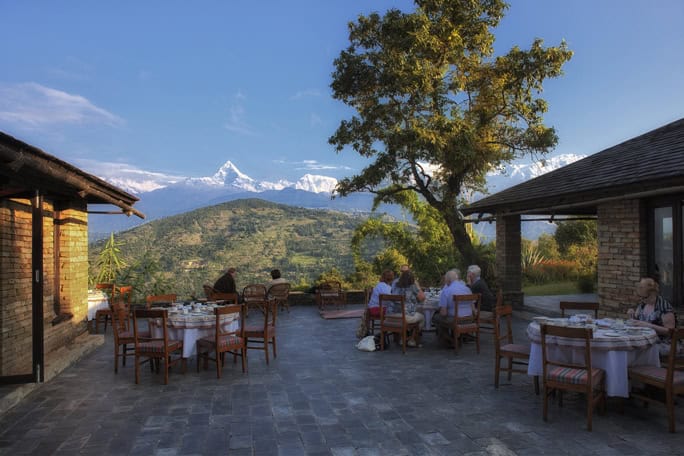
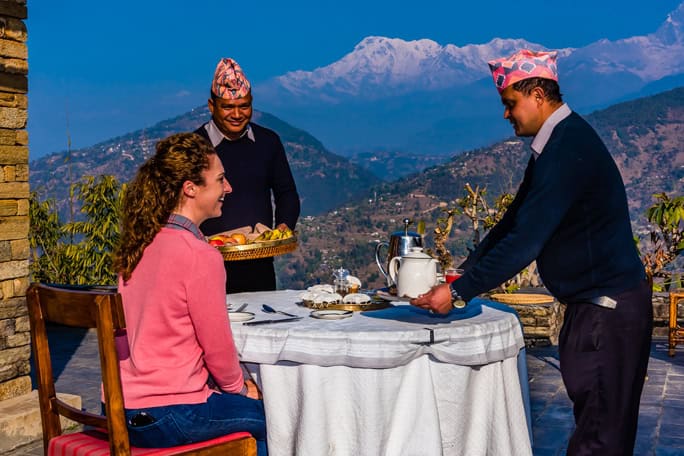
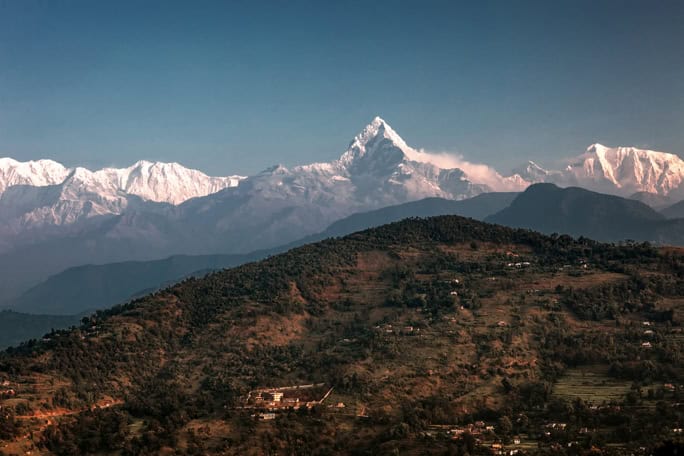
Opened by Sir Edmund Hillary, Tiger Mountain Pokhara Lodge has stunning panoramic views of Machhapuchhare, Dhaulagiri, Annapurna and Manaslu peaks, the latter three among the ten highest (over 8,000m/26,000ft) mountains in the world.
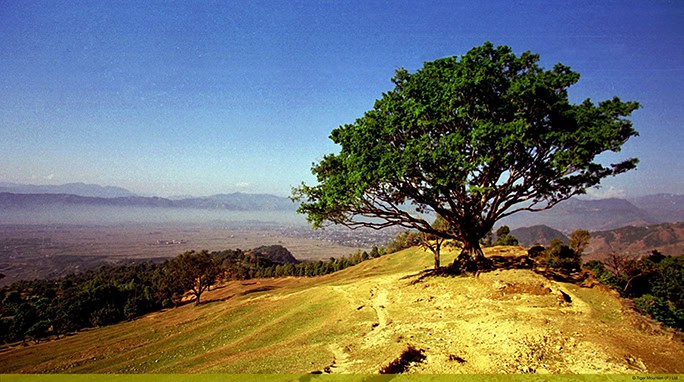
It was on the lodge’s dramatic hill top that Gurkha officer, war hero, reputed climber and founder of the first trekking company in Nepal, Mountain Travel, Colonel James O.M. Roberts MC, had assessed sites for radio masts to transmit impending election results to Kathmandu, subsequently remembered in preparing the route for, and so popularising, the “Royal Trek”, the first of HRH the Prince of Wales in 1979.
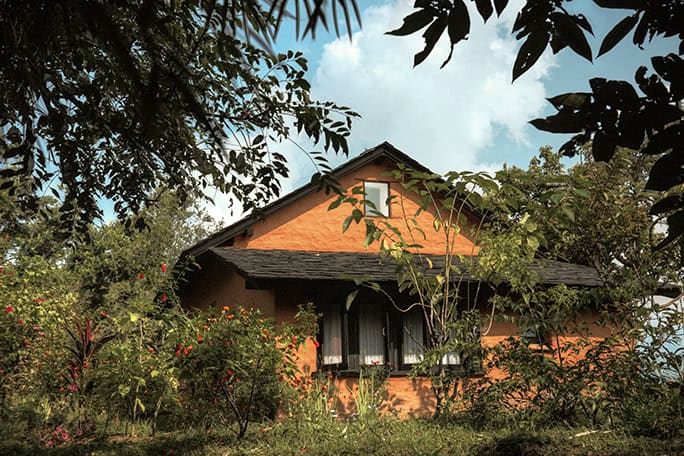
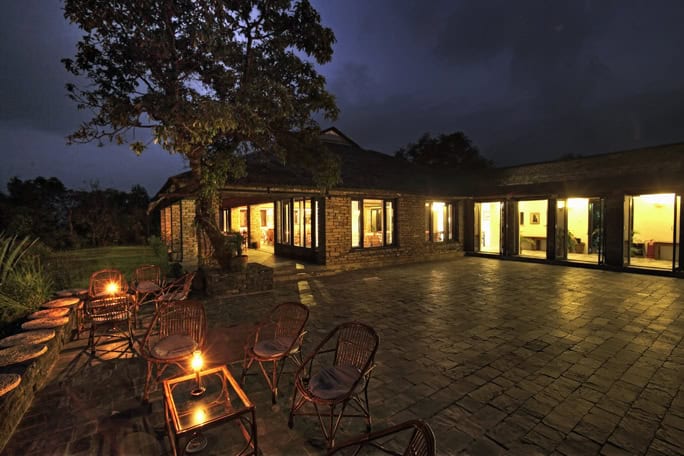
With just 18 rooms in 13 traditional cottages set in 7 acres of natural gardens and woodland, the lodge offers simple comfort and attention to personal service. See ‘Options to book’.
Maximal mountain peace
Around the lodge
Celebrating local culture
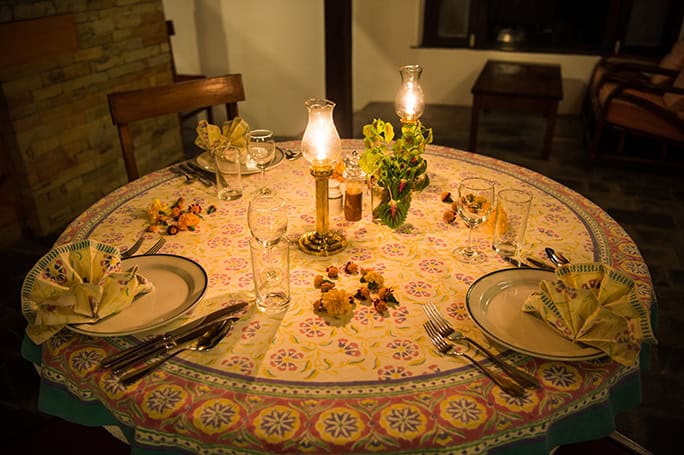
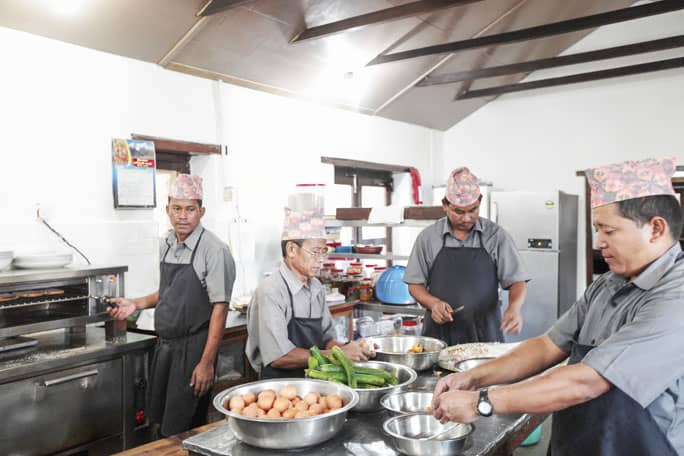
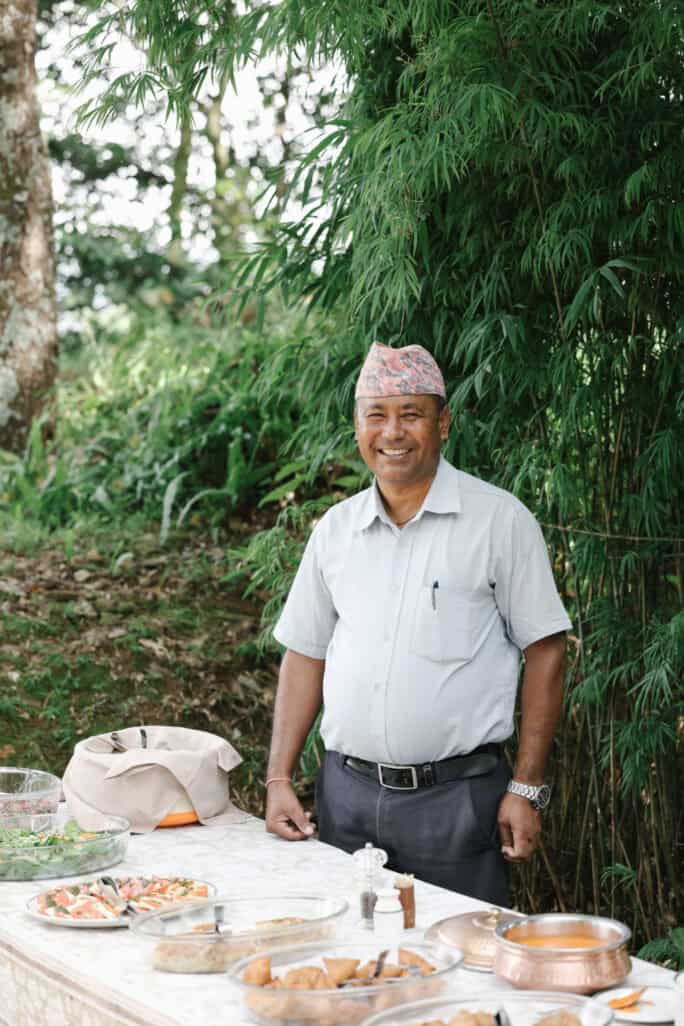
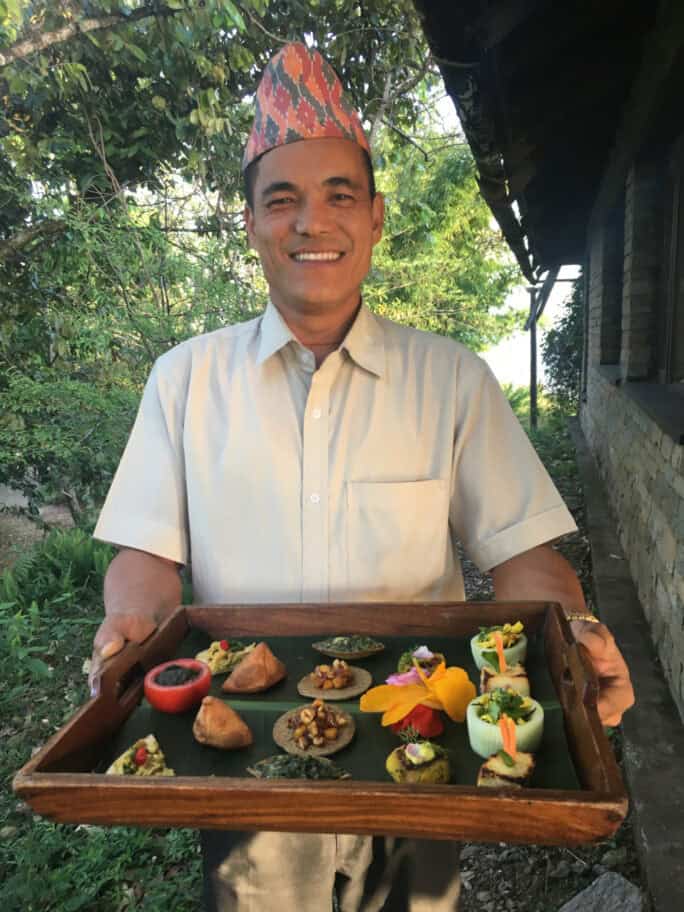
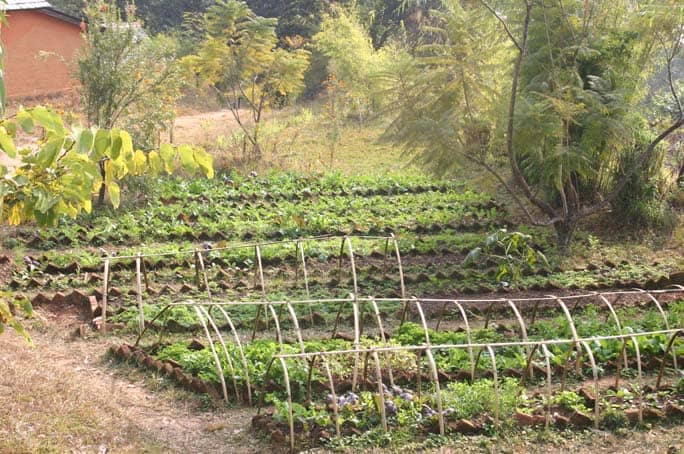
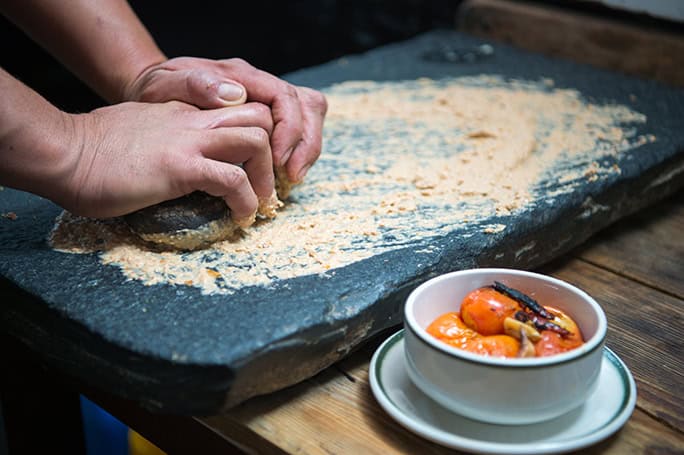
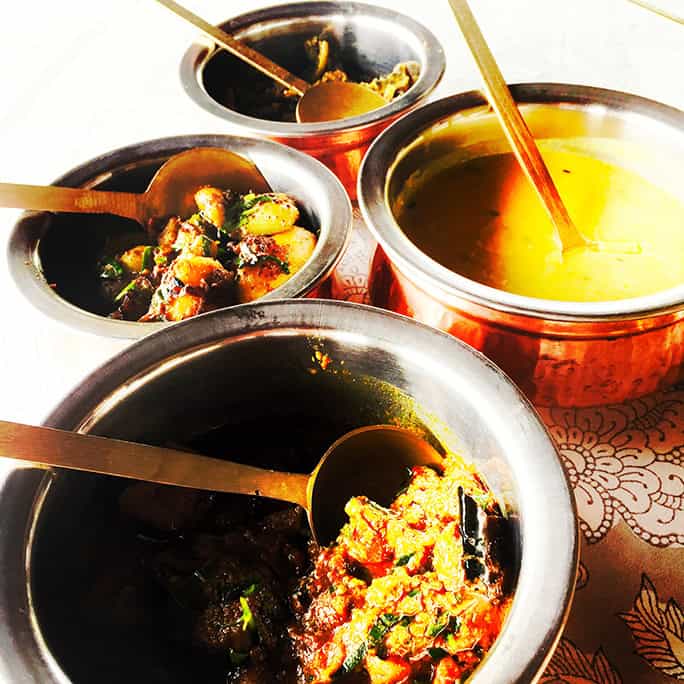
Award-winning meals in the airy dining room offer good home-style food, local, organically grown to the highest standard. Fresh herbs, salads and vegetables come from the lodge’s own gardens, other fruits and vegetables from the village. All food is prepared daily on site. All meals and non-bar hot drinks are included in room rates.
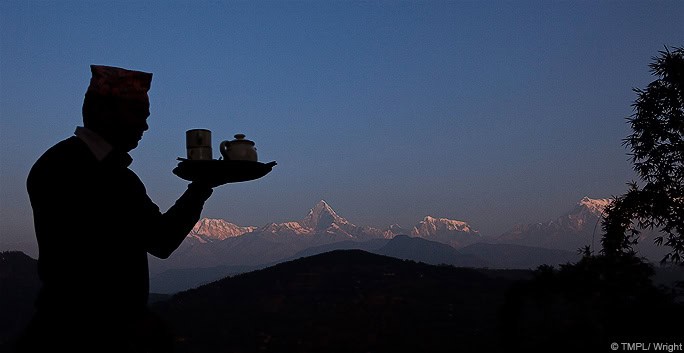
As the sunrises over the Himalaya you’ll start the day with room service of morning tea.
Breakfast
Lunch
Afternoon Tea
Table d’hôte dinner
Drinking water
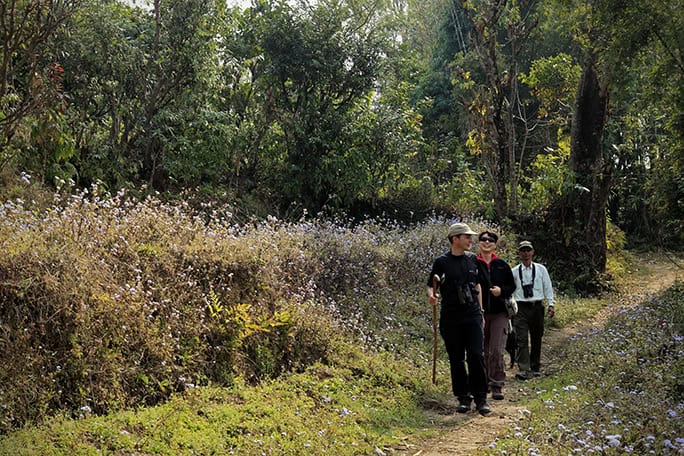
The lodge is an excellent base for diverse activities in the mountains and valley.
You might also like to play golf, go fishing, mountain biking, shopping in Pokhara or sightseeing:
As part of its commitment to the community and Nepal, staff have recorded basic weather data since 2004. Daily readings at 0845 and 1745 Nepal standard time log the maximum, minimum and actual temperature, barometric pressure and relative humidity in the format required by the government Department of Meteorology.
Nepal’s climate is dominated by the annual monsoon cycle in six seasons of 2 months. The Lodge’s hilltop location ensures a cool breeze even in the warmest weather compared to the valley floor.
Guests can observe a diverse range of wildlife. The lodge’s extensive grounds are home to:
The lodge’s commitment to wildlife conservation includes supporting research initiatives, enhancing the understanding of local ecosystems:
Vulture and Raptor Monitoring: A joint project with Tiger Tops Tharu Lodge.
Annual Asian Waterfowl Census (every January):
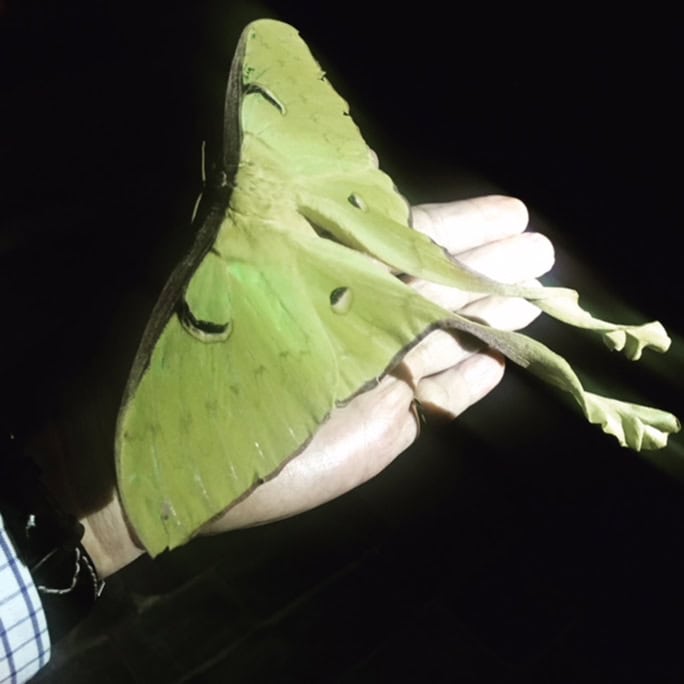
Monthly Butterfly Monitoring:
Tourism makes a major contribution to income for local people, and Tiger Mountain Pokhara Lodge takes its people priority, social responsibility, governance and accountability very seriously.
Tiger Mountain Pokhara Lodge believe in education for true responsible tourism: A sustainable natural and social environment can only be achieved effectively if all stakeholders (staff, guests, suppliers, community, authorities…) are fully informed and aware of the issues, take the required responsibility and make a personal commitment.
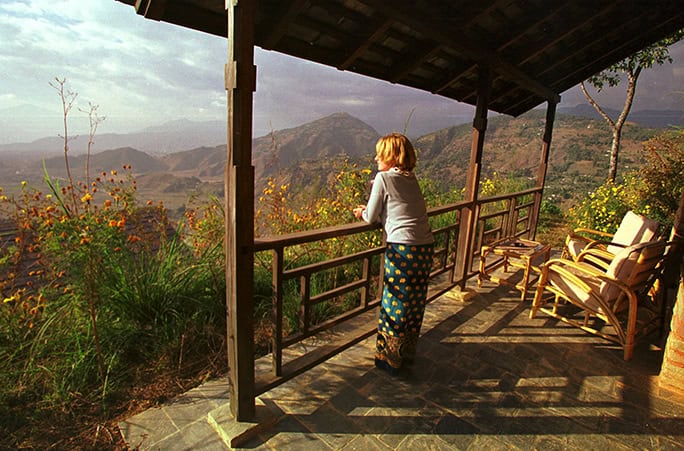
Guests do as much or as little as they please, often whiling away hours just contemplating the Himalayan peaks.
Dress: In the lodge, casual and relaxed, light cotton and other natural fibre clothing recommended.
Nepal is a conservative society. Guests are asked to dress appropriately when out on activities in the village or further afield: ladies with clothing to the knee and tops not low cut or revealing; generally the upper arms should be covered; gentlemen should avoid skimpy shorts and should wear a shirt or T-shirt that covers the torso.
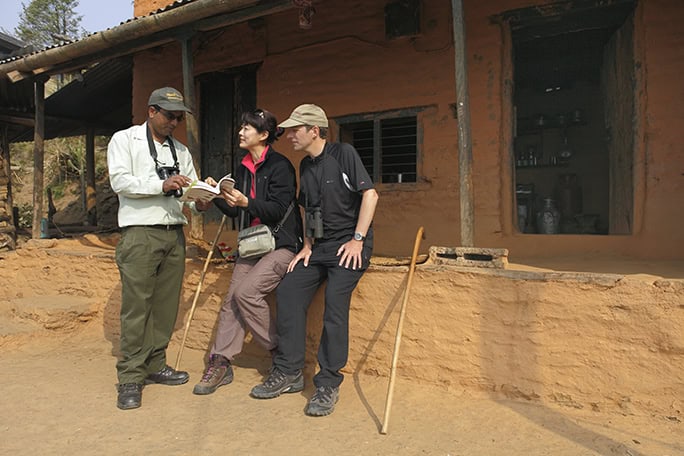
Meeting locals: When you’re out and about in the area, you’ll often be joined by children from the community on their way to/from school, intrigued with tourists and keen to practice English. It’s great to interact, but not to give sweets, money or gifts – it is not a good example to set, only encouraging begging, skipping school and bad teeth. If you wish to support them, please let the lodge know, who can ensure any contribution ends in the hands of the most deserving.
Please remember to keep with you all litter, including cigarette ends, which can be unsightly and a hazard for fire and animal welfare.
Photos: The Lodge is happy to print and distribute pictures to the local villagers, however always ask permission before photographing local people. Most will be more than willing, but it shows respect to be asked first.
Guests are informed about our approach of minimising fuel and water consumption, reducing waste and minimising use of chemicals through the welcome briefing and the room information pack. Guests are encouraged to provide feedback, comments and suggestions which are considered by the Sustainable Action Group and recommended for implementation if thought feasible and beneficial.
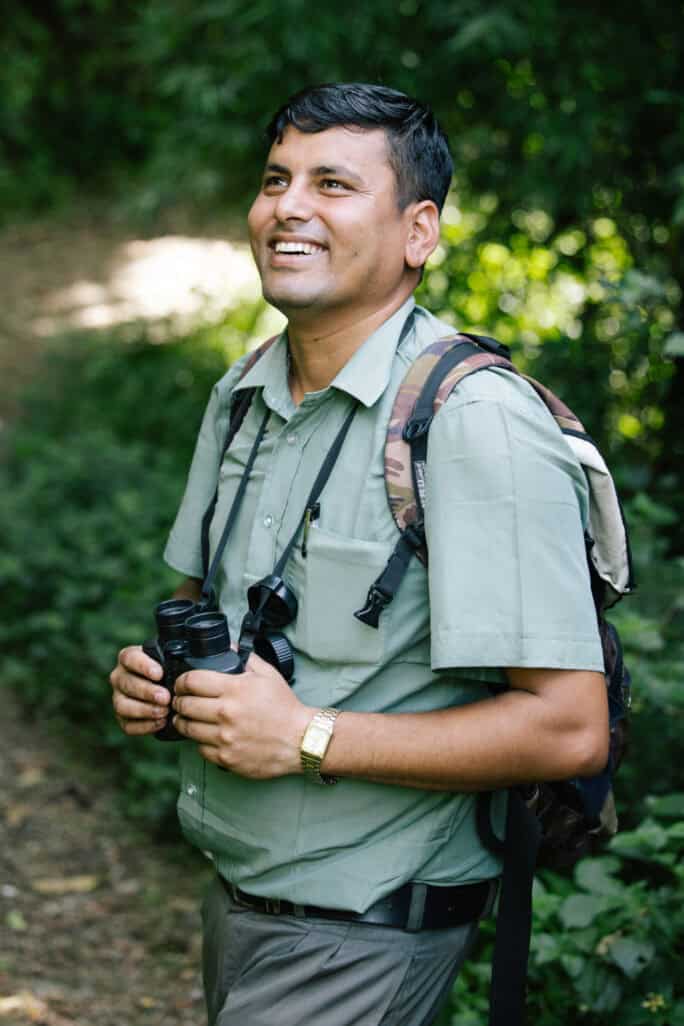
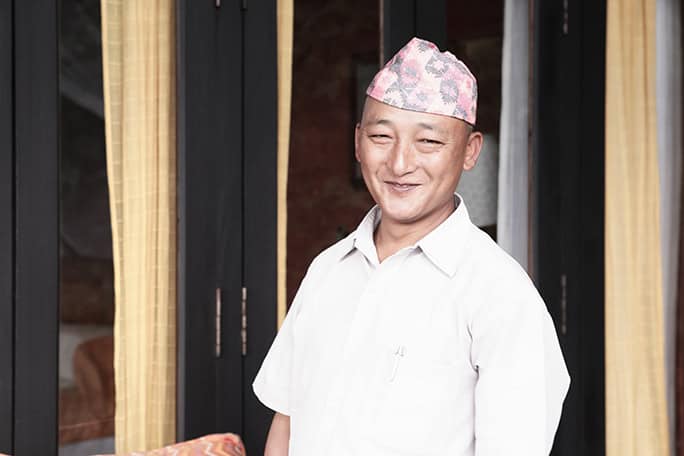
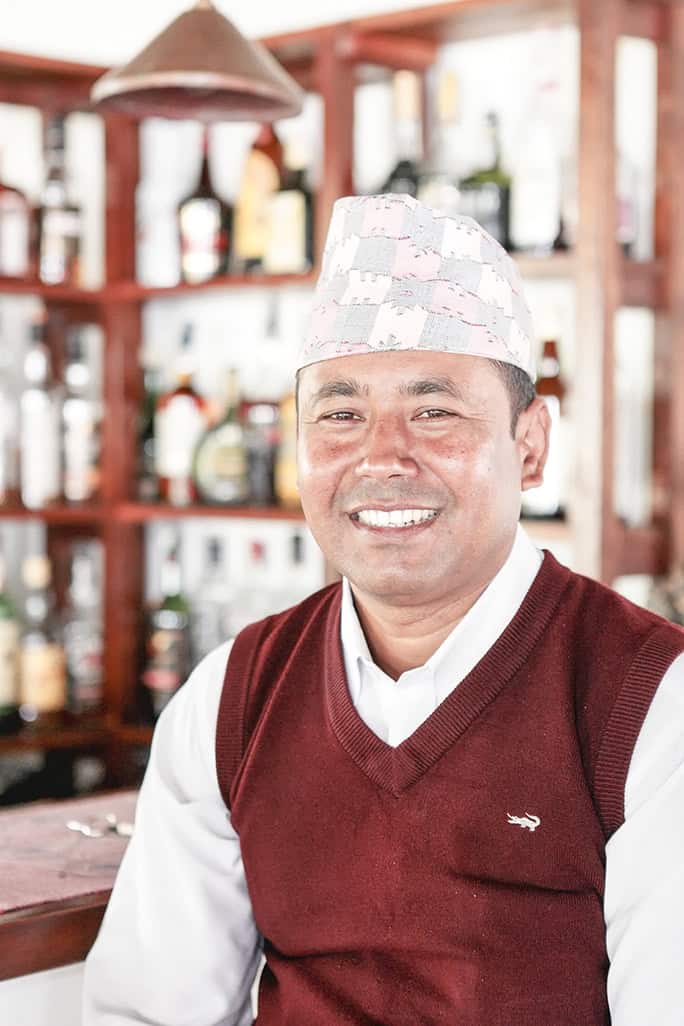
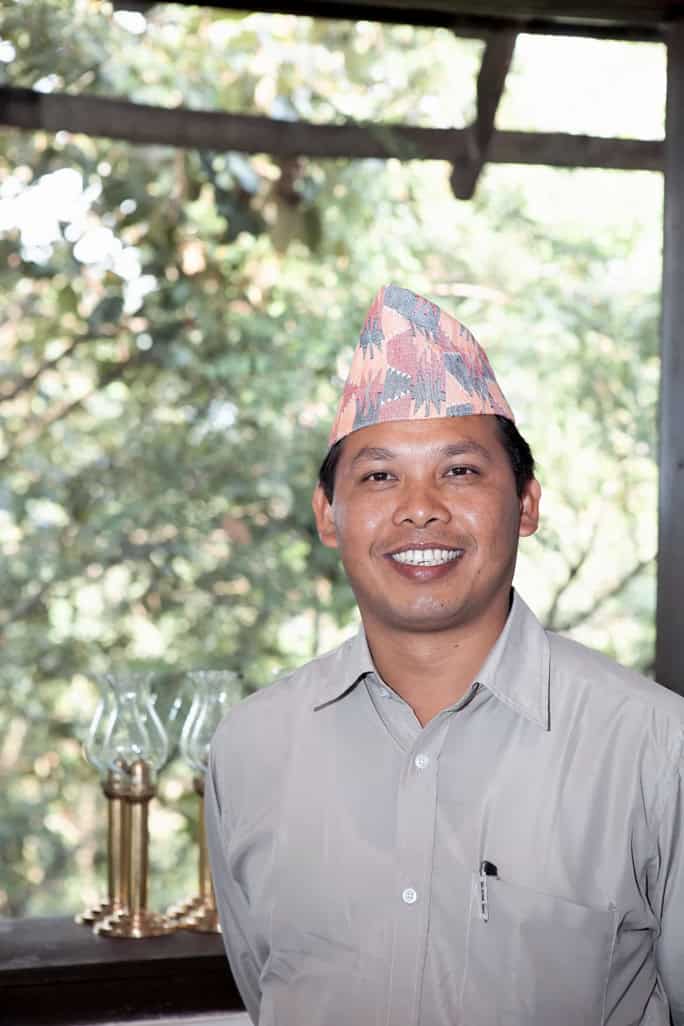
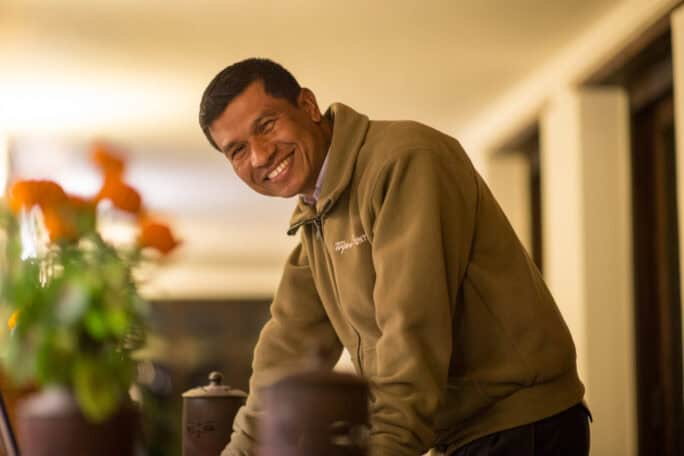
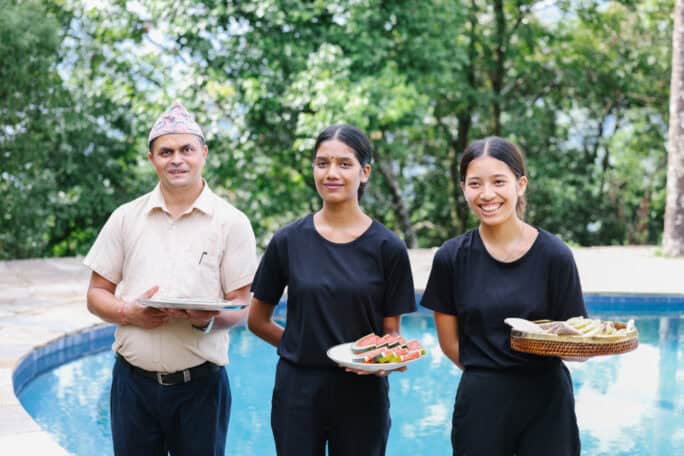
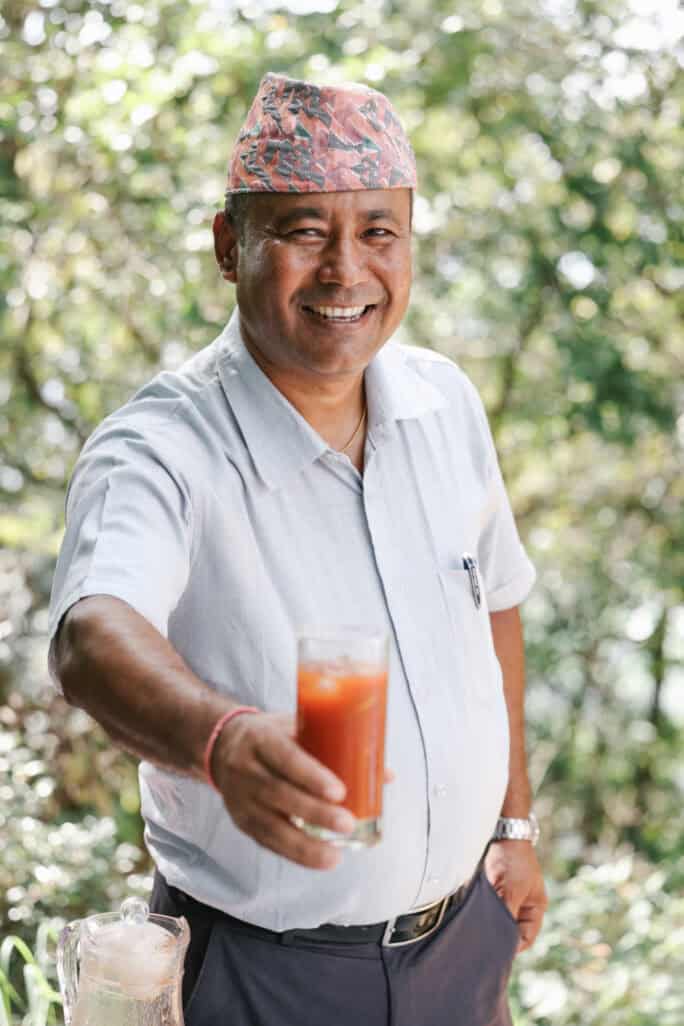
The staff at the lodge are attentive, accommodating and knowledgeable; you might hear them say ‘Atithi Deva Bhava’ – Guests are Gods.
Tiger Mountain Pokhara Lodge operates a responsible business underpinned by comprehensive employment benefits and career development opportunities, so much so,
97% of the staff have been with the lodge over 8 years.
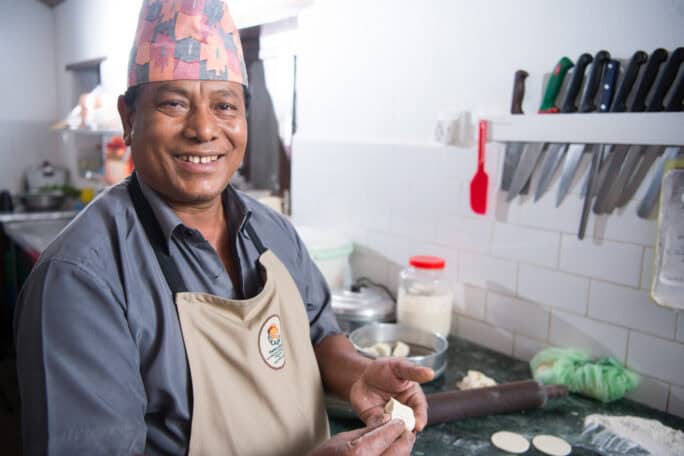
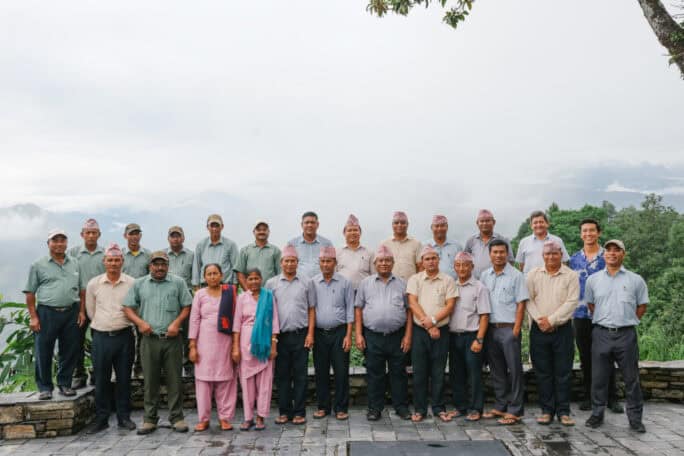
Staff Loyalty: The majority of the staff working in the lodge today formed part of the 350 local male and female labourers, craftsmen and overseers who originally built the lodge: The in-house experience, expertise and teamwork is immense. As such, all staff in front-of-house and behind the scenes work equally, contribute equally and share the tip box proceeds equally, including all guides, drivers and lodge staff.
Employment practices go far above and beyond the Nepali legislative requirements. Free board and lodging is provided, a bonus of one-month’s pay at Dasain, the major festival in Nepal, plus a statutory 10% of annual profit goes to staff. Tips from guests paid by credit card have no commission deducted, and the Lodge prioritises all appointments for applicants from the immediate community, actively encouraging the recruitment of women and individuals from disadvantaged groups.
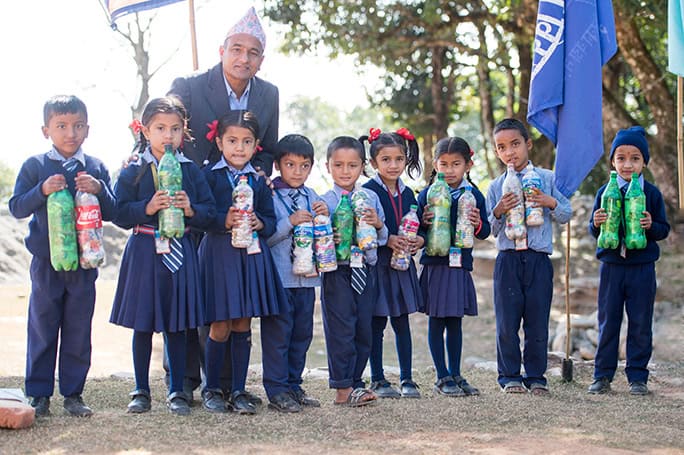
Teamwork: Staff are also encouraged to participate and voice ideas on how the company can become more sustainable, encouraging a bottom-up approach and sense of ownership of the initiatives through the lodge’s Regenerative Action & Advisory Group which monitors the implementation of the company’s responsible tourism policy and pilots projects with the local community, for example in refuse management.
Connection: the Lodge acts as an interface between the community and guests, believing in a two-way flow of mutual support, raising understanding of the lodge’s responsible tourism activities within the community through its local staff. The local and wider community are always encouraged to visit and learn about sustainability through a lead-by-example approach and guided tours of the lodge and grounds. The local community is consulted wherever Lodge activities may have an impact.
Educating: Guests are informed about minimising fuel, water and chemical consumption and reducing waste through the welcome briefing and the room information pack and encouraged to give feedback. Guests are encouraged to see, participate where appropriate, and learn about the local community, with no tolerance for all forms of exploitative behaviour.
Village: Tiger Mountain Pokhara Lodge is situated in Kandani Danda, settled approximately 200 years ago with migrants from north-west Kaski District and other areas. It developed into a predominantly Brahmin and Chhetri community of Sigdel, Neupane, Dhungana, Thapa, Bhandari, Ranabhat, Rajbhat, and Raibhat clans and other supporting occupational castes, such as Biswokarma and Pariyar. Current population of the settlement stands at about 1000.
Water Access: The families who sold land for the construction of the lodge were not just paid but also provided with private water taps and most have at least one person employed at the lodge. The village permitted the use of a spring 1000ft below the lodge, which ensured public benefit via two public taps from this otherwise inaccessible source of water. This has education benefits as well as health: freeing girls’ time for school that would otherwise be demanded for fetching water from a distant spring. A new water supply system is since in place and the public taps remain a backup.
Public rights of way are respected and access is provided to local families to cut grass for fodder and, subject to the lodge’s own requirements, thatching.
“The communities in which Tiger Mountain Pokhara Lodge is privileged to operate are our stakeholders, vital partners in the business” – Marcus Cotton, Managing Director.
Tiger Mountain Pokhara Lodge endeavours to develop and improve its commitment to guests, employees and the local community through its focus on health, education and environment. In the financial year 2018-19, 18% pre-tax profits went to charity.
Tiger Mountain Pokhara Lodge fully supports and practices responsible conservation tourism, in an environment where availability of alternatives can be challenging. Operating in the middle hills of Nepal where the surrounding area is under diverse pressure, there is a need for sound and sensitive management.
The lodge undertakes a range of biodiversity monitoring projects and supports various social development and welfare activities on an ad hoc and ongoing basis. Designated Community Support Partnership staff encourage community involvement.
Tiger Mountain Pokhara Lodge strives to ensure that all its operations have the smallest negative environmental impact possible:
Energy
Mains electricity is used, rather than an independent renewable source, because the majority of electricity supplied by the Nepal Electricity Board is generated by hydropower thus a clean, green solution. The Lodge has a backup diesel generator to maintain high standards required for tourism operations, but only used minimally when required, regularly serviced to ensure maximum efficiency and metered to log power generated.
Lighting: Almost all LED.
Consumption: Lights, machinery and computers are switched off whenever not in use and set with energy saving options when possible. All fridges are energy efficient models.
Solar power: is used to heat hot water for the staff and 4 out of the 19 guest rooms, to be extended in future although possibly not for all rooms due to topography.
Kerosene will be phased out 2025 with moving to electric room heating; alongside pathway lighting converted to electricity there has been significant reductions in carbon footprint. .
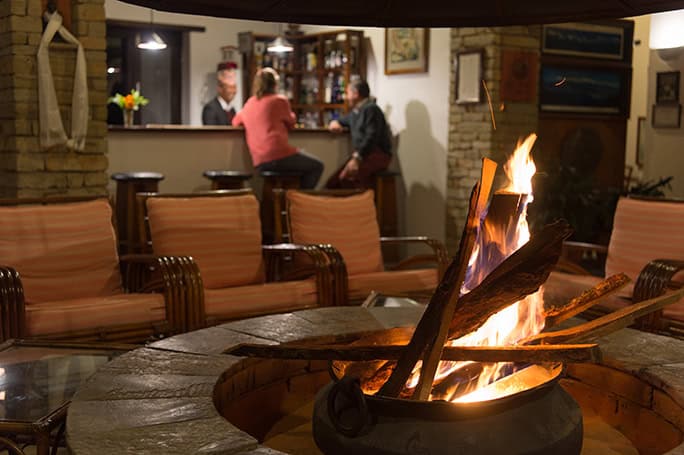
The lodge’s fires are minimally lit and burn off-cuts supplied by the local timber mill or timber sustainably harvested within the lodge grounds.
Transport: All vehicles are regularly serviced to minimise emissions and all activities are structured to minimise usage, with staff encouraged to use public transport where possible.
Water Management: Conservation of water is of utmost importance, as it is pumped over 300m (1,000ft) to the lodge. All toilets have a shortened flush and the majority of taps are fitted with aerators. 50% of water in guest showers has been saved by installing eco shower heads. Flow rates of all taps, showers and toilets are monitored. Leaks are fixed as soon as possible. Irrigation of the gardens occurs mainly after sunset, and occasionally at sunrise, to avoid evaporation in hot weather. Water meters are installed to log consumption.
The pool is filled by a mixture of direct rainfall – storms can overfill the pool – harvested rainwater from the main tank, and well / spring water.
The laundry and swimming pool are water consumption reduction priority areas, with work in hand to install three constructed wetland (CW) reed-bed natural filtration plants: one (pending technical considerations) to process kitchen grey water for garden irrigation; one to re-filter the pool water and one (pending land purchase) to process laundry water to allow it to be recycled for rinsing.
Waste Management: All waste is managed in an environmentally sound manner.
Chemicals
The Lodge
Designed and built in-keeping with local traditional architecture, with raw local stone from the community quarry, government -approved rich Sal (Shorea robusta) timber from the Nepal Terai plains, and pine from the western hills, to blend into the landscape. Traditional mud mortar is used where practicable and cement mortar only where load or other engineering need makes it necessary.
Lodge construction: All building complies with regulations and the needs of the disabled are also taken into account with dedicated staff also allocated to support needs as far as natural topography permits.
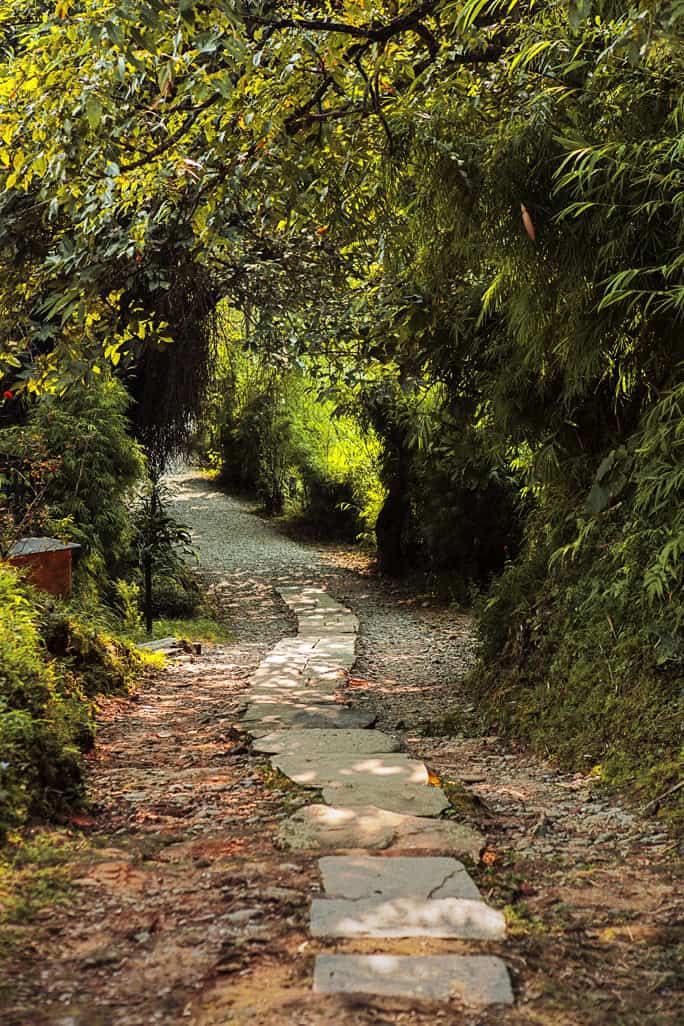
Grounds: The gardens and woodland areas are kept to natural biodiversity, only planted with indigenous and naturalised shrubbery.
The hilltop between the swimming pool and the main lodge is set aside as a natural Khar Bari, a field for traditional thatch grass. This retains natural land use patterns and is beneficial for bio-diversity. The wooded areas are managed with occasional and minimal selective thinning.
Erosion evasion: The appropriate planting and regular monitoring of the property ensures that everything possible is done to mitigate human-induced potential erosion risks. All storm-water run-off is controlled for the same reason.
The vegetable gardens are as much a nursery to encourage local farms to grow for the lodge, to expand its economic benefits in the community beyond direct employment –a key policy objective.
Conservation
Tiger Mountain Pokhara Lodge works closely with local partners, national, and international charities, emphasising community-based and -led organisations to develop and support local environmental enhancement projects.
The lodge has worked closely on:
The Shillinge Community Forestry Project:
Community Support Partnership: An active programme works with the local community to support locally-based and -led projects for community development.
“Personal choice and drive through understanding is inherently more sustainable than mechanical implementation of company rules” – > Marcus Cotton
First Aid: Although close to regional facilities in Pokhara, self-reliance for simple medical conditions and first aid issues are essential to not over-burden the city hospitals. To this end, the Lodge has a first aid facility, ambulance for emergency cases and have supported the local Nepal Red Cross branch to construct a meeting hall as a training and disaster-preparedness centre.
Medical support: Tiger Mountain Pokhara Lodge also provides logistic and management support at no cost to help families access the best available medical treatment. Staff and guests regularly support local families in difficulty, such as with medical cases, and also housing and education.
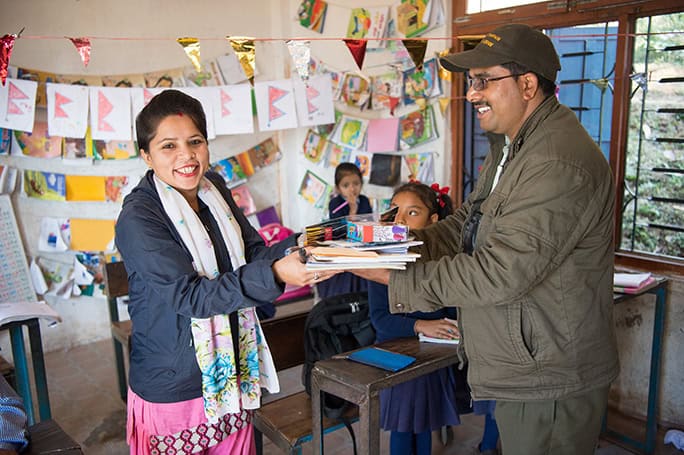
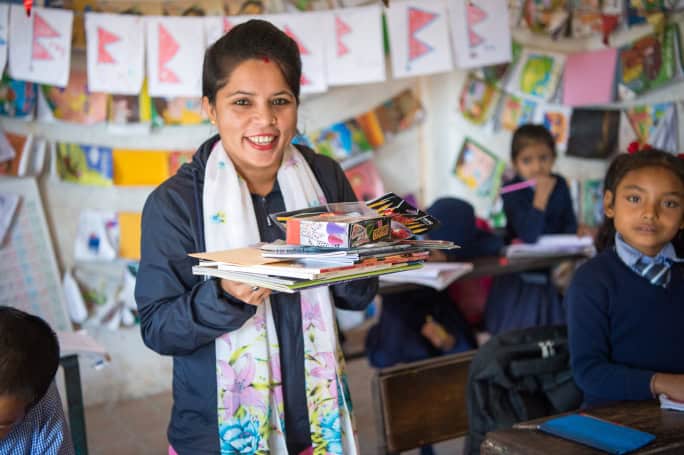
Primary and secondary education: Tiger Mountain Pokhara Lodge supports the local community’s schools, including the salary of one teacher (as the government budget cannot provide sufficient) and provision of teaching materials, books, paper and posters.
Generous guests over the years have helped build this rapport between the Lodge and schools. This has ultimately enabled classes to be taught to School Leaving Certificate level, a particular benefit for girl students as they can complete their education within the community, and facilitating a volunteer mentor programme to enhance the schools teachers’ own English and teaching-in-English language skills.
Staff support: The Lodge provides staff an education allowance to subsidise costs of up two children from kindergarten to School Leaving Certificate (approximately age 17).
Construction: The lodge has also enabled the rebuilding of Amar Jyoti Secondary School block beyond that available from the local government education budget, with improved desks, well rendered classrooms, blackboards and electricity.
Sponsorships: In addition, the Lodge manages the guest-funded sponsorship of various children from disadvantaged backgrounds who would otherwise not go to school, plus hosts study groups, government and non-government tours such as from Afghanistan, Mongolia, Tibet and Cambodia, keen to learn about the sustainable tourism development model at Tiger Mountain Pokhara Lodge.
Local families in difficulty are often supported by staff and guests, Such as Jibhakala Ranabhat, a single mother, whose house was uninhabitable, was built a new home with donations from staff and guests who also sponsor her two girls at school and nursing college. A boy with acute diabetes has his insulin needs funded by the company staff.
Tourism makes a major contribution to the Pokhara economy.
SDG 1: No Poverty: Provides employment and economic opportunities for the local community.
SDG 2: Zero Hunger: Prioritises local purchasing for food at fair prices, supporting local agriculture.
SDG 3: Good Health and Well-being: Offers 100% medical funding for employees and their families.
SDG 4: Quality Education: Supports local schools and provides education allowances for staff children.
SDG 5: Gender Equality: Actively seeks to employ women and individuals from disadvantaged groups.
SDG 6: Clean Water and Sanitation: Provided water access to local families and public taps for the community. All toilets have a shortened flush option and the majority of taps are fitted with aerators. Showers are fitted with Eco-camel showerheads where possible creating savings of 50%. Flow rates of all taps, showers and toilets are measured to work towards international best practice in water management.
SDG 7 Clean Energy: Mainly use hydropower-generated electricity from the national grid, plus solar power for water heating in some rooms
SDG 8: Decent Work and Economic Growth: Offers wages above the legal minimum and extensive employee benefits.
SDG 10: Reduced Inequalities: Promotes equal work opportunities and equal tip sharing among staff.
SDG 11: Sustainable Cities and Communities: Engages in community support partnerships and development projects.
SDG 12: Responsible Consumption and Production: Practices responsible, regenerative tourism and local sourcing, Travelife Gold certified. All waste is managed in an environmentally sound manner. Waste food is composted when suitable, eaten by neighbours’ cattle or by staff members.
SDG 13 Climate Action: The lodge is a lauch signatory of the Glasgow Declaration for Climate Action in Tourism and its reporting requirements and emission reduction targets.
SDG 15: Life on Land: Undertakes biodiversity monitoring projects and supports conservation efforts.
SDG 16: Peace, Justice, and Strong Institutions: Maintains a zero-tolerance approach to abuse, discrimination, and bribery.
SDG 17: Partnerships for the Goals: Collaborates with various sustainability organizations and certification bodies.
Fly to Kathmandu, Nepal. From Kathmandu, travel to Pokara via
Domestic flight (domestic terminal is connected to the International airport in KTM)
Private ground transfers from Kathmandu
Tourist bus or local bus
Private car
Such a beautiful place to stay! Warmly welcomed by Hari after a very bumpy road trip from Kathmandu. Tiger Mountain has clean and comfortable cottages - all discreetly nestled in the well tended grounds. The flora and fauna was abundant. The tranquility so welcome after the hustle and bustle of the city. The views of the Himalayas on a clear day were stunning. The service from all staff was consistently excellent. And the food of the highest quality. Lots of ingredients locally sourced from nearby villages or grown in the grounds. (The toffee and banana pudding and the ginger ice cream were absolutely delicious!) The Lodge offers guided walks of various lengths and for different abilities. Some FOC, some payable. We opted for the village walk, which was excellent and our guide was so knowledgeable about everything we saw. He really is passionate about his subject and was so interesting to walk with. We were very impressed! Tiger Mountain strives to be a sustainable Lodge with good working conditions and rewards for staff which is commendable and hopefully will encourage more travellers to stay. We throughly recommend it.

Restorative Retreat in the Mountains: I cannot say enough good things about our stay at Tiger Mountain. When coming to Pokhara, we debated about whether to stay by the lake, or several other venues in the hills around Pokhara, but kept coming back to Tiger Mountain and thinking that while it was by far the most expensive, it would be a special experience. ...The views from the main lodge, the pool, the grounds, and our room were priceless. 4 Sunrise and sundown were especially spectacular, and you receive a wake up call and tea or coffee on your porch to take it all in. The food was fantastic... The decor is really lovely in the main lodge and in the rooms with items from Nepal as well as other countries... We took several walks with a local guide, ranging from 3-7 hours and saw many views of the mountains, local villages, and so many trees, birds and butterflies... We went down to Phewa Lake one afternoon, which was nice, but the refuge of Tiger Mountain is so wonderful we really would not need to leave the area for several days. After the hustle and bustle of Kathmandu, or even the traffic of Pokhara, being in the mountains was the respite we needed. The staff are fantastic - we felt very pampered. Many of the staff have been there from the beginning, some of whom helped build the lodge. If you are in Nepal, we highly recommend visiting Tiger Mountain and experiencing a bit of luxurious tranquility and supporting this special regenerative tourism experience.
2022 The Long Run Member
2021 UNTO Global Tourism Plastics Initiative – Launch signatory
2021 The Glasgow Declaration – Launch Partner
2017-’19-’21-’24-’26 Travelife Gold




Enquire to find out what’s on offer for your trip dates, ensuring you get the best deals and availability tailored to your travel plans. Don’t miss out on exclusive promotions and packages designed to enhance your experience.