

Universal Education: How Tourism Can Help?
Despite years of progress in access to education and enrolments, particularly for girls, it has been too slow: about 260 million children were still out of school in 2018 — nearly one fifth of the global population in that age group — worsening through Covid to 272 million in 2025 (UNESCO’s Global Education Monitoring). 1 in 5 remain estimated to drop out and 2 in 5 never set foot in a classroom (UN Sustainable Development, 2016).
For this reason,‘Quality Education’ is Sustainable Development Goal #4 of the 17 Global Goals of the 2030 Agenda for Sustainable Development:
SDG #4 “Quality Education: Ensure inclusive and equitable quality education and promote lifelong opportunities for all”.
The goal aims for all girls and boys to complete free primary and secondary schooling by 2030, to provide equal access to affordable technical and vocational education and training (TVET), to eliminate gender and wealth disparities, and achieve universal access to a quality higher education and lifelong learning opportunities.
Sustainable Development Goal 4 Quality Education: Progress
- 754 million adults (aged 15 and above) worldwide still lack basic literacy skills, two-thirds of whom are women (UNESCO, 2025)
-
17%: the proportion of children out of primary and secondary school (2025), having declined from 26% in 2000 to 19% in 2010. Enrolment in primary alone reached 91% (2022), however ~57 million primary-aged children remain out of school, mostly sub-Saharan Africa (UNDP), disproportionately girls (UN).
- 272 million children and youth are out of school globally, with only ~60% of young people completing upper secondary education expected in 2030. even before the Covid crisis.
- 122 million girls are out of school, including 34 million of primary school age and 87 million of secondary school age;
-
1 in 4 girls are not in school in developing countries (UNDP): In countries affected by fragility, conflict, and poverty, girls face even starker exclusion, often 2.5 times more likely to be out of school than boys.
-
More than half of children that have not enrolled in school live in sub-Saharan Africa (UNESCO, 2024); where 202 million children and adolescents, nearly 90% children aged ~6-14 have not achieved the minimum proficiency in reading and mathematics expected.
- 241 million children/81% of Central and Southern Asia children not reaching minimum learning levels, ranks second.
-
617 million youth worldwide lack basic mathematics and literacy skills: 60% worldwide; 387 million of primary school-age (56%) and 230 million lower secondary school-age adolescents (61%) (UNESCO Institute for Statistics – UIS). Importantly, two-thirds are actually in school but are not acquiring skills.
-
19%: children with disabilities less likely to achieve minimum proficiency in reading, in 10 low- and middle-income countries (UNESCO GEMR, 2020)
- 14.8 million school-aged refugee children globally: Nearly half of these refugee children—over 7 million—are out of school (2022-2023): this number has more than doubled since 2017’s 4 million refugee children reported out of school, driven by conflicts, displacement crises, and refugee challenges.
-
34%: children’s school completion rate in low-income countries in the poorest 20% of households. it s 97% in the richest 20% of households (UNStats)
-
190+ countries impacted more than 91% of students worldwide with the temporary closure of schools during the Covid-19 pandemic, exacerbating inequalities in education. Never before have so many children been out of school at the same time, disrupting learning and lives: 1.6 billion by April 2020.
- ~51% of sampled countries reduced education spending in 2020. Lower-income countries were particularly affected, with 41% reducing education spending by an average of 13.5% after the pandemic’s onset, reduced again in 2022. High-income countries maintained or increased education spending.
- 500 million children and youth / 1/5th countries with school closures didn’t access distance learning solutions due to lack of access to computers and the Internet at home, and low computer-literacy skills, putting already marginalized students at a further disadvantage.
-
- In 2019, ~87% of households in Europe had Internet access at home, compared with 18% of those in Africa; now 94% of EU households (Eurostat)
-
78% of European households owned a computer compared with 11% in Africa.
-
In about half of the 86 countries for which data is available, less than half of the population possessed basic computer skills.
- ~407 million children worldwide received school meals in 2022: approximately one in four primary and secondary school-age children, with coverage is growing, expanded from 379 million in 2020.
-
- School meal programs serve as a critical source of nutrition for children, especially in vulnerable communities, supporting both educational attendance and food security. Reach varies widely: Latin America and the Caribbean have the highest coverage at ~51%, followed by Europe, Central Asia, and North America at ~42%, with sub-Saharan Africa the lowest at ~19%.
- Many schools lack other basic resources: 11% of upper secondary schools lack electricity, 15% lack basic drinking water, 35% primary / 29% lower and 24% upper secondary schools lack basic handwashing facilities; 26% lack computers and 30% have no Internet access: Those in sub-Saharan Africa are the most disadvantaged (UN Stats)
Especially for the most vulnerable and marginalised, school is not only a place to learn but also a safe place, removed from violence, where they can receive free meals, and health and nutrition services such as vaccinations. Without school, many children go hungry, which also threatens their immune systems and their capacity to cope with disease.
Previous crises show, school closures and economic downturn may also increase rates of violence against children, child labour (working to compensate for lost family income), child marriage and early pregnancies as reduced productivity of working parents poses challenges to family and society.
SDG4, Education: Challenges
Education is an issue commonly addressed by companies’ social responsibility actions to advance the UN goals, demonstrating that the business community views education as a top global development priority, and helping reduce its reliance on global aid. Measuring learning achievement, starting in the early grades, will help to identify where schools are failing to meet their commitments to children and to formulate appropriate remedial action.
The tourism industry can be an especially valuable partner and incentive to improve education, located in the same local environment and offering the potential for jobs, training and investment.
-
One of the founding principles of Lapa Rios in Costa Rica was in supporting education as a long-term empowerment tool to sustain isolated wilderness regions, wanting to eliminate the need for people to leave rural communities for education or professional opportunities.
-
And in South Africa, Grootbos have offered a formal course in horticulture, guiding and hospitality since 2003 at their Green Futures College, giving vocational skills to community youth to enable change to their lives: Over 300 young people have graduated, with more than 90% of graduates finding employment on completion of the course, 40% with the lodge itself. In addition, they are working with working with 6 early childhood development centres reaching over 200 children per annum.
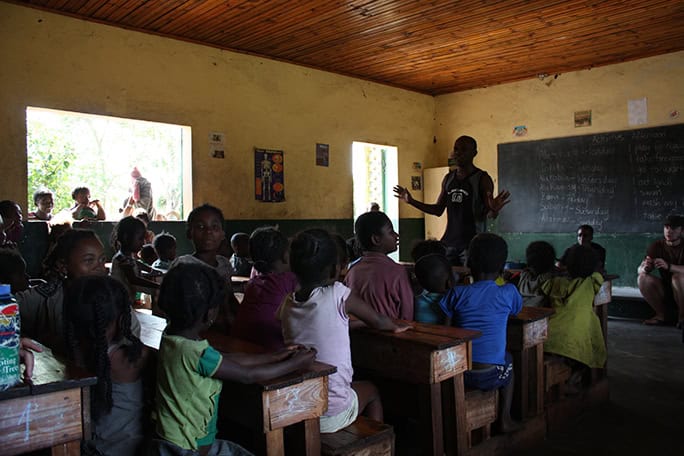
Infrastructure: Limited state funding for education sees minimal government-provided support. Children often have to walk many miles to schools which are vastly over-subscribed and in disrepair, studying all day lacking even the most basic of furniture with uncomfortable and inadequate facilities and equipment.
-
SEED Madagascar work with local government and communities to build new schools, repair existing buildings, provide furniture and facilities, and support teachers. Once construction is complete, each community takes on responsibility for ongoing maintenance of the buildings with SEED’s support to ensure the benefits are felt for years.
-
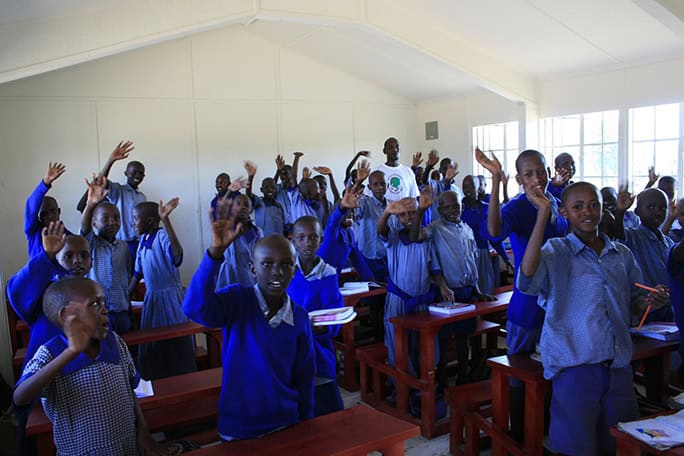
When Lapa Rios Ecolodge was built in 1992, the local people asked for help to build a primary school, requiring raising $45,000 for a pre-fab kit of two classrooms, a dining hall, a lavatory with flush toilets, and a teacher’s house. While raising the funds, a taxi-truck was hired to take the children to the primary school in Puerto Jiménez every day, until it was finished in 1993. You can still support the primary school when you holiday at Lapa Rios.
-
Through your stays at Campi ya Kanzi, The Maasai Wilderness Conservation Trust supports education for thousands of children in the area through multiple primary schools and secondary schools on the Kuku Group Ranch, with ongoing investment in school infrastructure, teachers’ salaries, school supplies, and scholarships, such as
-
constructing 8 classrooms, a 2-bedroom head teacher’s house, a modern library complete with books and computers, piped water and solar power for Iltilal Primary School’s 1000 children.
-
the Kanzi Academy supports the most gifted students from all over Kuku Group Ranch to board and study to develop future community leaders.
-
-
In Morocco, the Village Association helped construct a school for 80 children in an outlying valley, where distance would otherwise make education inaccessible. Education for All charity supports hundreds of girls to overcome logistic, economic, and social barriers, to break cycles of poverty and illiteracy.
Teaching staff: Round the world, there are low numbers of paid teachers, and almost non-existent teacher training. Nearly 26 million new primary school teachers are required worldwide by 2030 to achieve universal primary education, and the demand for all levels is about 44 million teachers. Africa faces the greatest challenges in this regard, with nearly 7 in 10 countries experiencing acute shortages of trained teachers with just 64% trained at primary level and 50% trained at secondary level, and needing around 15 million new teachers by 2030.
-
In Nepal, where education IS social security, guest support has enabled Tiger Mountain Pokhara Lodge to provide the salary of one teacher, teaching materials, the rebuilding of the secondary school block with improved facilities and sponsorship for pupils and staff’s children. This has enabled classes to be taught to School Leaving Certificate level, particularly beneficial for female students to complete education within the community, and a volunteer mentor programme for the schools teachers’ own English teaching skills.
-
The Maasai Wilderness Conservation Trust have employed 56 certified teachers and 12 school support staff in 22 schools within the Chyulu Hills ecosystem, with over 8000 students and a scholarship program for 47 students thus far, as well as providing school supplies and support for extra-curricular activities, school clubs and sports clubs. Maasai elders are also employed to assure Maasai lore is transmitted to pupils in school. Support their initiatives with a stay at Campi Ya Kanzi.
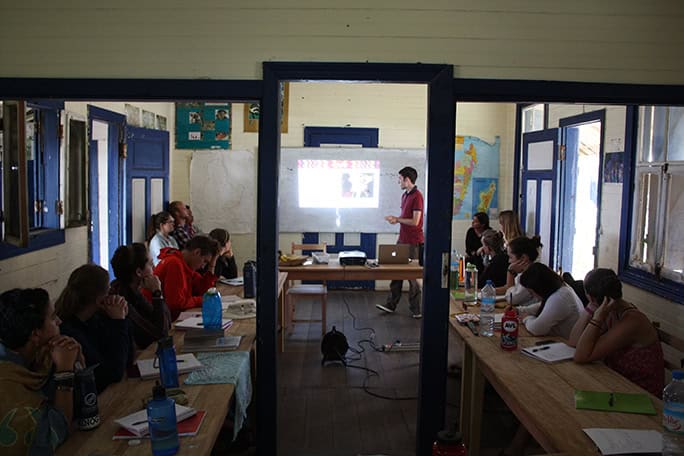
Literacy: At the end of primary school, children should be able to read and write and to understand and use basic concepts in mathematics.
Some 754 million adults worldwide are illiterate, most of whom – around two-thirds – are women, with approximately 50% in South Asia, and 25% in sub-Saharan Africa (UIS). Global adult literacy rate now stands at around 86.3%, with male literacy at about 90% and female literacy at about 82.7%.
Language: Often English education is very limited due to a number of the above reasons and a lack of skilled teachers, negatively impacting students’ chances of learning and progressing on to further education and employment, for which English may be a prerequisite. A lack of English language skills can lead to people and places being effectively cut off from national and international trade routes and development opportunities.
-
In Madagascar, SEED aim to improve the English skills for trade amongst the local Chamber of Commerce businesses and their own NGO staff with business and job focused English lessons.
Tourism’s importance to national and local economies (usually in the top 3 industries for the Least Developed Countries), makes the English language an extremely valuable skill all over the world, and to international business as a whole as the world’s global language.
The use of digital technology, often widely accessible in areas of poverty, is also often conducted in English. (More people have access to a mobile phone than a toilet – United Nations, 2013). This not only provides an opportunity for developing and synthesising personal and business use vocabulary, but also new platforms to capitalise on to enhance English education provision through media.
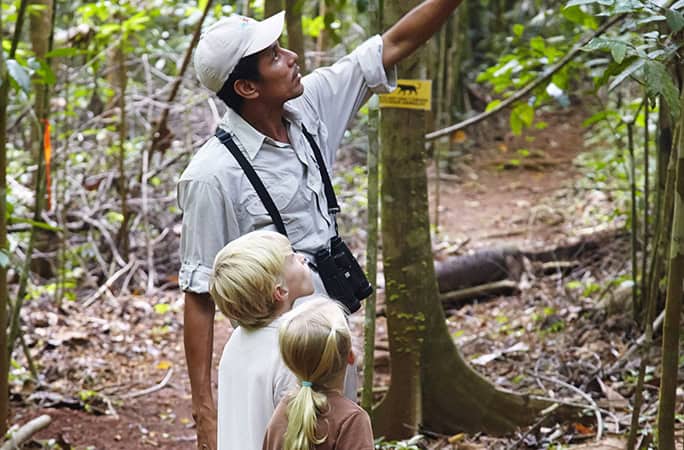
Inclusiveness: The tourism sector can provide incentives to further invest in education and labour mobility, especially inclusive of youth, women, senior citizens, indigenous peoples & those with special needs, also helping teach values of tolerance, peace, global exchange and citizenship. A well-trained and skilful workforce is crucial for tourism to prosper.
-
Lapa Rios in Costa Rica found their construction of the local primary school and community education wasn’t just about reading and writing, but also conveying new ideals like sustainability and building self-esteem. So they became a school for everyone, helping support a community around the idea of conserving the rainforest, as well as educating guests. Now the Lapa Rios Reserve can only ever be used for educational purposes legally, conserved as it is in perpetuity.
-
Tiger Mountain Pokhara Lodge provides staff an education allowance to subsidise costs of up to two children from kindergarten to School Leaving Certificate age 17.
-
In Morocco, the Kasbah du Toubkal’s costs include contribution to Education for All charity to enables young girls from local villages to pursue further education by providing scholarships and high quality boarding houses, where it would normally be not only cost-prohibitive but also socially unacceptable for girls to be away from family. Now disadvantaged girls 12-18 can complete secondary school and university.
-
In Indonesia, Nikoi Island focuses on great investment in staff training in various professional skills such as barista, scuba, nature, sailing, windsurfing, tennis, cooking. As a result, Nikoi has a very high staff retention and loyalty, which translates to great guest experience of experienced staff. Go yourself and see >>
-
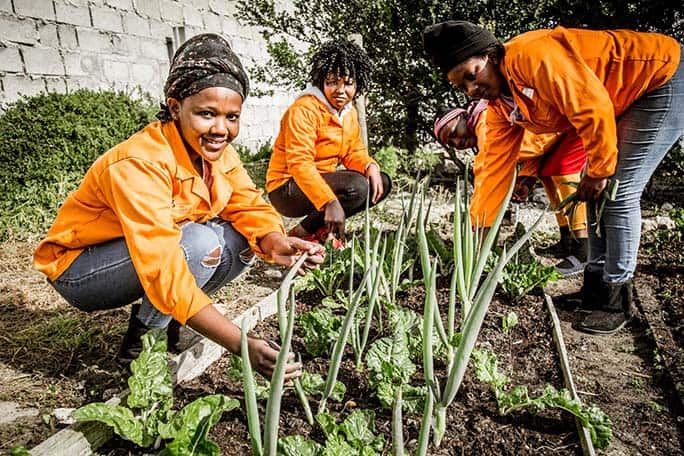
Grootbos Private Nature Reserve’s organic farm, Siyakhula meaning ‘growing the future’ provides entrepreneurship and enterprise development skills and income for women from the nearby township, as well as supporting food security.
Education, Tourism & Other Global Goals: Linkages
Goal 1 End poverty: Children from the poorest 20 per cent of households are nearly four times more likely to be out of school than those of the richest households. Becoming trapped in a cycle of poverty can result in limited opportunities for employment or income generation.
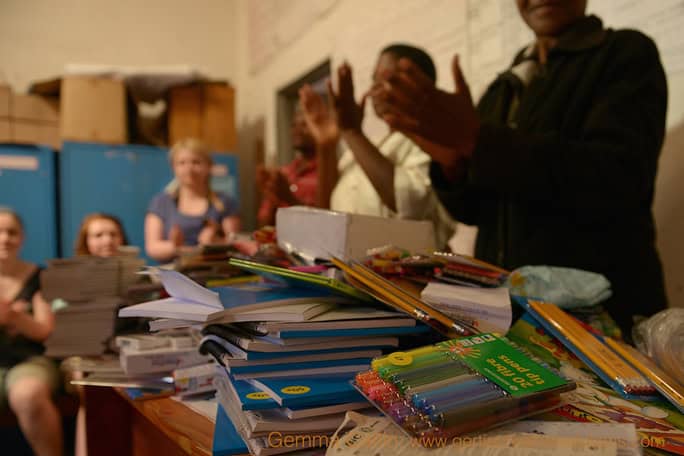
Helping people out of poverty can increase access to education, and increased access to education can help people out of poverty.
-
In Malawi, RSC works in partnership with inspiring community initiatives offering immersive learning opportunities for individuals, students & businesses to gain an insight into and thus supporting key global challenges facing rural communities in Africa.
Hands-on participatory workshops with practical subject matter include Education and Local Economic Development, and how they inter-relate with Fair Trade, Environment, Healthcare, Water, Sustainable Agriculture and Climate Change. Join a workshop >>
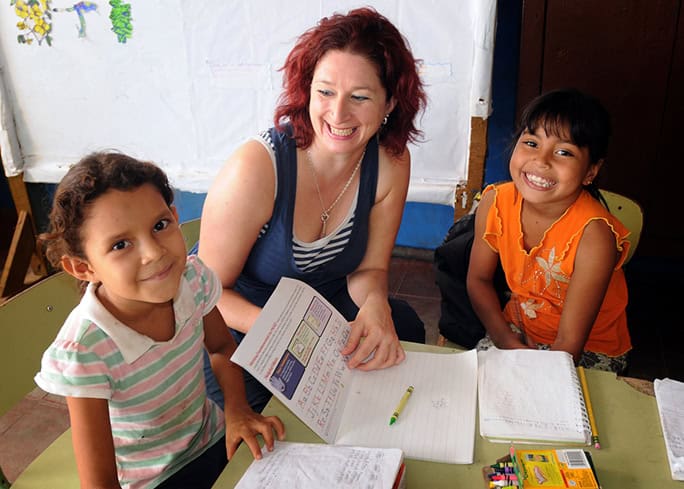
Goal 3 Health & well-being: Education and training of medical professionals is essential for building effective health systems, in complement to consumer behaviour-change based education programmes to be effective in addressing the risks associated with both infectious and non-communicable diseases.
-
Jicaro Island Ecolodge in Nicaragua supports local community health through the local school. They’ve decorated classrooms, upgraded equipment, and helped make the school usable after dark with solar power for adult education and as a medical centre. Vitally, they have installed a filtration system to provide safe drinking water for the school and 600-strong community, rather than their drinking lake water, and have created “A glass of milk” initiative to fight malnutrition.
Goal 5 Gender equality: The gender gap in access to education remains pronounced, particularly in lower-income, fragile, and conflict-affected settings, with
girls are 2.5 x more likely to be out of school than boys at secondary level, with secondary education enrollment showing ratios like 11 girls for every 100 boys in some contexts. Accessing education helps women access employment and incomes, helping them achieve greater economic equality. Increased educational attainment accounts for about 50% of economic growth in OECD countries over the past 50 years, over half of which is due to girls experiencing greater access to education (2025). Overall, education empowers women to take a more active role in society.
-
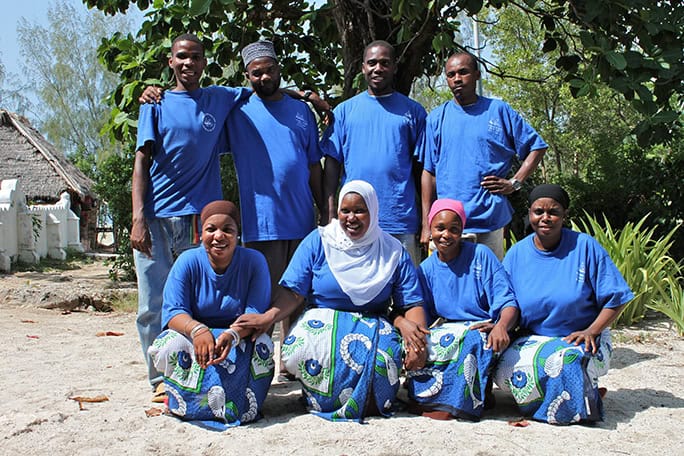
At Chumbe Island Coral Park, women are strongly supported to bring gender equality, and currently form 40% of the workforce. A women’s cooperative also produces all the organic soaps used in the banda bungalows. Visit Chumbe >
Goal 6 Clean water and sanitation
-
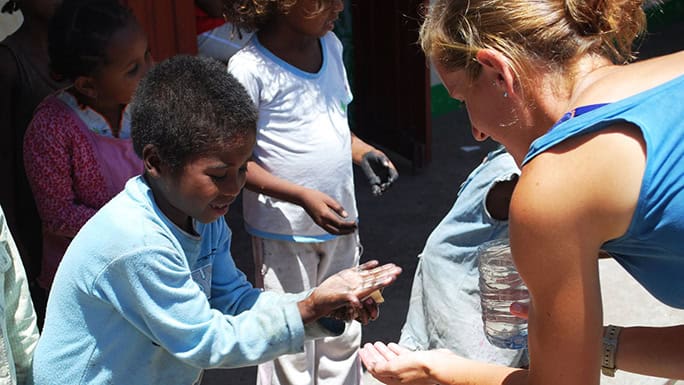
SEED Madagascar’s WASH programme has delivered water, sanitation, and hygiene (WASH) educational lessons to 6,567 primary school children and family knowledge sharing sessions.
Goal 8 Decent work and economic growth: Education and skills development equip people for productive and sustained employment and entrepreneurship. Employment and entrepreneurship are, in turn, core drivers of economic growth.
Lifelong learning through sustainable development also supports global citizenship, which can help address overarching society requirements such as ‘living together’ and the ‘relationship with nature’.
-
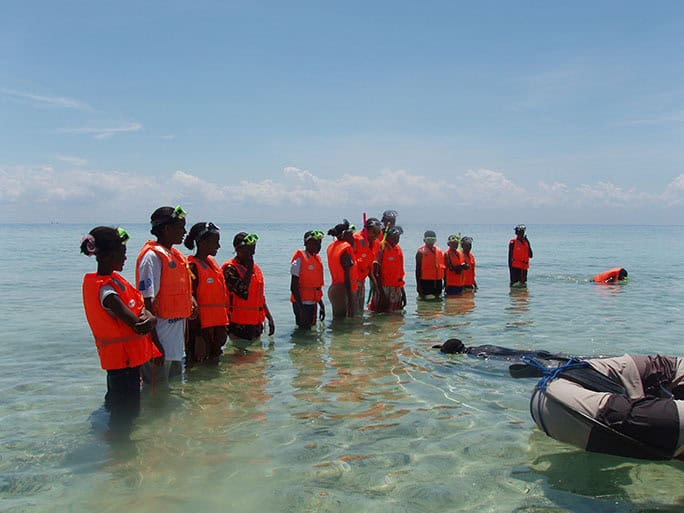
An original mission in setting up Chumbe Island Coral Park was free marine conservation education. This began with lobbying the government for support and understanding for the importance of creating a Marine Protected Area; continued with training fishermen away from dynamite fishing into new livelihoods as local guides and powerful guardians and advocates for the natural world; to teaching visitors and local children through Environmental Education programmes and practical lessons how to swim and snorkel.
-
By mid-2015, Chumbe had taught over 6,500 schoolchildren, 1,100 teachers and 700 community members, helped create conservation awareness and support amongst government officials, and involved all staff in learning the basics of reef ecology, forest ecology, English language, ecotourism and eco-technology. These education initiatives have been formally endorsed by the Zanzibar Ministry of Education since 2000 and continue to be a core element of conservation.

Goal 12 Responsible consumption and production: Education plays an important role play in awareness of how to live more sustainable lifestyles, such as reducing unnecessary consumption and waste.
-
There’s perhaps no better way to raise awareness of waste and learn about sustainable lifestyle, marine conservation and exploration, than by witnessing the plastic debris that accumulates on beaches and in the seas’ gyres (the centres of oceanic currents). Take an ocean conservation sailing trip >
Goal 13 Climate action: Education is needed for awareness-raising and capacity-building to help mitigate and adapt to climate change, and how it inter-relates to initiatives throughout the all the SDGs.
Goals 14 & 15 Life below water and Life on land
-
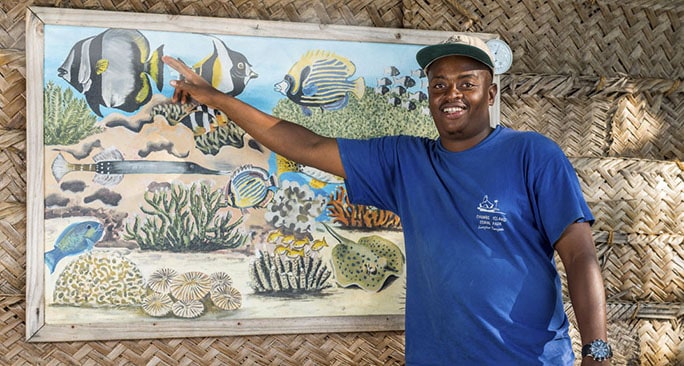
In 2007, Chumbe Island Coral Park expanded its Environmental Education programme with the Chumbe Challenge Environment Award, providing teaching material for student environmental clubs to work on local environmental issues once they have returned from an educational field excursion to Chumbe Island, such as waste management and climate change mitigation projects such as composting, tree and mangrove planting activities.
-
Chumbe has since taken its educational efforts nationwide by creating a coral reef module for local school circula in collaboration with the Ministry of Education, a locally developed guidebook called ”Environmental Sustainability in Zanzibar” and “Each one – teach one: WASTE in Zanzibar” to encourage observation and enquiry into waste related environmental issues that are meaningful to all of us, wherever we are!
Goal 16 – Peace and justice: Education is a strong driver of social development in post-conflict settings.