

Recommended duration
Price per night per adult
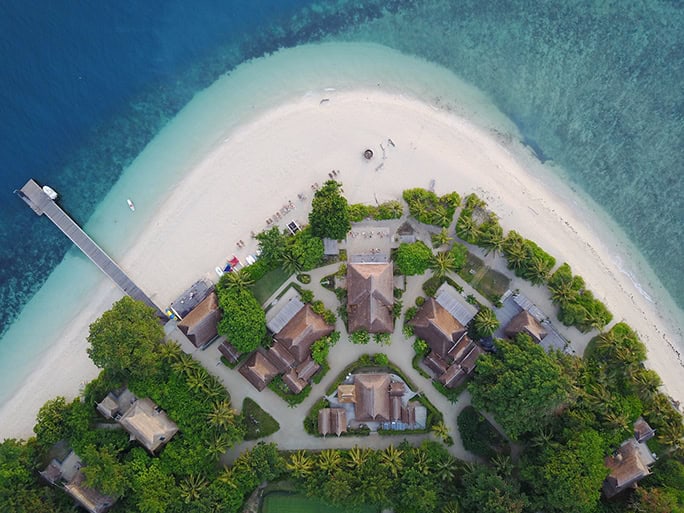
Nikoi Island is a 15 hectare private island in the Indonesian Riau Archipelago, 8km off Bintan, 37 km south-east from Singapore: Total travel time from Singapore ~2.5 hours. (NB. There is also a time difference, with Bintan one hour behind Singapore).
In an enclave of tropical islands, coral reefs and equatorial rainforest, it was here founder Andrew Dixon would bring his young family to explore.
“There’s no signs, rules and set timings, laid-back island life fits to the guests. And sustainability of nature, the environment and local community are at Nikoi’s heart, an understated priority and core to the experience.” — Andrew Dixon, Co-Founder, Nikoi Island
Luxurious eco-chic driftwood villas blend seamlessly with nature & stunning views
Conservation: From waste management to energy, wildlife and habitats to food miles
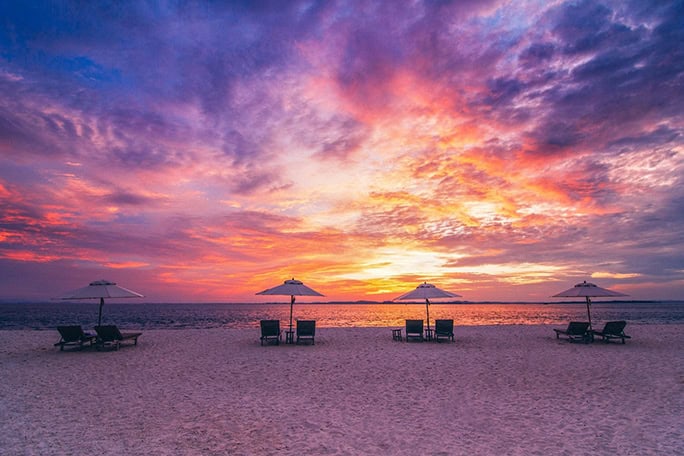
Natural Beauty: Pristine beaches and vibrant coral reefs in a tropical paradise, perfect relaxation and adventure.
Community: Supporting local culture & education to empower & improve livelihoods
Super sustainable: Eco-friendly design, construction, supply chain & environment
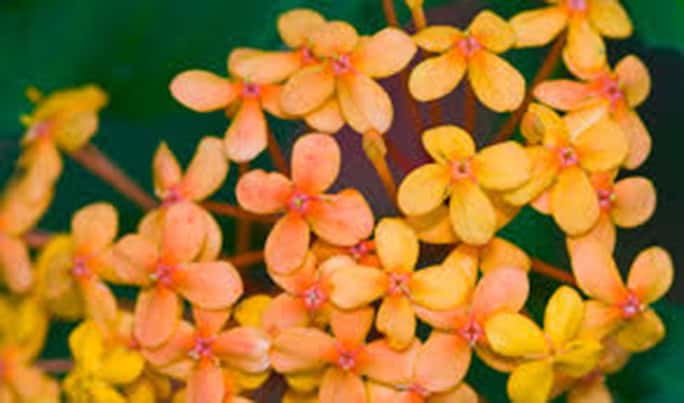
The name Nikoi is a local variation of the Hokkein word for papaya (paw paw) – a fruit that was originally grown on the island. There is little recorded history but shards of pottery and coins have been dug up, suggesting the island may have served as a trading post in the early 20th century, strategically positioned along the trade wind route between China and India.
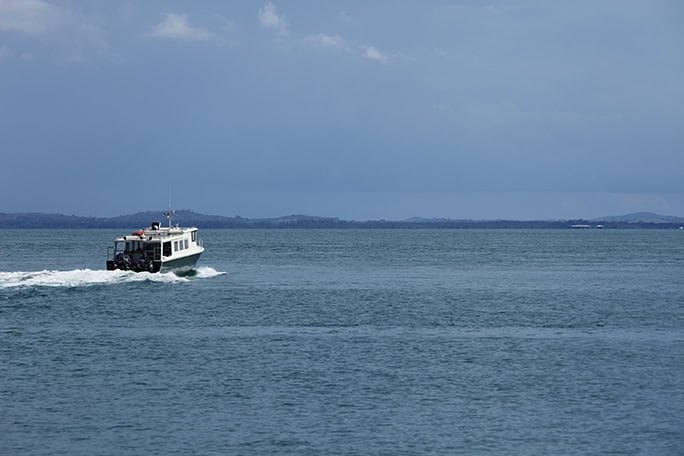
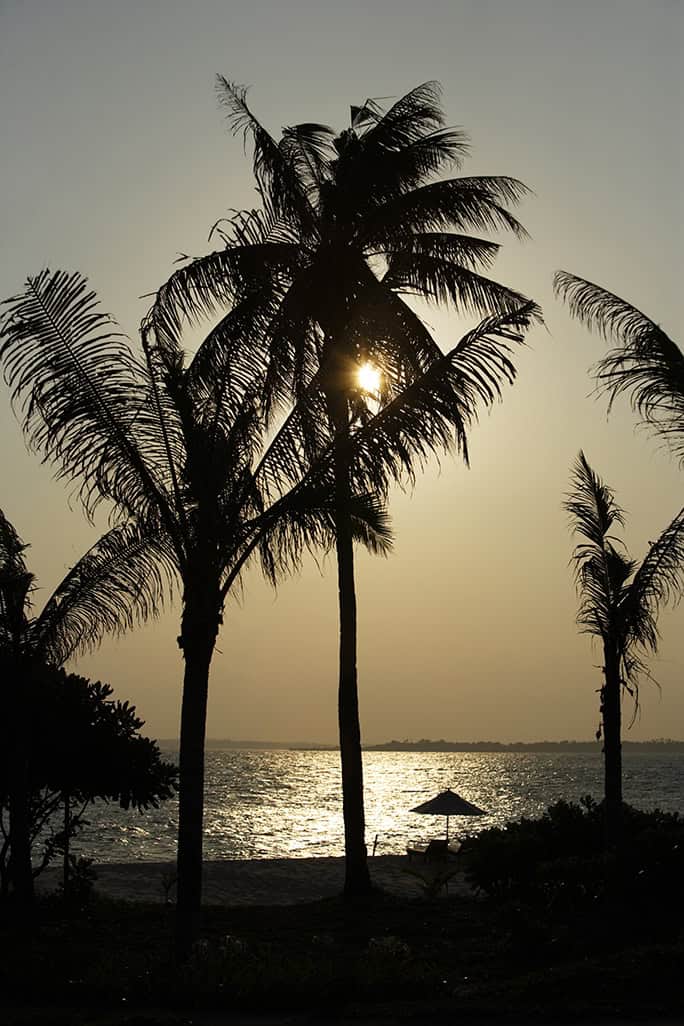
From the jetty on Bintan, via speed boat trip, to pitching up on the sand for a stay on this private island for the weekend, this is island fantasy in reality: Two thirds is preserved as a sanctuary and covered in virgin rainforest with a hill in the centre of the island. You can walk all around – half the circumference is beautiful sandy beach, the other half stony bluff, probably only watched lazily by harmless monitor lizards.
This is luxury of indulgence in a unique place, based on back-to-nature escape, space and privacy, such exclusivity meaning it’s both a romantic dream for couples and regularly taken over in its entirety by groups of friends or families.
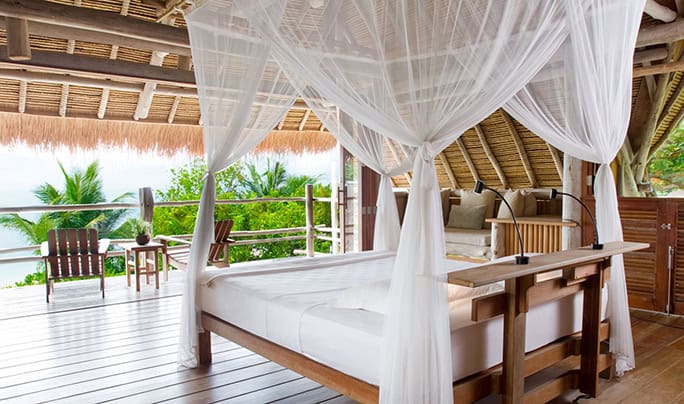
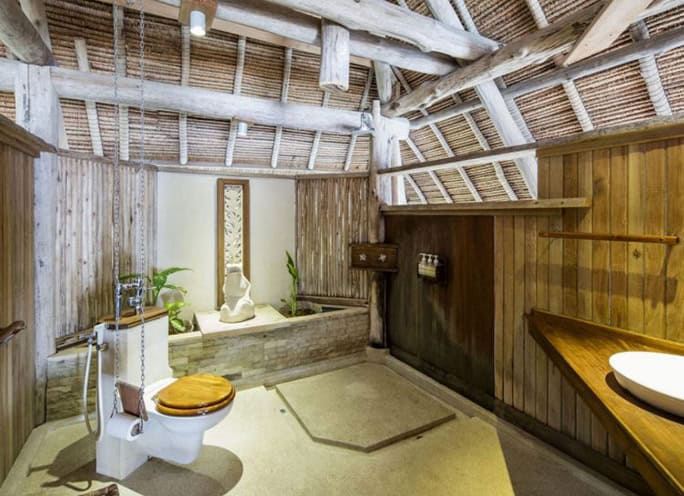
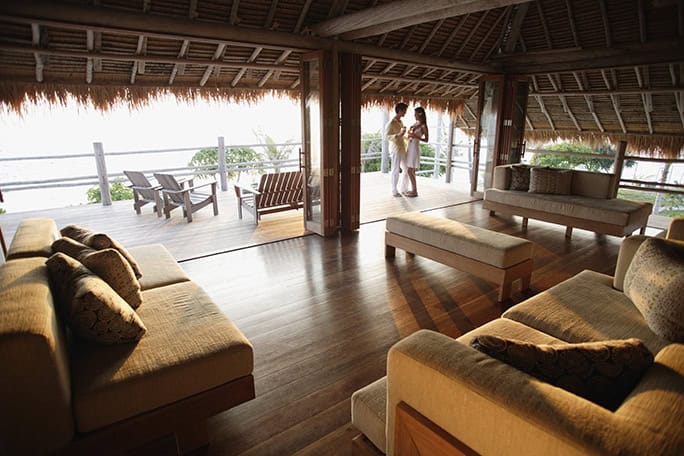
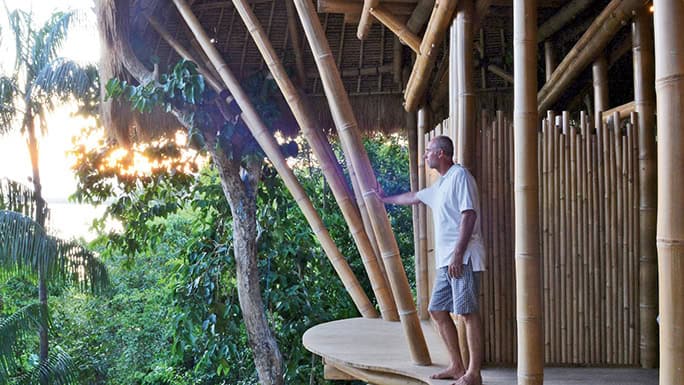
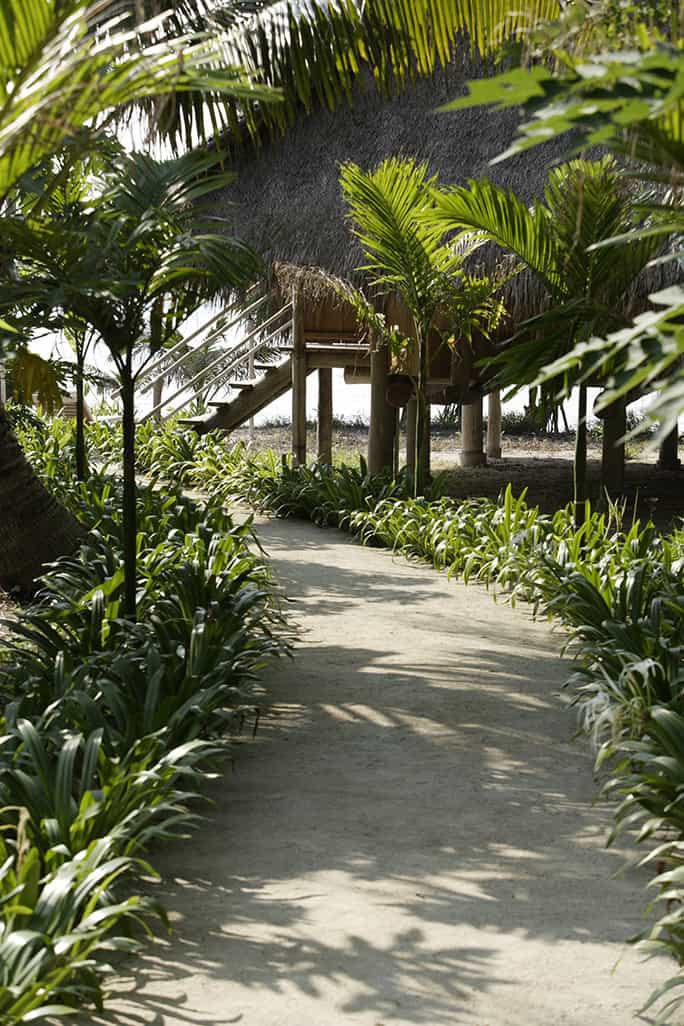
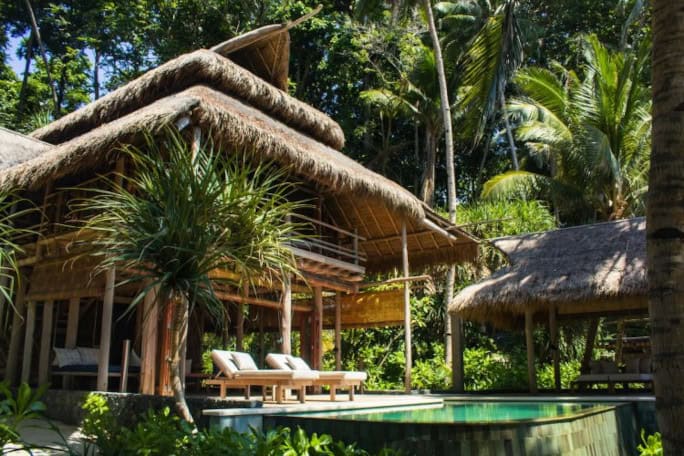
The design of the beach houses reflects both traditional Indonesian architecture and contemporary form whilst using driftwood and ‘alang alang’ roofing to blend into the environment.
The 18 villas of various sizes were all constructed solely from sustainably sourced driftwood, likewise into furniture all made on site, unfinished wherever practical or just finished with natural oils and waxes.
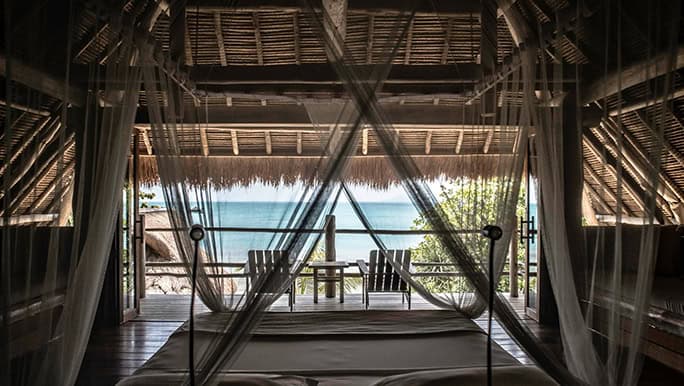
The villas are designed to encourage air-flow with master bedrooms raised off the ground and vaulted ceilings, so as to avoid air conditioning and minimise energy consumption and noise pollution.
The double layered roof design promotes natural ventilation, a cooling system enhanced by the use of overhead fans and the siting of each beach house just metres from the beach. Ocean breezes and the unique cooling effect of the landmass provide a natural air-con.
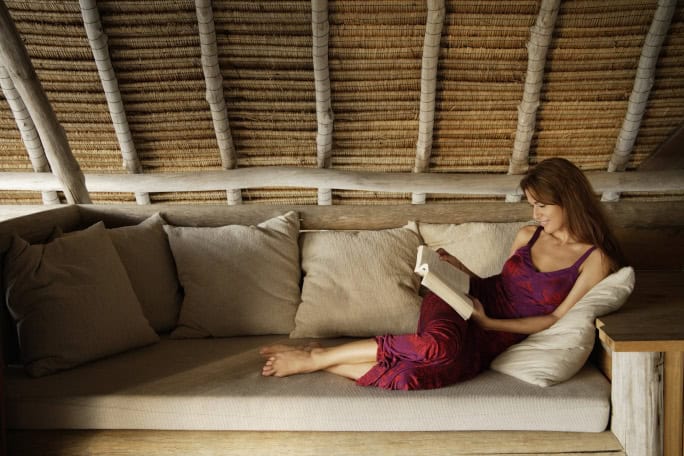
Villas have master bedrooms with ensuite bathroom upstairs, and vary in extra bedrooms, bunkrooms and facilities including downstairs private pools, open-air lounges complete with daybeds, sun loungers and a balé for massages.
There’s no televisions, dvds, telephones or mini bar fridges, and fans keep guests cool at night with low voltage LED or CFL lighting, with minimal light along pathways so as not to disorientate nightlife such as nesting turtles.
Solar panels provide hot water and create an excess of energy for battery storage so that the generators can even be switched off 12 hours per day.
The voltage on the island is 240V and power is available 24 hours a day. Electrical sockets are the three square pin type commonly found in Singapore, Hong Kong and the UK.
See the different villa ‘Options to book‘ below.
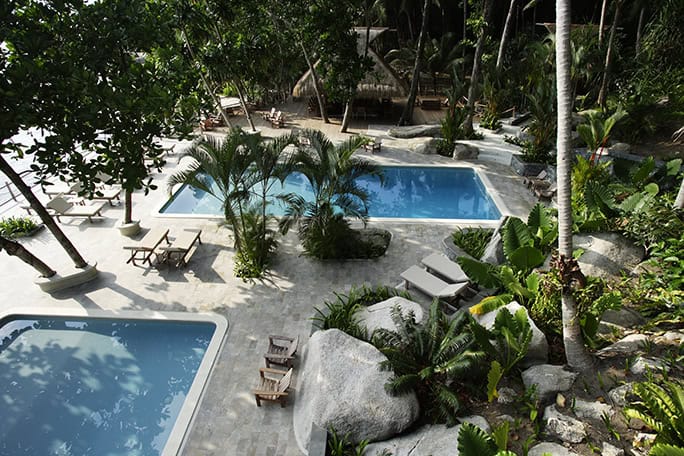
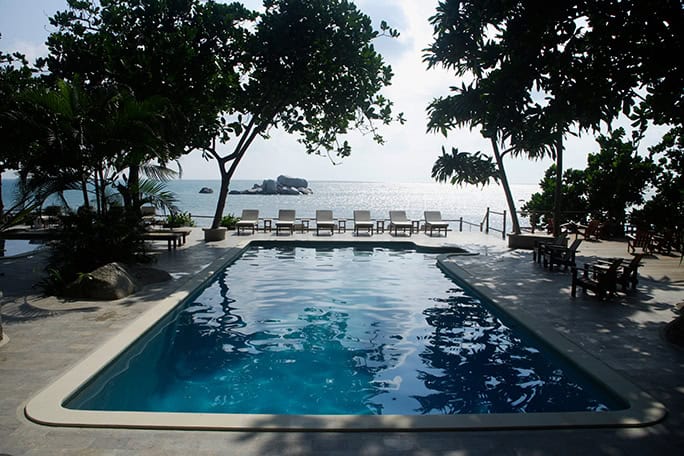
A spectacular pool has been built in amongst the granite boulders on the north-eastern side of the island with a bar serving drinks, a bathroom and plenty of deck chairs in both the shade and the sun. There is also a paddling pool for infants. NB. No lifeguards.
A dedicated spa is set up in three large safari tents near the pool. All natural products are used including virgin coconut oil. Available treatments include facials, scrubs, manicures, pedicures and massages – shorter, longer or for kids (booking in advance recommended).
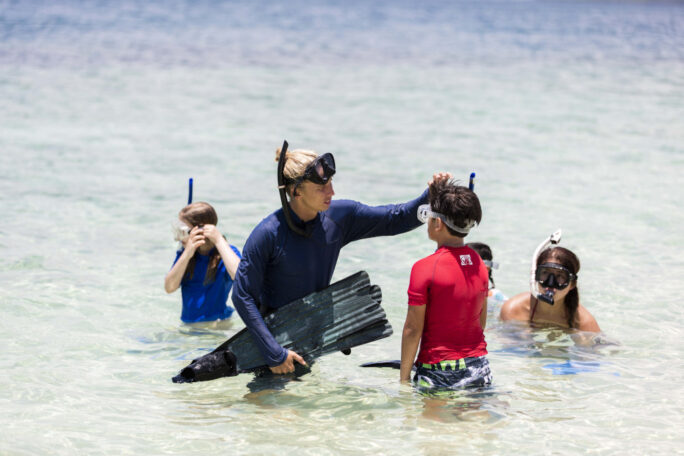
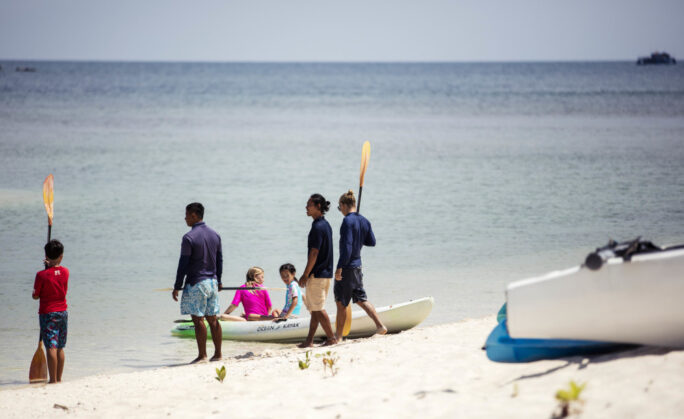
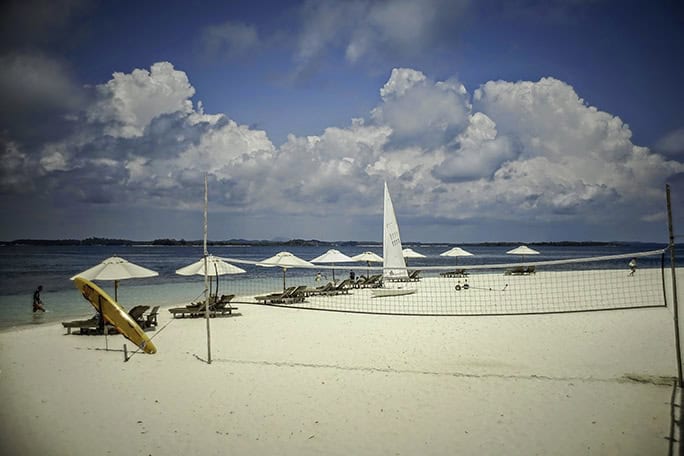
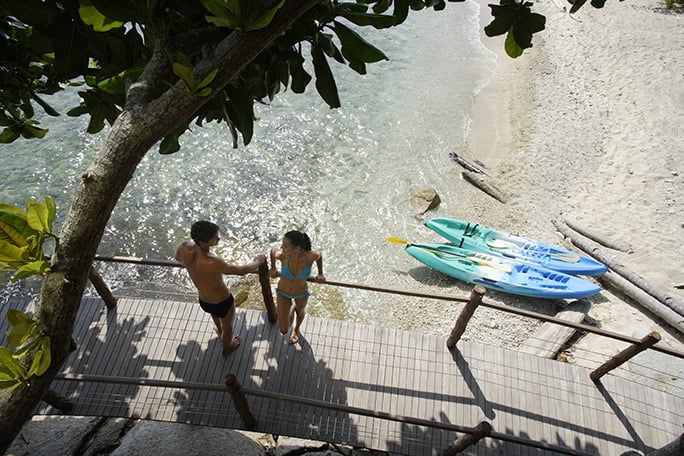
Sports equipment including for watersports (snorkelling, kayaking, sailing lasers) and life jackets is generally provided free of charge if returned intact.
Charges apply for the use of the catamarans, wing surfer, advanced level windsurfing boards, Epic racing kayak and diving equipment.
Movie screenings are available in the kids club area, and with prior notice, significant sporting events can be screened if they are on Indovision (Indonesian Satellite TV).
There is excellent mobile phone reception on the island should you wish to be contactable. Free wifi is also available in all of the guest rooms and public areas.
The voltage on the island is 240V and power is available 24 hours a day. Electrical sockets are the three square pin type commonly found in Singapore, Hong Kong and the UK.
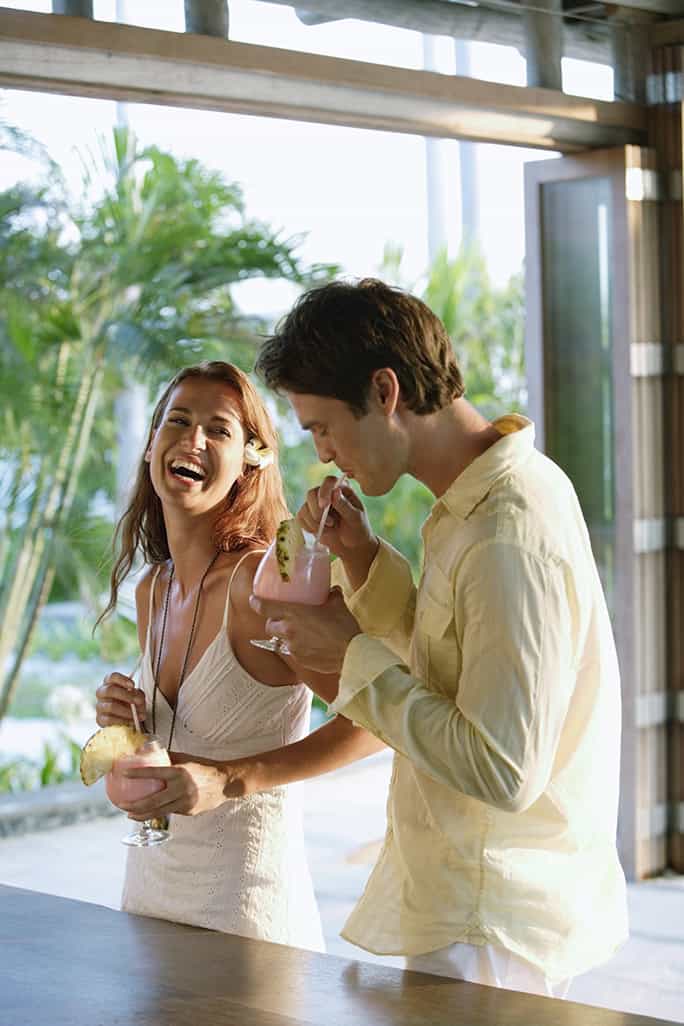
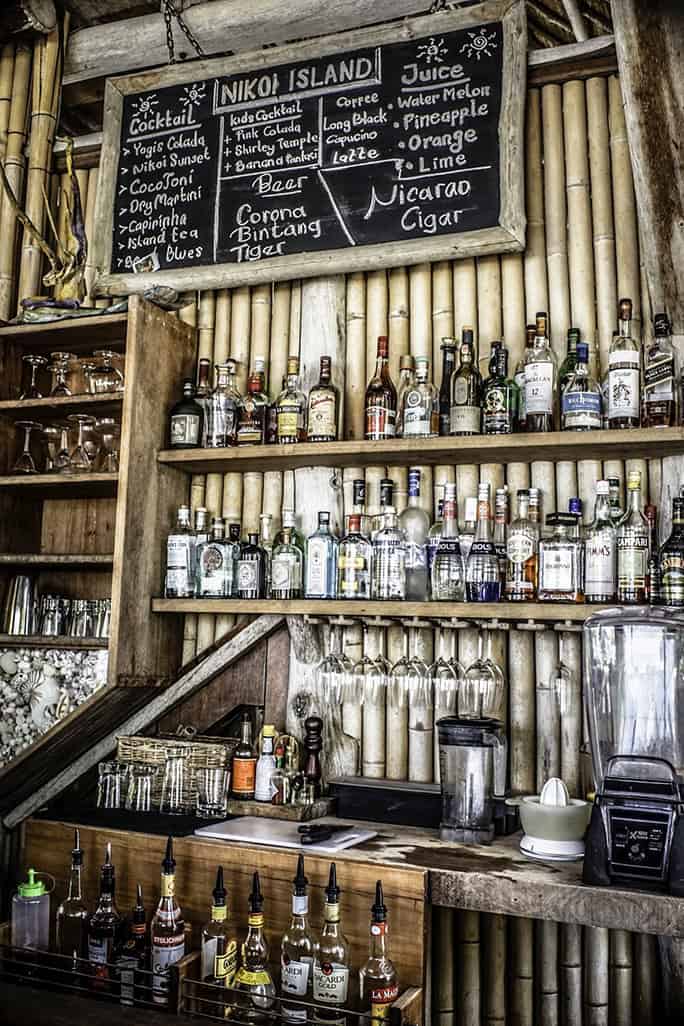
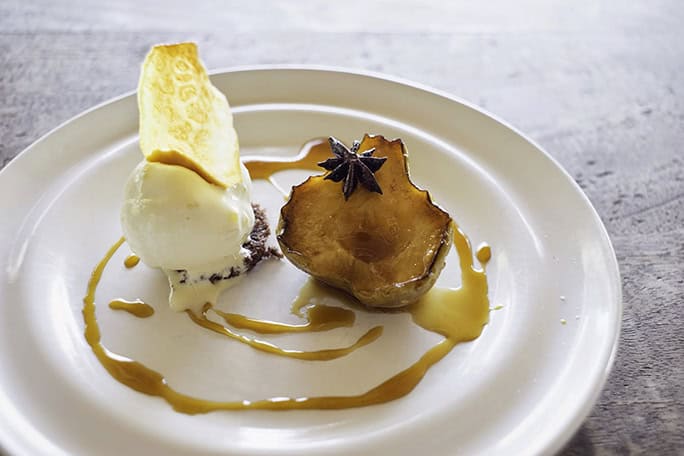
The menu is fixed – to reduce food waste and focus on seasonality – homemade, naturally organic, complying to guidelines, such as WWF sustainable seafood, with barbecues prevalent and tropical fruits, including in the head barman’s infamous piña coladas and margaritas.
Daily menus are put up on blackboards in the restaurants and whilst fixed the kitchen is happy to tailor them according to any specific dietary requirements, including a wide range of allergies – please notify in advance
There are two restaurants on Nikoi, the main restaurant and Restaurant Biru by the pool area.
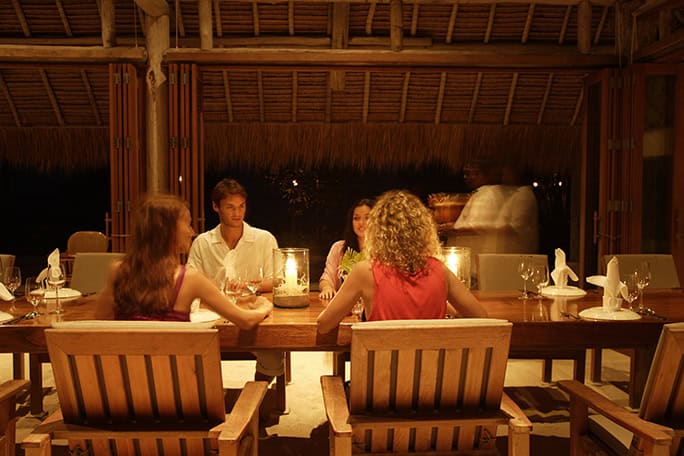
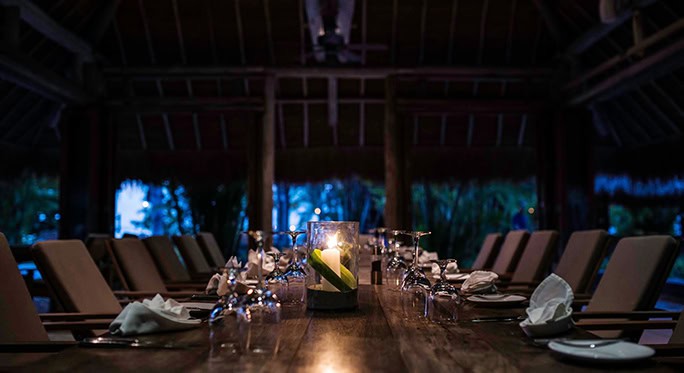
The main restaurant has two dining areas one for families and one for couples or families with older children. Each has a 9m long dining table made from an impressive piece of driftwood. Highchairs and booster seats are available.
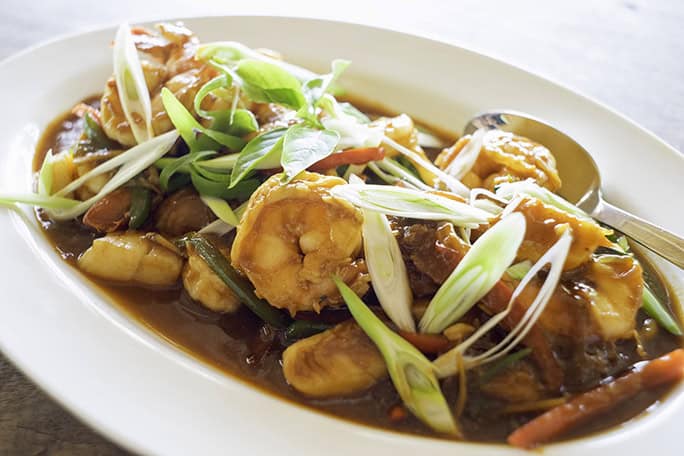
The emphasis is on the freshest ingredients prepared simply, with a fusion of Indonesian and international flavours. Barbecued seafood, local dishes and tropical fruit feature prominently on the menu as well as a variety of fresh vegetables, free-range chicken and eggs from their farm.
For those seeking something special, picnic hampers can be ordered and taken to your choice of nearby deserted islands or to a secluded location on Nikoi (additional charges may apply).
There’s a beach bar, sunset lounge and a pool bar. But don’t expected plastic bottles and straws – those are banned – rather, Nikoi carbonates their own water, provided in reusable glass bottles, with heavenly organic natural syrups for flavour should you wish, and drunk with bamboo straws.
Daily board is charged at S$100++ per adult and S$150++ per child per day (free for children under 4 years old).
This includes three meals per day (and most activities), excluding drinks although drinking water, tea and brewed coffee are provided free of charge except for espresso coffees which are charged.
A reasonably priced selection of beer, wine, spirits and soft drinks is available.
Guests may bring their own wine but the alcohol limit for Indonesia is 1 litre per person and corkage charge is S$25++ per bottle of wine and BYO spirits or beer is now permitted. There is no mini-bar in the houses but a cool box full of ice and drinks can be made available.
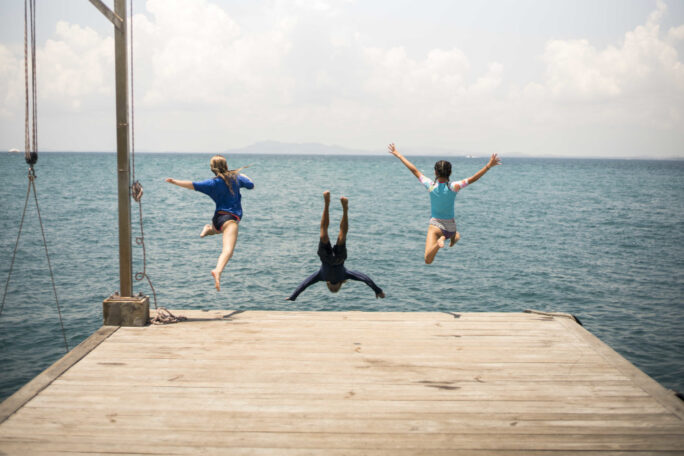
Whether you want to relax or be active, there’s a lot to do on a small remote island and most activities are included free!
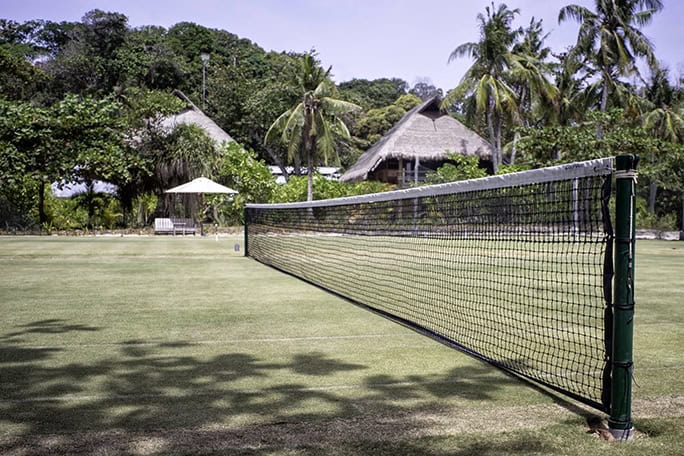
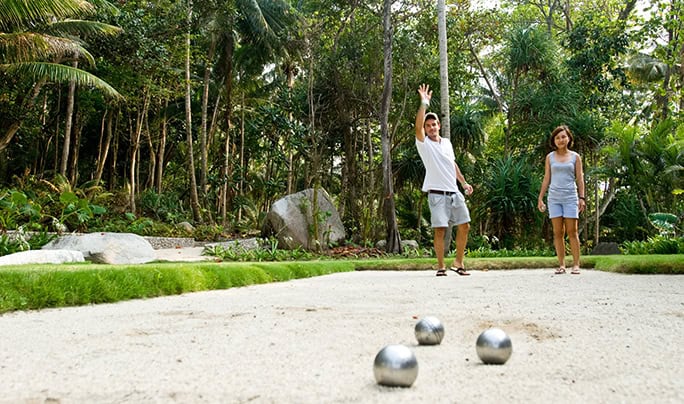
Resort-based activities include sustainability tours, board games, library, spa, boule, volleyball and dressing up for children. You can even play croquet or tennis on the first natural grass tennis courts in South East Asia! And guests are encouraged to play barefoot so there is no need to bring shoes.
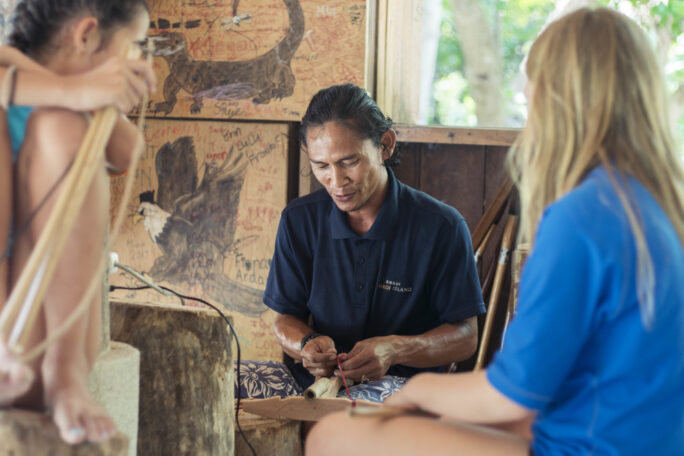
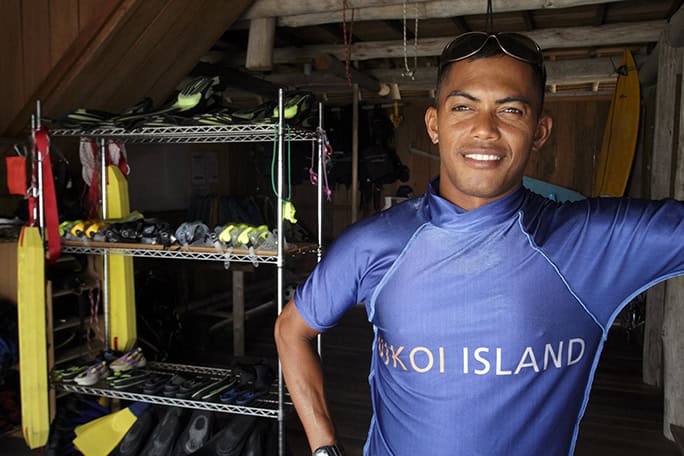
Many of the staff are experienced sailors, divers and rock climbers and are always happy to help introduce guests to a new activity.
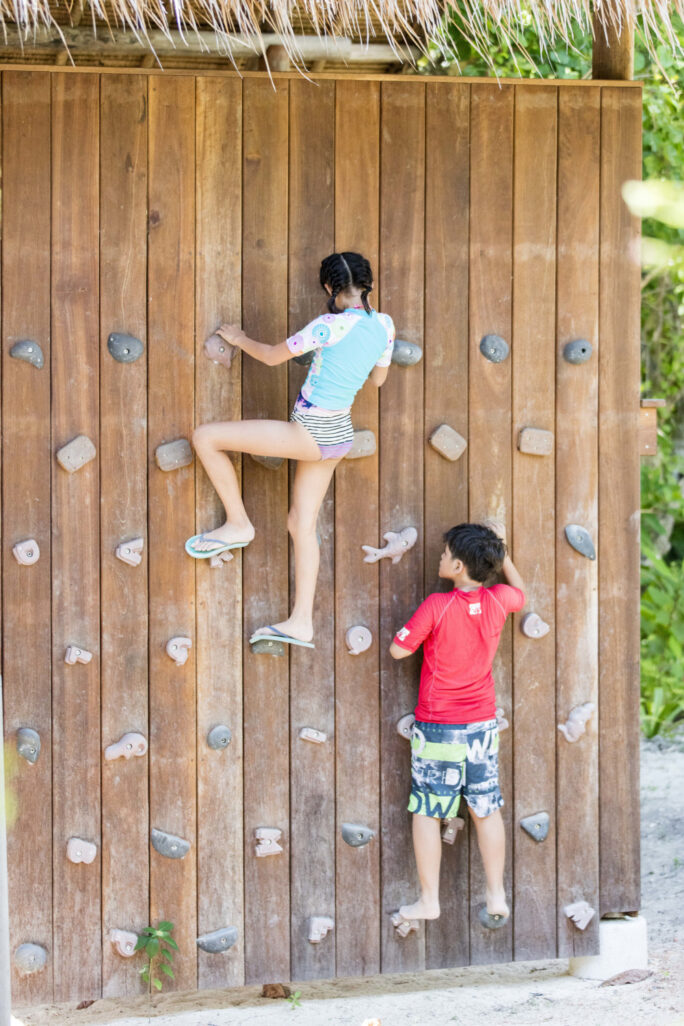
Outdoor activities include a zipline course in the jungle, trekking, rock climbing, kayaking, sailing, Stand Up Paddleboard, surfing, windsurfing, snorkelling, diving and fishing. At low tide the rock pools around the reef make a fascinating area to investigate for both adults and children.
Kite surfing is also a popular activity on nearby Bintan.
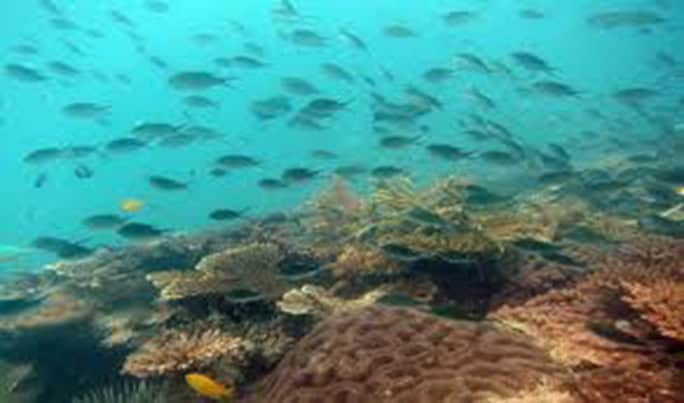
There is a pristine coral reef all around Nikoi providing some great spots to explore snorkelling, with the most accessible reef located directly in front of the main bar and dining pavilions.
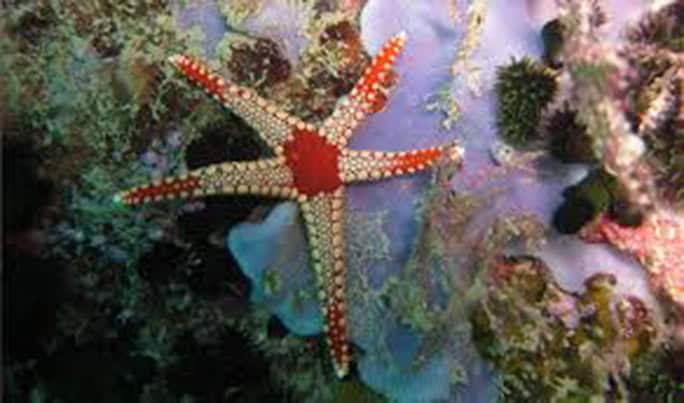
Diving: Nikoi is part of the Sunda shelf with a relatively shallow maximum depth of 20m and healthy coral reefs. Strong currents encourage the growth of hard and soft coral gardens but mean diving can be murky and not for the inexperienced; qualified staff can act as buddies or guides to qualified divers. Turtles, stingrays, seahorses, cuttlefish, batfish, octopus and sweet lips are regularly spotted plus occasionally unusual species of starfish and puffer fish.
There is a resident Dive Instructor and Dive Master but they do not offer dive courses. A small collection of dive equipment that can be hired out and all divers must have a PADI open water qualification (or equivalent).
A dive on the Nikoi house reef costs $100++ per person including equipment. Boat dives on outer reefs will depend on the location and number of dives. All divers must provide proof of their diving license and prices exclude 10% tax and 10% service.
Weather is tropical and similar to Singapore, although being an island slightly cooler and typically not as humid. Just 1 degree north of the equator, the temperature rarely varies outside 26C to 32C or the water temperature 28C.
The humidity is usually high, often around 75% or more.
The island experiences a wet season and a dry season:
Wet Season: Typically from November to March, with heavier rainfall and occasional thunderstorms, especially November-December.
Dry Season: Usually from April to October, featuring less rain and more sunny days.
Wind: Gentle breezes are common.
Here are some notable species that can be seen at Nikoi!
Your stay isn’t just a retreat, relax and recharge for you, it also enables employment and training for locals and, through The Island Foundation, a positive impact on education opportunities in the surrounding coastal and small island communities.
Nikoi Island aims to provide personalized, attentive service while encouraging guests to embrace the natural environment and sustainable practices of the resort.
Upon arrival, guests receive a welcome drink and a brief explanation of how things work on the island.
There are no phones in the beach houses. Instead, guests can WhatsApp the front desk for any needs or assistance.
Guests can participate in tours to learn about the island’s eco-friendly practices and conservation efforts.
There are 60+ staff resident on the island, all but one or two usually local Indonesian.
Many locals started working with Nikoi during construction and have gone on to learn new skills to work in front of house roles, as well as support wider area sustainability initiatives.
There is great investment in staff training in areas as barista, rock climbing, mixology, scuba, nature, sailing, windsurfing, tennis, cooking, first aid, life saving and wine. As a result, Nikoi has a very high staff retention and loyalty, which translates to great guest experience of experienced staff.
Supplies are almost all bought through local markets and small traders, avoiding the middle man where possible, to benefit the local community and the guests with local fresh non-processed organic produce. Nikoi has also helped establish local businesses, such as car hire and alang-alang (ylang ylang) supplier for grass roofs, likewise beneficial to the community, operations and guests.
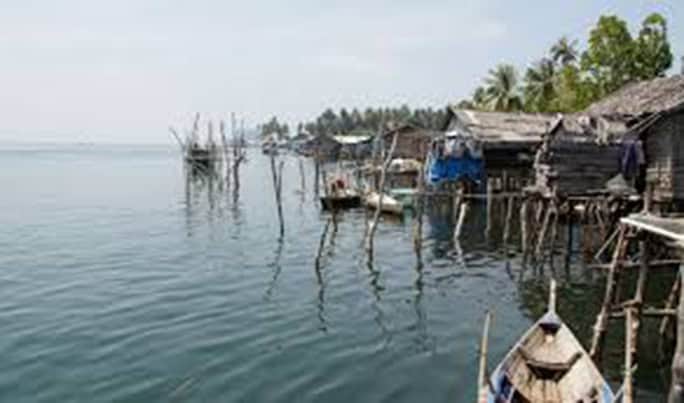
Through The Island Foundation, Nikoi has also supported the local Orang Laut people and their cultural identity.
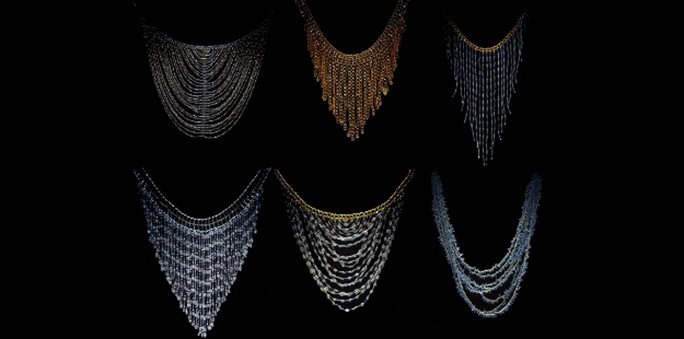
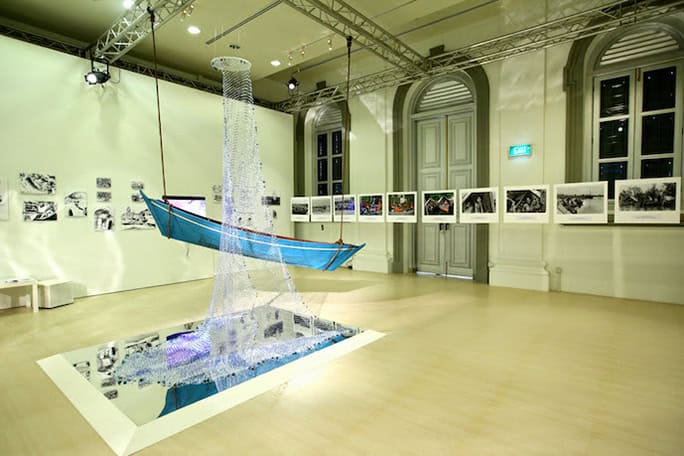
One project has seen their traditional fishing net sewers introduced to jewellery making, and the creation and exhibition of a Swarovski crystal fishing net, displayed at the National Museum of Singapore in January 2015.
Nikoi Island puts sustainability of nature, environment and local community at its heart.
Nikoi’s raw luxury almost seems effortless, such is the experience of its unspoilt natural environment and construction, but Andrew Dixon and co-founders have put a lot of hard work into developing Nikoi along strict sustainable principles from the outset.
Nikoi was built with local materials, labour and services but it is also operated with them. Significantly, through time many important new trades and skills have thus been transferred to Nikoi’s contractors, staff and community.
Regular surveys of the island’s flora and fauna (land and marine) including nesting turtles protection programme are conducted by external consultants, feeding into information guides in each guest room, along with explanations on the environmental and Corporate Social Responsibility policies.
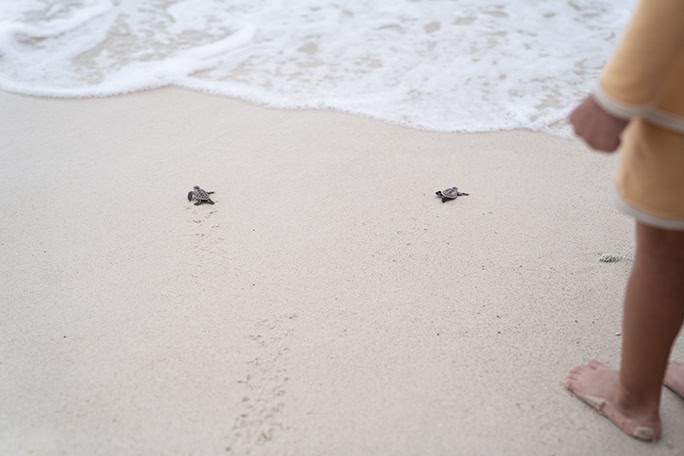
Turtles nest on the island between February and September – a team monitors the beaches.
In 2024, a marine biologist was employed to conduct research surveys to help understand the impact of the gazetted Marine Protected Area (officially designated and legally established), as well as provide guests with educational experiences. The Nikoi team also supports the work of the local fisheries department, and the marine biology department and students of the local university.
Nikoi’s owners have been instrumental in helping establish and fund three local foundations: One working on helping to protect the Marine Protected Area of approx 120,000ha; another working on removing plastic from the coastal areas and creating interventions to reduce the amount of plastic entering the sea from the local communities, the other the Island Foundation mentioned above. Staff have been instrumental in helping establish and support these efforts.
In addition to a small permaculture garden on the island, they have also been gradually developing a 7-hectare farm on Bintan, taken on as a run-down property, using permaculture principles to and building up the soil quality.
They now have over 700 free-range chickens supplying eggs and chicken to the island, and have added quails and ducks. The farm produces an abundance of chillies, Asian greens, a wide variety of herbs and spices, salads, corn, beans, and tomatoes, providing a regular flow of freshly picked produce to the kitchens. Fruit trees such as papaya, mulberries, and jackfruit offer fresh inspiration for locally inspired desserts and seasonal cocktails.
Next to be added is planted cashew, avocado, cacao, and nutmeg trees and a variety of unusual and heirloom species. Long-term, it is hoped the farm will provide an increasingly larger percentage of the island’s food and serve as a platform to teach others about the benefits of farming using permaculture principles.
Even the salt water pool is topped up by water rejected from the desalinated water used for hospitality: everything possible is recycled, reused or upcycled, such as the car tyre flip flops and rice bags souvenirs in the shop.
In Indonesia’s isolated small islands, The Island Foundation (TIF) is revolutionizing education to build self-reliant and sustainable communities.
Through 13 Learning Centres serving over 3,000 students, TIF’s Learning for Sustainability Framework emphasizes 21st-century skills like critical thinking, collaboration, and environmental stewardship.
Their impact transcends the classroom. Teacher training workshops have upskilled 1,500 educators, creating ripple effects of student-centered learning across the region.
Beyond education, TIF drives community initiatives like mangrove planting and beach cleanups, engaging over 3,000 residents to cultivate collective responsibility.
The resort supports local cultural events like traditional jong (model sailing boat) races, helping preserve cultural heritage and potentially attract cultural tourism.
The Ubah Rumah artist in residence programme is also working towards preserving local culture, stories and oral history.
Local employment: Nikoi Island employs local staff and invests heavily in training them, providing job opportunities and skills development for the local community.
Local sourcing: The resort sources food and materials locally as much as possible, supporting the local economy and reducing their carbon footprint.
The Island Foundation: Nikoi’s owners established this charity to support local communities beyond the immediate area of the resort. It provides community and education programmes, and arts and crafts retail opportunities that benefit over 8000 local villagers.
Sustainable tourism: By operating as a successful eco-resort, Nikoi demonstrates that responsible tourism can be profitable and in high demand, encouraging similar sustainable business models in the region.
Marine conservation: Nikoi played a significant role in helping gazette the Marine Protected Area and now is working with local stakeholders to create and implement the management plan, which can help sustain local fishing livelihoods in the long term.
Skill transfer: Through the construction and operation of the resort, many important new trades and skills have been transferred to local contractors and staff.
Sustainable practices: By implementing energy and water-saving measures, Nikoi reduces operational costs, contributing to the long-term economic viability of the resort.
By staying with Nikoi, the financial contribution you provide goes to:
The impact of this has been to:
SDG1 No Poverty: Employment opportunities and local livelihoods support through tourism and community initiatives.
SDG 2 Zero Hunger: What food Nikoi can’t grow on their own farm they source locally including supporting sustainable fishing practices.
SDG3 Good Health and Well-being: Health benefits for employees and promoting a healthy environment for guests and locals.
SDG 4 Quality Education: The Island Foundation provides educational programmes for local children and adults and the island offers staff great skills training.
SDG 5 Gender Equality: Empowering women through employment and entrepreneurial opportunities in tourism.
SDG7 Clean Energy+ SDG13 Climate Action:
Solar panels for hot water, excess energy stored for generators to be switched off up to 12 hours per day. Villas designed for energy-efficiency. Minimal use of electricity for appliances, low voltage LED or CFL lighting, efficient water consumption.
SDG8 Decent Work and Economic Growth +
SDG 9 Industry, Innovation & Infrastructure +
SDG 10 Reduced inequalities +
SDG 11 Sustainable Communities:
Job creation, local supplier prioritisation and entrepreneurship support with micro-finance, fostering economic development.
SDG 12 Responsible Consumption and Production: Implementing sustainable practices in construction, energy use, waste management including no plastics.
SDG14 Life Below Water: Protecting marine ecosystems and supporting the establishment of a huge Marine Protected Area.
SDG15 Life on Land: Preserving the island’s natural habitats and conducting regular flora and fauna surveys.
SDG 1& Partnerships for the Goals: Collaborating with local communities, NGOs, and initiatives like The Long Run to achieve sustainable development.
Nikoi Island is approximately 2.5 hours from Singapore:
– From Singapore’s Tanah Merah ferry terminal take a ferry to Bintan, approx. S$90 return.
The ferry terminal is 10 minutes from Changi International airport or 30 minutes from the city centre.
– From Bintan Ferry Terminal it’s a 1-hour drive to Nikoi’s base on the east coast of Bintan, followed by a 20 minute speedboat ride over to the island. This transfer from Bintan ferry terminal costs S$95++/S$48++ per adult/child round trip (includes VIP lounge at ferry terminal, car journey across Bintan and boat trip to Nikoi. This does not include ferry tickets which must be purchased separately through the Bintan Resorts Ferries website).
Please note, Nikoi Island gets booked up usually over 4 months in advance!
Most popular months are March to November; some prefer slightly cooler December to February.
The 3 days spent at Nikoi Island was the highlight of our 2 week Asian trip. Nikoi is such a unique gem, and is felt the moment you step foot on the island. You're immediately welcomed by the friendliest and most attentive/helpful staff ever. Before anything else, I must mention that I was aware of the lack of AC. I read and reread reviews stating that AC is not necessary, but still had my reservations. I'm here to tell you, it truly is not needed! The design of the double roof, fan overhead and the additional floor fan, is more than adequate. We stayed in a 2 bedroom beach house with its own pool. The food- AMAZING, every single meal! You're given options and put in your dinner order during breakfast- so no surprises! We thoroughly enjoyed the laid back off the grid vibe. We participated in the turtle release, nightly bon fires and got a kick out of catching Grouper with a Bamboo pole. Consider yourself lucky if you get to experience this!

Nikoi may only be a small island, but it has so many different feels throughout, walking around and through it. This is not your usual holiday destination, I guess you would liken it to staying in the Howell's hut on Gilligan's Island, beautifully designed timber structures with luxury amenities. There is just so much to do here, laze around the sand floored bar, sipping top shelf spirits or beer brewed on the island, go snorkeling, kayaking, laser sailing, zip line, you won't know what to do first. We also had a very nice couples massage, and my Wife had a facial. The kids can be looked after with the guys at the kids club if you need a break within a break. The food was top notch, they have a very talented Chef, who was able to cater for my food allergy without much compromise. 3 fantastic meals a day, almost unbelievable it is achievable in the middle of nowhere. Will definitely go again, well recommended.
2022 Member of The Long Run, achieved Global Ecosphere Retreat status, recognised by the Global Sustainable Tourism Council.
2019 World Travel & Tourism Council – Social Impact Award
2016 HICAP – Sustainability Communities Award
2015 Tourism Cares – New Innovators Award
Wild Asia Responsible Tourism Award: Most Inspiring Operator
Green Hotelier – Winner Asia Pacific
Sustainable Business Award – Indonesia
2014 National Geographic World Legacy Awards: Finalist, Earth Changers
Condé Naste – Gold Standard Award
2013 Travel + Leisure Global Vision Award – Sustainability
Condé Naste – World’s Best Private Island Resorts
2012 Wild Asia Responsible Tourism Awards Finalist
Treehugger – Best Resort Award
2011 onwards Trip Advisor – Certificate of Excellence Award
2009 Wild Asia Responsible Tourism Awards – Finalist




Enquire to find out what’s on offer for your trip dates, ensuring you get the best deals and availability tailored to your travel plans. Don’t miss out on exclusive promotions and packages designed to enhance your experience.