

Carbon impact
Recommended duration
Price per night per adult
Sustainability tour of the Maasai Wilderness Conservation Trust HQ
Campi ya Kanzi truly is a “Camp of the Hidden Treasure”, created as a true partnership with the Maasai people: A community-run boutique ecolodge, on Maasai community land, employing local Maasai people, paying tourism revenues locally and supporting a community trust.
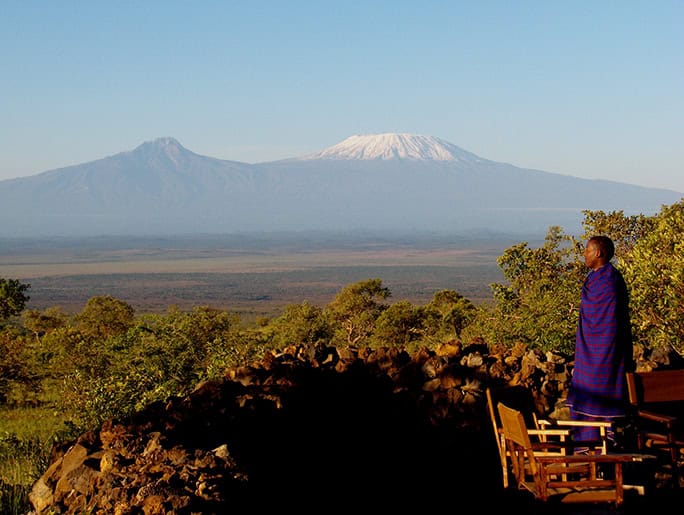
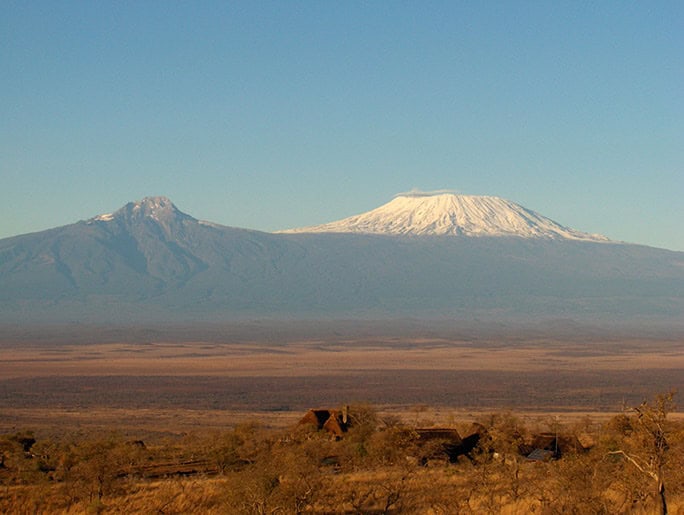
Campi ya Kanzi offers the luxury of a retreat from the hectic modern world, sundowners overlooking Kilimanjaro, safari with the privilege of a Maasai tracker in wilderness with no other lodges around, energy and water from the elements, and precious memories in a unique place with special hosts for a very exclusive and personal experience and life-changing soul journey.
Campi ya Kanzi is the tourism arm of its partnered NGO (Non-Governmental Organisation, not-for-profit), the Maasai Wilderness Conservation Trust, both founded by Luca Belpietro.
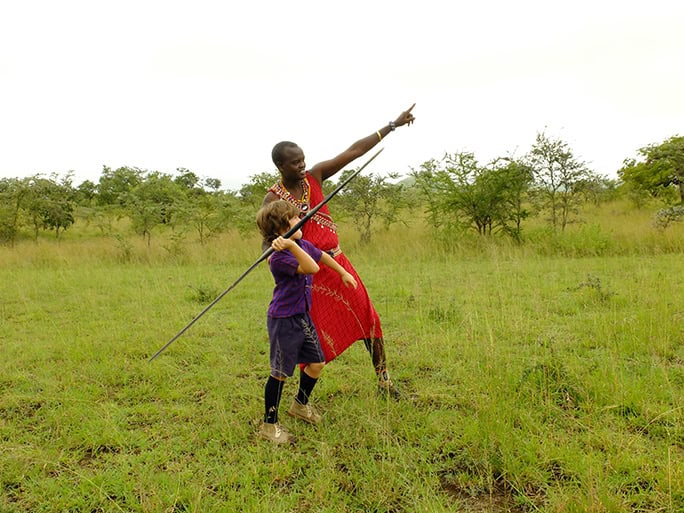
Plus! Families can combine a stay with Chyulu Lodge, the first carbon-negative and zero-emissions lodge in Africa. A truly transformative experience for young people and their families interested in eco-tourism and discovering other cultures, at Chyulu Lodge the journey is just as important for the children as it is for the parents: they can have their own safari in the Chyulu Hills with their own Maasai guides! In the evening, children and parents get together for dinner to share stories (or a joint programme can be designed for parents and children).
Eco-friendly luxury: award-winning eco-lodge in a Maasai-owned conservancy with stunning views of Kilimanjaro
Authentic experience: immerse in Maasai culture with guided safaris and interactions with the local community
Sustainable wilderness adventures: safari game drives in Rivian or Land Rover EVs, guided walks, horse-riding in Chyulu Hills' rich biodiversity
A very special soul safari: Connect with nature, your inner self and the Maasai, as well as your trip companions.
The first and only luxury regenerative safari lodge on a Maasai-owned reserve
Not just carbon-neutral, but carbon positive through local afforestation
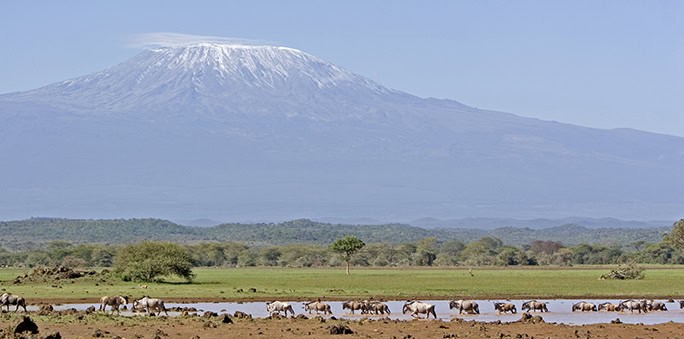
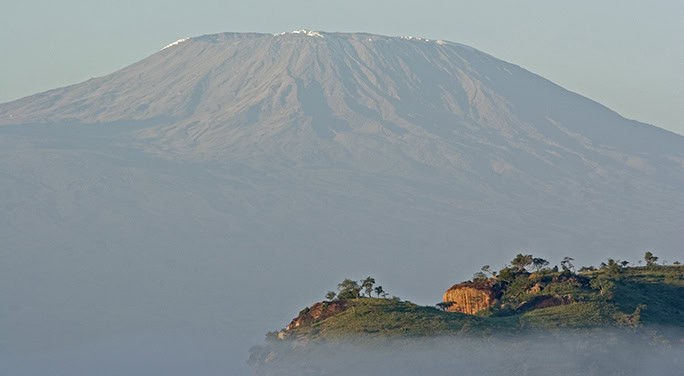
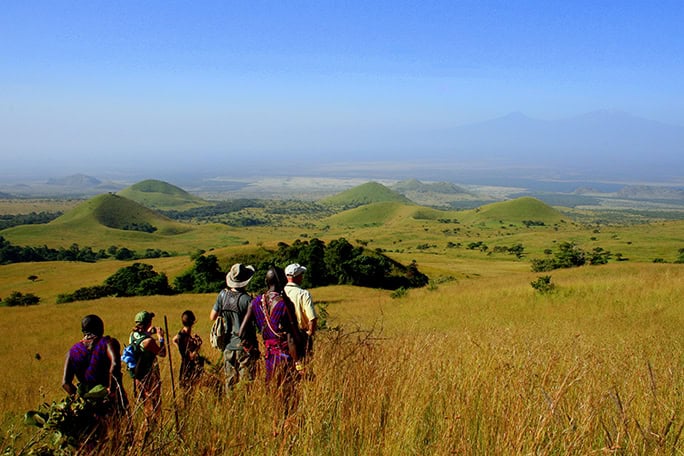
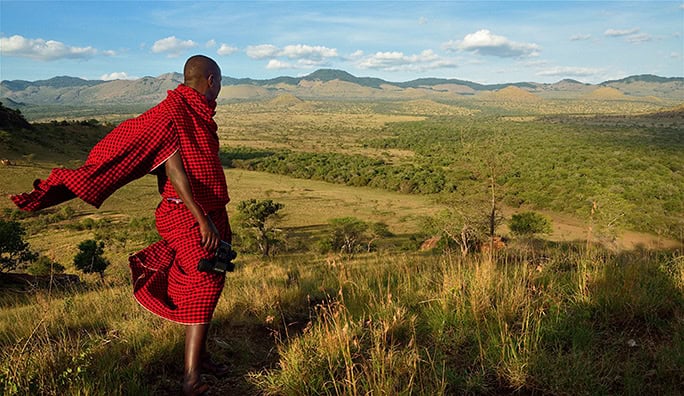
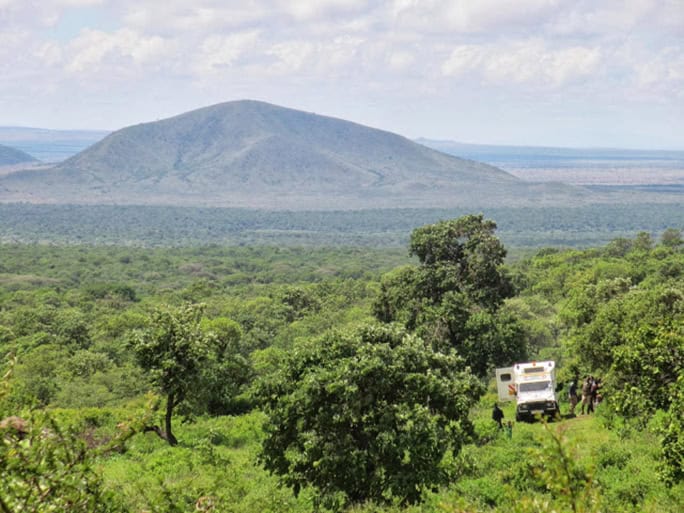
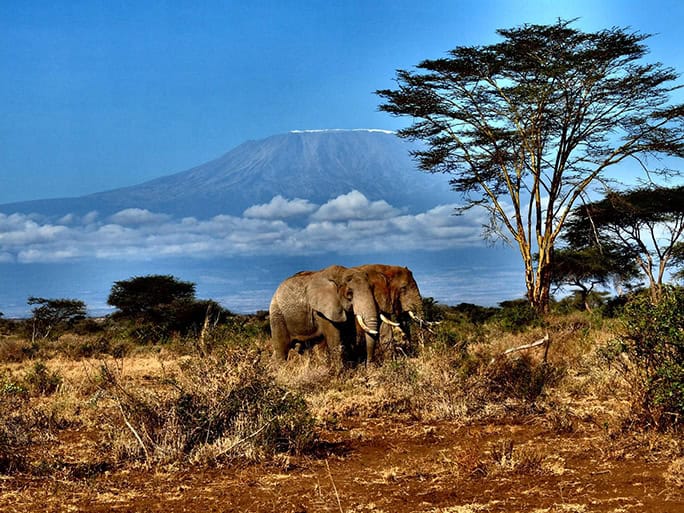
In the volcanic deep cloud forests of Kenya’s Maasai Chyulu Hills, a natural corridor between Tsavo and Amboseli National Parks with the foothills of Kilimanjaro just 35 miles away, Campi ya Kanzi offers the romance of great safaris.
In Hemingway’s fabled “Green Hills of Africa”, experience stunning views, incredible wildlife, the luxury of top hotels and fine dining of 5 star restaurants, all the while protecting the community, culture and environment in which you’re immersed.
A $150 (child $75) conservation fee per guest per night supports the Maasai Wilderness Conservation Trust.
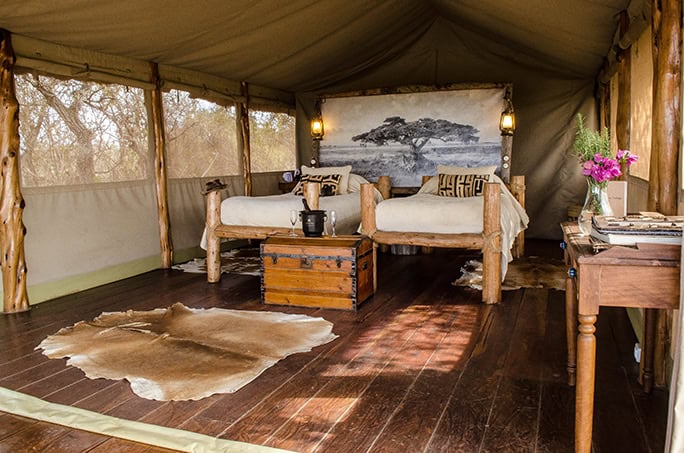
6 luxury tented cottages and 2 tented suites (see options below).
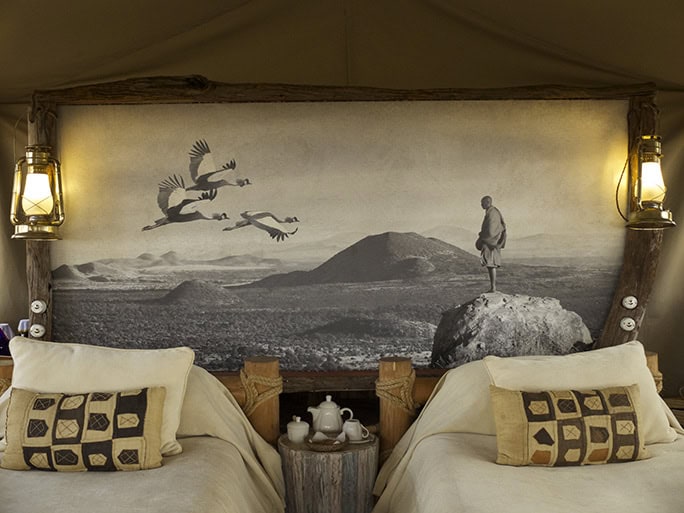
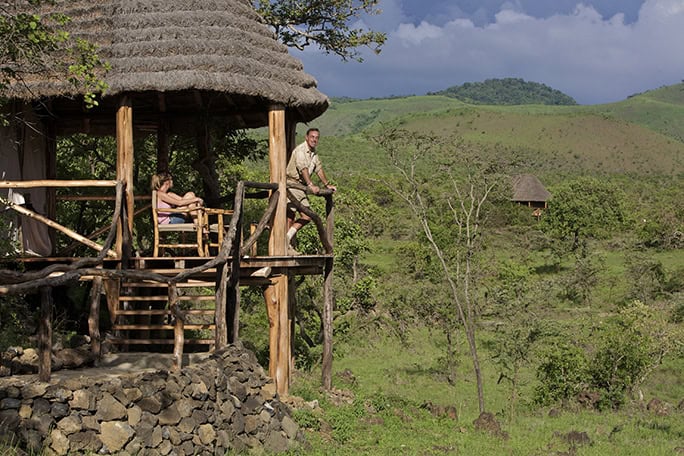
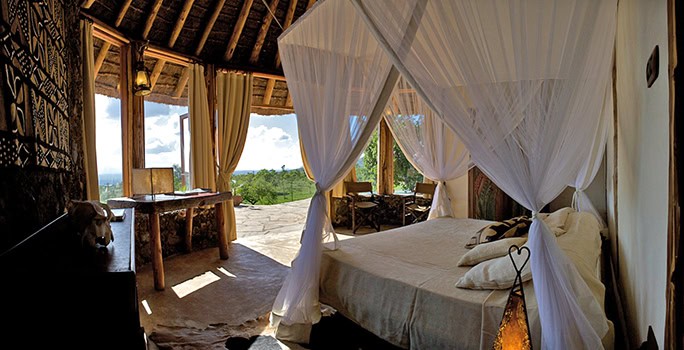
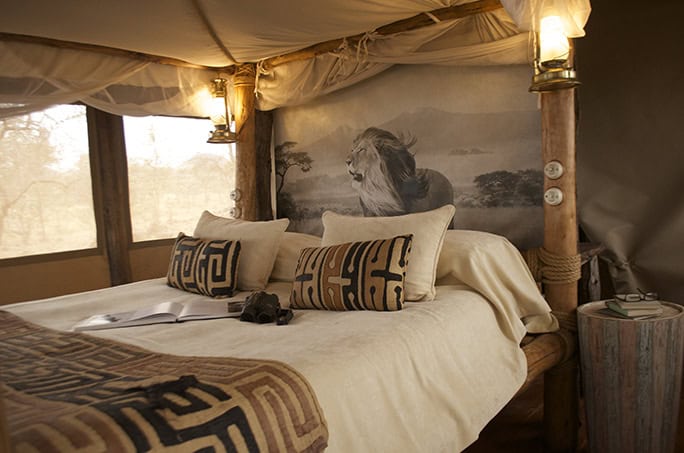
Built on wooden platforms, each has solar electricity and bathroom with hot running water (solar powered), is well spaced for privacy, distinctive artwork, a unique view of wildlife at the waterhole from the porch and named after the beautiful view of the specific hills that they face.
Each accommodates 1 or two guests (twin beds or king size).
Kanzi House: For families with children and guests who prefer not to sleep under canvas, or desire exclusive privacy, this is one of the very few private safari villas that you can rent in Kenya including a private vehicle as well as dedicated cooks and waiters. Meals can be taken inside the house or alfresco, where there is also a fire pit. Your host and guide will be Samson Parashina, the son of a Maasai chief, head guide (silver level) and President of Maasai Wilderness Conservation Trust. Alternatively you could additionally book founder Luca to guarantee to host and guide you. Only bookable as one party exclusively.
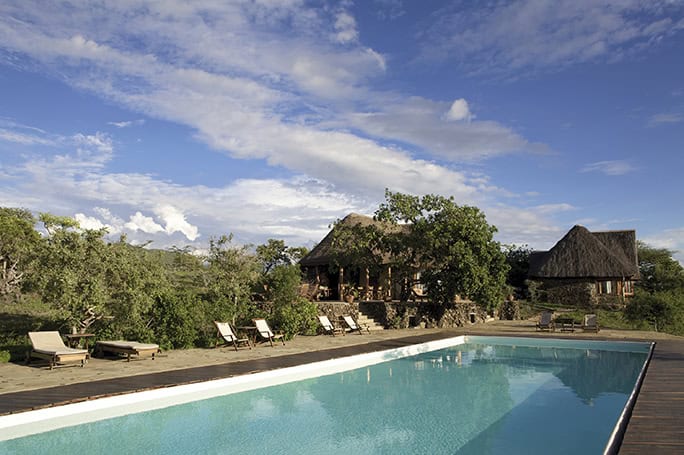
Swimming Pool Suite: Sleeps two, can be booked separately. Includes massage boma. The 18m pool is sustainably filled by rainwater catchment.
Kanzi House + the Pool Cottage can exclusively accommodate up to 10 people in three double rooms and two twin rooms.
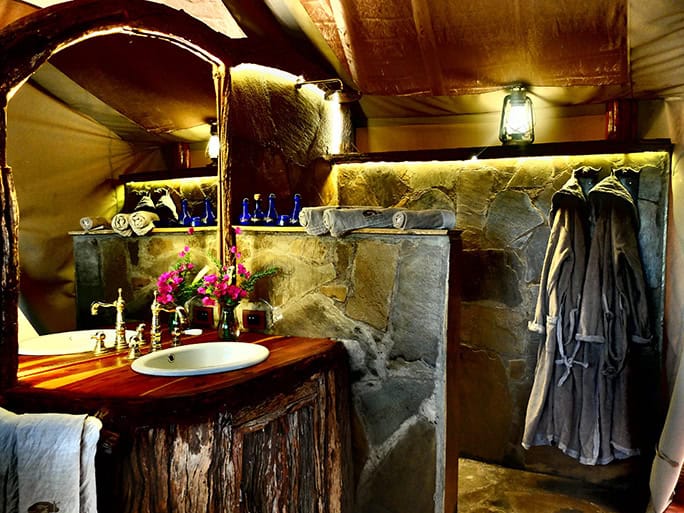
All accommodation bathrooms are en suite with organic products and robes, shower, bidet and basin.
Safe, solar rechargeable flashlights and laundry service are also available.
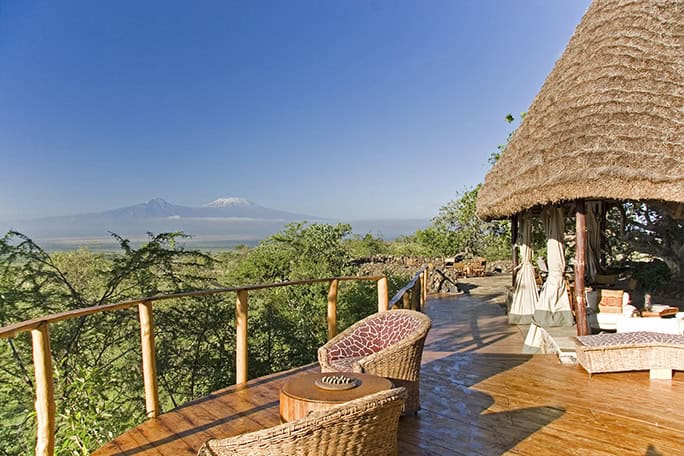
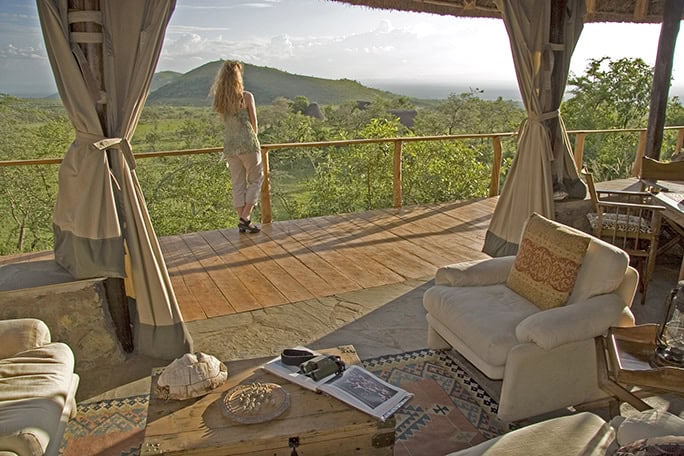
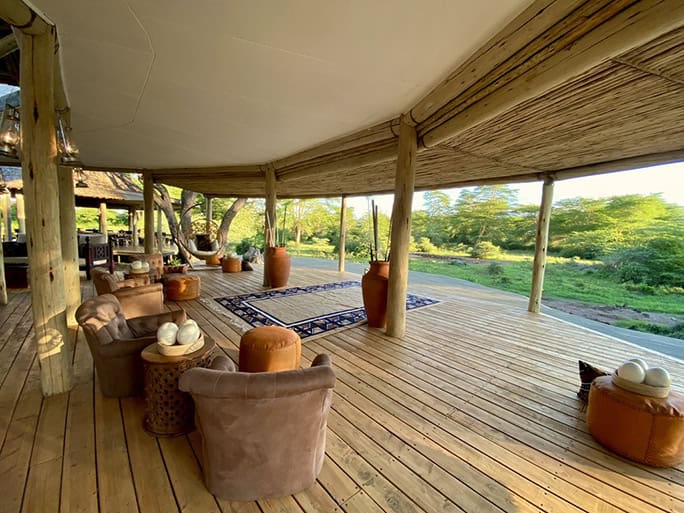
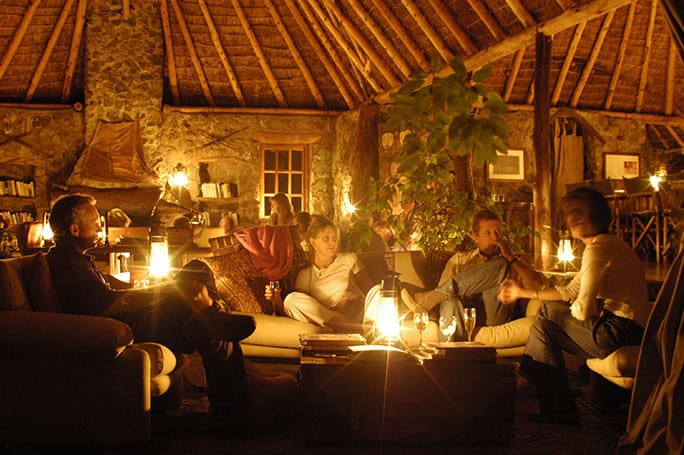
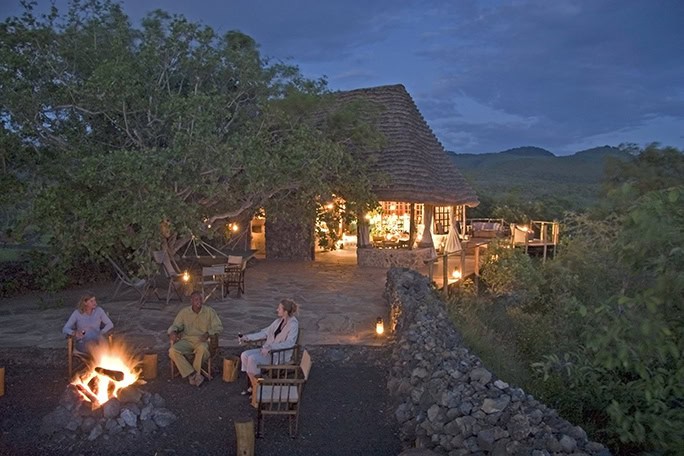
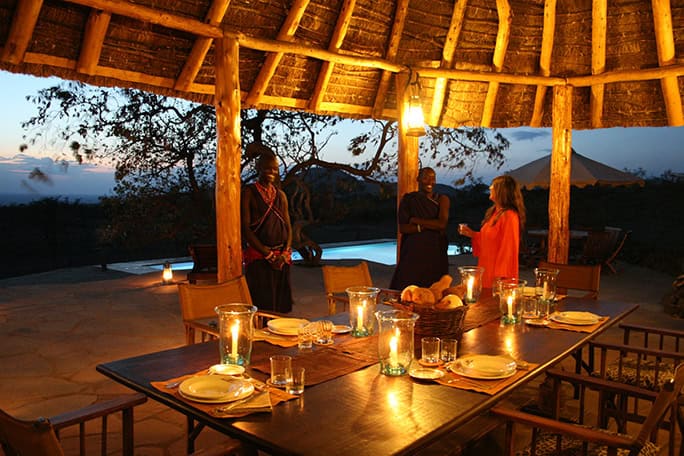
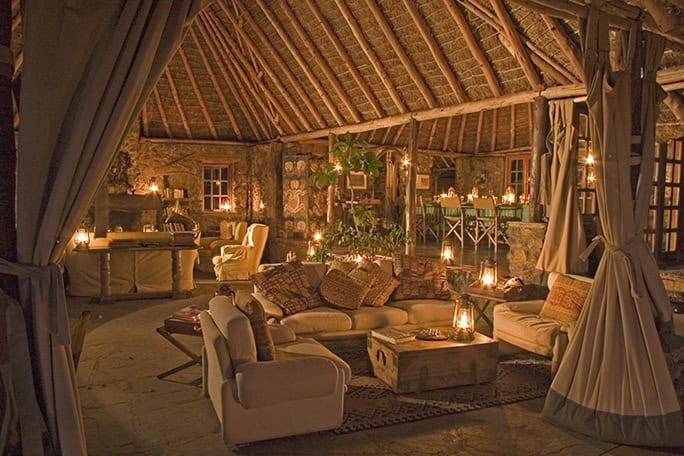
Tembo House is the heart of Campi ya Kanzi, a club house open to the outdoors where everyone meets and shares experiences or relaxes with a refreshing drink in the spacious lounge enjoying classical music or books about Africa.
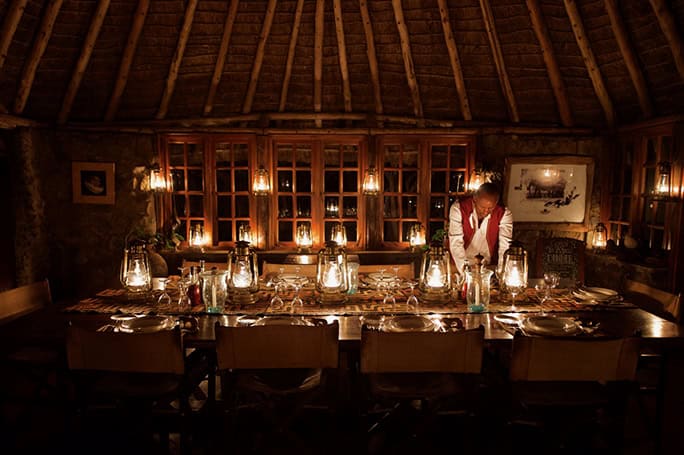
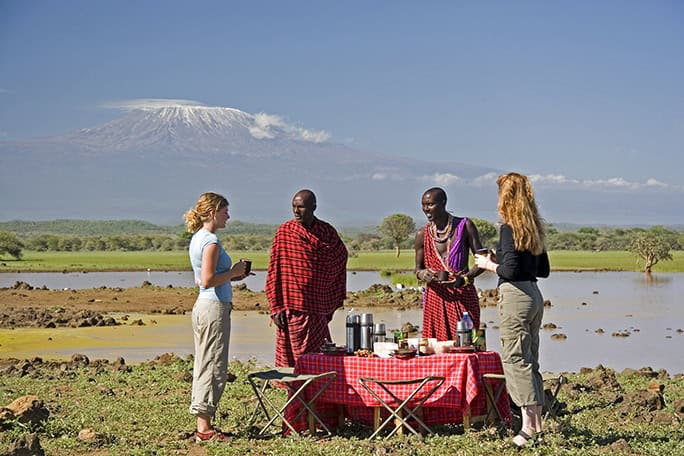
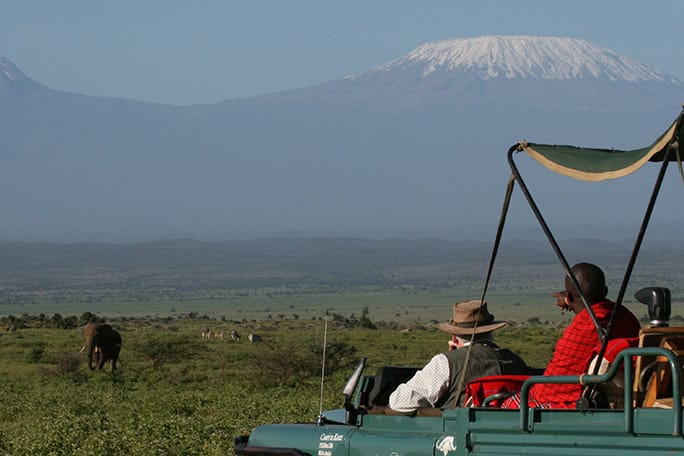
Outside is a fireplace and seating for sundowners in front of Kilimanjaro, a seriously romantic setting for sunsets before heading inside for a candle-lit dinner, and for joining in dancing and singing that happens after dinner on many nights under the moon.
Property facilities include:
Visitors are issued with re-usable water bottles to be used during game drives and taken away as souvenirs.
Please see ‘Options to book’ for accommodation amenities.
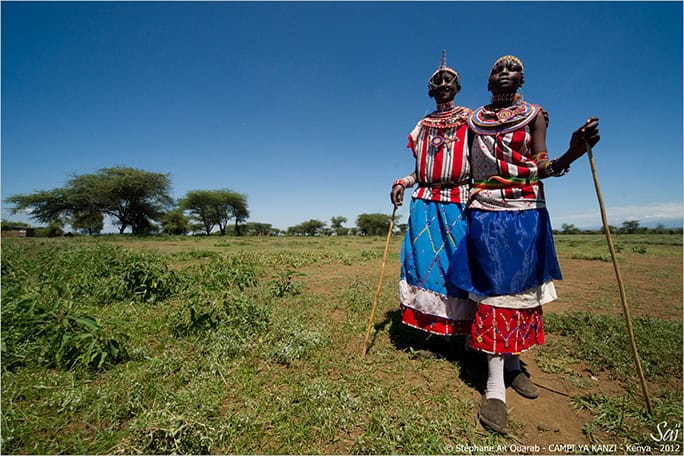
Maasai showroom: The boutique was started when it was realised the Maasai girls were losing the ability to bead. Older Maasai ladies were employed to teach the younger girls beading, and their handicrafts were sold in the shop, later augmented with more Kenyan jewellery, clothing, books, bags and other handmade arts and crafts, bought locally at fair prices.
Meals taken together with hosts Antonella and Luca are more like sharing stories and conversation with friends than being in a hotel, with the finest Italian-African fusion cuisine.
Quality, fresh, daily organic produce is crucial, so vegetables come from the camp’s garden, milk and eggs from the camp’s cows and chickens, and wines from Antonella’s home vineyards in Italy.
Cooking is on Aga stoves, with charcoal made from coffee husks. Only when truly necessary is anything bought from Nairobi, and then in bulk and supporting suppliers who care about the environment.
There’s also an amazing unique experience to go to a Maasai cave where warriors used to hide stolen cattle and dine there to the sound of Maasai singing.
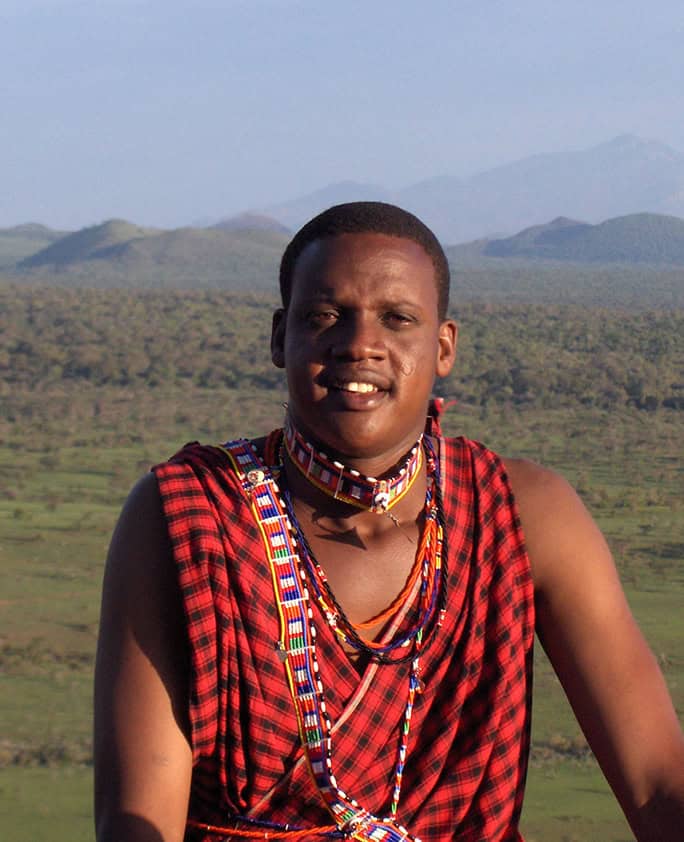
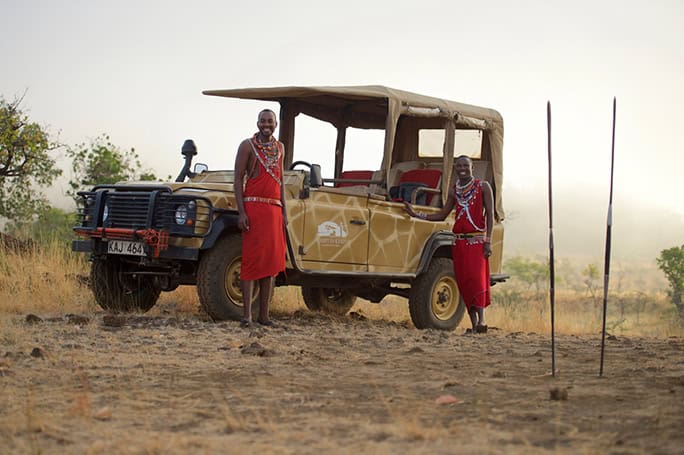
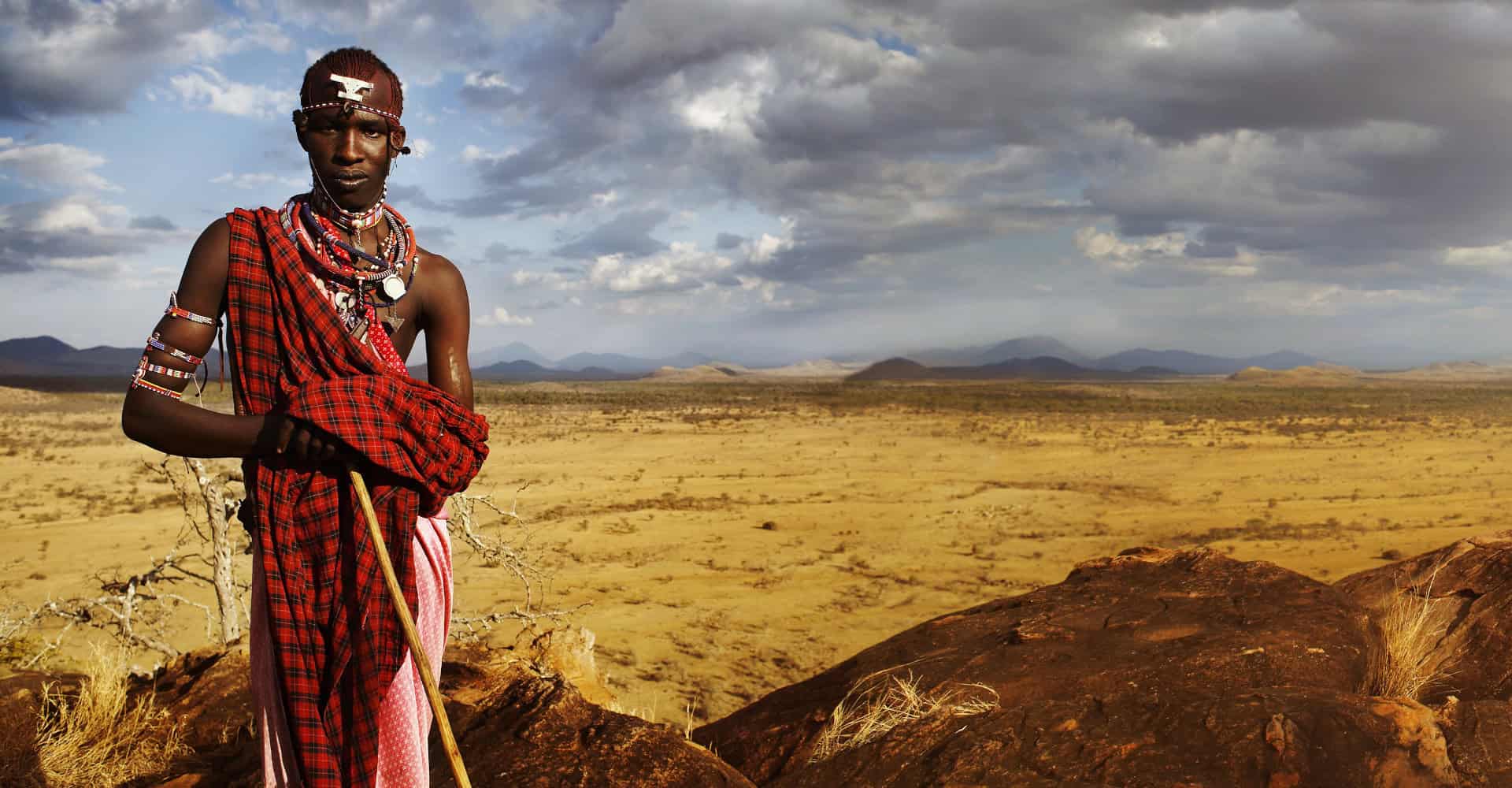
A Maasai warrior takes you on your safari journey, a dream adventure.
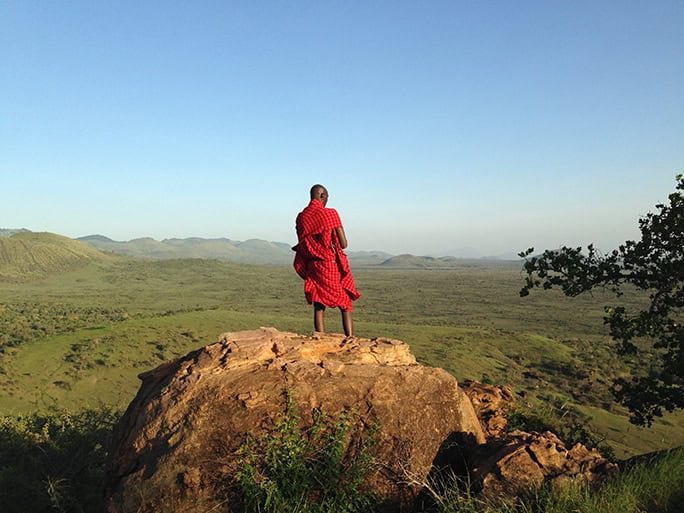
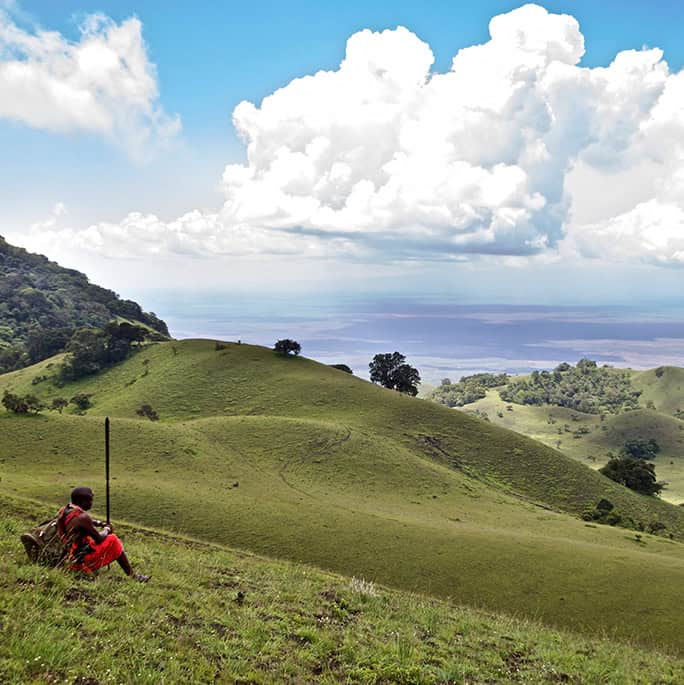
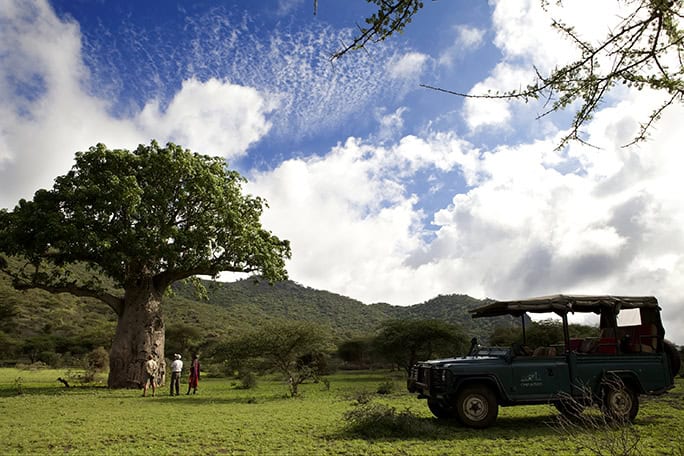
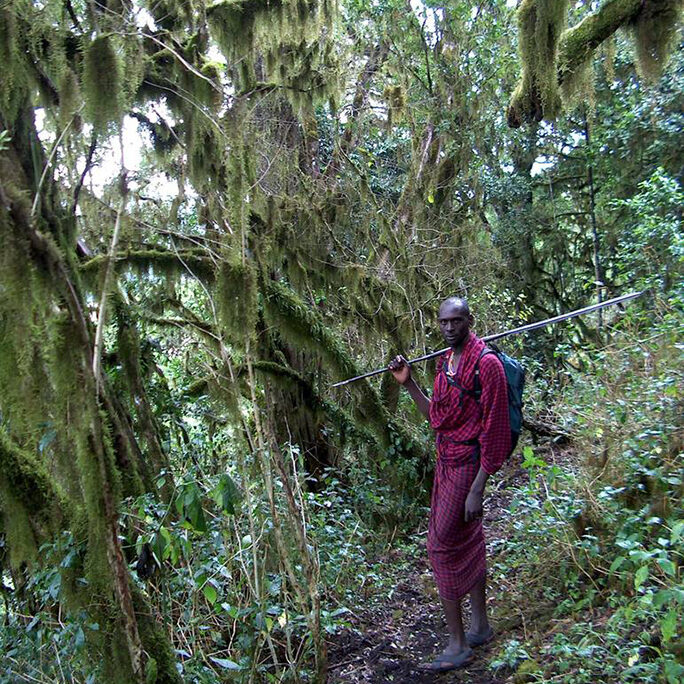
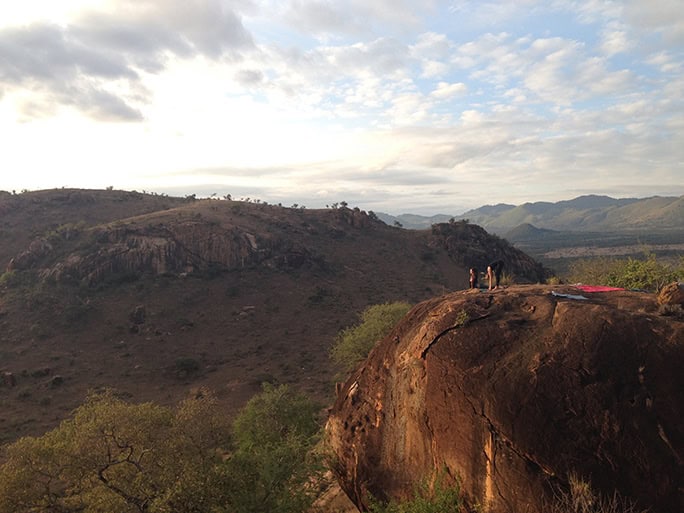
Being outside the National Parks means that a safari at Campi ya Kanzi is special, as you are not restricted to staying in vehicles. Guests can move about, walk in the bush with a Maasai tracker in his native land (there to keep you safe, armed with a spear), learn about the Maasai medicinal uses of plant and cultural lore, trek to the top of Hemingway’s Green Hills of Africa, visit the Maasai village of the guide, and see wildlife and birdlife, all in front of Kilimanjaro.
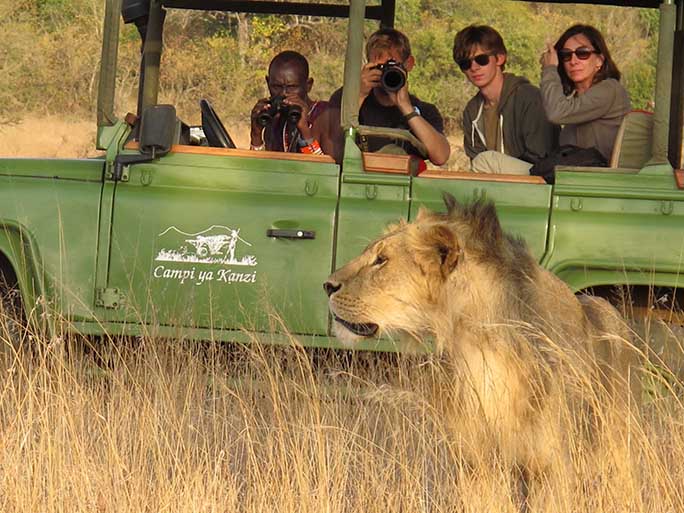
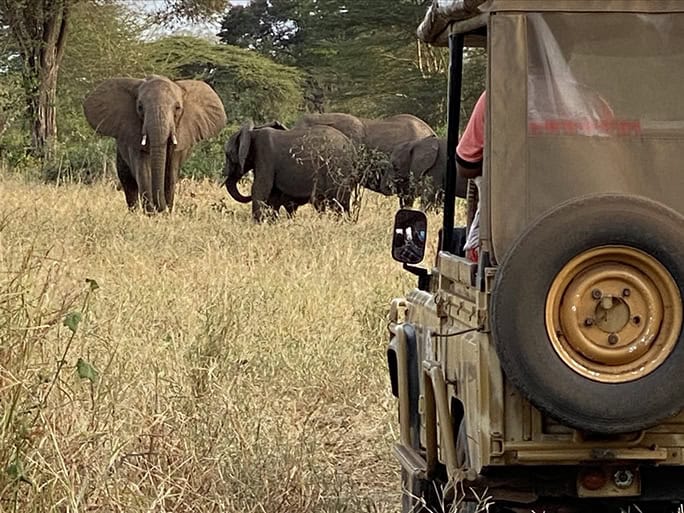
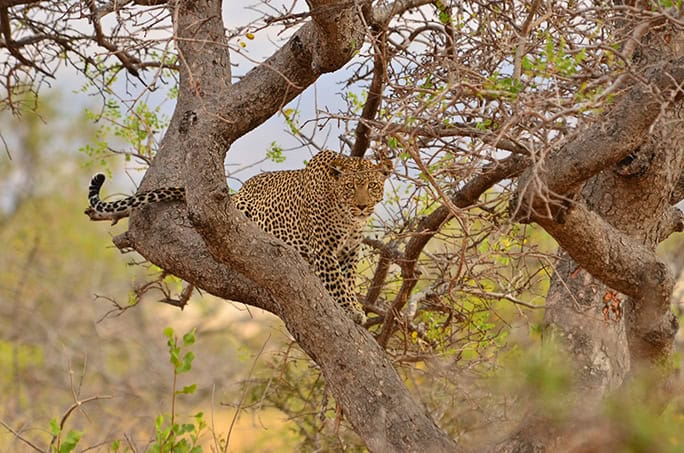
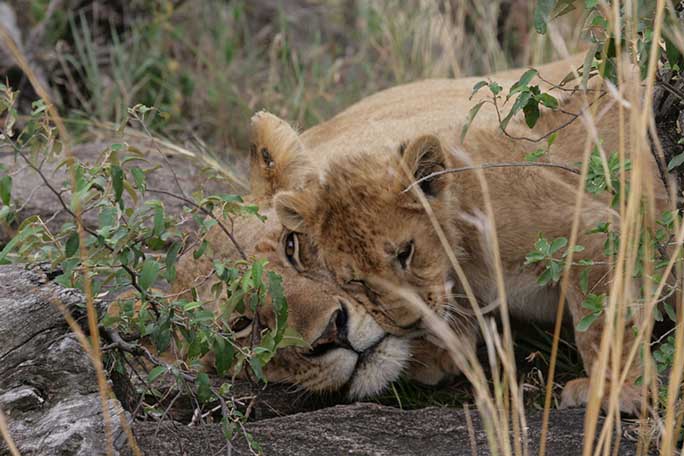
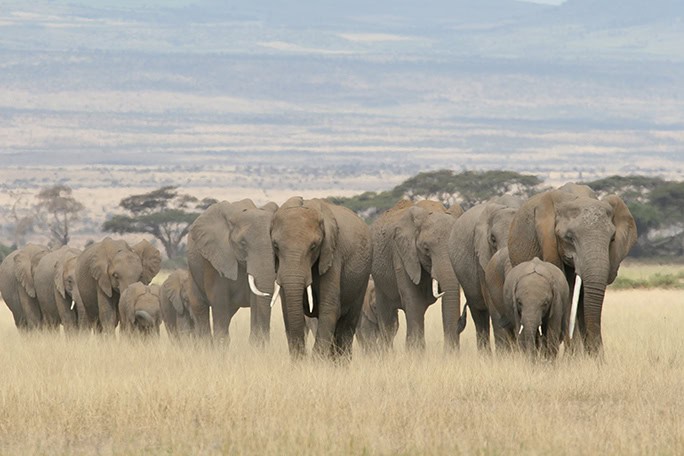
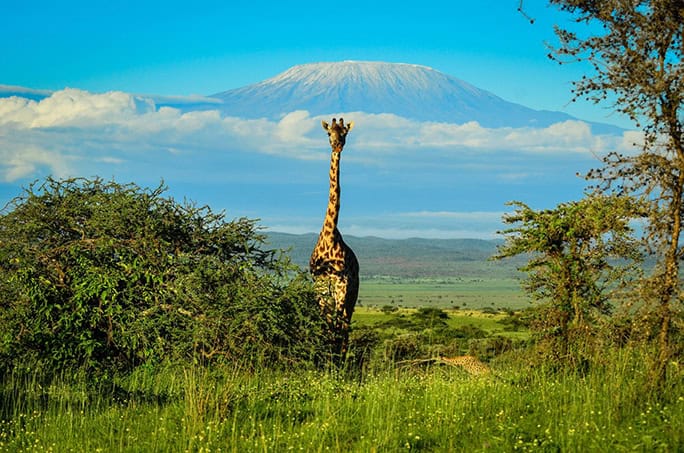
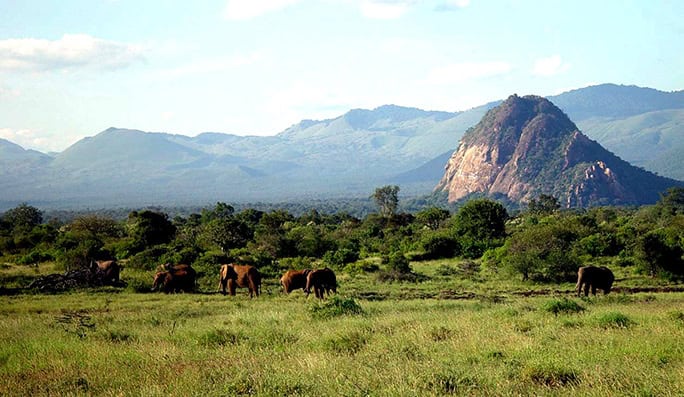
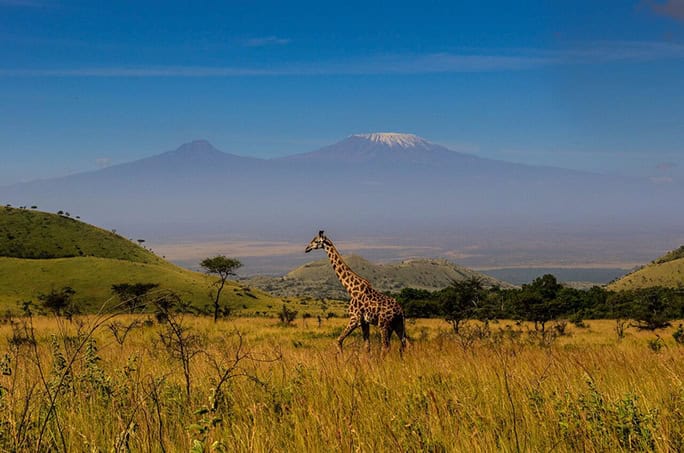
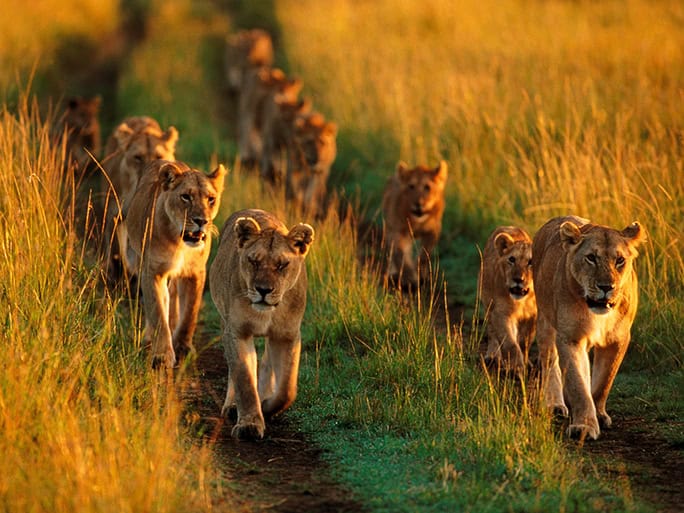
The 283,000 acres of the Kuku Group Ranch setting is immense, offering many different natural habitats. The wildlife corridor, between Tsavo West, Amboseli and Chyulu Hills and Mount Kilimanjaro National Parks, brings remarkable biodiversity and huge conservation value to the area. Of course, as wildlife is free to roam, there can be no guarantees of sightings. But the longer you stay, the more you are likely to see zebra, giraffe, the Big Five (elephant, lion, buffalo, rhino, leopard), maybe even rare wild dog and cheetah, and more common wildlife like antelope species and baboon.
You can also take scenic flights around Kilimanjaro, over the Chyulu Hills or take an old-fashioned ‘fly camping’ overnight safari.
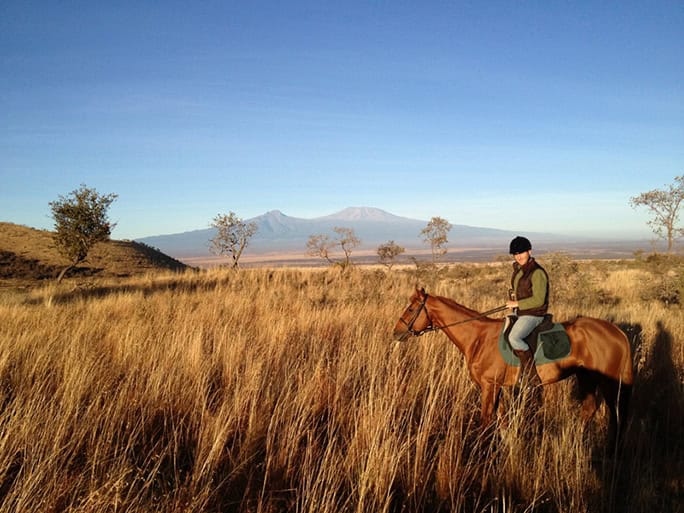
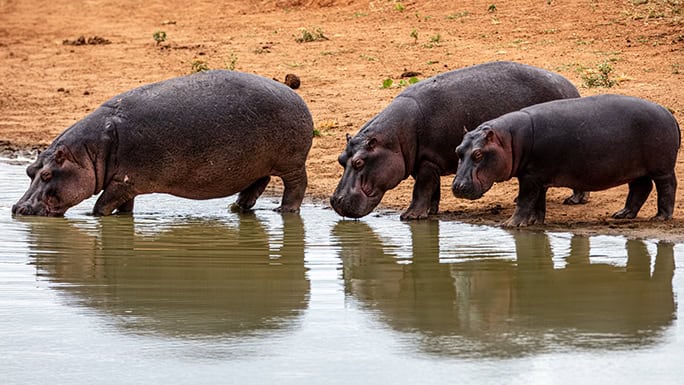
Visit Tsavo and the famous hippos of Mzima Springs or the David Sheldrick Wildlife Trust orphan elephant reintroduction programme; horse-back ride; undertake meditation or photography courses; and visit the Chyulu Conservation and Research Center.
Plus, there’s yoga with the certified resident yoga teacher. There are not many places to practice asana, pranayama and meditation that can top this in-nature immersion, with Mount Kilimanjaro as backdrop!
And at the Chyulu Club, experienced staff take care of the children during the day while they follow the pedagogical programme.
You can do something new and different every day, for 10 days straight!
The camp’s location in southern Kenya experiences a tropical savanna climate, warm year-round due to its equatorial location.
Daytime highs are around 90ºF/35ºC, nighttime lows around 50ºF/14ºC.
July is the coolest month,
January and February the warmest.
Kenya generally has wet and dry seasons, though the exact timing can vary by region.
November: Short Rains may bring several showers per night.
April to mid-May: Long Rains bring heavy shower nights.
During and after the rains, the landscape is particularly lush and attractive, and the elephant population at its peak.
The strategic location between Tsavo, Amboseli, and Chyulu National Parks is a notable species corridor. Guests might see:
The Big Five: elephants, lions, buffalo, rhinos, and leopards.
Other Apex Predators: Rare sightings of cheetahs and wild dogs can also occur, adding excitement to the safari experience.
Other Mammals: The area is home to a variety of wildlife such as zebras, giraffes, hartebeests, wildebeests, and several species of antelope, including Grant’s gazelle and impala.
Birdlife: Diverse habitats support a rich variety of bird species, making it a great destination for birdwatching.
Unique Encounters: Guests may also see smaller wildlife, such as genets.
The wildlife is free to roam within the expansive 283,000 acres of the Kuku Group Ranch, providing guests with an immersive and authentic safari experience.
It’s “unlike anywhere else. But then, it’s for someone who wants something other than a manufactured experience. I personally don’t want perfect waiters, and big [swimming] pools that deprive communities of their water. I want to go to a place where I can interact with people with the same concerns and needs, but whose culture is very different; where I can see incredible ecosystems and wildlife; where I can walk in forests, get out of my Jeep, and not see any other tourists.”
“This is peoples’ home, so you get a different encounter. You realise there is a commonality between us all, a connectedness. And when you walk those hills, climb those rocks, talk to those people, you want to protect their land too – because you realise we are all one.” — Edward Norton (The Telegraph, Oct 2015).
Every aspect of your stay is designed to create memorable and meaningful connections with nature and the Maasai people.
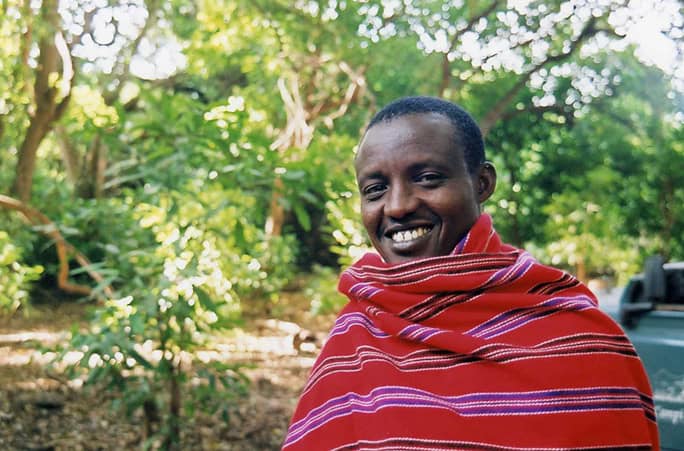
The Maasai guides, cooks and housekeepers are all dedicated to making your safari the trip of a lifetime.
Guests are also welcome to pick their own vegetables at the camps’ organic farm for their meals, as well as collect eggs and milk the cows!
Guests are also briefed on sustainability, energy and water consumption and conservation upon arrival and visual signage acts as reminders in strategic areas.
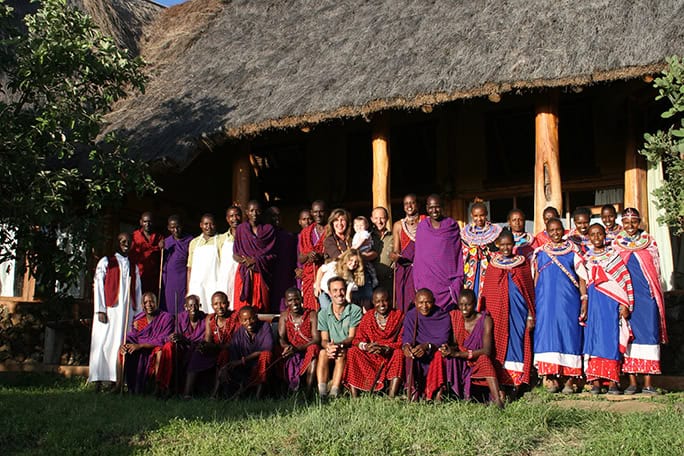
The Maasai are the true hosts, who own and staff Campi ya Kanzi and the conservancy.
The team of over 65 people are from the local Maasai community, who benefit directly from the camp’s revenues so the success of the camp contributes to the local community and conservation.
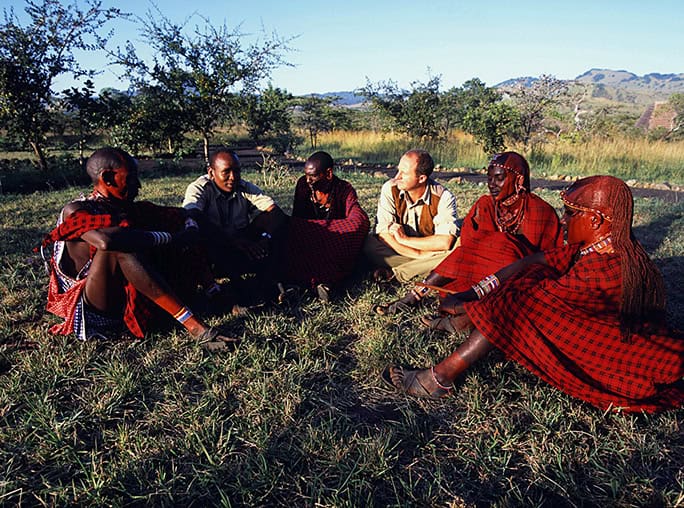
Being on safari with a Maasai professional guide is a unique experience, as you are exposed to the animal behaviour and biology, and the Maasai culture and way of life, from the inside.
Head Guide and President of Maasai Wilderness Conservation Trust is Samson Parashina, who received a university education in social science for the good of his community thanks to the trust, and was celebrated and named ‘Champion of the Earth’ by UNEP at Rio+20. Working alongside are guides Muli, Pashiet, Parashi and tracker Matasha.
Luca Belpietro and Antonella Bonomi are the founder hosts working with the Maasai team and community.
American actor Edward Norton came as a guest, left as a friend and later became President of the US Board of the Maasai Wilderness Conservation Trust.
Having learnt from his conservationist father, he saw a significant global model in the integrity Campi ya Kanzi showed in doing – not just talking about – working with communities for conservation, in such an ecologically and spiritually astonishing place.
“No one delivers a more authentic community experience than Luca and Antonella.”
Kenya recognizes over forty tribes of native people. The Maasai were the dominating tribe at the beginning of the 20th century.
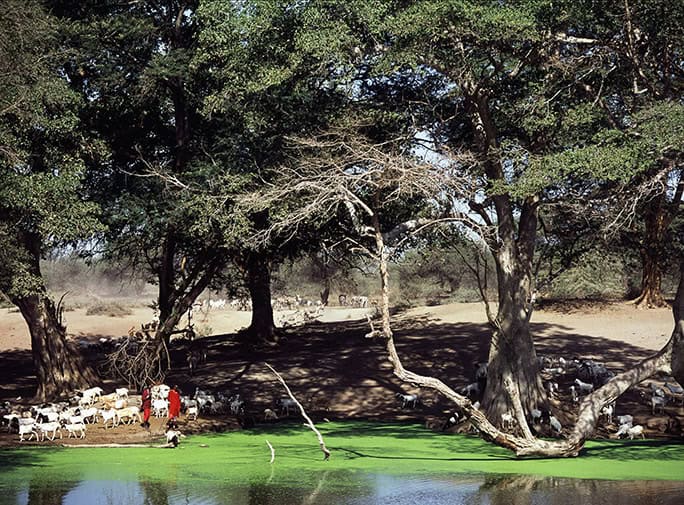
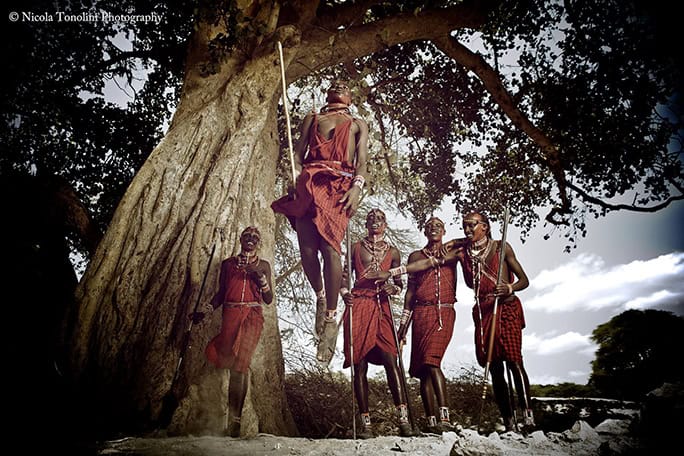
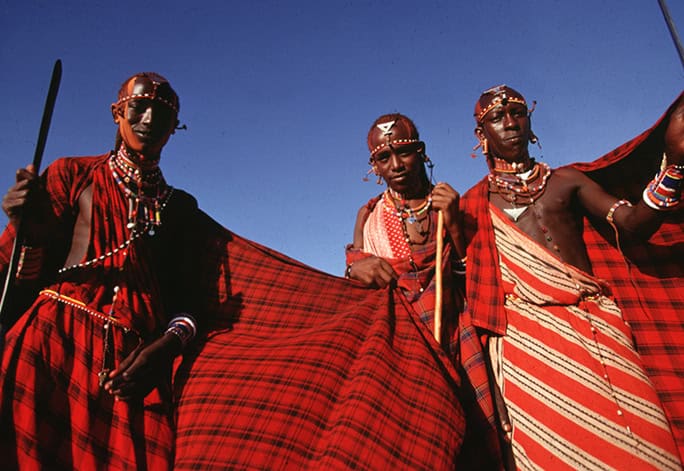
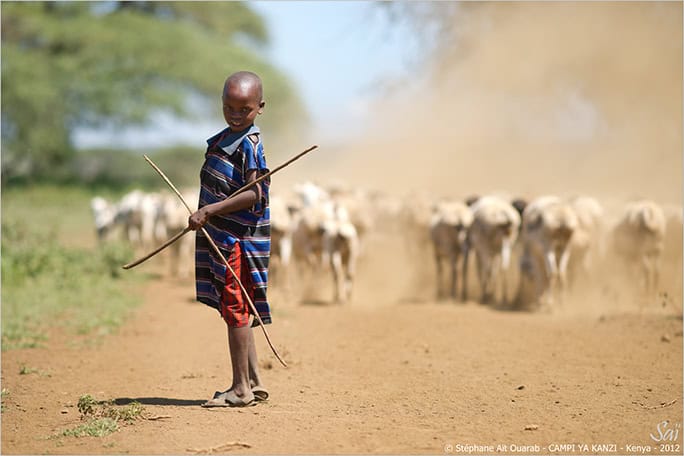
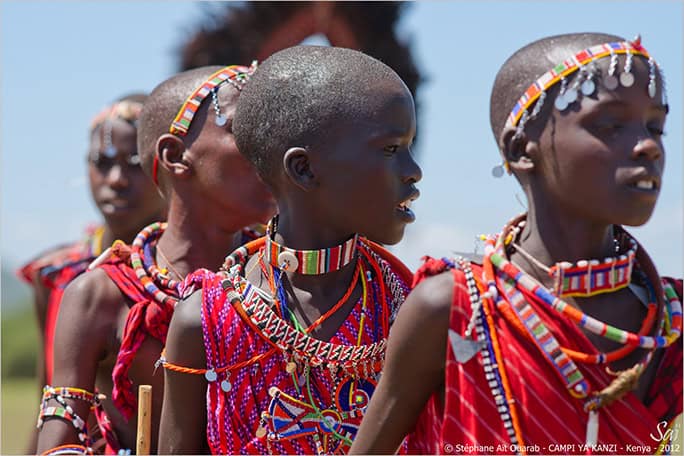
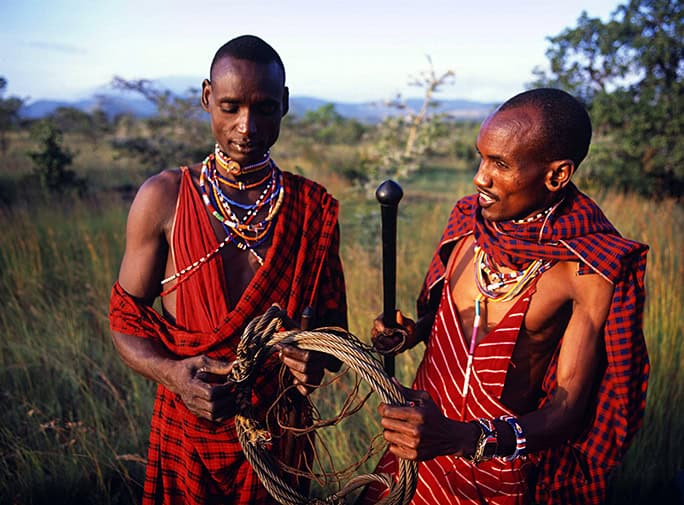
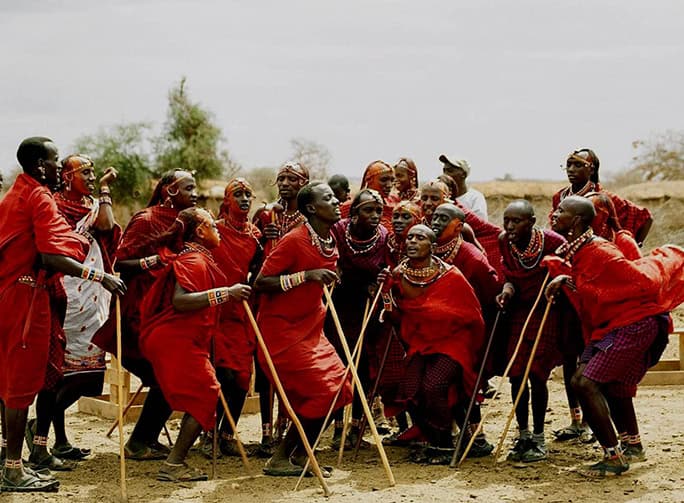
‘Maasai’ means people speaking maa. With their iconic red robes and spears, the fearless tribesmen are true to nature and have lived in harmony with wildlife for centuries as nomadic pastoralists herding cattle.
But despite external pressures to ‘evolve’ whilst they try to retain their laws and traditions, their land and ecosystem is under threat. Campi ya Kanzi was created and runs in partnership with the Maasai – as part of the Maasai Wilderness Conservation Trust – to protect the Maasai and their land, and enable the community to continue to live their culture and traditional way, if they wish. This is supported by the daily conservation fee.
“Being eco-friendly isn’t about awards. We want to ensure the Maasai have the best choice of a protected healthy environment and economic income is a sustainable way, for years to come.” — Campi ya Kanzi founder, Luca Belpietro
Campi ya Kanzi is run by the Maasai community as the ecotourism partner to the Maasai Wilderness Conservation Trust (MWCT) that safeguards the rich biodiversity of the Tsavo-Amboseli ecosystem.
The Maasai-owned lands serve as a crucial ecological bridge, strategically connecting Tsavo, Chyulu, and Amboseli National Parks. This area is not only home to essential wildlife corridors but also harbours carbon-sequestering forests and critical watersheds. These natural resources are vital for the well-being of over seven million people, including the residents of Mombasa, Kenya’s second-largest city. The region’s ecological significance extends far beyond its immediate boundaries, playing a pivotal role in maintaining biodiversity and supporting human populations across a vast area.
Mission: To preserve the Maasai wilderness, wildlife and cultural heritage and the Greater Kilimanjaro Ecosystem.
To deliver the highest possible conservation dividends to the Maasai landlords to continue to prove thriving wilderness and wildlife is their best economic resource.
Real involvement of the Maasai: run by and for the community.
Enable & support Maasai to create and run sustainable development programmes.
It’s “the real deal: a camp that is in the upper, upper, upper sphere of places with real credentials when it comes to working with community and protecting the environment” – Actor Edward Norton, 2015
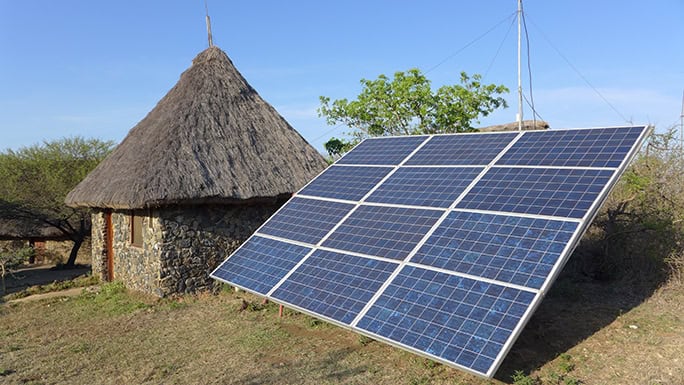
Zero emissions: Campi ya Kanzi was the first fully solar lodge, in 1996. Chyulu Club is the first zero-emissions and carbon-negative lodge in Africa.
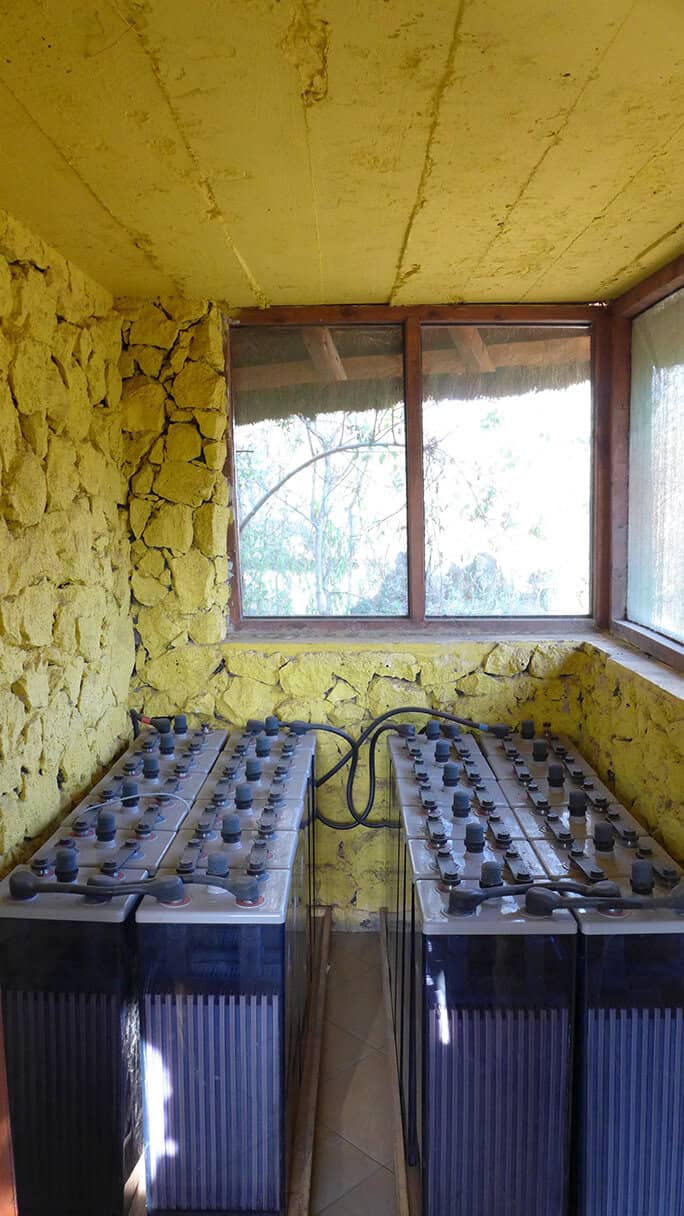
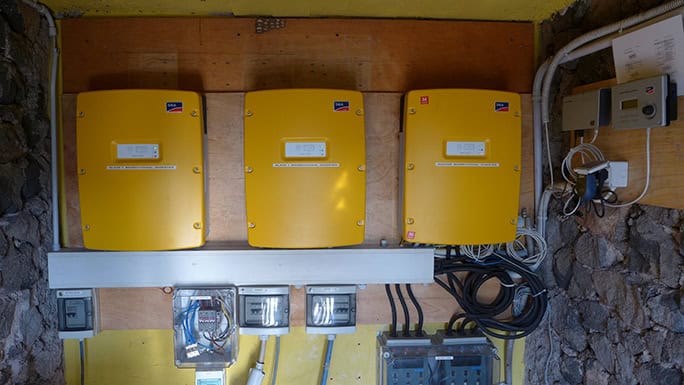
Only renewable energies are used – photovoltaic panels for the electricity demand, with solar energy battery storage; electric game drive vehicles; solar boilers for hot water.
Energy is measured and monitored monthly, with sub-meters in all guest rooms. Carbon footprint zero is achieved.
All food is cooked in stoves using a charcoal made from coffee husks, approved by the United Nations Environment Programme.
The limited emissions that occur, for example in transportation to and from the lodge, are more-than offset on-site through the MWCT REDD+ Chyulu Carbon Project: all guests are charged a nominal fee for the carbon generated during their stay.
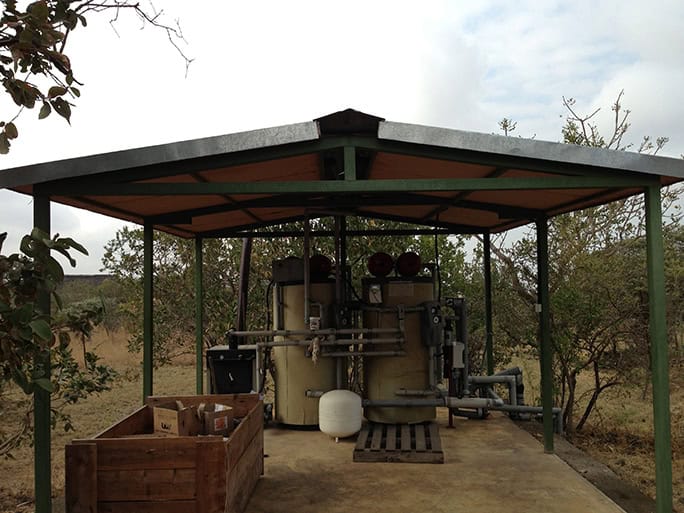
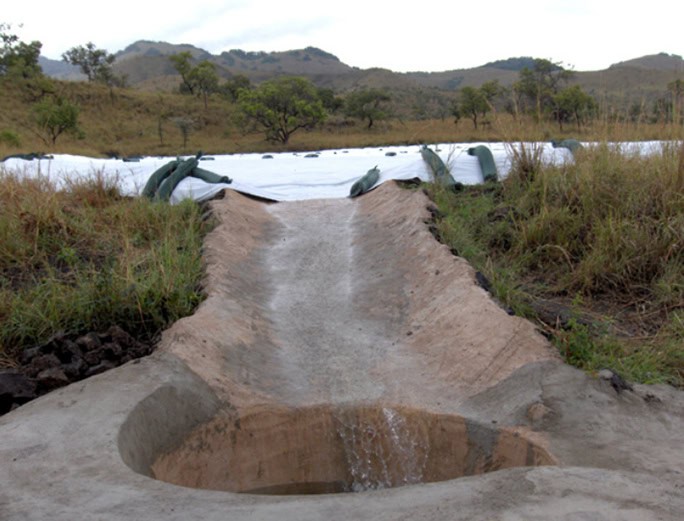
Water: Self-sustaining. All water needs are fulfilled through a rainwater catchment range of approximately 12,000 + 1500 roof square metres, with approximately 2,500,000 litres storage in special PVC tanks and bladders. This eliminates additional pressure on already-sparse wells, and the time and fuel required to bring water from many miles away.
At both lodges, black and grey wastewater is specially filtered through a three chambered process, then recycled to irrigation and a waterhole used by wildlife, providing them with valuable water and maximizing guests’ wildlife sightings. Low energy dishwashers and washing machines are used to save on water consumption, and ecological soaps for purity of water. Water meters monitor consumption. Water carbon footprint zero is achieved.
Kanzi House swimming pool would act as a reservoir for anti-fire if required.
At Chyulu Club water comes from the spring protected by our conservancy, as well as from the roofs. It is stored in three bladders of 600,000 liters.
Food: The camps’ own sustainable organic farm grows vegetables for meals, plus has chickens for eggs and a few cows for organic milk. Food scraps are circled back for compost in the vegetable garden. All kitchens are induction and solar-powered.
Waste: Organic waste is composted and used on the vegetable garden. Glass, plastics, cardboards and papers are recycled. Any non-recyclables go in an incinerator specially built on a UN recommendation to minimize impact. Some goods are reused and upcycled, such as waste tyres given to the Maasai community to re-use as water troughs for cattle, tetra packs re-used to grow tree seedlings and glass bottles re-used to serve drinking water in guest tents.
Construction impact: Using sustainable materials and minimising any landscaping and felling. All materials used are natural, sustainable and collected locally, such as thatched roofs, lava rock, wood for building and furniture and African raffia linens. Landscaping or tree felling is avoided.
Conservation Fee: The per-visitor per-night fee is paid directly to the Maasai Wilderness Conservation Trust, to enable and support the Maasai community to create and run sustainable development programmes to preserve the critical ecosystem and culture.
Land conservancies: 90% of the wildlife population of Amboseli National Park lives in Maasai land for part of the year, so it is crucial that Maasai landlords earn economic benefits to protect the wilderness status of their land and its wildlife.
The already-established Kanzi Conservancy 5,000 acres of grassland, and the Motikanju Conservancy, 7,000 acres of wetland and grassland, do not allow farming and grazing; land is solely dedicated to wildlife.
The aim for a third conservancy around a key water source adds to the vision for a network of conservancies to constitute over 150,000 acres of the most important ecological zones, with long term management deals supporting good stewardship and alternative community livelihoods and supported by international NGOs.
Wildlife research & protection: There are over 100 local rangers and ‘Simba Scouts’ employed to monitor activities in the ranch, combat poaching, and track and protect predator lions, cheetah and hyenas.
The successful ‘Wildlife Pays’ compensation program incentivises Maasai herders for good behaviour of not killing, but protecting wildlife that predates their cattle. The program rigorously assesses and fairly compensates for claims for livestock killed, to a maximum quarterly budget, fully funded by the conservation fee (not philanthropy). It benefits the wildlife, the tourism, and the community for the long term, and sets a new Payment for Ecosystem Services (PES) model for global ecotourism to move beyond minimising negative impacts to maximising positive impacts on the local ecosystem, viably and sustainably. Game scouts also ensure there are no water diversion, no bush fires and no illegal cutting of wood.
Partnership: With the Zoological Society of London (ZSL) aims to develop standard species monitoring protocols with Tsavo National Park. The partnership works to help understand long-term trends of abundance and distribution of key wildlife species with solid scientific assessment of the impact of conservation programs. Holistic rangeland management practices and participatory restoration have been implemented, using a rotational method to reduce environmental degradation and promote sustainable land management.
Carbon: The first REDD+ project for Maasai communities: A UN climate change mitigation strategy through biodiversity and active forest, deforestation and degradation protection and alternative livelihoods for local communities. It’s a 30-year project between 9 organisation partnerships under the Verified Carbon Standard (VCS) and Climate, Community and Biodiversity (CCB) standards, protecting 1,000,000 acres which can prevent 37 million tonnes of CO2 emissions. 2017 saw the first carbon credits sale, to Tiffany&Co. Your stay includes a fee for its offset, and you can buy further carbon credits if you wish. Guests who express an interest can receive a full presentation of the projects at the MWCT headquarters.
Employment: a staff of 65 Kenyans, 90% of whom are local Maasai. All guides, trackers, maids and waiters are Maasai from the community, trained by the lodge.
Education: In partnership with the Ministry, supporting so far
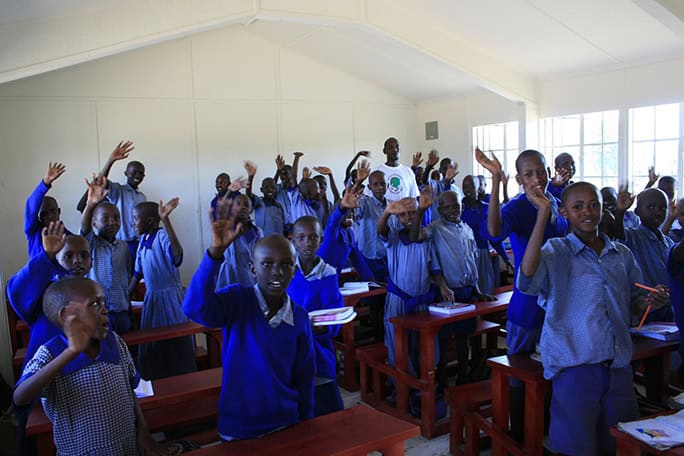
– 56 certified teachers and 12 school support staff in 22 schools, with over 8000 students and a scholarship program for 47 students, as well as providing school supplies and support for extra-curricular activities, school clubs and sports clubs. Maasai elders are also employed to assure Maasai lore is transmitted to pupils attending school.
Construction: 8 classrooms, a 2 bedroom head teacher’s house, a modern library complete with books and computers, and piped water and solar power for Iltilal Primary School, offering education for more than 1,000 children: The only special school in the region, highly gifted students come from all over Kuku Group Ranch to board and study at the Kanzi Academy.
Kanzi Academy: Purpose-built for the best pupils in the area, teaching a combination of the Kenyan and British curriculum, to prepare students for leading national and international schools and to develop future community leaders and role models.
Health: In partnership with the Government of Kenya and Ministry of Health for the 16,000 strong Maasai community over the 283,000 acres Kuku Group Ranch:
Employment of the only doctor in the area
Support of health facilities: 4 sustainably solar-powered with dispensaries and one clinic equipped with modern laboratory for enhanced diagnosis and treatment with a lab technician and 7 support staff.
The only ambulance operated in the area.
Health outreach to remote areas, resulting in greater child immunisation, prenatal care, early disease detection and treatment including for breast and cervical cancers.
Youth sports tournaments to encourage health education, promotion, awareness and counselling including for Female Genital Mutilation (FGV) and HIV/Aids, including voluntary testing. Please contact us if you are a qualified doctor, nurse, dentist or teacher who can volunteer your services to the Maasai people.
MWCT has pioneered very rigorous accountability for how conservation benefits and revenues flow into the community.
Here, everything combines to a genuine, profound, immersive and unforgettable experience.
A conservation fee per guest per night helps the Maasai coexisting with predators – disbursed to compensate predated livestock and in offsetting the minimal carbon emissions.
Buying local: Sometimes, local buying is a false, unsustainable economy which can lead to greater land division and destruction. Where necessary, buying from Nairobi in bulk, from suppliers who care about the environment can be the more sustainable option.
So far Campi Ya Kanzi and the Maasai Wilderness Conservation Trust have benefitted over 10,000 people in conservation, education and health.
Stunning backdrops of wildlife, scenery, Mount Kilimanjaro, and the vibrant Maasai culture, make a paradise for photography.
Alongside its creation and financial support of the Maasai Wilderness Conservation Trust, the lodge is a pioneer working on tourism for all SDGs:
SDG 1 No Poverty: Provides employment opportunities and supports local livelihoods through community-based ecotourism and MWCT projects’ roles in conservation, education and health.
SDG 2 Zero Hunger: Supports its own organic farm for guests and sustainable agriculture and food security initiatives in the Maasai community.
SDG 3 Good Health and Well-being: Employs heath staff and operates health facilities and community outreach.
SDG 4 Quality Education: Runs educational programs and supports local schools to improve access to education.
SDG 5 Gender Equality: Empowers Maasai women through employment and community development initiatives such as crafts, helping cultural preservation.
SDG 6 Clean Water and Sanitation: Implements water conservation measures and clean water access for the community.
SDG7 Clean Energy: Operates all-solar and electric operation.
SDG 8 Decent Work and Economic Growth: Creates jobs and fosters economic development through sustainable tourism and MWCT projects.
SDG 9: Industry, Innovation and Infrastructure: Regenerative ecotourism pioneers: one of the first eco-lodges built in partnership with the local (Maasai) community, carbon neutral and 100% solar-powered since inception in 1996, now carbon-negative, one of the first to implement electric game drive vehicles, to operate a REDD++ projects and sell carbon credits. and implement a “Payment for Ecosystem Services” model.
SDG 10 Reduced Inequalities: Partnering with the Maasai community to ensure equitable benefits from tourism.
SdG 11 Sustainable Cities and Communities: Supporting sustainable development of Maasai villages and preserving cultural heritage.
SDG 12 Responsible Consumption and Production: Implementing eco-friendly practices in lodge operations, such as organic bathroom products.
SDG 13 Climate Action: Using renewable energy sources and supporting carbon sequestration through forest conservation and afforestation programmes.
SDG 15 Life on Land: Protecting wildlife corridors, conserving biodiversity, and supporting sustainable land management practices.
SDG 16 Peace, Justice and Strong Institutions: negotiating wildlife compensation with the Maasai to reduce pastoralist community conflict for wildlife conservation.
SDG 17 Partnerships for the Goals: Collaborating with local communities, NGOs, and government agencies to achieve sustainable development goals.
All you need do is get to Nairobi International Airport, where a Campi ya Kanzi host will meet you and look after the rest!
If early enough in the day, you can transfer direct to the camp, otherwise you’ll need to overnight at a Nairobi hotel.
You can transfer the 200 miles by 4WD by road (maximum 4 passengers) which takes approximately 6 hours: from $500 one way per vehicle.
Alternatively, take Campi ya Kanzi’s own air services – a 6-seat Cessna 206, which takes one hour and operates 7 days a week: from $495 per person one way, with a minimum of 2 passengers and maximum total luggage allowance of strict 15 kg (35 pounds) per passenger, in soft duffle bags, not armoured cases or wheels.
Guests can even be transferred by private plane to/from other destinations such as a Maasai Mara trip witnessing the Great Migration, Mombasa or Malindi.
Luca and the local Masai communities are doing fantastic conservation work together, ensuring that sustainable tourism works for everyone. You really feel that your money is well spent in this conservancy. Money spent here not only brings the visitor an amazing experience whilst being at one with nature, but also goes a long way to preserving this wonderful piece of Africa for future generations.

Campi ya Kanzi is the most wonderful place on earth to experience wilderness as its best. Not only because of its amazing location but thanks to the well-prepared team in the camp! They made us spent far more than an amazing family holiday, they went beyond the imaginable! And whenever we thought that was it, there was another surprise! Another big experience. From wonderful walks through the savanna, exploration in the forest, sundowners at breathtaking lookouts, coffee at dawn overlooking the Kilimanjaro, (hearty) breakfast in the middle of the savanna, dinner in a cave... all these framed by the wonder of pure nature, it's sound and it's animals. Just amazing!
2015 Positive Luxury Award – Winner
2015 World Travel Award – Africa’s Leading Ecolodge – Nominee
2015 We Are Africa Innovation Awards – Engage Africa / Conserve Africa / Shape Africa – Nominee
2014 Travel + Leisure’s Global Vision Award –Winner
2014 We Are Africa Innovation Award – Community Engagement – Nominee
2012 The Equator Prize of the United Nations Development Programme Equator Initiative – recognising outstanding community efforts to reduce poverty through the conservation and sustainable use of biodiversity – winner Maasai Wilderness Conservation Trust.
2012 United Nations Development Programme – Champions of the Earth – MWCT Chairman Samson Parashina.
2008 Conde Nast World Savers Award
2006 Tourism for Tomorrow Award in 2006 (supported by the World Travel Tourism Council and sponsored by various organizations such as British Airways, BBC World and Newsweek) – winner
2006 Eco Warrior Award (supported by Ecotourism Kenya).
2005 Skal Ecotourism Award – winner
2004 Word Legacy Award (supported by the National Geographic Society and Conservation International) – finalist.
2002 Gold rated by Ecotourism Kenya (first lodge in Kenya to be)
Enquire to find out what’s on offer for your trip dates, ensuring you get the best deals and availability tailored to your travel plans. Don’t miss out on exclusive promotions and packages designed to enhance your experience.