

Recommended duration
Price per night per adult
tbc
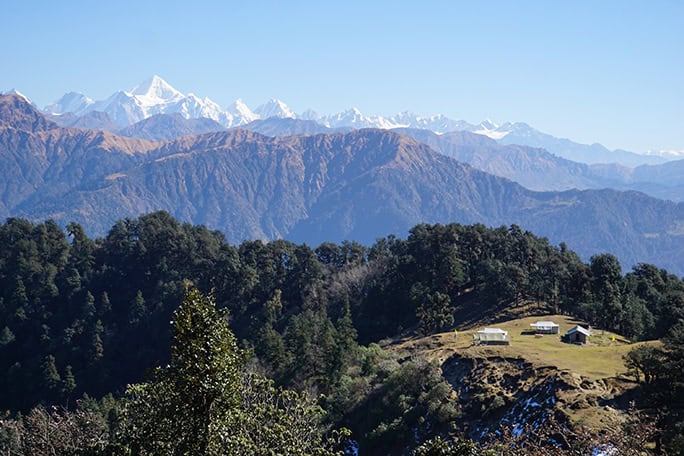
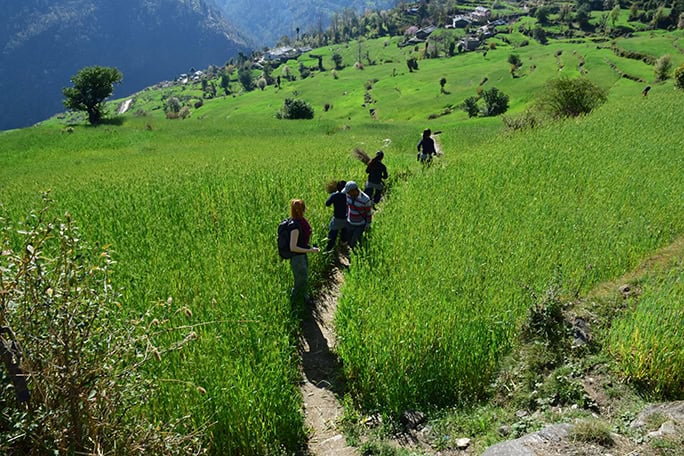
Walk from village to village in the Himalaya foothills and discover an extraordinary experience of India’s rural life whilst providing important supportive income to help sustain remote communities.
These walking and trekking holidays in the Himalayas offer options for every level of hiker.
Walk in your own party with a private guide so you can journey at your own pace, with plenty of time to spot wildlife and pause to admire the views.
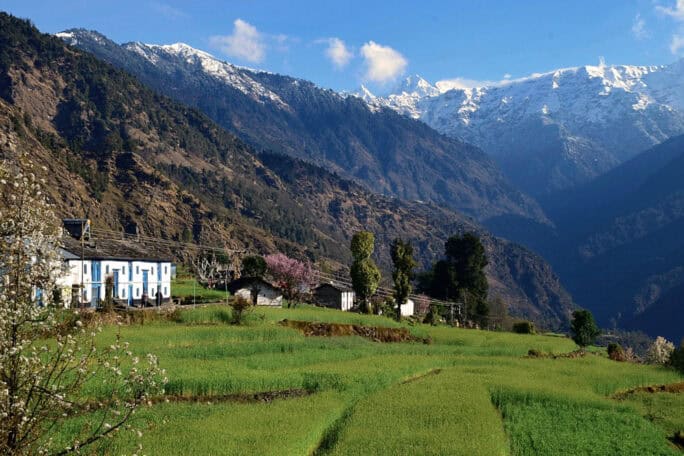
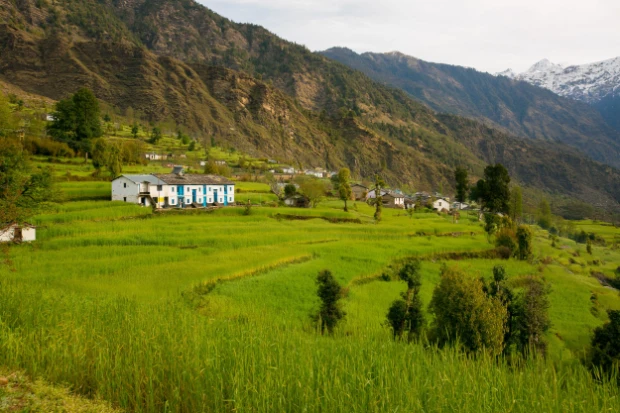
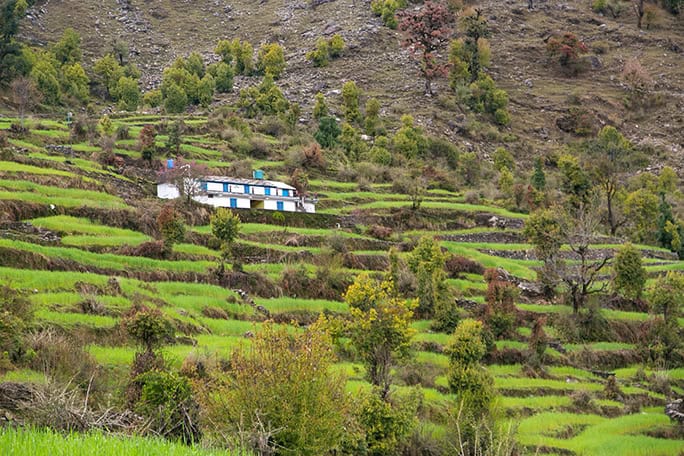
Staying in rural villages where traditional life has been sustained for centuries, you’ll discover these special places through the eyes of the local people. At the core of each is a village-owned guest-house, like a home stay.
Your own local guide will trek with you between the villages, while your luggage is carried by porters, leaving you to enjoy the walks, mountain views and villages. Your guide will help you connect and interact with your hosts in your unique village homestays, where you’ll be warmly welcomed to enjoy delicious local cooking and experience the ancient rhythms of life and community.
Your trip helps sustain these remote agricultural communities with a further income stream and job opportunities where rural exodus could otherwise threaten the existence of the villages. This is what led to the organisation’s creation. (Read the story).
Experience unparalleled depth of experience with village ways’ people and places.
True ecotourism: stay in the heart of timeless tranquillity in beautiful remote villages & valleys
Experience unique community immersion and see real India through local eyes
Relax in your own house as a village guest, supporting not displacing traditional livelihoods
Enjoy extra-special experiences at Holi, Diwali or the annual cricket tournament!
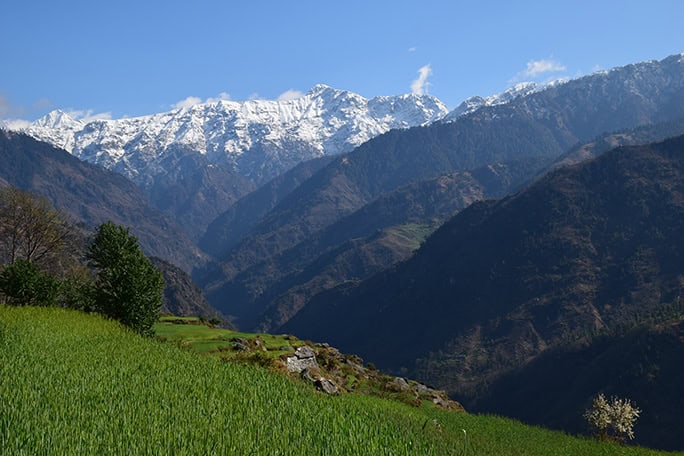
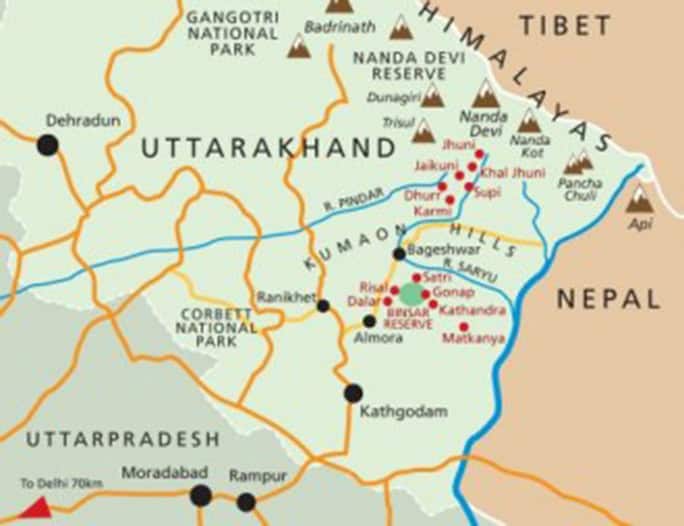
For your trip, choose from a range of inspirational routes in two regions in the Indian Himalayas:
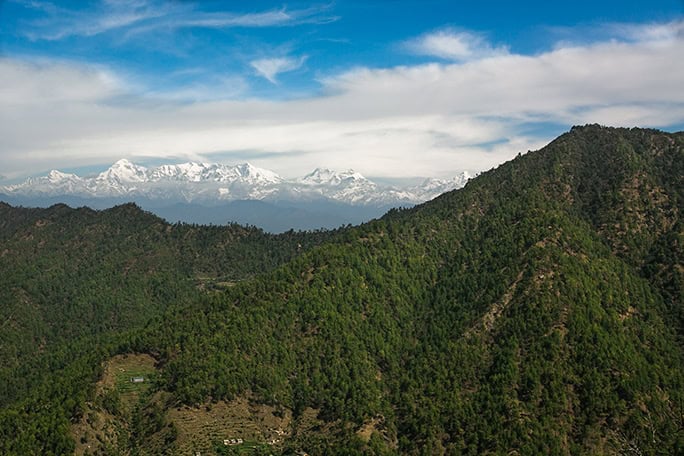
The Binsar Wildlife Sanctuary in the heart of the Kumaon mountains, and
The Saryu and Pindar Valleys, just a few miles from the borders with Tibet and Nepal.
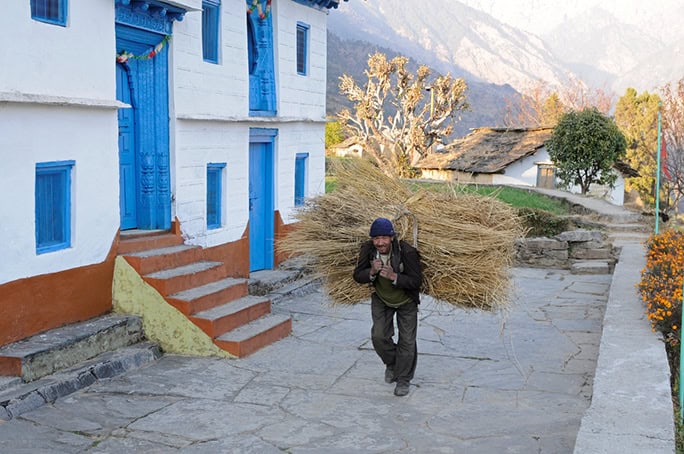
Every village is different. But each one shares a sense of the people being attached to the land that goes back generations.
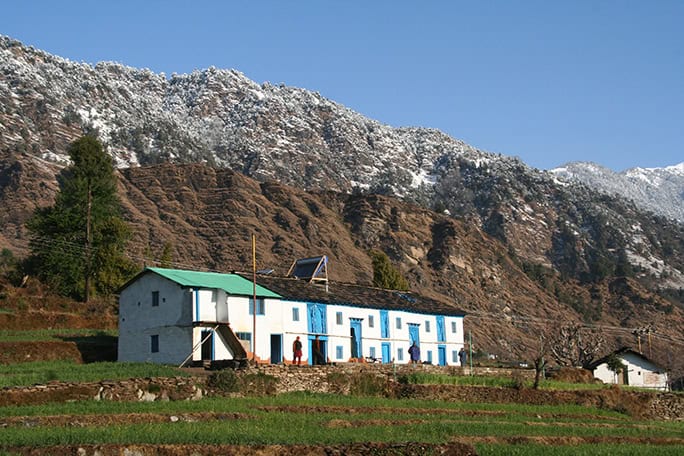
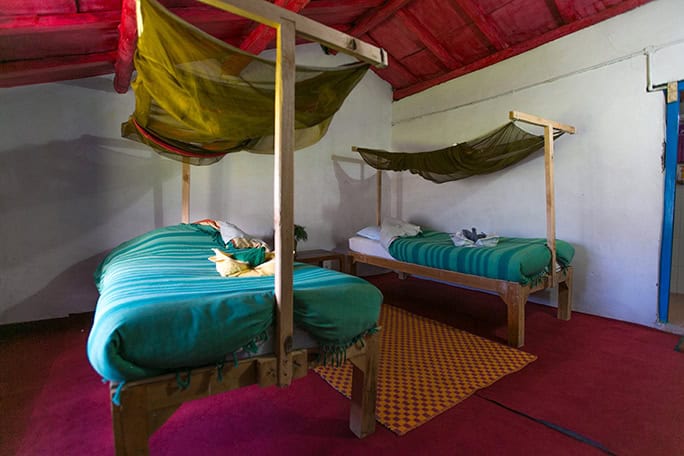
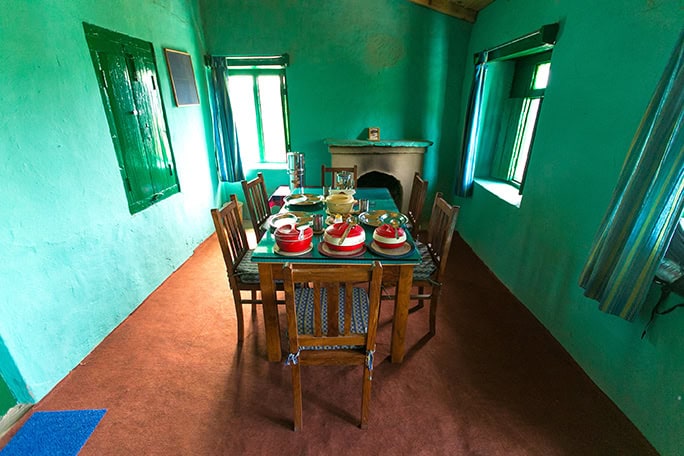
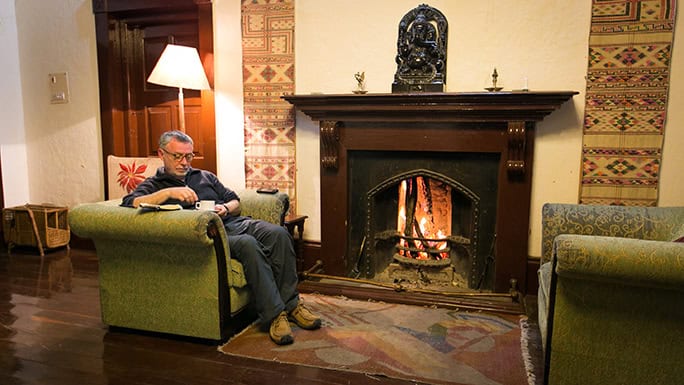
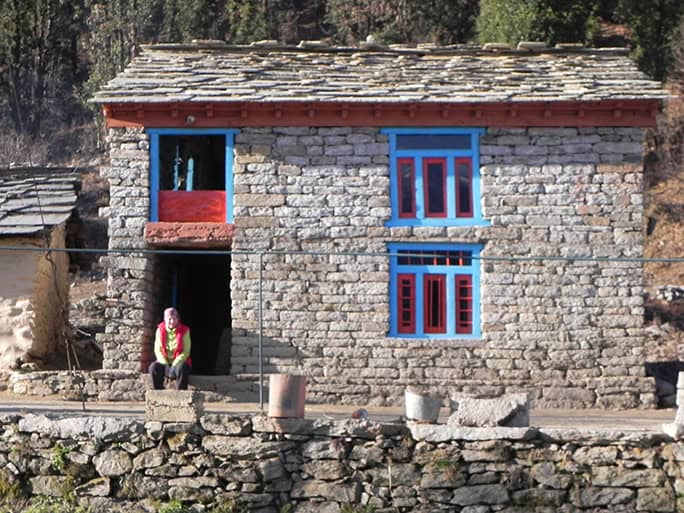
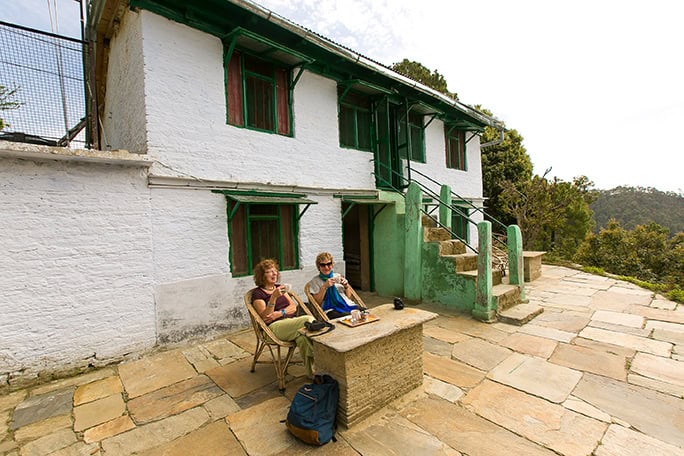
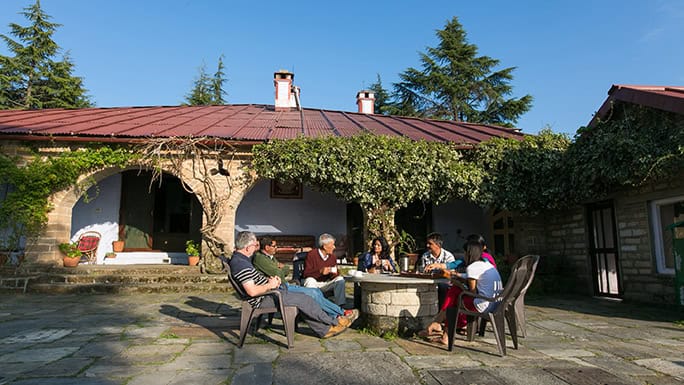
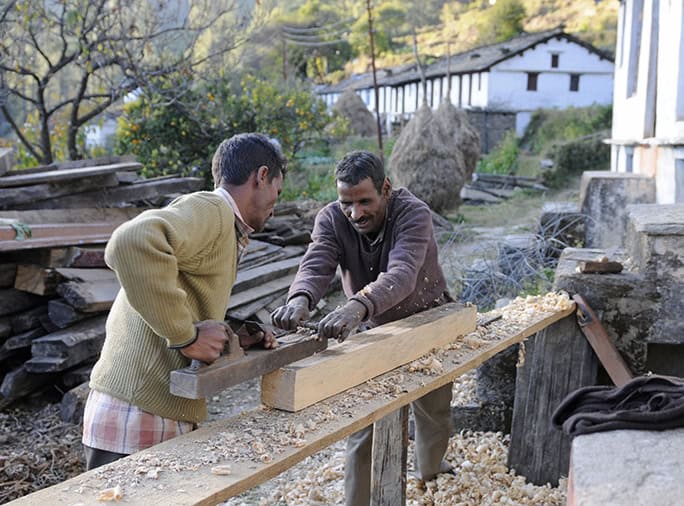
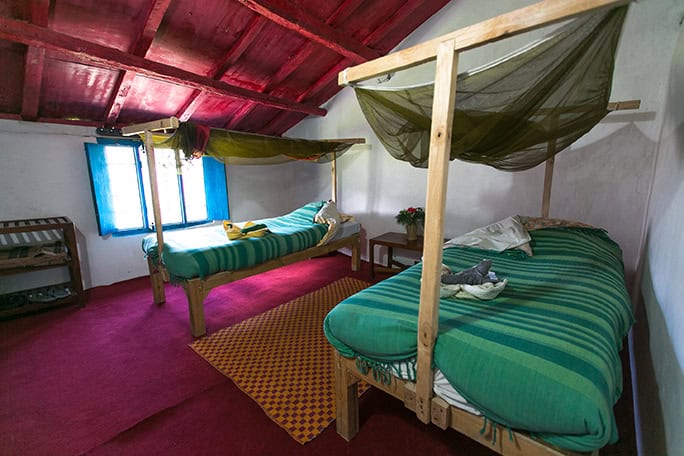
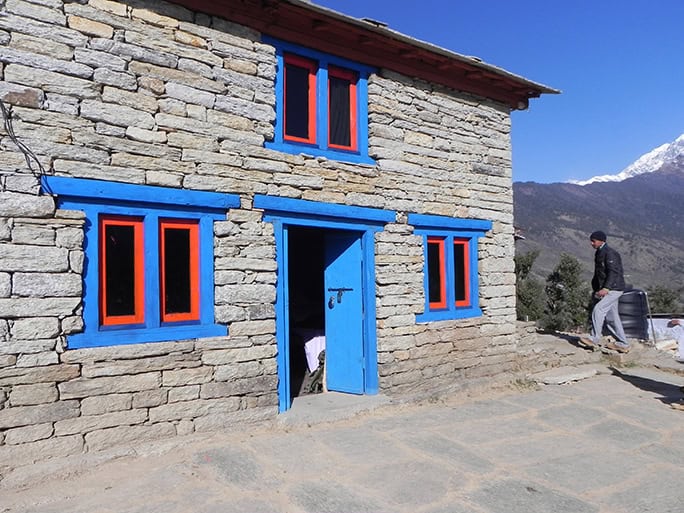
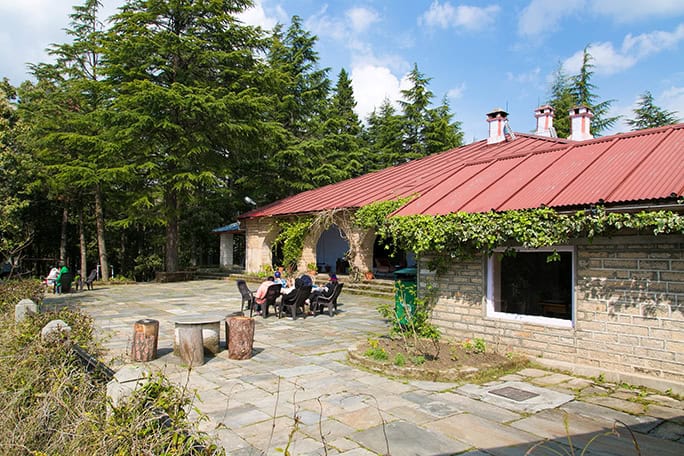
The special village guesthouses reflect the local style and traditions. Local craftsmen undertake the build, renovation and maintenance using traditional materials – stone, mud mortar and timber – and furnished attractively and simply with local materials wherever possible.
Owned and managed by the village committee, these are so much more than typical homestays; you are hosted by a village, rather than just one family and your visit benefits the wider community.
Houses typically have
All meals are provided during your stay in the villages, typically delicious home-grown vegetarian food and picnic lunches taken when trekking.
The trekking is ideal for every level of walker and a typical day might involve 4 -5 hours of walking.
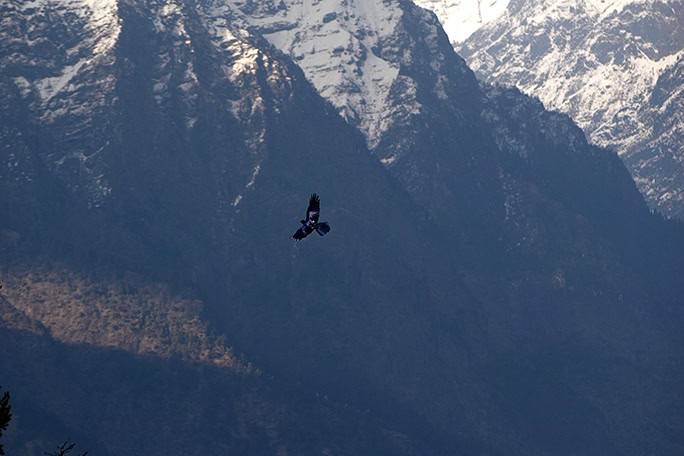
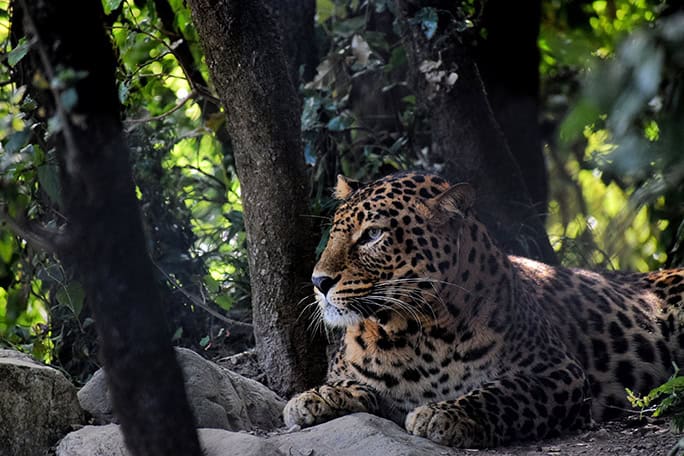
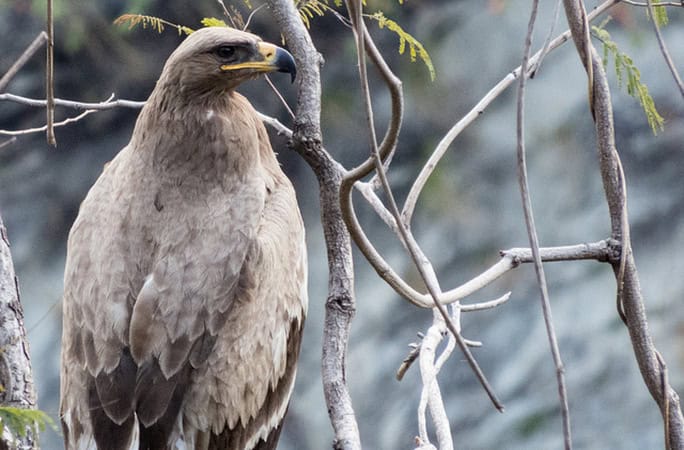
Your local guide will help you spot the birds and animals.
At the villages you may watch or help harvest fruit, tend buffalo or work in the fields, or relax on the terrace with a cup of hot chai.
You are welcome to help prepare traditional dishes using the day’s harvest if you wish. There is a wonderful diversity of produce; from coriander, buck wheat and rice, to cocoa yams, sweet lemons and pomegranates. After dinner you may be invited to join in the village games of gooli-dandia or cricket.
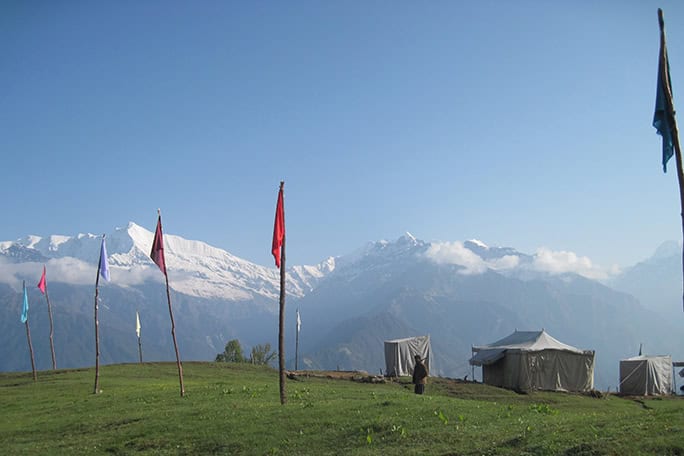
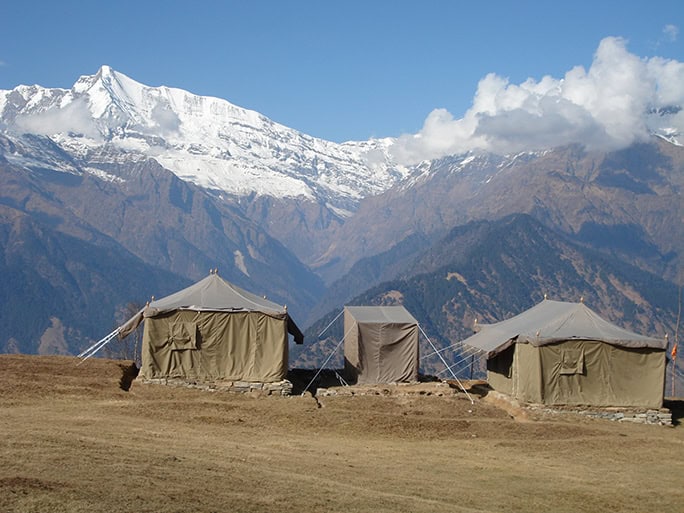
In general, mountainous areas have unpredictable weather, and rain showers can develop with little warning, with snowfalls at higher levels. Temperatures at the higher altitudes can also fall quite suddenly, especially when the sun goes down, so always carry a sweater, even during summer months. At the campsite the team usually lights a fire for warmth while you sip hot soup. However, even with the thick duvets, warm night clothing is required – and hot water bottles are provided.
The weather also varies markedly by season, so choose a time that suits your preferences:
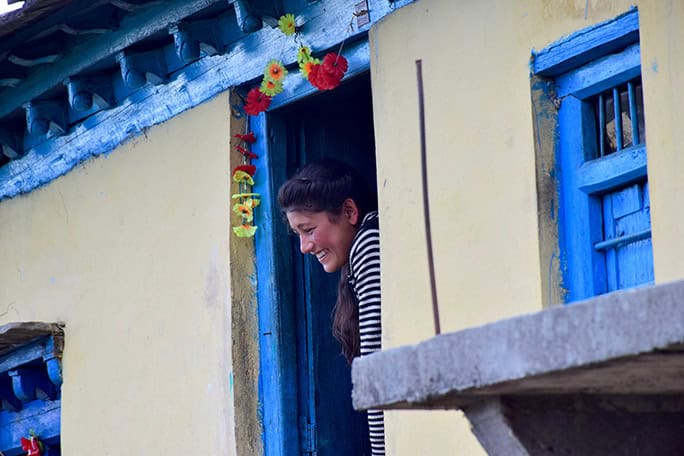
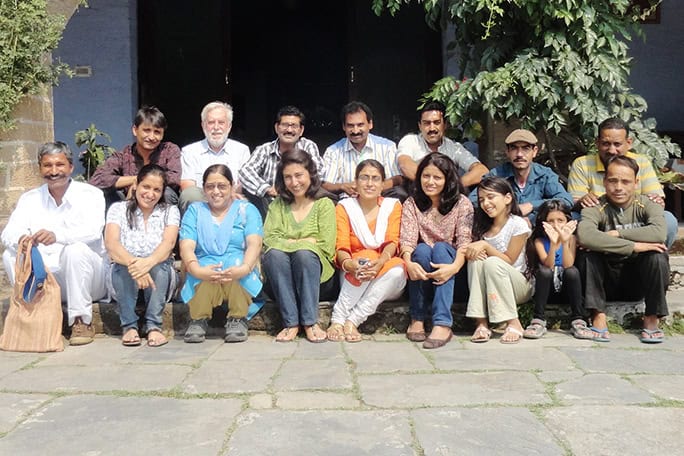
Most important are the village communities with whom you stay. You will be welcomed warmly and feel genuine village life all around you. This wonderful social exchange forms the most enduring memory for many guests.
The places can feel far from the modern world, but the villagers are rightly proud of their heritage, and delighted that guests travel vast distances to visit them.
“One of the partnership’s core values is mutual respect, of guests and village partners, recognising we should all celebrate and encourage the maintenance of diversity”
The Community Guest Houses set-up offers a unique opportunity to earn about each others’ lives through a wonderful mix of authentic experiences.
Local coordinators and community members ensure you are looked after from the moment you arrive and your stay is a success.
These trips take you to a remote part of the world and an area of unspoiled and outstanding natural beauty where you will also be spending time getting to know small, rural communities. Please act responsibly, respect the environment and their way of life, customs and religious sentiments at all times.
Please respect eating habits. The food in many of the communities is vegetarian. Please inform in advance of any allergies or special dietary requirements.
Please dress appropriately in clothes are not revealing.
It’s disrespectful to take a photo of locals without asking. If you’re with a guide you can have them ask on your behalf — but ensure that they do, and be prepared to accept being declined.
A dedicated team help make the most of your stay in partner villages.
There is a network of people involved in making your holiday a success. Most important are the village communities with whom you stay. Each village owns and manages the village guesthouses, run by a village committee. Local people cook and serve meals, and also introduce you to themselves and their way of life. Guides and porters as well as cooks and cleaners are all important part of the team.
Each village owns the homestays.
Each community forms a democratically-elected committee to set up and manage the homestays.
Village teams receive good training in hygiene and hospitality management but are not professional hoteliers.
The village communities have embraced their new host roles with huge hearts.
Rural communities in remote places often struggle to survive. As they lose economic viability, they face a brain and culture drain of migration as young people head for the cities, depleting traditional knowledge and skills. Village Ways is a shared value social enterprise aiming to:
Develop responsible tourism with poorer village communities:
Create village ownership, sustaining village life and culture
Connect you to rural life.
Provide villages benefits directly from your presence and improving livelihoods in remote areas, reducing the need for outward migration.
Conserve traditional livelihoods, culture, environment and wildlife.
Traditions and local knowledge are key to sustainability, enabling the villages to live in balance with their surroundings, and to develop understanding of the changes (positive and negative) that the modern world can bring.
As most journeys are on foot, you can take this in slowly, from guides’ knowledge of local flora and fauna, to witnessing craftsmen using traditional skills and materials whilst simultaneously incorporating energy-saving technologies.
Guests are encouraged to respect the traditions and beliefs of the host villagers, and to participate in local activities where possible.
The training and role of guides is instrumental to this and communicating local knowledge to tourist guests, including respect for and awareness-raising of local environmental issues to both villagers and tourists, is encouraged by providing information and interaction.
Communicating and sharing these experiences with outside guests has the added social benefit of generating self-confidence, greater pride in the villages and enhanced appreciation of the importance of their environment and wildlife, thereby reducing poaching and conserving nature.
Environmental consideration is a critical element of all economic decisions at all levels. Through the village tourism committees, there is education on vital matters such as pollution (especially litter), energy saving and water collection.
“People are coming back because their roots are strong. But the soil was weak. Projects like Village Ways are making the soil strong again.” — Himanshu Pande
Typically a village-owned guesthouse is at the centre of the tourism enterprise – a ‘home-stay’ offered by the whole village.
The hosts, guides, cooks, housekeepers and porters are all drawn from different families through the village, all undertaking training to improve their skills and sharing the benefits.
Wherever possible all necessary work is undertaken by the villagers, supplies (food, building materials, furnishings etc) are sourced locally and the use of local skills is encouraged and developed, with training and guidance provided where necessary in, for example, selling craft products.
As you move from village to village, you can connect easily to the communities and their way of life, sharing benefits even more.
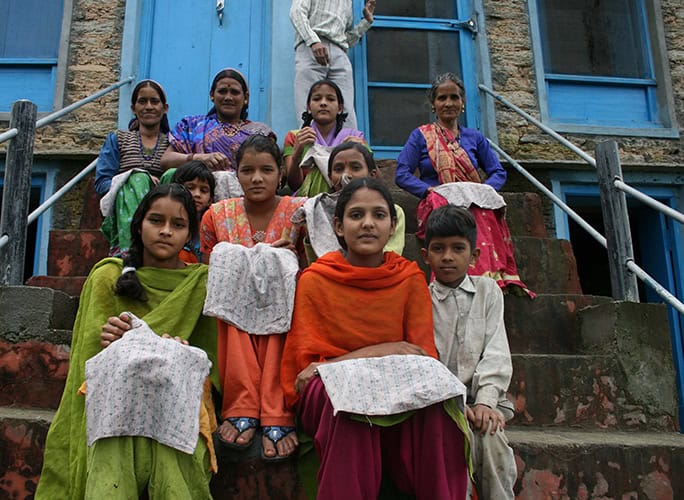
The democratic organisation of the village tourism committees and encouragement of women’s participation has also improved governance and gender balance.
“These were absolutely fabulous weavers once upon a time. And because the terrain where they live is so harsh, that just merely existence… they needed food and to farm these very difficult lands, and these skills were dying. And if we could now bring in revival of these techniques, we would find that they would be able to produce a fabulous product, and at the same time, the tourists will come, and guests will come to visit and will be buying this product so whereby promoting and preserving an old skill” – Ratnamala Kapur
With this model, a partnership is established with each village to develop and manage a local tourism enterprise offering unique ethical, responsible tourism.
Working in partnership with the villagers, it is important that this low-key tourism runs alongside, but does not displace, traditional livelihoods.
The aim is to develop a sustainable form of tourism that builds on local resources, which will provide demonstrable, practical and positive economic and social uplift for the participating communities and will raise their awareness of environmental and social issues, at the same time benefitting tourists by introducing them to local people, culture, walks and wildlife.
It is the responsibility of the Village Committees to data monitor, usually manually recorded as most villages do not have access to a computer. At the end of each financial year the regional coordinator collects the data from each Village Tourism Committee.
This way, economic opportunity is achieved by building on the villagers’ own strengths, traditional skills and deep local knowledge to develop enterprise, bringing income and rural population retention.
From 2013 to 2014 in Binsar, where 58% households are below the poverty line, Village Ways generated 14% of Binsar’s income, equivalent to two local full-time primary school teachers’ annual salaries. 81% of families and 20% of individual are involved with the organisation.
Such income means people can return to live in the villages and helps reduce dependence on risky seasonally crop yields or low agricultural prices.
There is ongoing monitoring to check benefits are spread around the households over each season, with priority given to those who are below the poverty line.
“People like to migrate because they want the money, but I don’t think they want to migrate if there is an alternative. We’ve shown that here with the village ways concept, people would be very very happy to stay in the village if they could afford to do so.” – Keith Virgo, Director.
SDG 1 No Poverty: Creates tourism job opportunities in rural villages, providing income to local communities.
SDG 2 Zero hunger: Supports local and traditional livelihoods, thus organic agriculture.
SDG 3 Good Health & Well-Being: Supports communities to remain in fresh air of mountains, not migrate to overpopulated, polluted cities, and supports fitness with trekking holidays.
SDG 4 Quality Education: Partnerships with schools in the UK help raise funds and awareness about education in developing countries.
SDG 5 Gender Equality: Promotes women’s empowerment and entrepreneurship through community partnerships.
SDG 8 Decent Work and Economic Growth: Establishes Village Tourism Enterprises (VTE) partnerships, creating sustainable livelihoods.
SDG 9 Industry, Innovation and Infrastructure: Has created an innovative scalable, replicable model in tourism sector, for sustainable development, including homestay infrastructure.
SDG 10 Reduced Inequalities: Focuses on uplifting under-resourced villages, reducing rural-urban disparities.
SDG 11 Sustainable Cities and Communities: Develops sustainable tourism infrastructure in rural areas, helps sustain local livelihoods.
SDG 12 Responsible Consumption and Production: Encourages responsible tourism practices and local supply chains.
SDG 15 Life on Land: Operates in wildlife sanctuaries, promoting conservation awareness.
SDG 17 Partnerships for the Goals: Creates networks of partnerships between villages, tour operators, and advisory councils.
Trips Include:
Trips Exclude
Brilliantly conceived and immaculately well-delivered: eco tourism at its best What a brilliant enterprise. Village Ways offers a fantastically well-organised and interesting holiday, with wonderful walks through the Binsar Wildlife Sanctuary, and comfortable nights in village guest houses. We were met at the airport, driven to our little hotel in Delhi for a night, shepherded to the train station, and driven up into the hills - all seamlessly and easily. The Kali Estate was an intriguing place to stay for two nights, and we were then provided with two guides to lead us up and down from village to village for a week or so. We loved the walks, the time in the villages, and the many conversations with our guides, especially Santosh, who was excellent and worth asking for by name. Others have written about how beautiful the area is, and how fragile. Do this holiday before it is too late.

A unique experience! We spent 10 days in the Binsar Wildlife Sanctuary - a night at each end at Khali Estate, and then 8 days walking from village to village through leafy forests, listening to the birds and surrounded by mountains and the peaks of the Himalayas. Dawn and dusk were exceptionally beautiful and peaceful. Committees from the villages take it in turns to cook and clean and the food was fabulous. In spite of the cold, we were cosy and the beds clean and comfy. Our guides, Bipin and Shere were excellent - so knowledgeable and such lovely people. We learnt so much from them about life in rural India in one of the loveliest spots in the world.
2021 World Travel Market World Responsible Tourism Awards – Growing Local Economic Benefit – Global Winner
2021 World Travel Market World Responsible Tourism Awards – Growing Local Economic Benefit – Gold
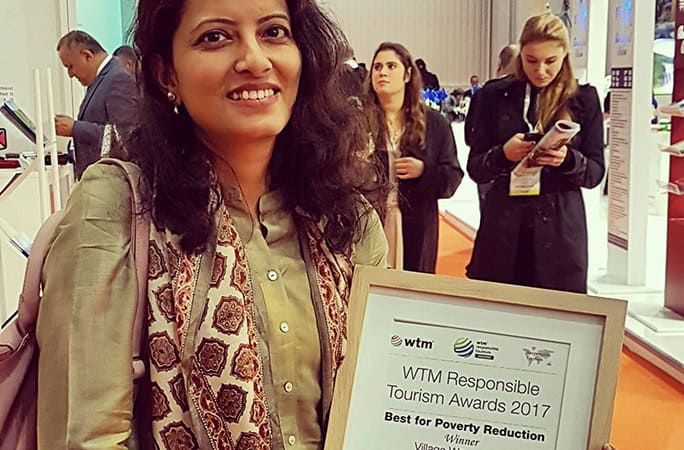
2017 World Travel Market World Responsible Tourism Awards – Winner – Best for Poverty Reduction
2013 World Travel Market World Responsible Tourism Awards – Winner, Best for Local Economy
Affiliation: The International Committee of the Red Cross
Affiliation: Madhya Pradesh Ecotourism Development Board (MPEDB)

Enquire to find out what’s on offer for your trip dates, ensuring you get the best deals and availability tailored to your travel plans. Don’t miss out on exclusive promotions and packages designed to enhance your experience.