


The human sex ratio for the world population is 101.07 males:100 females (UN, Our World in Data)
SDG #5
“Achieve gender equality and empower all women and girls”

Sustainable Development Goal 5 Gender Equality: Progress
While some indicators of gender equality are progressing, gender inequality continues to be high. Insufficient progress on structural issues at the root of inequalities (legal discrimination, unfair social norms and attitudes, decision-making on sexual and reproductive issues and low levels of political participation) are undermining the ability to achieve SDG 5. (Source data: UN)
-
640 million women and girls total alive today married before their 18th birthday; globally 19% of women aged 20 to 24 years (UNICEF, Girls Not Brides, 2023)
-
320%: Women spend, on average, 3.2 times as much time on unpaid domestic and care work as men (89 countries; Action Aid 2024, UN Women).
-
230 million: girls and women have been subjected to FGM in ~94 countries where it is regularly practiced (UNICEF, 2024, +15% vs 2017; End FGM European Network, Equality Now, U.S. Network to End FGM/C )
-
83%: Women worldwide earn 83 cents for every dollar earned by men, but not necessarily in the same work (Statista, 2025)
-
66%: developing countries have achieved gender parity in primary education enrollment. Globally, it’s near-parity at ~91-92% (UNESCO, UNICEF)
-
60%: countries still lack rape laws based on the principle of (lack of) consent. (UN Women, Equality Now, 2022)
-
60%: Countries give equal rights to women to financial services (UNDP, 2020). However, the gender gap in access to financial services narrowed from 9% in 2011 to 6% in 2021 globally (World Bank Global Findex, 2021), but remains (~1 billion women underserved by financial systems) and wider in many regions, especially South Asia and Sub-Saharan Africa.
-
~60%: women’s employment globally is in the informal economy, and in low-income countries, it exceeds 90% (ILO, UN Women, 2018).
-
57%: Women aged 15-49 can freely make their own decisions about sexual relations, contraceptive use and health care (UNFPA, WHO). In some regions (Europe, North America), it’s 80%+, in others it drops significantly eg. sub-Saharan Africa 38% (Global Health: Science & Practice)
-
42%: Countries legally give equal rights to women to land ownership (UNDP, 2020); but ~100 million women live in countries where they can’t own, inherit, or manage land (UN, 2024). Of the world’s land, women own >20% (We Forum, Global Issues), 13% of agricultural (FAO).
-
~40: Countries lack laws protecting women from domestic violence. Only 104 countries have comprehensive legislation (UN Women, World Bank, 2022).
-
39: countries do not grant daughters and sons equal inheritance rights, and 36 countries do not grant equal inheritance rights to widows and widowers (UN, World Bank, 2024).
-
30%: 1 in 3, 736 million women, have been subjected to physical and/or sexual violence (partner or non-partner), at least once in life (UN Women, WHO, 2025).
-
34%: Senior leadership positions mid-market companies held by women, yet they make up 48% of corporate workforce (LinkedIn, 2025)
-
27.2%: parliamentary seats (single or lower houses) worldwide held by women in 2025, up from 11% in 1995 (highest region Americas ~35%), and 35.5% of elected members in local government (UN Women). 6 countries have achieved gender parity (50%/+ women) in parliaments: Rwanda, Cuba, Nicaragua, Mexico, Andorra, and the UAE. For local government, 3 countries have reached parity, plus 22 countries with >40% women (UN/IPU)
-
18: The number of countries in which husbands can legally prevent their wives from working (World Bank, World Economic Forum, 2025).
-
8%: women aged 15–49 years have experienced physical and/or sexual violence by an intimate partner in the last 12 months (WHO), but less than 40% of women report the crime or seek help, and women’s mobiles are more likely monitored by partners (2024).
-
Covid-19: exacerbated existing inequalities for women and girls, supporting additional care-giving of children and the elderly, and disproportionately affecting nearly 60% working in the informal economy, putting them at greater risk of poverty. Lockdowns increased the risk of violence against women and girls: by up to 30%.
-
67% of health & social workers are women on the front line providing essential care services for billions. However, they often hold lower-status and lower-paid positions, with men occupying #75% of senior roles (WHO, 2022).
SDG5, Gender Equality: Challenges
Child marriage before the age of 18 is a human rights violation, mostly affecting girls, and can lead to a lifetime of disadvantage and deprivation. Most common in sub-Saharan Africa, as most declines has been driven in South Asia, where a girl’s risk of marrying in childhood decreased significantly.
Female Genital Mutilation: is also internationally recognised as a human rights violation:
- over 230 million girls and women worldwide have undergone FGM.
- rapid population growth in the 31 countries where the practice is concentrated and an entrenched social norm is leading to absolute numbers increasing, but percentages are decreasing: 1/3 girls aged 15-19 now, versus 1/2 in the mid-1980s.
- FGM is almost universal in some countries – affecting at least 9 in 10 girls and women aged 15-49 (UNICEF, 2024).
To meet the Sustainable Development Goal of eliminating FGM by 2030, progress would need to be 27 times faster than the rate seen in the past decade.
Physical and/or sexual violence: Data shows the prevalence of physical and/or sexual partner violence is highest in Least Developed Countries, at 37%. (WHO, UN Women)
Sexual and reproductive health and rights: Just under half of women aged 15 to 49, married or in union, don’t make their own decisions about sexual relations and the use of contraceptives and health services: Inequality that puts women at increased risk of HIV, the leading cause of death for women of reproductive age in some regions (UNFPA, WHO).
In education, women make up nearly two-thirds of the world’s illiterate adults (aged 15+), and girls are more likely than boys to be out of school, especially at secondary level and in low-income countries (UNICEF).
- Unpaid and domestic work: Women perform at least 3 times as much unpaid care and domestic work as men globally.
- The gender gap is widest when women have young children at home and in low- and middle-income countries (UN Women).
- This unpaid work limits women’s participation in paid employment, education, and leisure, reinforcing socioeconomic inequalities.
Women in STEM (science, technology, engineering and maths sectors, including health professionals), are still only 28-29% of the workforce, despite significant progress (WEF, Society of Women Engineers, UNESCO, 2025). Underrepresentation is even more pronounced in senior roles and specific sectors: Women hold only about 12% of STEM executive positions globally, and in fields like engineering, the share is even lower.
Healthcare is an exception: While women make up around 70% of the global healthcare workforce, they are still underrepresented in leadership roles (about 25%).
In sports: Women are also underrepresented, both in participation and especially in coaching and officiating roles. As of 2023, only one in four leadership positions in international sports federations were held by women, and girls are twice as likely as boys to drop out of school sports as teenagers.
All-female events also receive significantly less media coverage (Exxpedition, 2017).
- After decades at just 5% of total sports coverage, women’s sports coverage tripled to 16% in 2022, potentially reaching 20% (2025), far below parity with men’s sports.
- Structural inequalities persist in investment, sponsorship, scheduling, and pay, all of which contribute to lower visibility and fewer opportunities for women in sport (WEF, Deloitte, UN Women).
In law and legal protection: Globally, women enjoy only 64% of the legal rights that men do (WEF; World Bank, Fair Play Talks).
- Violence against women: Many countries still lack comprehensive legal protection, especially regarding marital rape, domestic violence, and sexual harassment in public spaces.
- Employment and economic benefits: Legal barriers remain in hiring, pay equity, parental leave, and workplace protections in many countries.
- Marriage and family: Dozens of countries still permit discriminatory practices in marriage, divorce, and inheritance.
- Public life and overarching frameworks: Not all constitutions guarantee gender equality, and anti-discrimination laws are incomplete in many places.
Gender-based exploitation hampers climate crisis attempts to repair and adapt to environmental degradation, plus increases violence against women and girls: Where extreme weather puts the natural environment under stress and intense competition for resources, links between gender-based violence, environmental crimes such as wildlife poaching and illegal resource extraction, and sex trafficking and violence rise. Sexual violence is used to suppress environmental activists, to undermine their status within a community and discourage others. Yet few projects for climate or conservation recognise this.
- For every 1°C rise in global temperature, incidents of intimate partner violence increase by nearly 5%, meaning an additional 40 million women and girls by 2090 if warming reaches 2°C (UN)
Gender equality therefore must also be at the heart of any viable strategies on the climate and ecology. (IUCN, 2020).
“The achievement of full human potential and of sustainable development is not possible if one half of humanity continues to be denied its full human rights and opportunities” — The 2030 Agenda for Sustainable Development
There cannot be sustainable development if there is no gender equality, integral to each and every sustainable development goal. Women’s empowerment is a precondition to solving poverty and resource issues and peace. Equality will require vigorous efforts and legal frameworks, to counter deeply rooted gender-based discrimination. Thankfully, social norms can and do change.
(In)Equality in tourism
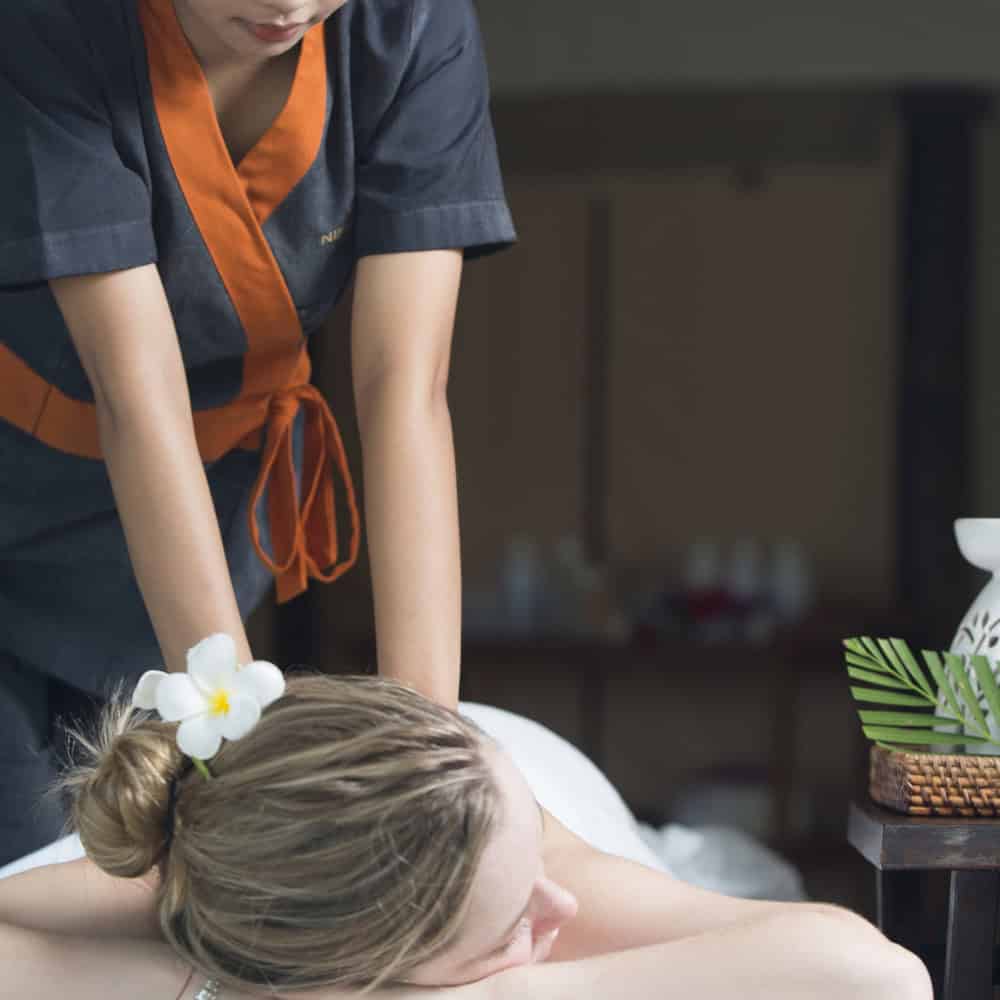
In most regions of the world, women make up the majority of the tourism workforce, representing 40% hospitality globally (2024, WTTC), up to 70% in some areas (International Labour Organization), including 57.6% in the EU (2023).
That said, women in tourism tend to be in the lowest paid and lowest status jobs, and women perform a large amount of unpaid work in family tourism businesses (UNWTO and UN Women).
It’s also of note that women “also tend to work exclusively with women. Such gender segregation affects pay, access to training and, hence, to better paid work” (Equality in Tourism).
“More must be done to close the gender gap, in particular ensuring equal pay for men and women for equal work, raising employment quality and ending all discrimination.” – Taleb Rifai, Secretary-General, UNWTO, 2011
How can Tourism help Gender Equality for Women and Girls, SDG 5?
“You can offer women jobs in the hospitality industry, assure fair access to microcredit; invest in training; promote mentorship, and feed the media with success stories of women entrepreneurs in the tourism sector who have made a difference in their communities.”- Michelle Bachelet, Executive Director of UN Women at First International Congress on Ethics and Tourism, September 2011.
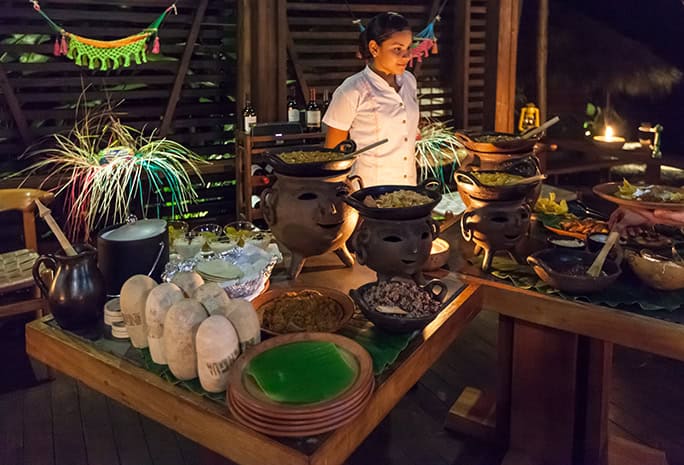
Tourism can empower women in multiple ways, particularly through the provision of jobs and through income-generating opportunities in small and larger-scale tourism and hospitality related enterprises.
As one of the sectors with the highest share of women employed and entrepreneurs, tourism can be a tool for women to unlock their potential, helping them to become fully engaged and lead in every aspect of society.
Here’s what some of the Earth Changers around the world are doing to support gender equality and empowerment:
Earth Changers’ Gender Equality & Female Empowerment Initiatives
-
One of the reasons Orbis decided to set up in Malawi is that the country is supportive of gender equality.
-
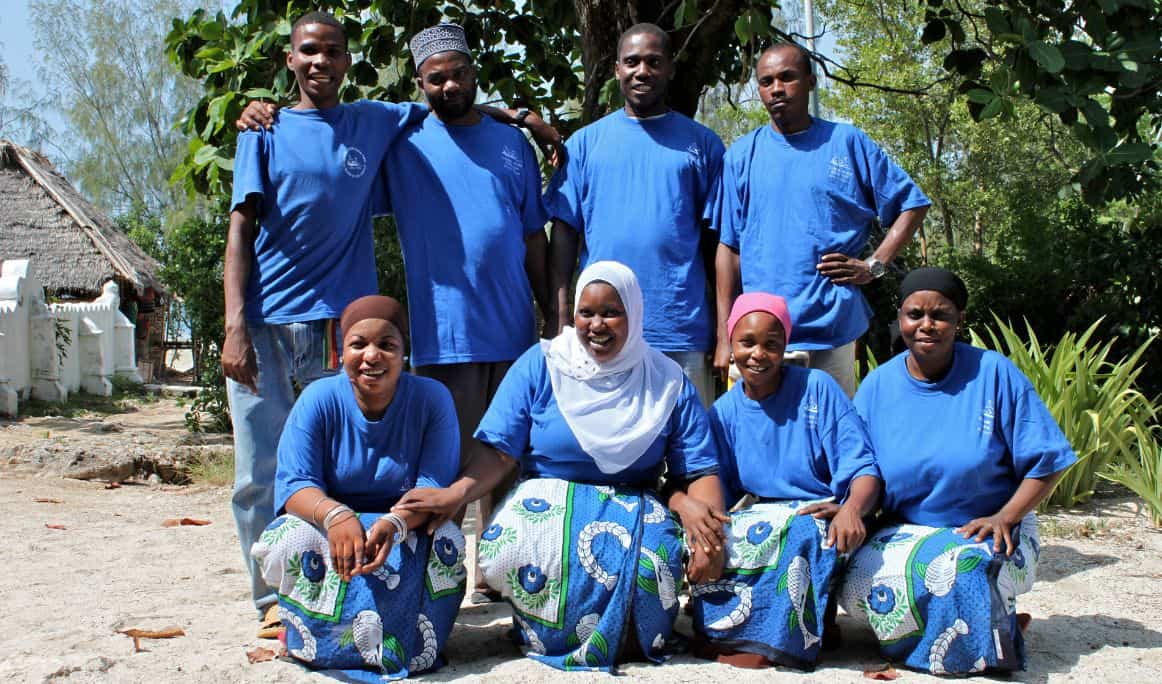
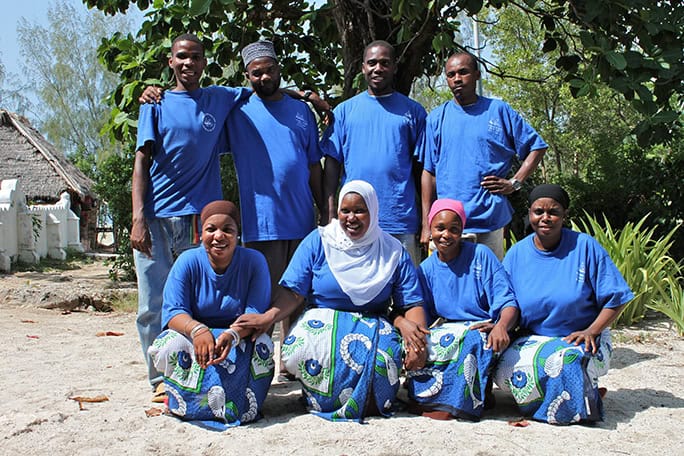
At Chumbe Island Coral Park, women are strongly supported to bring gender equality.
-
Women were included in the labourers that build Tiger Mountain Pokhara Lodge, a community workforce which has since trained to be retained into different positions at the lodge.
Equal opportunities for women in business
-
At Chumbe Island Coral Park, a women’s cooperative produces all the organic soaps used in the banda bungalows.
-
Jicaro Island Ecolodge support a group of local women to set up a business sewing clothes for sale.
-
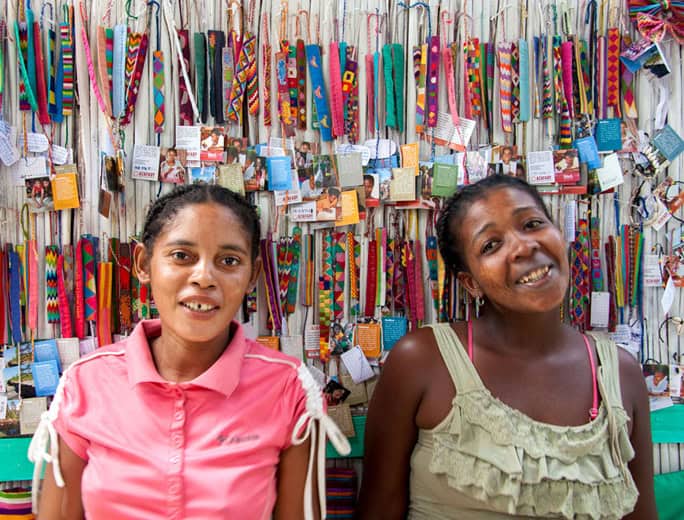
SEED Madagascar’s Stitch Sainte Luce trains women in producing and selling high quality embroidered products, language and business skills to provide a sustainable livelihood. Initially, 11 women were trained in embroidery and finance, allowing them to manage the £4000+ they made in commissions and going on a train a further 37 “associate embroiderers”. 12 more women trained saw sales increase by 48%. Its 3rd phase as a standalone business added a studio & shop showroom purpose-built in 2015. As an independent cooperative, from 2020, 90 members disseminated their skills to the wider community – and support an average of 11 extra people per woman. As a result, the women and their families’ health improves, able to buy better food, go to the doctor more often, and the children attend education.
Equal access to finance
-
In Malawi a village banking initiative offers small financed loans and education projects for women to set up in business and train.
Equal opportunities in education and training
Education helps women access employment, income, and greater economic equality, both personally and professionally, the increased education of girls accounting for over 25% growth in OECD countries over the past 50 years. Universal access to quality higher education brings lifelong learning opportunities and wealth disparities.
-
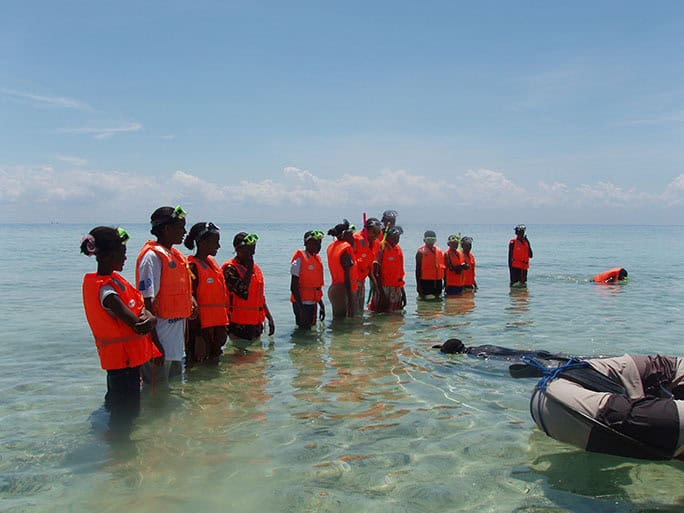
In Muslim Zanzibar, Chumbe Island promotes gender equality through its Environment Education programme: Between 2000 and 2015, 48% of student visitors were girls. In a country where women never normally learn how to swim, they offer a unique opportunity to learn to snorkel and see coral reef. The popularity of the programme is demonstrated in increasing applications and yearly trips, extended in 2015 through a first grassroots soccer camp.
-
Grootbos Foundation’s farm, Siyakhula – meaning ‘growing the future’, provides entrepreneurship and enterprise development skills and income for women from the nearby township, as well as supporting food security.
-
Tiger Mountain Pokhara Lodge’s school support has not only enabled classes to be taught to School Leaving Certificate level locally, but this means female students who would otherwise not go away, can complete their education.
When the lodge was built, the local village permitted the use of a nearby spring to be fitted with public taps. This not only benefitted the community in local access to water, but also meant girls had more time for education, previously spending much more time fetching water from a distant source.
Female health support
-
In Kenya, MWCT hold regular friendly youth sports tournaments to encourage health education, promotion, awareness and counseling including for Female Genital Mutilation (FGV) and HIV/Aids, including voluntary testing.
-
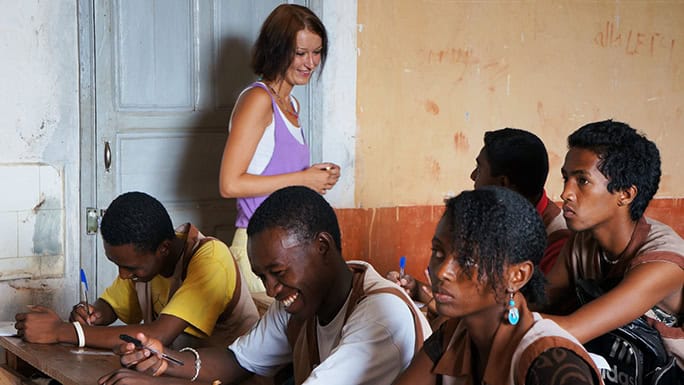
SEED Madagascar’s health education works with young people to raise awareness of safety prior to establishment of sexual practices, which can be as young as 11 in the region. And with women to offer increased access to quality sexual, reproductive and maternal health information, increasing awareness of healthy practices during pregnancy and birth.
Women vital in cultural preservation
-
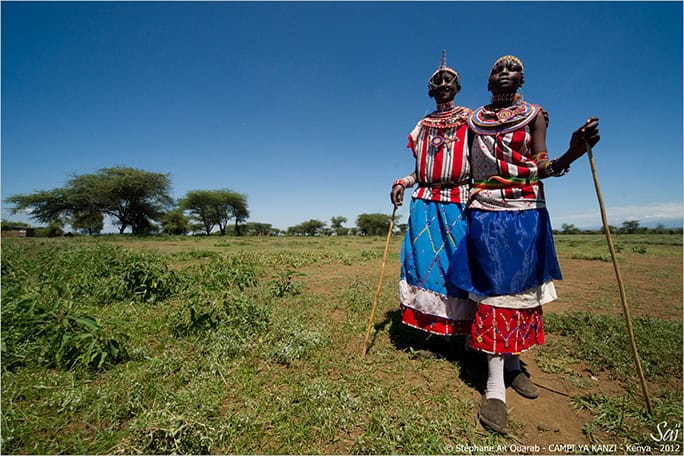
At Campi ya Kanzi in Kenya, it was realised the Maasai girls were losing the ability to bead. Older Maasai ladies were employed to teach the girls beading, with the handicrafts sold in the shop, later augmented with more Kenyan jewellery, clothing, books, bags and other handmade arts and crafts, bought locally at fair prices.
Women as positive role models
-
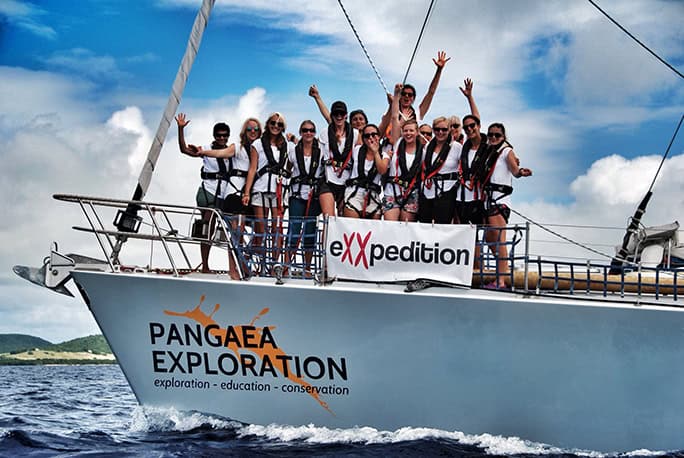
In 2017, Exxpedition charted an all-female crew on a 3-part mission to circumnavigate the British Isles, to explore the issue of chemicals, endocrine disruptors and carcinogens in our personal and global environment, sampling the waters for plastics and toxics. Check out trips planned with our ocean expeditions partnership.
Less women in science, technology, engineering and maths (STEM) is one reason for the all-female crew. Additionally, historically, studies on the effects of chemicals on human health have largely focused on the specific effects on men (Exxpedition, 2016), as they made up the majority of the workforce where occupational studies have taken place, or because effects can often be more easily determined in men compared to women. As a result, research on female-specific diseases has held a relatively low profile. This imbalance in research is becoming increasingly important as the incidences of fatty tissues (where plastic toxics accumulate) and non-communicable diseases, such as cancers, are increasing, and we seek to understand the effects on hormones, fertility, birth defects and the passing of chemicals from mother to child.
As women are also underrepresented in sailing, and media for sports than all-male events, the eXXpedition crews of inspiring females were assembled to help redress the balance.
Women’s Empowerment
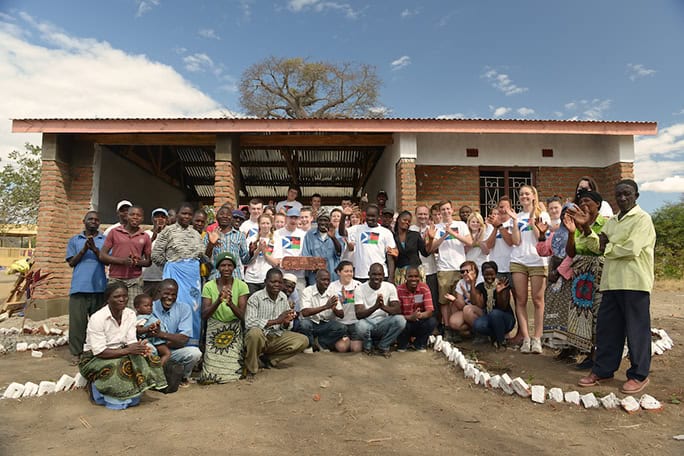
There are fantastic initiatives that look to redress gender inequality in tourism by showcasing women’s work or helping female tourism workers, often in very male-dominated societies.
Through tourism, women can be offered equal opportunities in education, work, income, skills development and equal access to resources, technology, ownership, control and finance can play a huge part in empowering women to take a more active and equal role in society, along with changing attitudes to greater acceptance, and so less exploitation and discrimination. There is still much to be done!
“There is no tool for development more effective than the empowerment of women.” — Kofi Annan
Links with the other Sustainable Development Goals
Gender equal opportunity is core to major challenges the world faces and integral to all the Global Goals, especially interlinked with:
Goal 1 – End poverty: Tourism provides jobs, income and entrepreneurial opportunities at community level, empowering less favoured groups such as women, and all in areas of a country that other sectors might not reach.
Goal 2 – Zero hunger: With women working and earning their own income, families tend to be better fed.
Goal 3 – Health & well-being: Globally, women face gender-based inequalities, putting them at increased risk of HIV, violence and death.
Goal 4 – Quality education: Universal access requires elimination of gender disparity, for lifelong opportunity for jobs and economic equality.
Goal 6 – Clean water access and sanitation: Women and girls’ time is often consumed carrying water for distance and looking after children with ill health due to poor sanitation. Access can buy time for women in education and work.
Goal 8 – Decent work and economic growth: ‘Full and productive employment and decent work for all’ means equal pay for work of equal value for women. This is important for equality, and greater purchasing power by women, leads to economic growth in new sectors.
Goal 9 – Industry, innovation & infrastructure: There can be no inclusivity, resilience and sustainability if one half of humanity is denied rights and opportunities.
Goal 10 – Reduced inequalities: By supporting equality in employment, and pay, women can contribute to renewal & development, reducing regional imbalances by giving communities the opportunity to prosper.
Goal 11 – Sustainable cities & communities: Inclusive, safe, resilient and sustainable communities good for women are good for all citizens.
Goal 13 – Climate change: Women are among the most vulnerable to the climate crisis. Extreme weather adds stresses, greater scarcity of food and leads to greater violence against women. Sexual violence is used to suppress and discourage environmental activists.
Goal 16 – Peace, justice & strong institutions: Inclusive societies help promote peaceful sustainable development, and are vital for post-conflict stability and socio-economic growth.
Goal 17 – Partnerships can support women’s empowerment and entrepreneurialism.