

UN Sustainable Development Report
Red List Index
Global Gender Gap Rank
Climate Change Performance Index
Human Development Index
Population: ~52.5 million
Capital: Nairobi
Language: Swahili, English
Currency: KES Kenyan Shillings
Tourism contribution to GDP: 15% of exports, 8% of GDP, 1.1 million jobs
Magical Kenya!
The Republic of Kenya (Swahili: Jamhuri ya Kenya), is a country in East Africa known for its rich tapestry of experiences: scenic landscapes, iconic wildlife and safaris, cultural diversity, indigenous communities and even beach holidays.
Kenya is bordered by South Sudan to the northwest, Ethiopia to the north, Somalia to the east, Uganda to the west, Tanzania to the south, and the Indian Ocean to the southeast.
The terrain rises from the low coastal areas to mountainous regions, including
Kenya experiences diverse weather patterns influenced by its varied geography, including coastal areas, highlands, and arid regions, and the best time to visit Kenya depends on your interests.
The coastal region, including cities like Mombasa, has a tropical climate with high humidity and temperatures averaging between 25°C to 30°C (77°F to 86°F).
The central highlands, including Nairobi and the Aberdare Mountains, have a temperate climate.
Temperatures can range from 10°C to 25°C (50°F to 77°F), with cooler nights.
Northern and eastern Kenya, including areas like Samburu, experience hot and dry conditions. Rainfall is sparse and unpredictable, often occurring in brief bursts during the rainy seasons.
Kenya Weather Variations
January to March: This period is usually dry and hot, especially in the lowland areas. It is a popular time for tourists, particularly for wildlife viewing.
April to June: Long Rains, with the heaviest rainfall in May. This season is crucial for agriculture and replenishing water sources.
June to October: Dry season, when animals gather around water sources and the Great Migration occurs.
October to December: Short Rains occur, generally lighter than the long rains but still significant for crop production and pastoralist communities.
Kenya Climate Change Trends
Kenya has experienced a mean annual temperature increase by approximately 1.0°C since the 1960s, at an estimated annual average rate of 0.21°C. Temperatures are projected to continue rising, with increases of 1.7°C expected by the 2050s.
Likewise since the 1960s, northern areas have become wetter, while southern areas have become drier, though there is high variability. More frequent and intense rainfall events have been experienced, with extreme rainfall expected to generally increase in frequency, duration, and intensity; but decrease in arid zones is expected.
Since 2000, prolonged droughts have become more common.
The agricultural sector, which is critical to Kenya’s economy, is considered one of the most vulnerable to climate risks, with increase short-term crop failures and long-term production declines.
Sea level rise is already affecting Kenya’s coastal towns and communities, expected to impact about 86,000 people annually.
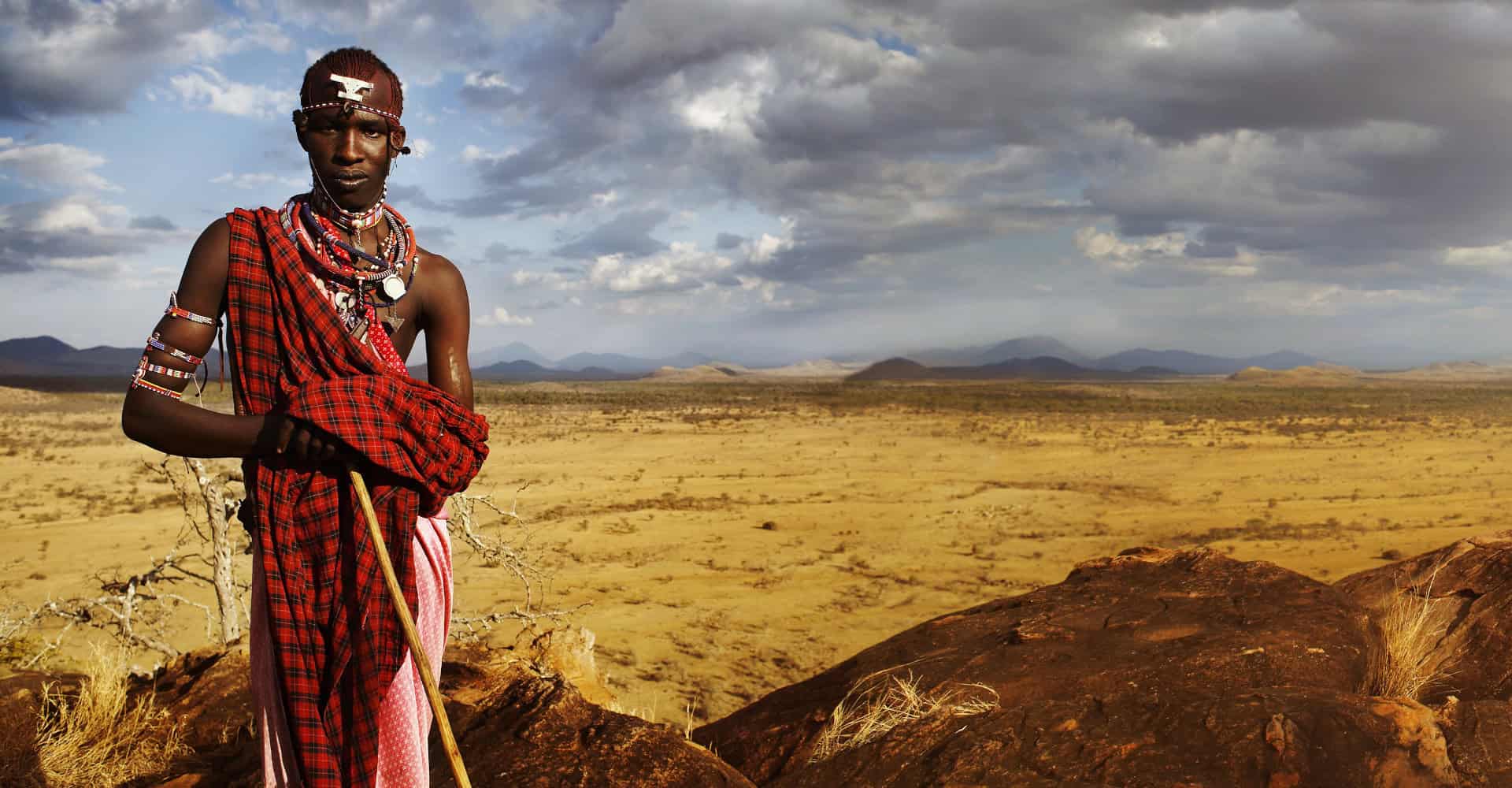
Kenya is home to over 40 ethnic groups and 62 languages are spoken, with Swahili and English as the official languages. This brings a rich cultural heritage that includes ethnic music, storytelling, and various traditional practices, rituals and social structures. Dances and ceremonies often accompany significant life events.
Likewise, each community has its distinctive artistic expressions of cultural identity, such as in beadwork, pottery, wood carving, and gourds, and masks play essential roles.
Cuisine is also influenced by cultural practices as well as local ingredients, with staples like maize, beans, and rice. Popular dishes include “ugali” (a maize flour porridge), “nyama choma” (grilled meat), and “sukuma wiki” (collard greens).
Kenya’s history includes early human settlements, with evidence suggesting that the region was inhabited by hunter-gatherers and later by pastoralist communities. European contact began in the 15th century, leading to colonisation by the British in the late 19th century. After a prolonged struggle, notably marked by the Mau Mau uprising against colonial rule, Kenya gained independence in 1963. Since independence, Kenya has maintained a presidential representative democratic republic structure.
Kenya’s population identifies as 82% Christian, with Islam the second most practiced religion, especially along the coast and among certain ethnic groups. Traditional African religions are also practiced, particularly in rural areas, where beliefs in ancestral spirits and natural elements are significant.
Kenyan society is group-oriented, emphasising community and extended family ties. the cornerstone of social structure.
The motto “Harambee,” meaning “pulling together,” emphasises national unity and cooperation among its diverse populations.
The country has a variety of ecosystems, ranging from savannas and forests to deserts and wetlands, contributing to its rich biodiversity, including iconic wildlife such as the Big Five: buffalo, elephants, lions, rhinos and elusive leopards.
Kenya’s Northern Circuit (Samburu, Laikipia, Meru, and parts of the Rift Valley) offers a collection of game reserves, national parks, and conservancies with distinct experience to that of the more popular Southern Circuit (Amboseli, Tsavo, Chyulu Hills ) and coastal areas.
The Maasai Mara National Reserve is a home to the Big Five and offers opportunities to engage with the Maasai people. It is famous for the Great Migration, one of the greatest natural spectacles in the world: 1.5 million wildebeest, zebras and other herbivores cross the Serengeti-Maasai Mara ecosystem between Tanzania and Kenya and the Mara River, following a roughly clockwise circuit of ~1,200 miles and attracts predators such as lions, leopards, cheetahs, and crocodiles.
Exact timing is unpredictable and dependent on rainfall and grazing requirements:
· December-March: Herds are in the southern Serengeti for calving season.
o February-March: peak calving season
· April-June: Animals begin moving north through the Serengeti.
· July-October: Peak migration season as herds cross into Kenya’s Maasai Mara.
o July – September: the herds dramatically cross the Mara River.
§ August is often considered the best month to see large herds crossing
· October-November: Herds begin moving south again towards the Serengeti.
Samburu county and National Reserve namesake was likewise named after its indigenous people. Samburu, as well as a large population of elephants, has its own “Special Five” species not commonly found elsewhere in Kenya: Grevy’s Zebra, Somali Ostrich, Reticulated Giraffe, Gerenuk and the Beisa Oryx. It offers a unique, authentic and less crowded alternative to other safari destinations. Samburu National Reserve’s rich conservation history is linked to famous conservationists George and Joy Adamson, who raised the lioness Elsa, known from the book and film Born Free.
Amboseli National Park is known for its large elephant herds and stunning views from the foot of Mount Kilimanjaro, near the Tanzanian border. It’s one of Kenya’s most popular safari destinations.
Tsavo National Parks comprise Tsavo East and Tsavo West, and are among the largest in Kenya, again known for diverse landscapes and wildlife.
Mount Kenya offers challenging climbs and stunning scenery.
Mombasa is a coastal city known for its beautiful beaches and historical sites, including Fort Jesus, a UNESCO World Heritage site. The Indian Ocean coastline also offers pristine beaches like Diani, Malindi, Watamu, and marine parks.
Lamu Island is also a UNESCO World Heritage site, offering a glimpse into Swahili culture with its well-preserved architecture and traditional dhow boats.
The capital offers attractions like the Nairobi National Park, iconic next to the city, David Sheldrick Wildlife Trust, and the Giraffe Centre. Nairobi National Museum gives insights into Kenya’s rich history and culture.
Kenya has one of the largest economies in East Africa, driven primarily by agriculture, tourism, and other services. Nairobi serves as a major commercial hub in the region, facilitating trade and investment in its growing economy.
The country is known for its production of tea and coffee, which are significant cash crops.
Tourism plays a crucial role, attracting millions of visitors to its national parks, wildlife reserves, marine reserves and beaches each year. From safaris, bird watching and camel treks to cultural tours and mountain hiking, Kenya offers a multitude of trips and activities.
Conservation in Kenya
Modern wildlife conservation in Kenya can be traced back to the colonial period starting with the British East Africa (Protectorate) era around 1898 when the first laws to protect wildlife were enacted, as the British wanted protected lands so that they could continue their big-game hunting safaris and controlling the exploitation of resources, while the locals acted as guides, porters, and servants. One of the very first registered safari companies was ‘Cottar’s Safari Service’, established in 1919 by Charles Cottar, together with his sons, Mike, Bud and Ted, and still run by the family today.
The National Parks Ordinance of 1945 drove the establishment of protected areas in the country. Aberdare Royal Park and Mount Kenya Royal Park (later renamed National Parks) were established not only for protection of wildlife but to also to offer exclusive recreation to settlers: this did not bode well for local communities who immediately faced displacement and human–wildlife conflict.
In 1946, Nairobi National Park was established as the first national park in Kenya, added to over time by the likes of Amboseli, Tsavo, and the Maasai Mara.
Royal and presidential influence played a significant role in promoting wildlife conservation, particularly through the establishment of protected areas and the promotion of safari tourism. It was queen while on a visit to Aberdare in 1952 that Princess Elizabeth became news reached her of the death of her father.
Upon attainment of independence in 1963, there was a strong move to establish national parks and reserves for wildlife sanctuary, with the Wildlife Conservation and Management Act (1976) and a ban put on hunting.
This management assumed preserving wildlife by the state in parks and reserves for the common good would be enough. But the 1980s saw rising concerns arose about poaching and unsustainable practices. The state as the sole regulator was unrealistic for wildlife conservation and exclusive of local people: wildlife roams, comes into conflict with humans, plus ecotourism and conservation are inherently linked with communities and cultural heritage.
Kenya Wildlife Service (KWS, 1990) was subsequently created as a subsidiary to enable private sector and local community participation in wildlife conservation and ecotourism. This marked a significant shift towards more structured and professional conservation efforts and a broader perspective that augments state-run protected areas.
Conservancies began to develop, particularly in areas like Laikipia, creating protected areas managed by local communities. Maasai Mara conservancies allowed native landowners to generate income through small-scale safari experiences and lodge leases, creating a symbiosis between wildlife, tourism, and local communities.
The National Museums of Kenya (NMK) plays a crucial role in conserving Kenya’s rich pre-historic heritage including fossils and artifacts that provide insights into human evolution and the earth’s history.
The tourism industry has been identified as one of the key pillars under the government’s near-term blueprint for economic development—popularly known as Vision 2030. The annual gross revenue of the tourism industry is over US$1.5 billion.
Regenerative Tourism in Kenya
Ecotourism Kenya launched the Eco-rating Certification Scheme in 2002 in cooperation with tourism stakeholders in Kenya, achieving ‘GSTC-Recognized’ status from the Global Sustainable Tourism Council (GSTC) in 2016.
The programme was designed to promote responsible tourism and recognise best practices in environmental conservation, responsible resource use, and socio-economic investment, rating tourism accommodation facilities as Bronze, Silver or Gold.
In 2017, Kenya imposed one of the world’s toughest bans on single-use plastic bags, followed in 2020 by a ban on all single-use plastics in conservation areas.
By 2020, 71% of the population had access to electricity, with ~90% of this electricity from renewable sources from 2022 (Sustainable Energy for All/Statista).
Kenya has widespread solar adoption and a very dynamic market. Geothermal also energy meets ~27% of total energy demand and wind ~30% off peak energy with the largest wind farm in Africa (Rapid Transition Alliance). The Accelerated Partnership for Renewables in Africa (APRA) aims to achieve 100% renewable power by 2030.
From its colonial hunting past, Kenya’s successes have included the development of ecotourism and wildlife sanctuaries, and the creation of conservancy models, payments for ecosystem services and community involvement, bans on plastic and a commitment to renewable energy access.
From eco-rating properties, there’s an increasing emphasis on tourism that not only sustains but regenerates environments and communities, with lodges and camps investing in community health, education and livelihoods, as well as species and ecosystem conservation. It has provided significant socio-economic benefits, job creation and infrastructure development.