



SDG #9
“Build resilient infrastructure, promote inclusive and sustainable industrialization and foster innovation.”
Progress on Sustainable Development Goal 9 Industry, Innovation & Infrastructure
-
Growing: Mass transport, renewable energy and information and communication technologies are becoming ever more important.
-
96% of global population live in reach of a mobile broadband network (+>3G) as of the end of 2023 (GSMA).
- 57% of the global population (4.6 billion people) were using mobile internet on their own device by the end of 2023, up from 33% in 2015, but the rate of adoption has slowed in recent years.
-
79% mobile coverage in Least Developed Countries in 2019, grown from 51% in 2015, however, only 19% / <1 in 5 use the Internet despite higher coverage. The usage gap persists due to affordability, skills, device access.
-
2.6 billion people /32% remain offline: only 27% of people in poorer countries are connected, compared to 93% in wealthier countries: Africa lags with only 37% of its population online vs Europe at 91%. India and China together account for over 1 billion of the world’s unconnected, with India alone having more than 680 million people offline. The digital divide is due to cost and skills, and crucial for equal access to information and knowledge, to foster innovation and entrepreneurship.
-
In LDCs, the share of manufacturing in GDP increased from 10% in 2010 to 12.4% in 2019. However, this growth rate is too slow to reach the target of doubling the industry’s share in GDP by 2030, for SDG9 targets.
-
$132: Manufacturing Value Added per capita in LDCs in 2019, lagging far behind Europe and North America’s $4,856.
-
Small and Medium Enterprises, with limited resources, do not have the capacity to deal with unexpected shocks, such as the Covid crisis, without help from governments, especially to increase competitiveness and integrate into local and global value chains.
-
$2.5-3 trillion: global investment in R&D in 2024 – but still not enough? (Global Innovation Index).
-
~1.75%: Investment in R&D as a proportion of GDP from 2015, having increased from 1.5% in 2000, but less than 1% in LDCs, where nearly half are under 0.5% (Vs EU 2.22% and OECD 2.7% in 2023)
-
50%: global investment in R&D from Europe and Northern America in 2023 vs 46% for Eastern and South-Eastern Asia quickly catching up from 22.6% in 2000; in sub-Saharan Africa and LDCs, most countries invest less than 1% of GDP in R&D.
-
22.9%: small-scale industries in sub-Saharan Africa received loans or lines of credit, vs almost half in Latin America & the Caribbean. 51% of formal Africa MSMEs unable or only partially able to access credit as of 2017.
-
< 30% of agricultural products in developing countries undergo industrial processing, compared to 98% in high income countries.
-
$3 trillion: Global clean energy investment set to exceed in 2024 (IEA). However, developing countries (excluding China) still receive only about 15–20% of global clean energy investment—a share that has not kept pace with decarbonisation plans’ needs or investment growth in advanced economies and China.
- >$40 billion Africa’s clean energy investment in 2024, nearly double 2020 levels, but far below needs.
- $434 billion per year: additional investment required to make infrastructure disaster- and climate change-resilient, more in some sub-regions such as SIDS (The Economic and Social Survey of Asia and the Pacific).
-
Better access to financial services is urgently needed for small-scale industries, major sources of employment and central to income-generation and poverty alleviation, to resuscitate the global economy.
-
Covid-19 accelerated digitalization of many businesses and services, including teleworking, video conferencing, and highlighted the need for more investment in pharmaceuticals including emerging technologies such as artificial intelligence to assist in managing health-related services and resources.
-
The World Bank estimates that developing countries need to invest 4.5% of GDP to achieve the SDGs whilst limiting global warming. The Pacific region and SIDS require a much higher share for infrastructure resilience—up to 9.1% of GDP in the Pacific.
Challenges of SDG9, Industry, Innovation & Infrastructure
What is Infrastructure?
Infrastructure provides the basic physical facilities essential to business and society, enabling basic needs to be met and access to information and learning for improving knowledge and productivity.
Infrastructure can include public services such as water, energy, waste, irrigation, and communications including telephone and internet. It can also be more tangible, such as transport, roads and bridges, or education establishments, systems and standards.
Often infrastructure may be aged in need of replacing or updating, to support better efficiency or reliability, to enable business or access to basic needs such as education and healthcare. Pre-empting infrastructure breakdown or resource inefficiency may require early and smart investment, particularly if development lead times are long.
Climate change is also adding extra pressures and creating the need for more resilient infrastructure to cope with changing weather patterns, such as extreme heats, floods and storms. Governments are looking to ‘climate-proofing’ through early investment for climate resilience, reducing ultimate costs.
What is Innovation?
Innovation expands technological capabilities and leads to the development of new skills. Technological progress is key to finding lasting solutions to both economic and environmental challenges, such as providing new jobs and promoting energy efficiency, and can open new markets and opportunities for better growth, leading to more sustainability. Eg. free video conferencing has reduced business air miles.
What is Industry?
Industry is the part of economy concerned with production of goods. Industrial output is a component of the GDP of a nation. It includes mining and extraction sectors, fuels and fertilisers.
Feed and food production is excluded, counted with farming as agricultural output: the systematic raising of plants and animals.
Service provision is also excluded: non-material economic activity equivalent of goods that does not result in physical ownership but which create benefits, such as financial services and digital technologies.
Of world GDP ($170 trillion, purchasing power parity, 2025), industry is ~29%, services ~66% and agriculture ~5% (UN, World Bank, and CIA World Factbook, 2023-24)
Manufacturing is an important employer, accounting for around ~400 million people/16% of the world’s workforce. It includes automobile, chemical, machinery, electrical and electronics, metal, aviation, pharmaceutical and medical equipment, but is undergoing transformation due to automation and technological change, and shifts in jobs.
Small and medium-sized enterprises (SMEs) are the largest job creators, making up over 90% of business worldwide and 50-70% of employment (UN, World Bank) – and 70–80% of workers in emerging economies.
Industrialisation drives economic growth and job creation, reducing income inequality. However, Least Developed Countries face a significant infrastructure investment gap needed to support growth and sustainable development.
What’s it got to do with Tourism?
Tourism can reach into the extremities of a country other industries cannot.
Tourism is thus dependent on, but also depended upon, infrastructure for development.
It not only relies on good public and privately supplied infrastructure and an innovative environment for its services to be delivered, but can also incentivise governments to upgrade infrastructure as a means of attracting tourism and other sources of foreign investment, in size, scale, efficiency and sustainability.
This can facilitate further sustainable industrialisation, necessary for economic growth, development and innovation. Tourism can thus support inequalities and disadvantaged countries in a way other industries cannot.
Significant investment is needed in the Least Developed Countries to boost technological progress and economic growth. Innovation and upgrading infrastructure such as in transport, energy and water can also support other industries to be more sustainable, with increasingly efficient use of resources and environmentally sound technologies and processes.
-
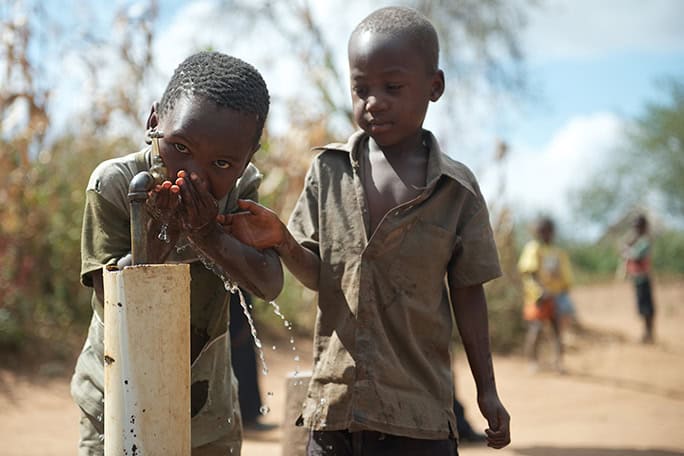
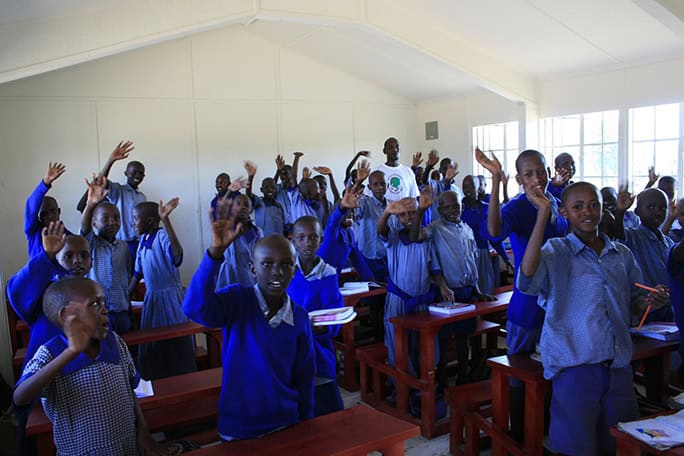
SEED Madagascar has created incredible water and sanitation infrastructure for rainwater harvesting and latrines.
-
Tiger Mountain Pokhara Lodge tapped into the natural water supply and provided infrastructure for private village access.
-
Jicaro Island Ecolodge provide water filtration for Lake Nicaragua water for the 600-strong community.
-
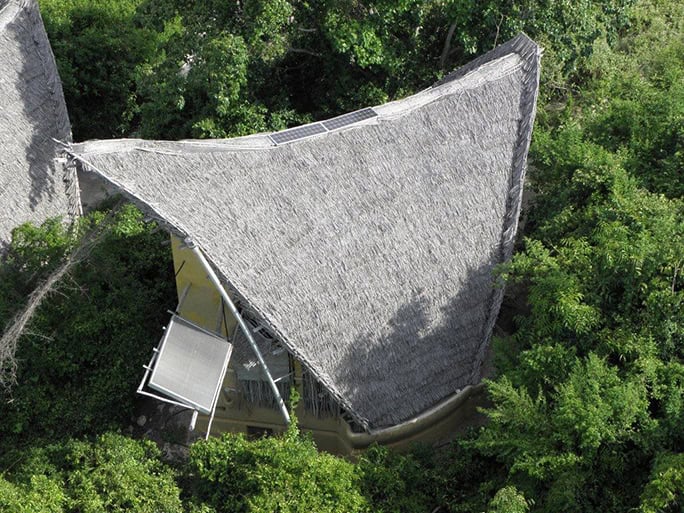
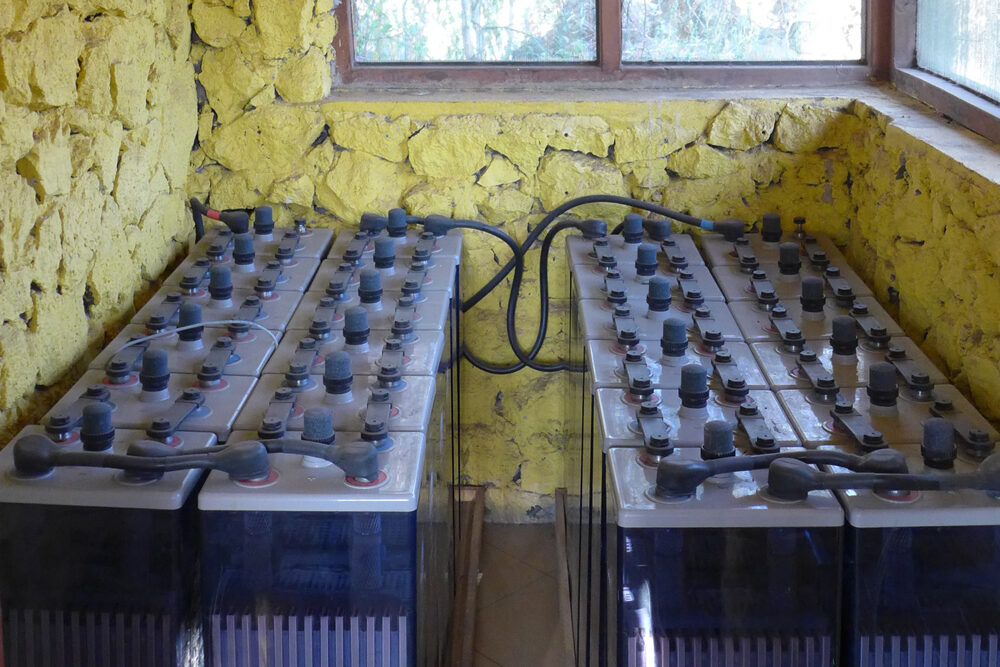
Solar energy provision has been built at Lapa Rios, Campi ya Kanzi, Nikoi Island, Chumbe Island and Jicaro Island Ecolodge.
-
Schools have been built and upgraded by Lapa Rios in Costa Rica, Jicaro Island Ecolodge in Nicaragua, SEED Madagascar, Maasai Wilderness Conservation Trust through Campi ya Kanzi in Kenya and Tiger Mountain Pokhara Lodge in Nepal.
-
In Malawi, Orbis focus on increasing business linkages between people from low-income communities and tourism-industry actors for the positive impacts of tourism on poverty. You can undertake global development workshops in social enterprise such paper-making and water sanitation.
The tourism sector includes:
-
Transportation: such as cruise ships, yachts, airlines, railways, roads, buses and taxis.
-
Hospitality: including accommodation.
-
Entertainment and leisure: such as casinos, amusement parks, shopping malls and theatre.

As well as building their tourism services,
-
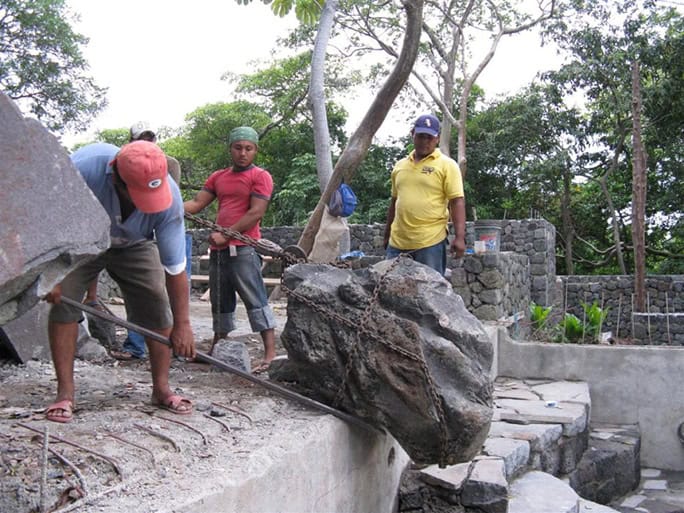
Luca Belpietro, founder of Campi ya Kanzi, built the lodge from scratch in conjunction with the local Maasai, teaching them to be carpenters, masons, and later waiters, cooks, mechanics, guides for the now-Maasai-run community lodge.
-
Nikoi’s The Island Foundation has established a retail brand (Kura Kura) to help sell traditional arts and crafts, plus helped establish several local businesses, such as car hire and alang-alang (ylang ylang) supplier for grass roofs, beneficial to the community and tourism operations.
-
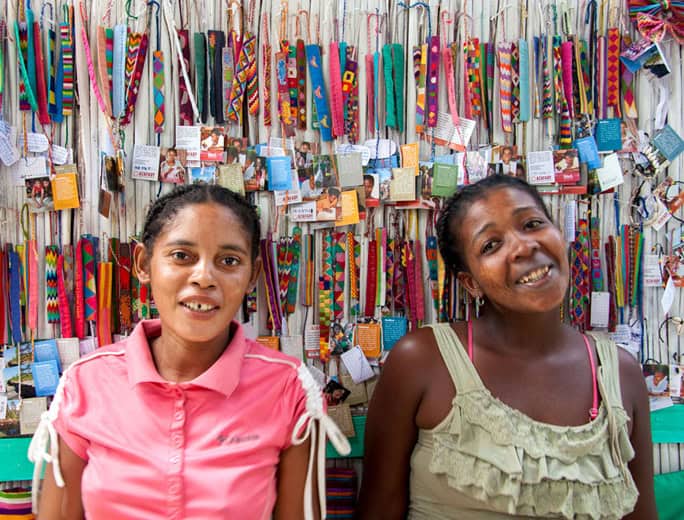
SEED Madagascar set up Stitch St Luce as a project, now a thriving independent international business, training women in producing and selling high quality embroidered products, language and business skills for sustainable livelihoods. The products take inspiration from the diverse local wildlife and environment, linking consumer demand to local desire for conservation.
-
Lapa Rios have constructed and maintain a suspension (walking) bridge to cross the Carbonera River and the road from Puerto Jimenez as well as organise the Osa Peninsula recycling centre & dump.

The Impact of Tourism on World Industry GDP
Directly, travellers pay into airlines, accommodation, car hire, entertainments, restaurants, shopping, sports, tour operators, transportation, travel agents…
Indirectly, their supply chains are brought together to create tourism goods and services: design, food, materials, maintenance, marketing, staff, utilities…
All that demand creates jobs and employment which pay income and taxes.
Induced impacts includes those which are demanded as a result of those jobs and income: how the wider industry benefits ultimately from money being in tourism: supporting wide-ranging sectors such as energy, food, agriculture, retail, finance, education and manufacturing. There is an enormous indirect impact by tourism to non-tourism industry economic contribution.
Overtourism
Looking at the number of international visitors compared to local population can provide an indicator of the impact tourism may have on the destination. For example, in Venice tourists outnumber residents by a ratio of 3-5: 1. In Barcelona, this figure is commonly 2-3:1, Mallorca 4:1, and on the Greek island of Zakynthos (Zante), 150:1!
Continued strong growth in tourism hotspots may squeeze infrastructure capacity and lead to environmental and societal pressures if not managed responsibly – as witnessed in many worldwide destinations, including US Parks.
The top ten tourism economies in GDP in 2025 were: United States (contributing $2.36 trillion to GDP), China ($1.3 trillion in tourism GDP), Germany ($488 billion GDP), Japan ($297 billion GDP), United Kingdom ($295 billion GDP), France ($265 billion),Mexico ($262 billion), India ($232 billion GDP), Italy ($231 billion) and Spain ($228 billion to GDP) (UNWTO). By 2027, China is expected to top the list, with India in 4th place. That said, natural disasters, politics and currency fluctuations can strongly affect tourism unexpectedly.
Other countries see the fastest growth, due to factors such as more open borders, infrastructure investment, and promotional efforts: Maldives, Vietnam, Greece, Jordan, Mongolia, Egypt and Saudi Arabia with its mega-projects.
Forecast
In 2025, Travel & Tourism is expected to deliver
- $11.7 trillion to the global economy, or 10.3% of global GDP (2025, WTTC).
This is a record high in absolute terms, but slightly below the pre-pandemic projection of 11.4%, - international visitor spending of $2.1 trillion, surpassing pre-pandemic levels for the first time.
- support for 371 million jobs worldwide—about 1 in every 8 jobs globally (12.5%)
2023-2033 as a major driver of net new jobs globally, more than 110 million new jobs created.
By 2035, Travel & Tourism is forecast to reach:
- $16.5 trillion, or 11.5% of global GDP
- 460 million, or 1 in every 8 jobs
It is expected to outperform the global economy and increase its share of global economic activity across GDP, employment, exports and investment, compared to sectors such as telecoms, retail, finance and manufacturing. Covid’s long impact remains to be seen.
Such growth will see increased and ongoing investment into the supporting goods and service for tourism infrastructure and facilities, innovation in research and development of new technology and industrialisation driving economic growth and job creation, reducing income inequality and helping end poverty, water and energy shortage.
Links with the other Sustainable Development Goals
Industry, infrastructure and innovation are core requirements to help solve the world’s major challenges, and key to travel and tourism:
Goal 1 – End Poverty: Poverty alleviation may be constrained by investment and support for infrastructure and development.
Goal 2 – Zero hunger: Access to food and agricultural productivity may be improved by access to technology, industry and infrastructure.
Goal 3 – Health & Well-Being: Covid has shown the importance of investment in innovation and infrastructure for health services.
Goal 4 – Quality Education: requires investment in schools’ construction, maintenance, furniture, facilities, equipment and technology.
Goal 5 – Gender Equality – inclusive industrialisation means for everyone. All too often are women marginalised, eg. less funded.
Goal 6 – Access to affordable, safe and sustainable water and sanitation requires adequate infrastructure and facilities.
Goal 7 – Access to affordable, reliable, sustainable and modern energy can be catalysed by tourism’s innovation for cost incentive.
Goal 8 – Sustained, inclusive & sustainable economic growth, full & productive employment especially in SMEs as a source of innovation.
Goal 10 – Reduced inequalities between countries.
Goal 11 – Inclusive, safe, resilient and sustainable settlements
Goal 12 – Sustainable consumption and production patterns
Goal 13 – Climate change: adverse weather patterns can destroy and damage infrastructure.
Goal 14 – Life under water and marine conservation is key to fishing and coastal area industry.
Goal 15 – Life on land: innovation in industry can be transposed to conservation infrastructure, such as drone technology fighting poaching.
Goal 16 – Peace & justice: Innovation & regeneration of infrastructure and industry are vital to post-conflict situations for growth.
Goal 17 – Partnerships for the Goals: Working with others can support faster, more efficient innovation and industrialisation, eg. green fuels.