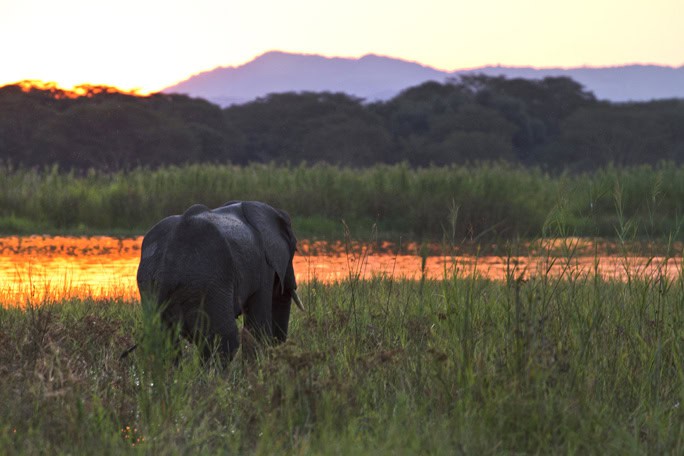



Despite the peak of poaching in 2011, the world is still losing more elephants than the population can reproduce. Elephants continue to face serious threats from poaching, but also habitat loss, habitat fragmentation and conflict with people. Although some populations are stable or increasing in well-managed areas, with more elephants being killed than born, their increasing decline threatens the species’ future.
Conservation therefore needs to protect elephants, their habitats and the communities living alongside them.
“The question is, are we happy to suppose that our grandchildren may never be able to see an elephant except in a picture book?” – David Attenborough
World Elephant Day was conceived by Canadian filmmakers Patricia Sims and Michael Clark, and Sivaporn Dardarananda of the Elephant Reintroduction Foundation in Thailand, and officially launched on August 12, 2012. It is held every year to raise awareness of the threats facing elephants and to support conservation, habitat protection and better welfare for elephants in human care.
Ethical elephant tourism supports the protection of wild elephants and improves the welfare of elephants in human care. It does not involve riding, performances, forced bathing, close-contact feeding or other activities that require elephants to be controlled for entertainment.
Why Elephant Conservation Matters
According to the IUCN assessments published in 2021, populations declined by more than 86% of African forest elephants over a 31-year period, and by at least 60% for African savanna elephant over the previous 50 years. The main pressures identified were poaching for ivory and the conversion and fragmentation of habitat for agriculture and other land uses.
Bull elephants with big tusks are the main targets and their numbers have been diminished to less than half that of the females, with demographic, reproductive and social structure consequences. Female African elephants also have tusks and are killed, leaving an increasing number of orphaned baby elephants. This impacts the stability of matriarchal elephant societies, especially given ‘an elephant never forgets’: The elephant is the largest existing land mammal, has the largest brain and is known to be smart, sentient, socially complex and empathetic.
Elephants are one of the world’s most iconic species and a keystone species, which means they play a unique and crucial role in the way their ecosystem functions: Like the keystone in an arch, although the keystone is under the least pressure of any of the stones in an arch, the arch collapses without it.
Relative to their abundance, keystone species have a disproportionately large impact on their natural environment. Without them, the ecosystem would dramatically change or cease to exist altogether. They make it possible for a myriad of plant and animal species to live in their environments as well.
As ‘landscape architects’, herbivore elephants move and feed, creating clearings as they go which let plants grow and forests regenerate naturally, and dispersing seeds they eat over a huge area.
So the loss of elephants gravely affects many species that depend on the elephant ecosystems and causes major habitat chaos and a weakening to the structure and diversity of nature itself. This means that elephant conservation is also ecosystem conservation, upon whose natural resources people depend, and natural heritage of human communities.
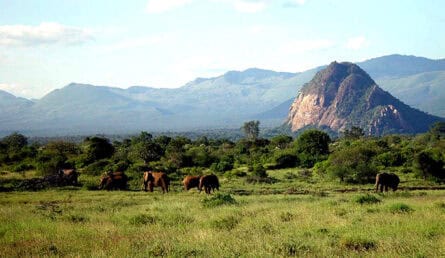
Elephant Species and Conservation: Status on the IUCN Red List
There are three living elephant species recognised by the IUCN: the Asian elephant (Elephas maximus), the African savanna elephant (Loxodonta africana) and the African forest elephant (Loxodonta cyclotis).
On the IUCN Red List of species, the Asian Elephants is categorised as “Endangered“.
Following genetic research, the previously ‘vulnerable’ single species African Elephant (range map) was assessed as two African elephant species separately for the first time in 2021: the African savanna elephant is listed as Endangered, while the African forest elephant is listed as Critically Endangered. This indicates a high risk of extinction, but some populations are stable or recovering where protection, habitat management and community-based conservation are effective.
The IUCN’s 2021 assessment cited the African Elephant Status Report 2016 as the most recent reliable continental estimate, putting the combined population of African forest and savanna elephants at around 415,000, with a decline of approximately 111,000 between 2006 and 2015. Separately, the Great Elephant Census estimated that savanna elephant populations declined by around 30% -approximately 144,000 elephants – between 2007 and 2014 across 15 of the 18 countries surveyed, with poaching the primary driver of the decline.
These are historical estimates, not current population figures; the assessment periods and survey methods differ.
Elephant Species Populations and Threats
Elephantidae is the only surviving family of the order Proboscidea; extinct members include the mastodons and mammoths.
Three living elephant species are currently recognised in the family Elephantidae:
• Asian Elephant (Elephas maximus) – Endangered, global wild population decreasing, ~40,000-50,000.
• African Savanna Elephant (Loxodonta africana) – Endangered, population decreasing, by at least 60% over 50 years.
• African Forest Elephant (Loxodonta cyclotis) – Critically Endangered, population decreasing, by more than 86% over a period of 31 years.
Ancient giant elephants living 1.5 million to 100,000 years ago across Eurasia (before eventually becoming extinct) are more closely related to the African forest elephants of today than the forest elephants are related to African savanna elephants!
Elephants and humans share a long history throughout civilization, though it differs in Africa and Asia, due to their different size and habitat.
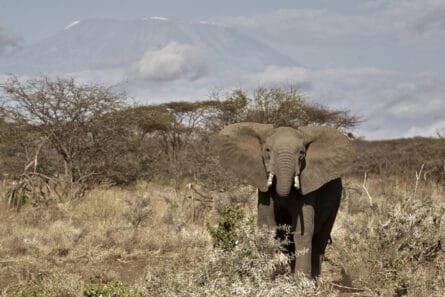
Elephants’ pillar-like legs carry their great weight; their trunk (a proboscis) is used for breathing, bringing food and water to the mouth, and grasping objects; their tusks, derived from incisor teeth, serve both as weapons and tools for moving objects and digging; and their large ear flaps help maintain a constant body temperature as well as in communication.
African elephants have larger ears and concave backs, whereas Asian elephants have smaller ears, and convex or level backs.
Both species suffer extensive poaching for their ivory tusks, meat and body parts.
African Elephants: Locations
African elephants – Loxodonta africana & Loxodonta cyclotis – are found in 37 countries in sub-Saharan Africa, with an estimated 70% in Southern Africa, 20% in Eastern Africa, 6% in Central Africa and 3% in West Africa.
They are extinct in Burundi, Mauritania (savanna) and the Gambia (forest).
The forest elephant is found in: Angola; Benin; Burkina Faso; Cameroon; Central African Republic; Congo; Democratic Republic of the Congo; Côte d’Ivoire; Equatorial Guinea; Gabon; Ghana; Guinea; Guinea-Bissau; Liberia; Niger; Nigeria; Senegal; Sierra Leone; South Sudan; and Togo.
The savanna elephant is found in: Angola; Botswana; Cameroon; Central African Republic; Chad; Democratic Republic of the Congo; Eritrea; Ethiopia; Kenya; Malawi; Mali; Mozambique; Namibia; Nigeria; Rwanda; Somalia; South Africa; South Sudan; Tanzania, Uganda; Zambia; Zimbabwe. (Botswana, Zimbabwe, South Africa, Namibia, and Angola form the core of the largest savanna elephant populations).
African Elephants: Range
The expanse of the African forests and grasslands habitat, where the African elephant has roamed for 50 million years, and its enormous size and aggression, has allowed the African elephant to resist captivity, unlike the Asian elephant.
Elephants need a lot of land to find enough food and water. They can roam across more than 30,000 sq km / 11,600 square miles. African elephant range has contracted substantially since the late twentieth century: from three million square miles in 1979 to just over one million square miles in 2007, more than a 65% range reduction, pushing elephants into smaller islands of protected areas, limiting their freedom to roam freely, access seasonal resources, and maintain healthy genetic diversity.
The main causes of this habitat loss and fragmentation include human population expansion, conversion of land for agriculture and settlements, commercial logging, plantations (including biofuels), mining, and infrastructure development. These causes have also increased access for poachers into previously remote elephant habitats.
Forest elephants occur in the tropical forests of Central Africa and in a range of habitats in West Africa. They rarely overlap with the range of the savanna elephant, which prefers open country and is found in a variety of habitats in Sub-Saharan Africa including grasslands and deserts.
Elephants are doing well in some secure areas, especially in parts of Southern Africa such as Botswana and Zimbabwe where populations have stabilized or even increased due to strong protection and management. But in contrast, many other populations, especially in West Africa and parts of Central and East Africa, have been forced to live in small, isolated herds and numbers are getting dangerously low. Populations in Ivory Coast, Ghana, Guinea, Guinea Bissau, Nigeria, Sierra Leone and Togo have been already wiped out in recent years or reduced to dangerously small remnant groups in recent years.
African Elephants: Numbers
WWF and TRAFFIC historically estimated that around 20,000 African elephants were illegally killed for their ivory each year – approximately 55 per day. In 2013, Conservationist Dr Dame Daphne Sheldrick revealed an elephant was being killed every 15 minutes in Africa, suggesting their consequential extinction could come as soon as 2025 – equating to 100 elephants/day or more than 30,000/year, to supply an insatiable and unsustainable demand for ivory.
In some countries, like Kenya, anti-poaching campaigns and hard work have helped stabilise populations. But this has led to conflict between humans and elephants, so work is being carried out to try and put elephants off human settlement encroachment.
In other places, such as for forest elephants in Mali, West Africa, numbers are at a critical level (~550 individuals). These elephants survive a challenging environment with the longest recorded migration in Africa: around 600 km annually.
Elephants do not live only inside national parks. More than 57% of elephant range falls outside protected areas (70% for African forest elephants, IUCN), and 85% of modelled potentially suitable habitat (Wall, Wittemyer at al., 2021). This highlights the importance of community forests, wildlife corridors and coexistence measures alongside formally protected areas.
And as one of Africa’s wildlife ‘big five’, elephants are popular with tourists, which can be an important source of income for communities.
The Asian Elephant
The Asian elephant – Elephas maximus – is listed as an ‘Endangered’ species with ~40,000-50,000 remaining worldwide – less than 10% of the African elephant population – having declined by at least 50% over the last three generations (IUCN Red List) – approximately 60-75 years (each generation the average age of reproductive females).
Asian elephants now occupy only around 15% of their historical range (WWF), in fragmented populations across 13 countries in South and Southeast Asia: Bangladesh; Bhutan; Cambodia; China; India; Indonesia (Kalimantan, Sumatera); People’s Democratic Republic Laos; Malaysia (Sabah, Peninsular Malaysia); Myanmar; Nepal; Sri Lanka; Thailand; Viet Nam. They have gone extinct in Pakistan.
The Sumatran elephant (Elephas maximus sumatranus) is classified as Critically Endangered, with less than 2,800 left in the wild (IUCN based on surveys and estimates from the early 2000s), perhaps as few as 924–1,359 (Indonesian government estimate, Monga Bay, 2022).
In Asia, wild elephants suffer severe habitat loss in some of the most densely human-populated regions on the planet, where habitat fragmentation and conflict with people continue to restrict their distribution:.
Traditional territories and migration routes have been fragmented by development, highways and industrial monocrops such as palm oil and rubber tree plantations, which have destroyed millions of hectares of forest ecosystems.
With limited access to natural habitat, elephants are forced into deadly confrontations with humans where neither species wins.
Poaching is perhaps less common in Asia because only some male Asian elephants have tusks, and most females don’t have any at all.
“A world without elephants is hard to comprehend, but it is a real possibility. Against a submachine gun or poacher armed with a spear, they stand little chance.” — Conservationist Dr Dame Daphne Sheldrick, 2013, David Sheldrick Wildlife Trut tst, Kenya.
The escalation of poaching, habitat loss, human-elephant conflict and mistreatment in captivity are just some of the threats to the elephant.
Elephants’ traditional roles
The Asian elephant has lived alongside humans for over 4,000 years, revered and admired in tradition and spirituality across many cultures.
Elephants are a sacred symbol in Hindu and Buddhist religions, representing loyalty, power, wisdom, and fertility.
Similarly, the African elephant is seen as the wise chief who impartially settles disputes among the forest creatures in African fables, and the Ashanti tradition holds that they are human chiefs from the past.
Elephants are also associated with water and rainfall, and the shape, size, and color of their bodies are said to be symbols of clouds.
In Thailand, the elephant is a national icon: it has a national holiday designated in its honour and elephants can receive a Royal title from the King.
However, one out of every three Asian elephants left in the world is a captive animal, and Asian elephants are still poached for body parts.
Baby elephants are captured from the wild and sold into the (irresponsible) tourism industry, to be viciously trained in order to ‘break the spirit’ of the elephant, traded, used for entertainment in tourist parks and circuses, and for illegal logging. These captive elephants are often mistreated, abused and confined to sub-standard facilities without adequate veterinary care. Research suggests they suffer long-term depression over the trauma of their capture and captivity, as well as drastically shortened lifespans.
Elephant Ivory Trade and Anti-Poaching
International commercial trade in elephant ivory is generally prohibited under CITES (the Convention on International Trade in Endangered Species), subject to narrow exceptions and specific CITES decisions.
However, despite an international ivory trade ban since 1990, huge amounts of ivory are still smuggled illegally by organised criminal networks and legal trade still exists in many countries.
Illegal wildlife trade is recognised as the fourth largest transnational crime by value, after drugs, arms and human trafficking.
It is estimated to be worth up to £15 billion each year and is responsible for decimating populations of elephant, as well as rhino, lion and many other lesser known species.
-
International legal ivory trade ban: All international trade in elephant ivory is banned since 1975 for Asian elephants and 1989 for African elephants, with some limited exceptions and nuances.
-
Previously approved legal sales: Southern African countries (Botswana, Namibia, Zimbabwe, South Africa) were allowed limited “one-off” sales of government-owned stockpiles to Japan (1999) and China (2008) – but none since.
-
Domestic legal markets: Domestic rules differ between countries, so the existence of a legal market does not mean that ivory can be freely imported, exported or sold.
The European Union, United Kingdom, United States and Japan all impose substantial restrictions on elephant ivory, with limited exceptions for qualifying antiques, musical instruments, museums, research or other specified purposes. The relevant conditions, certificates and age requirements differ by jurisdiction.
In the EU, internal trade in worked ivory is generally prohibited, with limited exceptions including qualifying pre-1947 antiques and some musical instruments containing ivory acquired before 1975.
Because national rules change and illegal ivory can be laundered through apparently legal channels, anyone considering buying, selling or transporting ivory should check the current rules with the relevant wildlife or customs authority.
- Some Southern Africa Range States maintain some level of regulated trade in ivory carvings and jewellery derived from well-managed elephant populations. These countries have repeatedly proposed at CITES conferences to allow limited international sales of registered government-owned raw ivory stockpiles to generate revenue for conservation and local communities, but these proposals were rejected by the global community such as at the 2022 CITES Conference.
-
These legal domestic markets are tightly regulated to prevent laundering of illegal ivory, but conservation groups argue even these markets pose risks of stimulating illegal trade demand.
Between 2010 and 2014, the price of ivory in China reportedly tripled, which drove a significant increase in illicit poaching of African elephants at the time. This surge in demand corresponded with record high levels of poaching and trafficking.
From 2000 to 2016, China seized over 71,000 kg of ivory, equivalent to roughly 10,800 elephants killed, reflecting large-scale illegal trade despite official bans. The peak year for ivory seizures was 2013, marking the greatest volume confiscated over the preceding 25 years, underscoring the scale of illegal activity during that period.
Despite China’s historic 2017 ban on domestic ivory trade, legal and illegal ivory markets remain active in neighboring countries such as Vietnam, Thailand, and Hong Kong, creating challenges to fully curtailing demand and trafficking.
Vietnam was ranked the world’s largest hub for (detected) ivory seizures and shipments from 2018, responsible for about 34% of detected ivory imports and a major transit point (CITES ETIS, via Asia News Network citing Vietnamese government/WWF, Feb 2025; EIA, 2019). Much of the ivory carved or traded in Vietnam is trafficked onward domestically or internationally to markets including China and the United States.
In May 2021, Bloomberg estimated the value of ivory at $3,300 per pound (up from ~$953 per pound in 2014), the global trade $23 billion annually. More recently, illicit ivory prices in key markets have averaged ~$181 per pound.
The decline in price reflects successful demand reduction campaigns, market shutdowns (notably China’s domestic ban in 2017), and law enforcement efforts disrupting supply chains.
If the elephants are to survive, the demand for ivory must be stopped.
“No one in the world needs an elephant tusk but an elephant.”
Elephant Ivory Government Policy
The UK’s Ivory Act 2018 introduced a near-total ban on the commercial dealing of elephant ivory, subject to narrow exemptions on certain antiques, musical instruments and items of museum or cultural importance.
Sellers must meet evidence and certification requirements. The hope is that if poachers can’t sell it, they won’t kill the elephants for the ivory.
The UK is also actively involved in developing forensic tools like fingerprinting and DNA analysis of ivory to identify the geographic origin of seized ivory and link it to specific poaching hotspots and criminal networks. This helps law enforcement trace illegal ivory back to poachers and traffickers, improving prosecution and deterrence efforts.
In May 2016, Kenya publicly destroyed 105 tons of ivory (about 8,000 elephant tusks) and approximately 1.35 tons of rhino horn in Nairobi National Park. This was the largest ever ivory burn in history, intended as a strong symbolic message of zero tolerance toward illegal ivory trade and elephant poaching. The event was attended by Kenyan President Uhuru Kenyatta and other heads of state, alongside conservationists and international officials. The burn represented ivory valued at $150-220 million on the black market.
In June 2016, the US implemented a near-total ban on commercial import, export, and interstate trade of African elephant ivory, with limited exceptions for antiques and certain items. Over the course of summer 2017, several US states enacted laws banning intrastate sales of elephant ivory, extending restrictions further within states to curb domestic ivory markets
In January 2018, China banned domestic ivory trade – an historic move shutting down the world’s biggest legal ivory market. This move significantly reduced demand for legally traded ivory and contributed to a plummet in raw ivory prices and illegal poaching pressures globally.
The EU has progressively tightened its ivory rules. International trade is prohibited under CITES, while EU rules now generally prohibit the commercial sale and export of elephant ivory, subject to narrow exceptions. on antiques and old musical instruments, with the required documentation and certificates.
Elephant & Ivory Anti-Poaching Developments
Detection dogs are actively used by wildlife rangers and conservation organisations across Africa, including Kenya, Tanzania, Zimbabwe, to help track poachers on foot in the wild. Specialized tracker dogs follow fresh human scent trails to locate and apprehend poachers, complementing technological tools like thermal cameras. “Sniffer” dogs are also trained to work at ports, airports, and border checkpoints to detect ivory and other illegal wildlife products, as well as firearms and ammunition, concealed in vehicles, cargo, or luggage. Their noses can distinguish these scents even when illicit items are packed or hidden. Different breeds have different roles. Bloodhounds can track people over long distances, while Labrador Retrievers and Belgian Malinois are often trained to detect specific odours. Together, these dogs complement human rangers, law-enforcement teams and other technologies, extending the reach and capabilities of anti-poaching operations.
Technology also offers opportunities for anti-poaching: GPS tracking to help rangers monitor and protect animals and drones, surveillance and thermal-imaging cameras being set up at waterholes and other common poaching locations.
Incredibly, while tusks are normally found in Asian elephant males and African elephants of both sexes, some female African elephants are now being born without tusks in a genetic mutation caused by poaching. (World Elephant Day)
Elephant Behaviour
Elephants are found in different habitats, such as savannahs, forests, deserts, and marshes. They are herbivorous, and they stay near water when it is accessible.
Given their size, most animals give them a wide berth and even predators such as lions, hyenas, wild dogs and tigers in Asia may only target young calves.
They live in a matriarchal fission–fusion society, in which multiple family groups come together to socialise, the size and composition of the social group changing as time passes and animals move through the environment; animals merge into a group (fusion)—e.g. sleeping in one place—or split (fission)—e.g. foraging in small groups during the day.
Females (cows) tend to live in family groups, which can consist of one female with her calves or several related females with offspring. The groups, which do not include bulls, are led by the (usually) oldest cow, matriarch. Calves are the centre of attention in their family groups and rely on their mothers for up to three years.
Males (bulls) leave their family groups when they reach puberty, and may live alone or with other males. Adult bulls mostly interact with family groups when looking for a mate. They enter a state of increased testosterone and aggression known as musth, which helps them gain dominance over other males as well as reproductive success.
Elephants have the longest gestation period of any animal at almost 22 months. A newborn elephant can weigh up to 260 pounds.
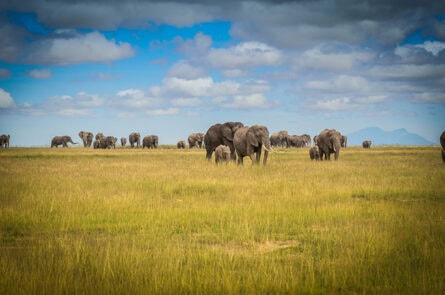
Elephants can live up to 70 years in the wild. They communicate by touch, sight, smell, and sound; using infrasound, and seismic communication over long distances.
An elephant’s trunk has more than 40,000 muscles, more than all the muscles in the human body. They can tear down trees or pick up a blade of grass with their trunks.
Elephant intelligence has been compared with that of primates and cetaceans, who also live in fission–fusion societies. They appear to have self-awareness, and show empathy for dying and dead family members.
Ethical Elephant Tourism
It is now known there’s no such thing as an ethical elephant ride or act. If they are behaving a certain way for tourists or an audience (whether carrying or performing in a circus, playing ball, or painting) they will have had their spirit broken in order to be trained this way. Don’t support it.
Genuine sanctuaries are focused first and foremost on supporting elephants, not tourists, and not on breeding. If you suspect they are not, you can report it to animal welfare.
How to Support Elephant Conservation:
Please support elephants! Can you help conserve and protect them from the numerous threats they face?
Raise Awareness: Like and share this article.
Watch: When Giants Fall
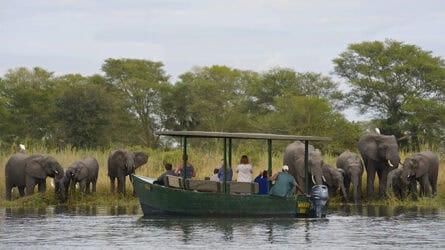
Experience: Seeing is believing. Support elephants in non-exploitative and sustainable environments where elephants can thrive under protection. See elephants in the wild with Earth Changers’ partners in Kenya & Malawi.