



The oceans make up 71% of the planet’s surface, 97% of the Earth’s water, and 99% of the living space (UNESCO, NOAA)
SDG #14
“Conserve & sustainably use the oceans, seas & marine resources for sustainable development”
“By 2030 increase the economic benefits of Small Island Developing States and Least Developed Countries from the sustainable use of marine resources, including through management of fisheries, aquaculture and tourism“.
Tourism interlinks with oceans. Whether fishing as an activity or for the fish we consume, boating, snorkelling, diving, travelling over the seas, staying on the coast or on a cruise line, the environment is of paramount importance. As such, tourism development must be part of integrated Coastal Zone Management plans in order to help conserve and preserve fragile ecosystems.
However, despite the critical importance of oceans, decades of irresponsible exploitation have led to alarming degradation.
Progress on Sustainable Development Goal 14, Life Below Water
-
$3.3 trillion per year / 3.2% of global GDP: Globally, the market value of marine and coastal resources and industries (WTTC, 2025).
-
$1.5 trillion per year: the value of coastal and marine tourism, supporting 52 million jobs, accounting for 50% of all tourists’ spending, and generating $820 billion in direct tax revenue globally (2025, WTTC).
-
~60 million/200 million+: people employed directly/indirectly by marine fisheries, contributing ~1.5% to Small Island Developing States GDP, 1.1% in the least developed countries (10 times the global average), and proving at least 50% of their primary protein (FAO, OECD).
-
46% (2019): the global mean percentage of marine Key Biodiversity Areas covered by protected areas, increasing from 30.5% (2000) to 44.7% (2015). However many KBAs only have partial or no protected area coverage: Least Developed Countries and Small Island Developing States lag at 25.4% and 23.7% (UN Stats, 2021).
-
Nearly halved: Live coral cover on reefs over the past 75 years, if not 150 years; with amphibians and cycads amongst among the most threatened species globally, due to climate change.
-
40% of the ocean is heavily affected by pollution, depleted fisheries, loss of habitat and other human activities (UNDP, 2021)
-
80% of marine and coastal pollution originates on land – from agricultural run-off, pesticides, plastics and untreated sewage (UNESCO, UNEP)
-
13,000-18,000: pieces of plastic litter are found on average in every square kilometre of ocean.
-
17 million metric tons: of plastic pollution in 2021 is forecasted to multiply 2-3 times by 2040. Recycling remains a low 10% (UN Stats).
-
One million plastic drinking bottles are purchased every minute, worldwide, and up to 5 trillion single-use plastic bags used each year (UNEP).
-
30% rise in ocean acidity (drop in pH level 8.2 to 8.1) since pre-industrial times, a rise projected to be 100%-150% by 2100, that could affect half of all marine life (UN Stats).
-
539: stations report ocean acidification (2023), tripling via 308 (2022) from 178 (2021) (UN Stats).
-
>20%: increase in coastal eutrophication (excessive plant and algal growth, and dead zones where life cannot survive because of low oxygen) of large marine ecosystems is expected without concerted efforts by 2050 (UN, Oceans Day).
-
37.5%: Global fish stocks over-fished. The Mediterranean and Black Sea have the lowest % fished at sustainable levels: (FAO State of World Fisheries and Aquaculture (SOFIA), 2024).
-
1/5 fish caught originates from illegal, unreported and unregulated (aka ‘ghost’) fishing, 11-26 million tons of fish, valued at up to $23b (UN, FAO). 75 countries +EU have signed the international binding Agreement on Port State Measures, covering 101 States and 60% port States.
-
UN global ocean / High Seas Treaty 2023 – agreement protecting marine biodiversity in international waters (2/3 of the ocean), was reached after nearly two decades of negotiations. An international agreement to end plastic pollution is expected soon.
-
30 x 30: the United Nations Ocean Conference in June 2022 saw more than 100 Member States voluntarily commit to conserve or protect at least 30% of global ocean within marine protected areas and other conservation measures by 2030.
-
3% only of the world’s oceans were described as free from human pressure in 2014 (Nature).
-
0.8%: global GHG emissions (390 million tonnes of CO₂) are directly contributed by coastal & marine tourism, requiring annual investments of $30 billion for direct emissions reduction, up to $65 billion for including climate adaptation efforts. (WTTC, 2023)
Challenges of SDG14, Life Below Water
Delicate marine habitats such as coral reefs and seagrass meadows that provide vital food, shelter and breeding grounds are very vulnerable to irresponsible, destructive and unsustainable practices. Local issues may vary but underlying threats are common worldwide:
- Oceans are the planet’s largest carbon sink, absorbing 25-30% of carbon dioxide produced by humans, causing ocean warming, acidification and oxygen loss (UN, CSIRO, NOAA). The ocean holds about 50 to 60 times more carbon than the atmosphere.
- The ocean has also absorbed more than 90% of the excess heat in the climate system, causing widespread record marine heatwaves
- Water temperature changes and acidification due to increased atmospheric CO2 disrupt life-cycles in key marine species like corals.
- Chemical pollution and debris, range from toxins to the famous ‘garbage gyres’ of the open sea. Covid19 created more plastics (PPE).
- Over-exploitation/fishing and destructive harvesting techniques depress natural populations.
- Sea level rise changes coastal habitat and contributes to land based pollution and debris.
- Marine protected areas are vital to the sustainable development of oceans, to safeguard vulnerable species and ecosystems, conserve biodiversity, and avert potential conflicts between different users’ activities.
- Managing fish stocks sustainably is crucial to harnessing the benefits of fisheries and aquaculture to alleviate poverty, hunger and malnutrition, and to generate economic growth (UN Stats, 2021)
- There is increasing separation between our daily lives and the health of marine ecosystems.
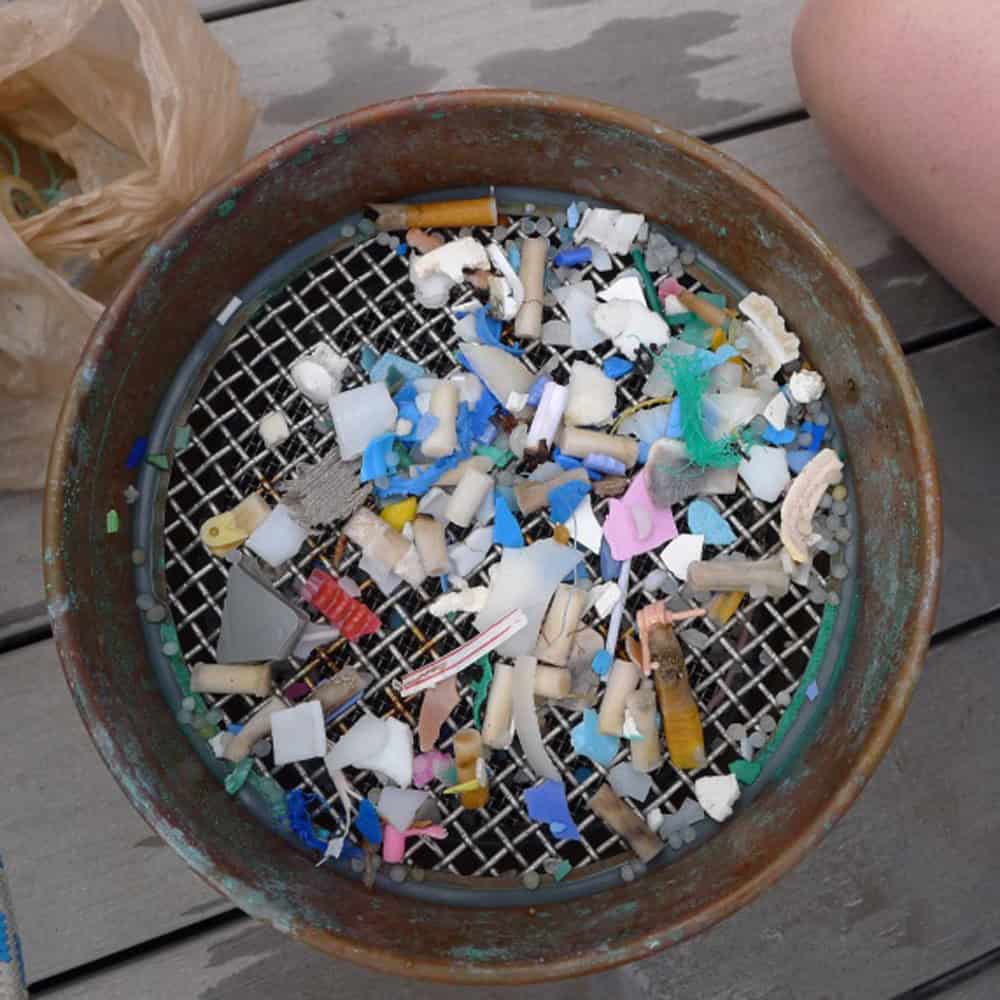
Toxic chemicals trickle into the environment from sources such as factories, farms, homes, automobiles and plastics from every country. At the bottom of the food chain, these toxins are absorbed by animals and plants which are eaten by fish, which are eaten by bigger fish, which are eaten by humans and so enter the food chain. Inadvertently, even our sunscreen ‘protection’ is causing damage to corals, so being banned from tropical waters in some places.
In parallel, the seas are suffocating: excessive nutrient pollution from human activities (such as land fertilisers or waste water removal) in the water called ‘eutrophication’ deplete the oxygen required to support most marine life in near-bottom deep water. Excess nutrients create over-growth of algae, which decomposes consuming the oxygen other life requires and increasing acidity in the water (in parallel to less fish consuming algae for other reasons such as overfishing). These low-oxygen areas are called hypoxic, or “dead” zones, as life suffocates and dies or leaves the area, and have grown explosively over the last half century around the world, causing ‘crustacean walk-outs’ for survival.
Of the 63 large marine ecosystems under the Transboundary Waters Assessment Programme, 16% are in the “high” or “highest” risk categories for coastal eutrophication. They are located mainly in Western Europe, Southern and Eastern Asia, and the Gulf of Mexico. (UN)
-
Pangaea Explorations studies fish in partnership with University of Miami with relevance to environmental and human diet and consequences, which include birth defects and toxicity in adults world over.
Marine Plastics
Plastic debris from our modern society – plastic bags, straws, bottles, toothbrushes, toys – accumulate all over the world on beaches and in great concentrations in the seas’ “gyres” – the centres of oceanic currents. The Sargasso Sea in the North Atlantic, is the best known gyre, with a legendary ability to trap ships, along with the “Great Pacific Garbage Patch”, a moving area of 1.6 million square km between California and Hawaii, estimated at 100,000 tonnes and 1.8 trillion pieces of plastic, up to 16 times higher than previously reported (2018). The total mass consists of ~46% plastic fishing nets, over 75% debris larger than 5cm, and 8% microplastics, less than 5 mm. Once trapped in a gyre, larger debris plastic breaks down into microplastics.

The plastics threaten the existence of birds and wildlife, caught up or killed by consumption: researchers found algae on plastic waste can
-
Pangaea Explorations is working long-term with organisation ‘5-Gyres’ and their partners to document the amount of floating debris in our world’s oceans. It seeks out areas with higher than normal garbage loads, and counts on beaches and transects – trawls the sea with a fine net – to analyse volume and categorise the plastic contents.
“The trash we throw in our neighbourhood gutter can devastate rare wildlife half a world away”
Ocean Acidification
As CO2 in the planet’s atmosphere grows, it is absorbed by the oceans, increasing its acidity, which threatens corals, shellfish and many plankton species that utilize calcium, damage valuable marine ecosystems, food chains and will likely cause extinction of some species.
-
Pangaea Explorations continuously monitor carbon dioxide through their expeditions, working in collaboration with National Oceanic and Atmospheric Administration.
Coral Bleaching
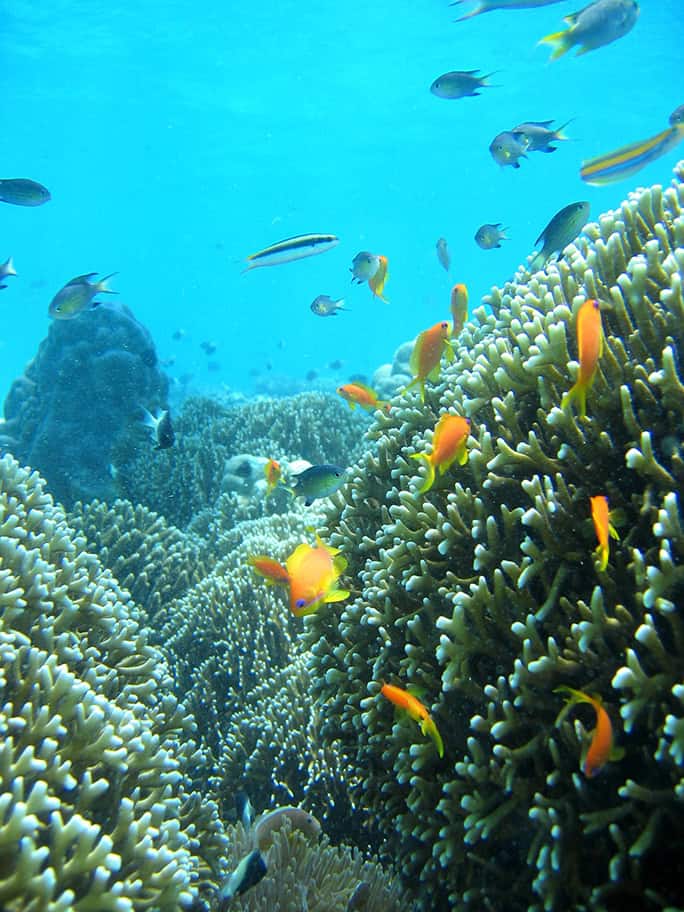
Coral reefs are one of the most productive ecosystems on Earth, and one of the most sensitive to climate change, acting as a barometer for global warming. The world’s oceans have taken up about 93% of the extra energy caused by rising levels of greenhouse gases in the atmosphere (AR5, UN IPCC). Elevated surface temperatures cause seawater to heat up and coral animals to expel the symbiotic algae they rely on for energy, essential for the nutrition and colour of corals, and ecosystem services. When the algae die, corals appear white and are referred to as “bleached”.
Water temperatures of as little as 1 degree Celsius above normal, lasting for at least two to three days, can be used as a predictor of coral bleaching and can threaten the health of coral reefs.
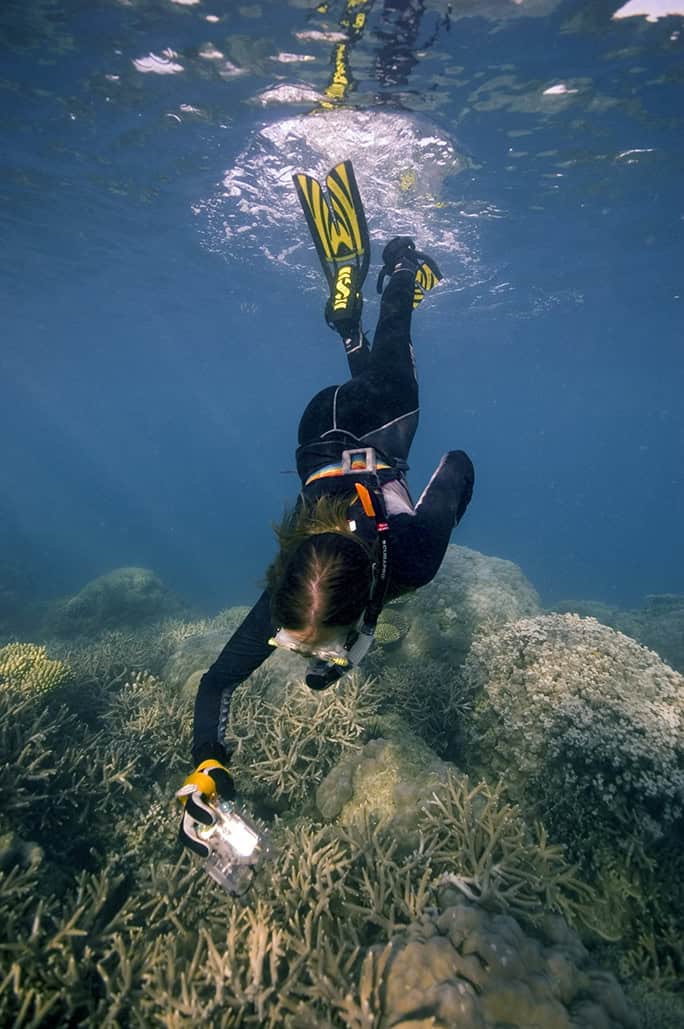
Most coral can recover from bleaching if higher temperatures persist for less than a month, but sustained high temperatures cause stress and physiological damage that may be irreversible. At 1.2°C of global warming or higher, or if heat stress lasts too long, and corals don’t reabsorb the algae, they can die.
Reefs can recover from bleaching, but it takes 15-25 years. Prior to the mid 1980s, bleaching tended to be rare and localized, and corals generally recovered. But in 1998 coral reefs around the world experienced the most extensive and severe bleaching recorded in history, in 60 countries, coincident with anomalously high sea surface temperatures and the warmest year of the century. While some corals are more warmth-tolerant, they tend to ‘offer lower habitat complexity‘, meaning used by fewer fish and other species, negatively impacting conservation.
Increasing human stresses such as pollution, overfishing, soil erosion, physical damage from boats and recreational activities, and even chemicals from sunscreen, will weaken corals, limiting their ability to adapt to climate change. So with climate change causing more and hotter heat waves, ocean warming coinciding with sea-level rise and perhaps more frequent tropical storms and El Niños, reefs are likely to experience greater coastal erosion and sedimentation, which would not only add to their demise, but also their role as barriers to tides and shoreline structures and habitation. The breaking point is approaching.
In 2015, the National Oceanic and Atmospheric Association declared the third-ever global coral bleaching event when UNESCO’s first global scientific assessment found 72% World Heritage coral reefs impacted by above normal prolonged temperatures.
This now likely underestimated given the fourth and most extensive global coral bleaching event on record, which began in early 2023. This has impacted approximately 84% of the world’s coral reefs across at least 83 countries and territories, surpassing the scale of the 2015–2017 event.
If carbon emissions growth continues, 25 of the 29 World Heritage reefs will bleach twice a decade by 2040, with all 29 bleaching yearly by 2100, so ceasing to exist as functioning coral reef systems by the end of the century. National and global effort is required. (UNESCO)
-
Chumbe Island Coral Park’s mission is to conserve and educate on its coral reef sanctuary and coral rag forest. Its dedicated scientific research is facilitated with the academic and scientific community around the world, with projects to monitor Coral reef amongst others.
Global Warming & Ecosystems
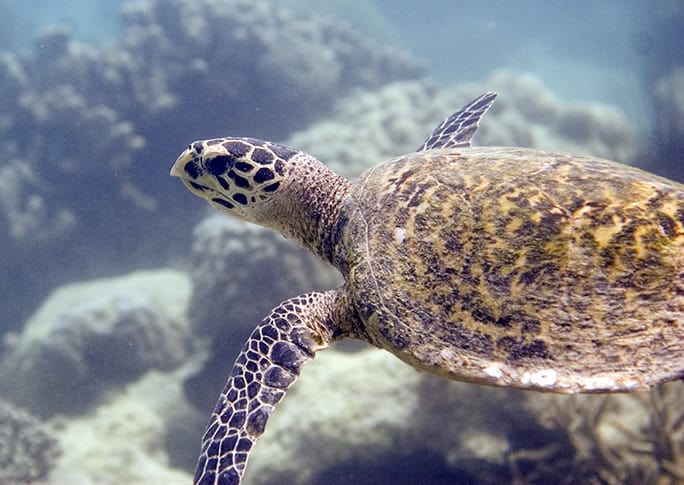
Oceans contain nearly 200,000 identified species, although actual numbers may be in the millions (UN). Increasing temperatures and acidification don’t just affect species separately, but also entire communities. As one species is affected, so is the balance of its ecosystem, its predators and prey, so climate change may indirectly shape whole marine communities (mbari.org).
Seagrass meadows, which surround every continent except Antarctica, play a vital role in ocean health, sheltering important fish species and their nurseries. They support other species (and so the fishing industry), filter pollutants, and lock-in atmosphere-warming carbon, valued at ~US$20,000 per hectare per year. They purge pathogens with powerful photosynthesis, so much so the surrounding water fizzes from oxygen released, even estimated to be worth $11,000 of filtering every year. As their soils hold little oxygen, they don’t decompose so can hold carbon. Research has found that disease-causing bacteria in the meadows are reduced, protecting reefs, so they may even be priceless in combating even in combating climate change (NY Times).
But warmer temperatures cause the plants to lose oxygen through their leaves, and with less in their roots can become poisoned by toxic sediments; as waters warn, so bacteria increases; damage magnified by cloudier warmer water so less sunlight to produce oxygen, and so they are among the most endangered ecosystems on Earth. One third have died since the 19th century, taking their economic value with them, as well as releasing stored carbon and contributing to carbon dioxide in the atmosphere.
Because of the immense size and depth of the ocean, warming already absorbed at the ocean surface will mix into deeper waters, which are thus likely to experience rapid warming by 2050 even if global emissions decline. Climate ‘velocity’ (the speed at which marine life seeks to move out to preferred temperature habitats) is currently twice as fast on the surface than in the deep ocean as it is warming more quickly. Marine life in deep ocean will face escalating threats from ocean warming until the end of the century, no matter what we do now.
Destructive harvesting
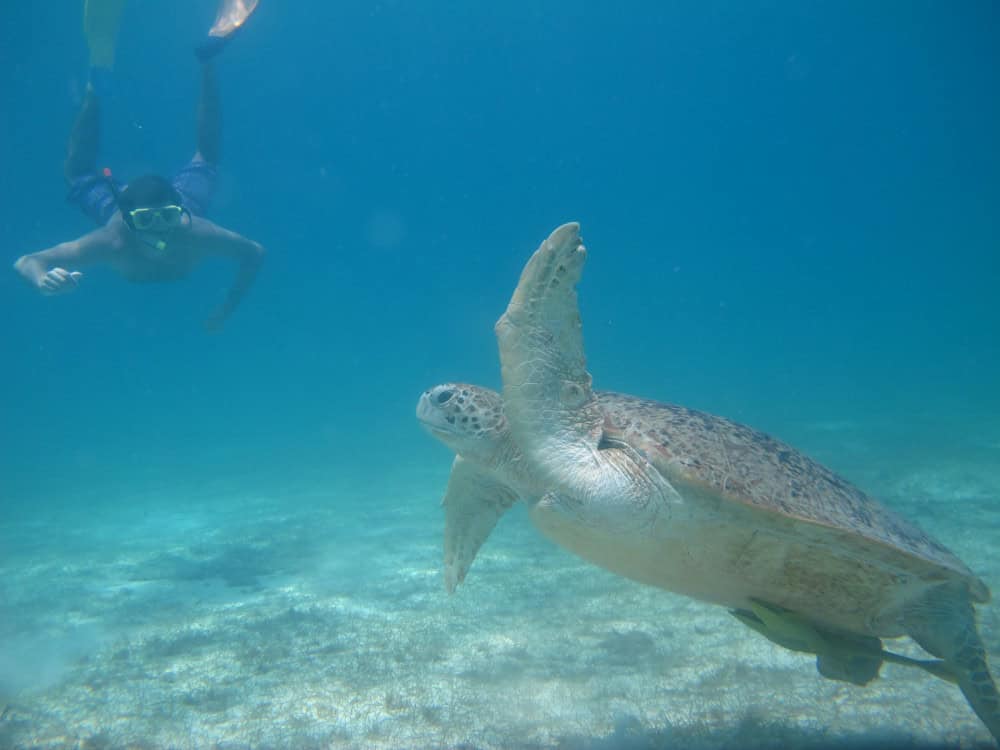
Exploitation, illegal and over-fishing, and (non-sought but caught) ‘by-catch’ can mean more fish being caught than can reproduce naturally to replenish stocks, an unsustainable practice: WWF and OECD cite the global fishing fleet is 2-3 times larger than the oceans can sustainably support, with several important commercial fish populations already declined to the point where survival is threatened.
Depletion of local fish stocks not only causes imbalance in ocean ecosystem, throwing out other species’ dependencies and the food chain, but can also decimate a local fishing industry, thus livelihoods and core income to households with few other employment opportunities, as well as a source of local protein for diets, thus health, affecting a community all round: Fisheries directly or indirectly employ over 200 million people (UN).
Subsidies for fishing also contribute to overcapacity and overfishing, thus to rapid depletion of many fish species and preventing efforts to save and restore global fisheries and related jobs, causing ocean fisheries to generate US$ 50 billion less per year than they could.
Dynamite fishing, setting off explosives under water, means dead fish float to the surface and can be scooped up. However, the explosives also completely reduce the underwater environment to rubble. Dynamite fishing has contributed to massive destruction of, for example, Southeast Asian coral reefs over the past 20 years.
Fisheries contribute significantly to global food security, livelihoods and the economy. According to The Marine Stewardship Council MSC Global Impacts Report 2017, world marine fish stocks within biologically sustainable levels declined from 90% in 1974, to 68.6% in 2013, to 62.3% in 2021. This is in part thanks to the MSC Fisheries Standard and positive impact certification, with MSC-certified fisheries offering healthy and well-managed stocks as well as safeguarding marine habitats and ecosystems through commitments to improve fishery performance, traceability and sustainability. Yet still 37.7% of stocks are now overfished, reflecting a continued, though slowing, downward trend (FAO).
Protecting biodiverse marine sites is vital for ensuring the sustainability of marine biodiversity and ecosystem services. Strict sustainable management plans are required to restore and safeguard populations and balance of the marine environment for longevity. Marine Protected Areas (MPAs) can help do this. From 2000 to 2016, the share of marine key biodiversity areas that were completely covered by protected areas increased from 15% to 19%, or 5.3% of the total global ocean area. (UNStats).
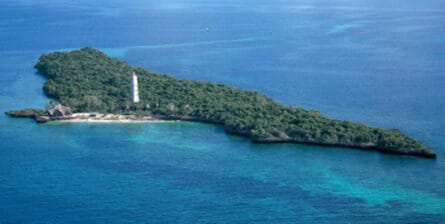
- Chumbe Island Coral Park was set up as the world’s first private Marine Protected Area. It started by undertaking baseline surveys of the ecosystems, flora and fauna to establish the conservation value of the Chumbe reef and coral-rag forest. It became clear that local community co-operation and income generation had to be at the heart of the sustainable development as they relied on fishing for livelihood where as a no-take zone was required for conservation. Firstly, as an alternative livelihood, Chumbe trained fishermen as guides, to act as guardians of the natural resources, and as advocates, educating others about the importance. For longer term and wider attitude change, Chumbe extended this education to link to the national curriculum with schools supported through environmental talks/seminars and clubs, including a popular competition for schools, the Chumbe Challenge Environmental Award.
-
Nikoi Island in Indonesia have put forward a proposal to develop a Marine Protected Area including a No Take Zone to support locals’ livelihoods and stimulate opportunities for the economy, marine sector and tourism.
-
SEED Madagascar works with 400-500 fishers and their households to have a positive impact on lobster stocks, developing a community management model that can be replicated regionally. Lobster fishing is of considerable economic importance generating 80% of income households, whereby fishermen navigate dangerous seas in poorly constructed canoes to try to earn around £1 per day. Now with a Locally-Managed Marine Area, including a minimum landing (lobster) size, a ban on landing berried (egg bearing) females and a periodic No Take Zone (NTZ) the community-elected “Riaky” (Sea) Committee is responsible for enforcing rules with great results of increased catches.
In 2016, delegates from 24 countries and the European Union agreed that the Ross Sea in Antarctica will become the world’s largest Marine Protected Area, an area of 600,000 square miles – larger than France, Germany, Italy and the UK put together. Since, another large MPAs includes the Pacific Remote Islands Marine National Monument
Rising Sea Levels
More extreme weather patterns have irreversible effects: Climate change causes loss of sensitive protective ecosystems like coastal wetlands that protect shores from flooding, as can tourism development and attractions, with major social and economic impacts.
Sea level rise is caused primarily by two factors related to global warming: The added water from melting land ice and the expansion of sea water as it warms. Sea level rise is not equal across the earth: regional effects and periodic warming such as El Nino (in the eastern tropical Pacific) cause sea levels to increase on some parts of the planet, decrease on others, or remain relatively flat in some. Plus, while most countries are planning for sea level rise, half for it to be high, with 2100 the most common planning horizon; differences in preparation will also lead to different impacts.
However, even keeping within the +2C degrees global warming limit target, coastal communities are predicted to encounter significant impacts, such as higher sea levels of 44–76 cm (17–30 inches) by 2100 (AR6, IPCC), and 2–6 meters (6.5–19.5 feet) by the year 2300, reshaping the world’s coastline and affecting populations of millions, including in major worldwide cities, from New York to Dhaka to London to Honolulu. Whole islands will disappear. Already, some are investing in land elsewhere to move whole scale when the time comes. The importance of Marine Protected Areas to coastal ecosystems is only likely to increase, raising important questions over area rights and boundary changes.
-
One of Chumbe Island Coral Park’s ongoing scientific research projects is to monitor sea surface temperature.
Conclusion?
“The frequency, intensity and duration of heat stress events has increased with global warming, and we are at a tipping point: if we don’t dramatically reduce carbon emissions, we could lose every one of the 29 coral reefs on the World Heritage List, devastating the vibrant ecosystems they support, and the human communities that rely on them for food, jobs and flood protection”.
Want to see the Marine Big Five?
Check out our partner in South Africa – dedicated to marine and land conservation and community. There you can see dolphins, sharks, whales, penguins & seals, all in one place.
Links with the other Sustainable Development Goals
Goal 1 – End poverty: Fishing is a traditional livelihood supporting millions of lives worldwide.
Goal 2 – Zero hunger: Fisheries contribute to global food security and improved nutrition.
Goal 3 – Health & well-being: The marine environment is a vital source of protein for global diets and fresh air for well-being breaks.
Goal 4 – Education: Is required to retrain people in sustainable livelihoods in marine conservation, eg, from dynamite fishing.
Goal 6 – Clean water & sanitation: in a coastal environment, water pollutants can cause eutrophication and get into the food chain via fish.
Goal 8 – Decent work & economic growth: 39% of world population directly depend on marine and coastal biodiversity for living and almost half of the world’s cities with more than one million people are sited in and around estuaries. Sustainable fisheries, aquaculture and tourism are important to create jobs in marine environments.
Goal 9 – Infrastructure is key for industry for fishing in coastal areas and communities.
Goal 11 – Sustainable cities & communities: need marine resources to survive, even if not coastal.
Goal 12 – Sustainable consumption and production is required to support the natural resource base sustainability and protection.
Goal 13 – Climate change: Global heating impacts water temperatures, acidity, coral bleaching, marine ecosystems, species, coastal areas.
Goal 15 – Life on land: Land and marine ecosystems meet in coastal ecosystems creating diverse habitat vulnerable to climate change.
Goal 16 – Peace, justice & strong institutions: Coastal communities, habitats and livelihoods are strongly affected by marine ecosystems’ pollution, unjustly created often half a world away.
Goal 17 – Partnerships for the Goals: Marine ecosystems require international and national policy to enable sustainable management.