


SDG 11: Urban migration, sprawl & tourism – is it sustainable?
The rapid growth of cities in the developing world and increasing rural-to-urban migration has led to a boom in urban sprawl and mega cities – those with more than 10 million inhabitants. The first, New York, emerged in 1950. By 1990, there were ten mega-cities; in 2004, nineteen; in 2014, twenty-eight, in 2025, thirty-seven, mostly located in Asia (22), plus Latin America (6), and Africa (4). The number of megacities is expected to grow to 48 by 2035 and further to 67 by 2050, Africa growing fastest. Asia will continue to host many of the largest megacities, including Delhi (projected to be the largest by 2035 and 2050), Tokyo, Shanghai, and Dhaka.
But as governments struggle to accommodate such rising populations, extreme poverty is often concentrated in such urban spaces and infrastructure and services such as waste collection, water, sanitation, roads and transport become inadequate and over-burdened. Projections indicate that urban growth to 2050 will be mostly concentrated in developing countries like India, China, and Nigeria, with much of the population living in areas categorised as slums. And as accelerating climate change weather extremes hit, so greater is impacted infrastructure and population.
However, cities can offer more efficient economies of scale for providing goods, services and transportation, and with sound planning and management, can become incubators for innovation and growth, attracting people seeking greater opportunities and a better life: Sustainable development can be achieved if we significantly transform the way we build and manage our urban spaces.
For this reason, Goal 11 of the UN 17 Global Goals of the 2030 Agenda for Sustainable Development is:
SDG #11
“Make cities and human settlements inclusive, safe, resilient and sustainable.”

Progress on Sustainable Development Goal 11
Sustainable Cities & Communities
- 4.8 billion people, 58% of the global population, live in urban areas or cities worldwide (2025) – up from 4.2 billion / 52% in 2018; by 2030, it’s expected to be 5 billion / 60%; by 2035, 5.3 billion people / 62%.
- 3 billion+ by 2050: projected global slum population without major policy changes and new investments.
- 95%: of urban expansion in the future will be in the developing world; 80% in cities. Africa alone will see its urban population double from 700 million to 1.4 billion by 2050.
- 90% of people living in urban areas breathed air that did not meet World Health Organization air quality guidelines. More than half were exposed to air pollution levels at least 2.5 times higher than the safety standard set by the WHO.
- 90%: the proportion of cases of Covid-19 in urban areas where poor and dense population meant social distancing difficult.
- 70%: The global carbon emissions contributed by cities
- 60%: The global GDP generated and resource used by cities.
- 51-52% the world’s urban population has convenient access to public transport (500-1000m) (2023)
- 47% of world population live within 400m walking distance of open public spaces
- 16%: The share of land allocated to streets and open spaces (2019, global average from 610 cities in 95 countries): Streets form about three times as much urban land as open public spaces, such as parks and riverfronts.
- 24% / 1 million: Urban population living in slums (2018), down from 28% in 2000 but up from 23% in 2014; In sub-Saharan Africa, it’s 56% – the highest of any region; over 90% in Ethiopia, Malawi and Uganda, three of the world’s most rural countries. By 2030, over 2 billion people in the world will be living in slums.
- 4.2 million: premature deaths caused by air pollution (2016)
- Covid-19 lockdowns meant a high risk of losing livelihoods in the informal sector, but also a stop of industrial production, traffic and air transport, giving a glimpse of real clean air, plus additional safety measures to mitigate elevated risk of transmission in crowded public transport. Many governments were forced to revisit urban planning to help prevent the next pandemic.
SDG 11 Cities & Communities: Challenges
A city that is not good for its citizens is not good for tourists.
From 2000 to 2015, in all regions of the world, the expansion of urban land outpaced the growth of urban populations by about 1.5 to 2 times (UN Stats), meaning cities are growing outwards rather than upwards or becoming denser, with unplanned urban sprawl negatively affecting the sustainability of urban development – eg. due to longer commutes, greater energy use, more limiting efficient service delivery, and increased per capita CO2 emissions and hazardous pollution, major risks to health.
The share of the urban population living in slums has risen- from 22.7% in 2020 to 24.9% in 2024 – meaning the absolute number is rising significantly as cities grow, especially in Africa and Asia, outpacing the development of housing, infrastructure and services. These areas have high rates of unsanitary conditions, malnutrition, disease, lack basic health care and are often also in energy poverty.
The trend is driven by rapid rural-to-urban migration outstripping local governments’ ability to provide adequate, affordable housing, land tenure, and essential services; and persistent gaps in urban planning, social housing policy, and infrastructure provision.
2020-2023 data also shows some positive signs where urban densification policies, transit-oriented development, and urban planning reforms have slowed or reversed sprawl, though sprawling growth remains a key challenge, particularly in Africa, Asia, and Latin America.
Making cities safe and sustainable means ensuring access to safe and affordable housing, and upgrading settlements’ conditions, including water and sanitation, energy, infrastructure, investing in public transport, creating green public spaces, contributing to productivity and physical and mental health. Open spaces as places of commerce are critical to the informal economy, which many people depend on for their livelihoods. Better urban planning and management is participatory and inclusive.
SDG 11 Cities & Communities: Open Spaces
Equitable access to open and public spaces contributes to enhanced productivity and physical and mental health. However, streets take up about three times as much urban land as open public spaces, such as parks and riverfronts.
Open spaces may also be places of commerce critical to the informal economy, which many people depend on for livelihoods. But wide disparities in access to public spaces are observed across regions, ranging from 26.8% in Eastern and South-Eastern Asia to 78% in Australia and New Zealand, and within countries, smaller cities record higher levels of access than large cities.
SDG 11 Cities & Communities: Transportation
Reliable, accessible and affordable public transportation reduces pollution, traffic and emissions and promotes efficient movement, productivity and inclusion. But only half the world’s urban population has convenient access to public transportation.
Accessible is defined as within 500 metres walking distance of low-capacity transport systems (buses and trams) and within 1,000 metres of high-capacity systems (trains, subways and ferries). Many cities also have a high prevalence of informal transport systems, often deficient in regularity and safety.
There is also a need to enhance access to public transport systems that are well integrated with walking and cycling paths through long-term mobility plans and targeted investments.
SDG 11 Cities & Communities: Tourism-related challenges
The ‘Cape Town Declaration on Responsible Tourism’ (Fabricius and Goodwin, 2002) defined it as,
“to take responsibility for achieving sustainable tourism, and to create better places for people to live in and for people to visit”
– in priority order, residents quality of life comes before tourists’ quality of visit. A city is nice to visit because it prioritises local needs and residents, that consequently create the nice place to visit.
Destinations’ sustainable development needs to be driven by local need, but tourism can be a vehicle to help achieve this:
“Sustainable tourism has the potential to advance urban infrastructure and universal accessibility, promote regeneration of areas in decay and preserve cultural and natural heritage, assets on which tourism depends. Greater investment in green infrastructure (more efficient transport facilities, reducing air pollution, conservation of heritage sites and open spaces, etc.) should result in smarter and greener cities, from which not only residents, but also tourists, can benefit.” (UN)
Currently, many cities are posing challenges for their communities and tourism.
SDG 11 Cities & Communities: Over-tourism
In 2017, The UN Year of Sustainable Tourism for Development, (ir)responsible tourism became mainstream news – for overtourism and its impacts. It had been building, but the reality of only focusing on pushing for the economic growth and jobs that tourism brings comes at the cost of a unbalanced triple bottom line: tipping the scales on environmental and social impacts; straining services, infrastructure and local people’s tolerance.
In popular cities served by no-frills flights, cruise ships and readily available accommodation ‘sharing’, benefits from tourism are hardly for the common good, where as its costs are hit residents hard, and locals are increasingly raise their voices. From Amsterdam to Barcelona, Berlin, Copenhagen, Dubrovnik, Florence, Genoa, Kyoto, Lisbon, Malaga, Milan, New York City, Palma de Mallorca, Paris, Prague, Reykjavik, Rome, Sevilla, Venice to Valencia, city residents tell tourists, “go home”.
Whilst there are also issues around over-tourism in US National Parks and cultural and historical sites such as Machu Picchu, many recognised over-tourism destinations are cities: Of the 1.4 billion international tourists in 2018, more than 36%, or half a billion, visited one of the planet’s 300 most popular cities (WTTC); others expected to surge the next decade include megacities Delhi, Cairo, Manila, Moscow and Bangkok (changeable geo-politics allowing).
Europe, the largest destination region, received 747 million visitors in 2024, approximately 50% of the world’s tourism (1.465 billion), with years of consecutive growth surpassing the pre-Covid peak in 2019, and not-withstanding the pandemic impacted years (2020-2022).
-
No-frills flying opened up spontaneous travel to many, with its low-cost based on removing non-essential features for minimum comfort, often flying to remote airports with lower access charges, with governments even luring airlines’ routes with subsidies for potential tourism export revenues.
This has enabled people to travel more than ever, making more destinations more accessible than ever including many culturally beautiful cities, now faced with stag and hen parties seeking weekends abroad with cheap beer, and the ensuing social behaviour, not to mention the greater environmental impact of more aviation.
-
Cruise is a part of the travel sector which has seen enormous growth for years, its popularity in visiting multiple destinations, convenience, service levels, facilities, entertainments and aspirational escape, seen as great value for money, and welcomed by destinations for the potential economic impact from tourist spend and job creation.
But consumer demand growth means a drive for more and bigger ships, and destination ports, to accommodate the annual 37 million passenger business (2025, up from 34.6 million passengers in 2024) with relatively little consideration of environmental or social impacts for marine conservation, air quality and residents’ lives, as they spew more pollution into air and water and people onto small streets of temporary destinations.
The largest cruise ship in service as of 2025 accommodates up to 5,610 passengers at double occupancy, served by up to 2,350 crew members: a maximum passenger capacity of 7,600.
The largest at least 20 cruise ships that carry over 5000 passengers (Wikipedia) while 314 cruise ships operating in total worldwide have a a total capacity of 537,000.
Miami is the busiest cruise port globally with around ~1,271 cruise departures with ~8.23 million passengers, with daily passenger numbers sometimes exceeding 67,000 (2024).
In Europe, for Genoa and nearby Savona combined (Italy), cruise generates annual tourism revenue of 5.3 billion euros, with 2.3 million cruise passengers in Genoa alone in 2024. Even in the winter January and February, they receive more than a million monthly visitors, though peak cruise arrivals month is October: in 2014, 6 cruise ships carrying 14 000 passengers together arrived in a single day.
- Environmental challenges include air quality and port congestion; Genoa has spent more than €100 million on significant infrastructure investments to address environmental and congestion impacts.
The impact of this on a destination and its resident cannot be under-estimated – but cruise ship arrivals have provoked protests here dating back to at least the “Costa Concordia” shipwreck – in January 2012 – off the region’s coast.
-
Accommodation “sharing” economy sites have also played a significant part in overtourism in cities, making cheaper stays more accessible. Originally touted as offering great responsible tourism benefits, supporting local people with supplementary income and businesses in their localities, the demand has created unintentional costs. Locals have moved out to prioritise holiday rentals, creating a housing stock shortages, local property price inflation, tourist tax avoidance, more tourists, thus less income for support services, less residents, and so the culture and ‘soul’ of places diluted but more pressures on services and residents who remain.
Cities & Communities: Curbing overtourism
In 2017, demonstrations and violence brought over-tourism to mainstream media headlines and put responsible tourism on the political agenda. Whilst governments have always been known in the tourism sector to be key stakeholders, residents and consumers are waking up to its importance, and demanding the need for local authorities to better plan and manage impacts of tourism, particularly under the pressures and stresses of cities. Many are also reviewing their policies with regards to foreign ownership of properties on a national level.
Here’s some examples of cities’ and countries’ new tactics to manage tourism for the benefit of their communities:
| Strategies / Tactics | Eg. Destinations Implementing: Not exhaustive, continues growing |
|---|---|
| Visitor Caps & Timed Entry Tickets | Venice (Italy), Machu Picchu (Peru), Athens (Greece), Amsterdam (Netherlands), Galapagos Islands (Ecuador) |
| Short-Term Rental Regulations & Bans | Barcelona (10,000 units to return to housing stick), Spain, Amsterdam, London, Berlin, Vienna, Athens, New York, Las Vegas, Santa Monica, Boston, Hawaii… |
| Cruise Ship Restrictions & Docking Limits | Barcelona, Venice, Santorini & Mykonos (Greece), Ibiza (Spain) |
| Tourism / Visitor Taxes & Fees | Barcelona, Amsterdam, Seville (Spain), Edinburgh (Scotland) |
| Promoting Off-Season and Off-Peak Travel | Iceland (winter tourism), Barcelona, Amsterdam |
| Geographic Dispersion & Alternative Destinations | Barcelona (outskirts), Amsterdam (Haarlem, Alkmaar) |
| Real-Time Visitor Tracking & Smart Tourism Technologies | Barcelona (digital visitor dispersion), Amsterdam (apps & dynamic pricing); Dubrovnik (Croatia |
| Community Engagement & Participatory Planning | Barcelona, Bali (Indonesia), Dubrovnik (Croatia), Florence (Italy) |
| Curfews or Time-Restricted Access for Tourists | Seoul (Bukchon Hanok Village), Menorca (Spain) |
| Group Tour Size & Behaviour Regulations | Venice (max 25 per group), Florence (education campaigns), Dubrovnik (limiting chairs) |
| Infrastructure Investment to Improve Sustainability | Barcelona, Venice, Dubrovnik, Trentino-Alto Adige (Italy) |
| Demarketing or Discouraging Mass Tourism | Amsterdam, Hallstatt (Austria), Florence |
| Business and Conference Tourism Promotion | Barcelona |
| Strict Ticketing Systems for Sensitive Sites | Machu Picchu (Peru) |
| Environmental Protection Measures (e.g., Onshore Power, Traffic Restrictions) | Dubrovnik, Genoa (Italy), Barcelona |
| Regulation of Visitor Behaviour and Local Norms | Dubrovnik (noise control) Florence, Amsterdam (housing and visitor conduct) |
Cities & Communities: Overtourism case study examples
- Amsterdam
concerned over its previous party attraction, ‘Disneyfication’ and tourist centre monoculture of noise, trash and nuisance, has tried to reverse the trends that push out locals to provide “tourism in balance” and ensure that “the city stays livable for all residents” for its ~1 million population which receives 19 million visitors and expects 42 million by 2030. In May 2018, it stated it is ‘a city to live and work in – and only a tourist destination in the second place’, stopping advertising, switching from “destination promotion” to “destination management”.
Since 2014, Amsterdam has gradually tightened rules by reducing permitted rental nights, introducing registration, and requiring permits. It has not banned short-term rentals outright in its busiest areas but is imposing stricter limits. Starting April 2026 (pending City Council approval), homeowners in the city center and De Pijp area will be allowed to rent their homes for no more than 15 nights per year, down from the current 30-night limit, targeting neighbourhoods with the highest tourist congestion and housing pressures, aiming to reduce nuisance and improve livability.
This is part of a staged approach called the “Holiday Rental Escalation Ladder,” which could lead to a full temporary ban in the most affected areas if problems persist. Elsewhere, short-term rentals remain allowed with mandatory registration and permits. Violations can lead to large fines—up to €87,000 for a first offense.
With its “Stay Away” campaign, Amsterdam has also cracked down on “fun rides” like beer bikes and boozy boat trips with tour boats dis/embarking outside the centre; it’s also banned tours of its infamous red light district, requires tour guides to have a permit, plus no longer allows within the central ‘Ring’ area touring cars that transport tourists into and out of the city.
Demarketing has reduced advertising as a city, and concentrated on spreading visitors, congresses and promoting cultural tourism such as the Anne Frank House and Van Gogh and Rembrandt art, plus introduced advertising taxes and banned advertising street boards that play videos in order to create calmer streets. As the plans cost money, the tourist tax has risen significantly from previous levels (4%-6%) to 12.5%, roughly ~€22 per night based on average hotel prices (2025), raising €245 million revenue given more visitors and rising prices.
Amsterdam levies a day tourist tax on all sea and river cruise passengers docking within the municipal boundaries, about €14.50 per passenger per 24-hour period (up from €8 previously), collected through the Port of Amsterdam. This cruise passenger tax has led to some cruise lines cancelling stops in Amsterdam (eg. MSC) or redirecting to other nearby ports like Rotterdam, which is about an hour away by car. In 2019, after the tax was introduced, cruise ship calls dropped from 180 to 128.
Amsterdam has implemented a cap on cruise ship visits, limiting them to a maximum of 190 per year in 2024, and this cap will reduce further to 100 ships per year by 2026. It has also cancelled plans for expanding its cruise port in the city center and is considering moving the Passenger Terminal to Coenhaven, farther from the city centre, with a target to close the central terminal by 2035.
Amsterdam has also banned any more retail premises aimed at tourists: souvenir shops, waffle houses and ticket outlets, and considering limiting branches of large retail chains targeting tourists, in an effort to preserve urban quality.
It is however continuing to welcome tourists with open arms, but managing them more cleverly using the latest technology and tools: dispersal marketing to outlying districts, such as ‘rebranding’ Zandvoort, as ‘Amsterdam Beach’, and analysing Big Data from the city visit card to encourage tourists to change how, where, and when they visit, for example the museum and boat trips, plus live streaming the entrances to attractions with mobile notifications of peak times, because, as the ‘I Amsterdam’ campaign said, “You cannot close a city.” (Conde Nast Traveler).
For destination management (rather than destination marketing), Amsterdam have turned to Doughnut Economics to consider impacts of alternative management choices within social and planetary limits.
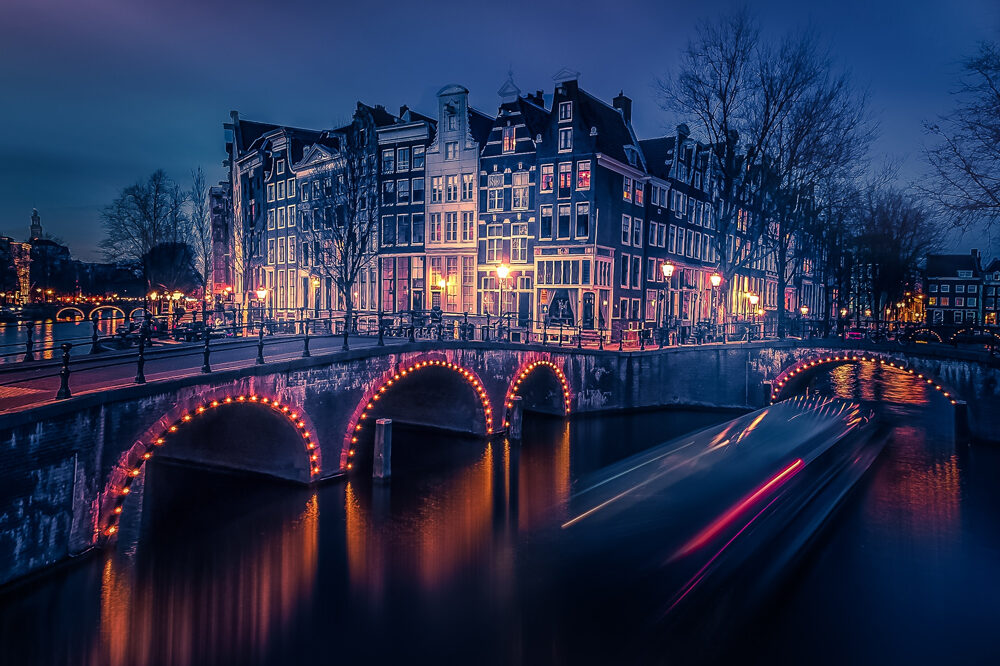
- Copenhagen with ~10 million annual visitors (vs ~600,000 residents) has limited new hospitality venues, restricting bars and restaurants in key areas, and developed an extensive bike-friendly infrastructure to promote sustainable and dispersed tourist movement. Innovative measures include pilot “silent areas” where loud talking is discouraged to improve local quality of life, and the CopenPay programme rewards tourists for eco-friendly actions such as biking or litter picking with perks like free coffees and museum entry. Copenhagen’s comprehensive “All Inclusive” tourism strategy promotes conscious tourism with targets to achieve carbon neutrality by 2050. Discussions around demand management, including visitor levies, continue amid rising arrivals.
- France remains the world’s top tourist destination, attracting around 90 million international visitors annually; summer months’ crowding at popular Paris attractions leads to advice for tourists to book tickets at least 2-3 months in advance, especially for major museums and monuments. The Eiffel Tower welcomes about 7 million visitors per year, with strict time-slot ticketing limiting visits to about 30 minutes per visitor inside the tower to manage crowding and preserve the monument. Street vending around major attractions is tightly regulated, controlled by local authorities to combat illegal sales, maintain aesthetics and protect tourist safety. Surrounding areas are maintained by specialist urban and environmental teams who enforce cleanliness with significant fines for littering and vandalism, helping protect both resident quality of life and visitor experience.
French and Parisian tourism authorities are increasingly focused on managing tourist flows, for example promoting off-peak visits in shoulder and low seasons; encouraging visits to lesser-known cultural sites and regions outside Paris (e.g., Loire Valley, South of France); using digital tools for visitor information and queue management; and implementing stricter group size controls and timed entry tickets at sensitive sites.
-
Dubrovnik’s popularity (nearly 1.4 million arrivals, 2024) part due to the ‘Game of Thrones effect‘ and a cruise port has been limited in its historic Old Town every day to a maximum 4,000 people at any one time, stricter than the earlier UNESCO recommendation of 8,000 to prevent damage to the city’s oldest buildings., which the city also plans to cut in future years to enhance quality of life and sustainability. Cruise ship visits are capped at a maximum of two ships docking simultaneously, with limits on disembarking passengers to ~5,000 per day. Surveillance cameras and people counters are installed at the city’s gates to monitor arrivals. When visitor counts approach thresholds, crowd flow controls are activated, including slowing down visitor traffic or denying access when limits are reached. Advance registration via a Dubrovnik City Card or online booking provides priority access, while unregistered visitors may be temporarily turned away. The city has also introduced a “Respect the City” initiative asking tourists to behave considerately, including rules such as no swimwear in the Old Town, no loud behavior, and no alcohol outside licensed venues; bans on new short-term rental apartments and city purchasing properties support permanent residents.
From 2025, a “special traffic regime zone” in the Old Town has been introduced with app-based controls for tourist buses and vehicles, tightening traffic and congestion management. Dubrovnik also plans to reduce cruise ship peak-time arrivals by rescheduling or cancelling some cruise stops and to discourage day-tripping from cruise ships to improve local quality of life and heritage protection
-
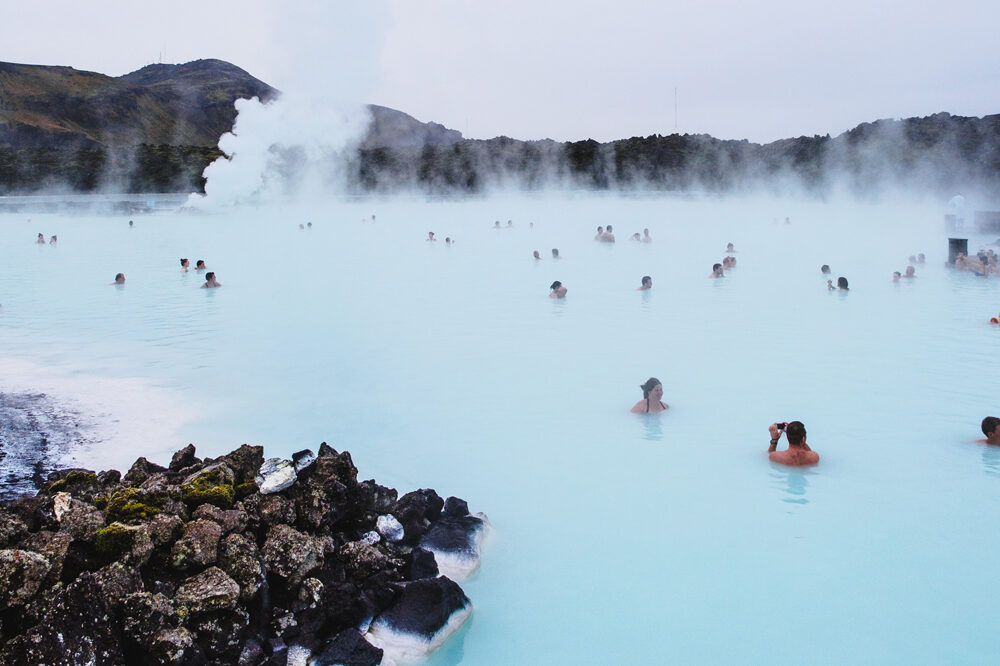
Iceland did an incredible marketing job after its banking collapse in 2008 and subsequent financial crisis. Understanding its assets lay in its natural capital, it saw tourism as a saving grace and geared itself to become a bargain destination as a major transatlantic US-Europe gateway and stopover. However, the (Game-of-Thrones-effect) boom has become a backlash as demand now outstrips supply, hospitality infrastructure strains under the pressure (tourists known to have knocked for accommodation on residents’ doors), prices inflate, and locals are pushed out – visitors jumping from 500,000 in 2010 to over 2 million in 2019 and ~2.3 million in 2023, mostly in Reykjavik, dwarfing its 383,000 population. With 79% locals thinking there’s too much pressure on the country’s nature in 2017 yet only 18% thinking there should be a cap on tourism, the government looked at taxation to manage and re-premium Iceland’s tourism (Skift).
Since January 2024, Iceland charges a tourism tax of 600 ISK (~$4.34) per hotel stay, with proportional fees for campsites, mobile homes and cruise ship passengers (~1000 ISK or $7.26). This funds sustainability initiatives and helps manage visitor impact. The government is considering seasonal and peak-demand pricing or access fees to popular natural sites (like Geysir hot springs) to regulate visitor flow and protect fragile environments. Policies targeting investment companies’ purchase of housing for short-term rentals are being considered or gradually implemented, the focus on balancing economic benefits with nature and wellbeing.
-
Barcelona faces significant challenges with ~15.6 million visitors annually in a city of 1.7 million residents, contributing to housing shortages and local discontent. Key measures to address overtourism include: a ban on all short-term tourist apartment rentals by late 2028, targeting over 10,000 licensed rentals and many unlicensed ones, and a ban on opening new hotels in the city centre; tourism taxes €6.60-€12.10 per visitor per night to help fund mitigation efforts; limits on tour group sizes in the historic centre and installation of foot traffic sensors on La Rambla to monitor and manage congestion; creation of pedestrian-friendly “superilles” (superblocks) to reduce traffic and promote green spaces; relocation of most cruise ship activity away from the city centre to outer piers, cutting central cruise arrivals; promotion of cultural and less-touristed Catalonia regions to disperse visitors; plus active policing and efforts to reduce petty crime affecting tourists and residents.
Despite these actions, overtourism remains a heated issue locally, with rising rents (68% increase ~2015-2025) pushing residents out and protests occurring faced with economic importance of tourism (14% of GDP) with growing negative impacts.
-
Venice continues to face acute overtourism, with a dwindling population of under 50,000 overwhelmed by roughly 85,000 daily visitors in the historic center, most of whom are day-trippers. The city hosts about 30 million tourists annually.
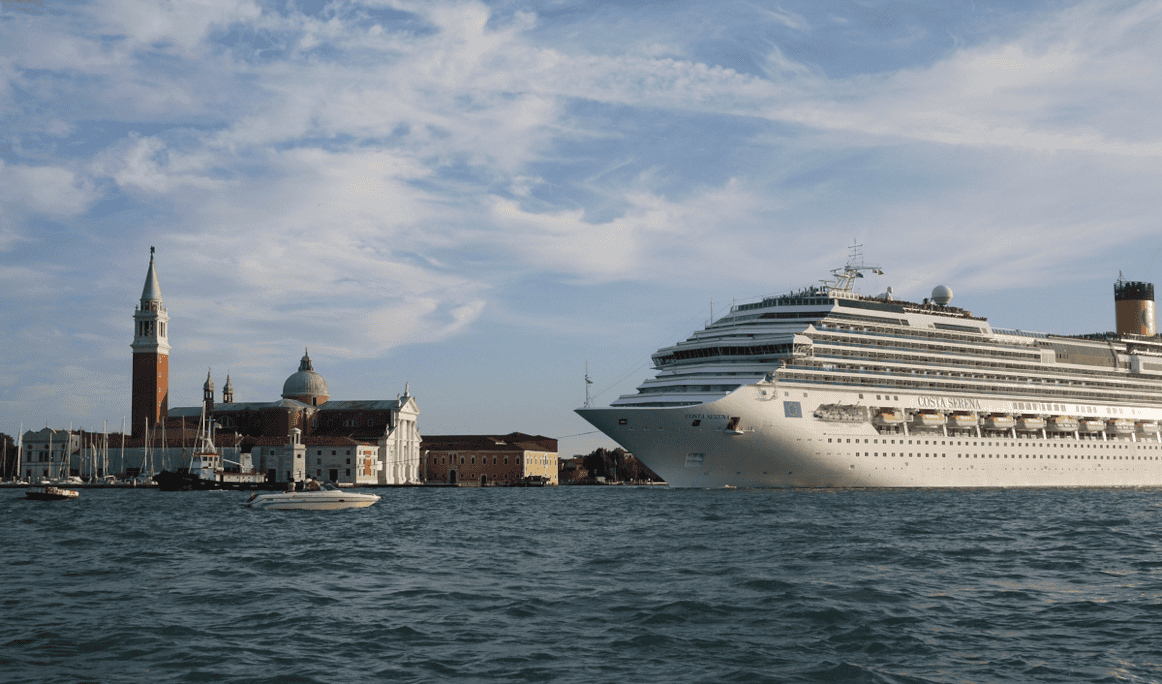
For cruise, a ban (2014) was overturned by authorities (2015), in spite of UNESCO’s threat to put the city on its list of endangered heritage sites if none of the measures required to protect the lagoon and its delicate ecosystem were implemented. A voluntary ban saw numbers reduce, but in 2019, a collision between 2 boats saw the ban reinstated and since August 2021, large cruise ships have been banned from entering the lagoon. Only vessels under 55,000 tonnes can pass the historic canal route, with a strict limit of two cruise ships docking per day now enforced. Large ships must dock at the industrial port outside the lagoon.
Venice also uses crowd control barriers, person-counting systems, and turnstiles at key tourist sites to regulate visitor numbers and reduce congestion, plus charges a €3- €10 ‘contributo disbarco’– a disembarkation contribution based on advance booking, making it the first that “would effectively turn the entire city into a large, for-profit museum” (Conde Nast Traveler). The Mayor of Florence called for a law to extend day fees to all of Italy and to address the use of private residences as tourist lodgings, “threatening the residential nature of the historic centers of all the Italian art cities” (Skift). Overnight visitors already pay a tourist tax of €1–€5 per night, to fund city upkeep and improve residents’ quality of life.
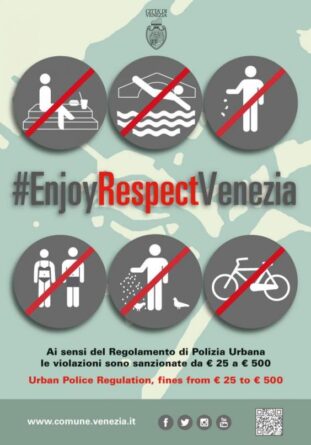
From July 2025, St. Mark’s Basilica enforces online booking, fewer visitors at once (max 500–600), and raised ticket prices from €6 to €10, with proceeds supporting the upkeep of 40 churches. Strict regulations prohibit swimming in canals, sitting on historic monument grounds, cycling in the centre, wearing swimwear outside pools, littering, and obstructing pedestrian traffic, with fines from €25 to €500.
Demarketing tourism destinations has become a ‘thing’.
But it’s not just a stick approach, Venice are also telling offering a carrot and promoting responsible behaviour, telling tourists to live by the golden rule with the #EnjoyRespectVenezia campaign i.e. Treat the city like you would want visitors to treat yours. Signs and posters are display in 10 languages including English, Chinese, Arabic and Korean, throughout the main tourist areas.
The campaign plays on the International Year of Sustainable Tourism for Development #IY2017 slogan, #TravelEnjoyRespect. Going on what’s gone before, and residents’ responses, it’s certainly not appeared very sustainable in the past. But maybe it can rescue itself promoting typically responsible tourism behaviour: discover the city’s hidden treasures, explore nearby islands, visit a food market and sample local produce. It remains to be seen if tourists will do as suggested!
Communities readjusting tourism: What can be done?
Of course it’s not just cities suffering from over-tourism, it’s the same issues for Montenegro, Scotland’s Inner Hebrides and Isle of Skye – and many other places.
But in a world with mega cities’ and slums’ citizens’ needs not being met, and the over-tourism of European cultural heritage site cities’ citizens’ needs not met, there seems such misalignment: The previous mass tourism model is ‘broken’ – it does not deliver benefits for guests and hosts, but yet places exist that need and want consumer support for sustainable development. How do we balance this?
The Power of the Consumer
Destinations can of course apply supply-side ‘stick’ strategies to limit capacity and behaviours, or ‘carrots’ to encourage tourists to spread the impact. It is tourist demand which enables the supply, tourist choice that creates an impact. Tourists do have the choice – to go to another place, at another time, to travel in a different way. At Earth Changers we would encourage quality over quantity and tourism which supports our values and manifesto.
Tourism to rural areas not only helps spread the benefits of tourism in terms of expenditure by tourists, but helps create employment, and other local support services as a result, which can help slow down rural-urban migration and the growth of mega cities and slums. This can help create more resilient and sustainable communities, both in rural areas and urban cities.
As a former teacher and Peace Corps volunteer, Karen Lewis witnessed the devastating effects migration from rural areas to cities for education, training and employment had on local villages, as both a brain and brawn drain. So she set up Lapa Rios in Costa Rica from the outset as a conservation tourism organisation to create jobs and support education as a long-term empowerment tool to sustain the isolated, wilderness region.
Links with the other Sustainable Development Goals
Inclusive, safe, resilient and sustainable cities and communities are key to tourism for sustainable development:
Goal 1 – End poverty: Cities & communities can’t be sustainable where poverty exists.
Goal 2 – Zero hunger: Cities & communities can’t be sustainable where hunger exists.
Goal 3 – Health & well-being: Slums have high rates of unsanitary conditions, disease and lack basic health care.
Goal 4 – Quality education: Cities and communities cannot be sustainable where inaccessible education makes migration likely.
Goal 5 – Gender equality: Communities without female empowerment will struggle to be sustainable wit continued discrimination.
Goal 6 – Cities and communities require access to affordable, safe and sustainable water and sanitation to be sustainable.
Goal 7 – Cities and communities require access to affordable, reliable, sustainable and modern energy to be sustainable.
Goal 8 – Without sustainable economic growth & productive employment cities and communities cannot be sustainable.
Goal 9 – Without resilient infrastructure, sustainable industrialisation and innovation cities and communities cannot sustainably develop.
Goal 10 – Only with more global equality will cities and human settlements be more inclusive, safe, resilient and sustainable.
Goal 12 – Sustainable consumption and production is needed where urban sprawl is leading to high demands for goods/services.
Goal 13 – Climate change – adverse weather patterns can destroy and damage cities and communities.
Goal 14 – Marine environment conservation is required to support even inland communities’ consumption and production.
Goal 15 – Life on Land – the earth’s land natural resources are required for communities’ life and sustainability
Goal 16 – Without Peace and justice, cities and communities would destroy each other – obviously unsustainable!
Goal 17 – Partnerships – no man, community nor city is an island – we all form an ecosystem of support required for longevity.