


First published 17 January, 2018
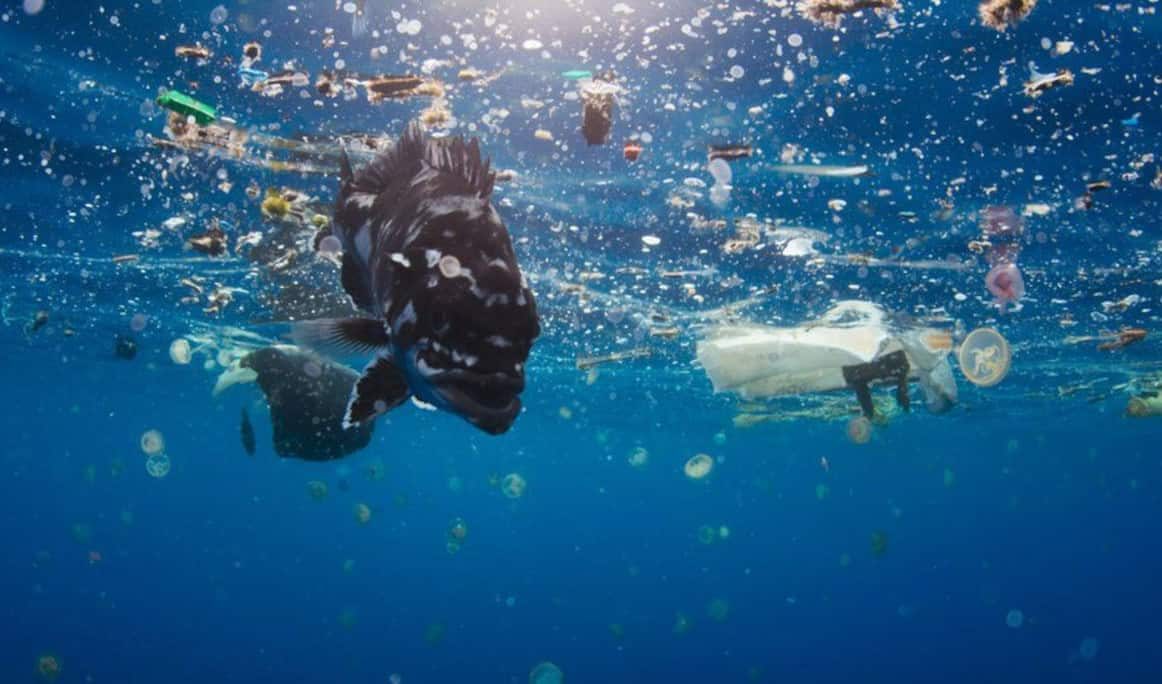
Here we celebrate positive progress in plastics pollution that has been made worldwide, but not without highlighting some terrifying statistics, as we consider what impact plastic waste is having on our holiday destinations.
Every year, the world:
- Produces over 300 million tons of plastic, set to double by 2034, half of which is single use.
- Uses 500 billion plastic bags. More than 1 million bags are used every minute, their ‘working life’ just 15 minutes.
- Will waste 460 million tonnes plastic annually by 2025, with recycling rates lagging far behind consumption growth.
- Allows approximately 8 million pieces of plastic pollution into our oceans daily: In 2014 it was estimated there are 5.25 trillion macro and microplastic pieces floating, weighing 269,000 tonnes – about the weight of 1345 adult blue whales and 500 times the number of stars in our galaxy (Surfers against Sewage). The 5 Gyres Institute (2023) now estimate that to exceed 170 trillion pieces – over 1,000 adult blue whales.
- Sells a million plastic bottles every minute, totalling more than 500 billion bottles annually, still rising.
- More plastic has been produced since 2000 than in the entire 20th century. (PlasticOceans.org)
- Pollutes with ingested plastic 100% of marine turtles, 59% of whales, 36% of seals (UNEP, 2016) and 90% of seabird species (Wilcox et al., 2015; updated 2019), which could reach 99% by 2050.
- Kills 100,000 marine mammals and turtles and 1 million sea birds with marine plastic pollution annually (UNEP).
- Contributes to 1 million deaths annually from diseases caused by waste of all forms.
- Children living near mismanaged waste sites—including plastic waste—face a significantly higher risk of intestinal infections such as diarrhea and cholera: major killers of children under five in low-income countries.
- 91% of all plastic waste ever generated has not been recycled (Science Advances, 2017). Only 9% remains recycled 2022-2025, with the rest incinerated (~34%), landfilled (~40%), or mismanaged (wastedirect.co).
Every year, the EU alone:
- produces 25-30 million tonnes of plastic waste annually with less than 40% recycled (EEA, Eurostat, 2023))
- Consumes 46 billion bottles, 36 billion straws, 16 billion coffee cups, 2 billion containers for takeout and 580 billion cigarette butts (Seas at Risk, 2017): no comprehensive new EU-wide data is available as of 2025.
- Has plastic constitute over 80% of marine litter (fishing gear is a significant ~27%+)
- The EU Single-Use Plastics Directive (2021) is projected to:
- avoid 3.4 million tonnes of carbon emissions
- prevent €22bn (£19.2bn) worth of environmental damage by 2030
- save consumers €6.5bn
- Position the EU as a leader in the €2.5 trillion/$2.9 trillion sustainable goods market (Unilever)
In The UK
In 2022, the Marine Conservation Society’s Great British Beach Clean Up found 718 pieces of litter for every 100m stretch of UK beach surveyed. This reduced in 2023 to 671 pieces of litter per 100m of UK beach, at least 20% from food and drink packaging, and polystyrene and plastic packets remaining most common.
Until 2023, people in England used an estimated 2.7 billion single-use cutlery items (lined up, would go round the world more than eight-and-a-half times!) and 721 million single-use plates each year, with only 10% recycled (Gov.uk).
Thankfully, the world is now waking up to what it is doing to itself. Tackling the plastics problem is a must. But are we doing enough?
Plastic Pollution Regulation
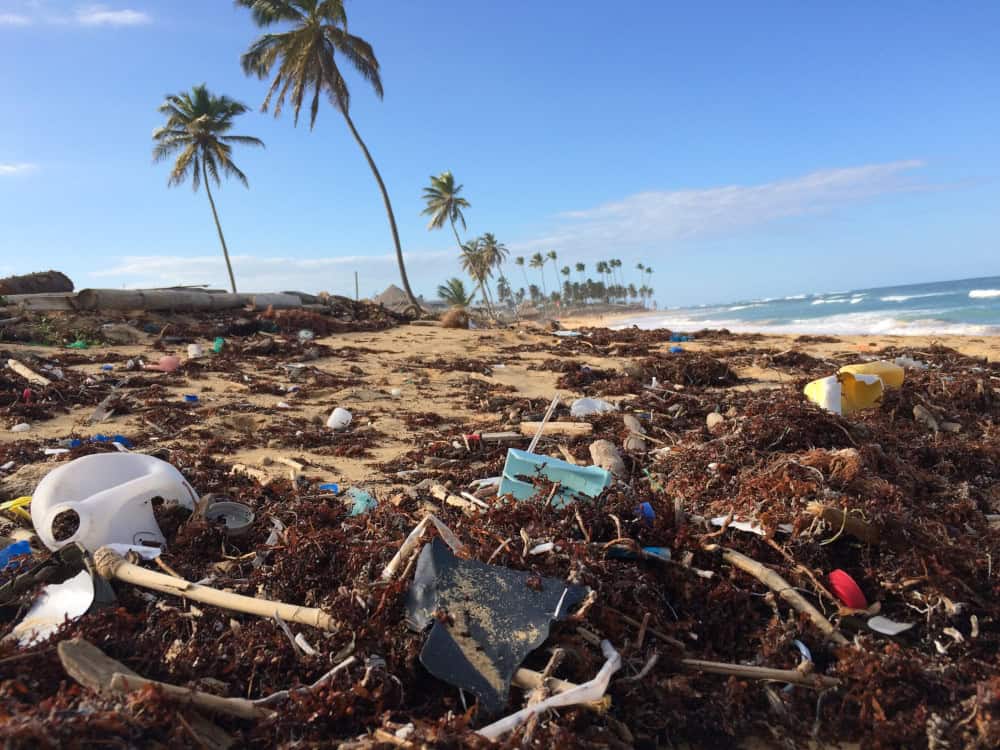
Plastic policies typically cover plastic bags, other single-use plastics and microbeads, and ranges from complete bans, to progressive phase-outs, to laws that incentivize the use of reusable bags.
In the UK
- Since 2015, the plastic bag charge (10p per bag in England) has led to a 97% reduction in plastic bag sales at major supermarkets.
- In January 2018, the plastic microbeads ban entered force (US-banned, 2015) , riding on the wave of greater consumer awareness and emotive response to the damage done to nature by plastic, especially after Attenborough’s Blue Planet 2 – to no longer be used in cosmetics and personal care products, such as abrasive facial scrubs and toothpastes, which when washed into the sea, harm wildlife & enter the human food chain.
“Britain’s natural environment needs a 25-month emergency plan more than it needs a 25-year vision”
– Greenpeace UK Executive Director, John Sauven (BBC, 2018).
- From 1 October 2023, the plastics ban was extended to include single-use plastic cutlery, plates, balloon sticks, polystyrene cups and food containers in England.
- The UK government has committed to a deposit return scheme for drinks containers, scheduled for phased rollout starting in 2026.
- And in the EU: Extended Producer Responsibility (EPR) for packaging is being implemented, making producers increasingly responsible for the cost of waste collection, treatment, and clean-up, including for items like fishing gear and single-use plastic bottles.
In the European Union:
- Since 3 July 2021, the EU has banned the placing on the market of several single-use plastic items, including plates, cutlery, straws, balloon sticks, and cotton bud sticks. The ban also covers cups, food and beverage containers made of expanded polystyrene, and all products made of oxo-degradable plastic.
- 2025’s Packaging and Packaging Waste Regulation (PPWR) regulation aims that all packaging placed on the EU market must be recyclable in an economically viable way by 2030.
- Reduction, recycling and reuse targets:
- By 2025, at least 65% of all packaging waste and 50% of plastic packaging must be recycled;
- By 2030, these targets rise to 70% for all packaging and 55% for plastics.
- Plastic bottles must achieve a 77% separate collection rate by 2025 and 90% by 2029.
- Recycled content: Plastic bottles must contain at least 25% recycled plastic by 2025 and 30% by 2030
- All plastic packaging must include a minimum of 30% recycled content by 2030.
- By 2030, 40% of most transport packaging (including e-commerce) must be reusable and part of a reuse system, increasing to 70% by 2040.
-
Export restrictions:
-
Since January 2021, the EU has banned the export of plastic waste to non-OECD countries (except for clean plastic waste destined for recycling). The 2018 ban by China on plastic waste imports accelerated EU policy action, but has also led to concerns about displacement of waste exports to other countries such as Malaysia and Vietnam.
-
-
Circularity and climate:
-
The EU aims to decrease the use of virgin materials in packaging and put the sector on track to climate neutrality by 2050.
-
In the USA:
The EPA reports that plastic containers and packaging account for over 14 million tons of municipal solid waste annually, much of which ends up in landfills or waterways.
-
Bans and restrictions are expanding, especially on bags, foam containers, and small plastic bottles.
-
EPR programs are gaining traction, making producers responsible for packaging waste.
- There is no federal ban on single-use plastics, though the EPA and Congress are considering national strategies for plastic waste reduction and extended producer responsibility.
-
With no national ban imminent, progress remains state-by-state, often with significant local variation. Some states (mainly in the South and Midwest) have preemption laws that prohibit local governments from enacting plastic bag bans, making a uniform national approach unlikely in the near future.
-
State and Local Action:
-
At least 12 states (including California, New York, Oregon, Washington, New Jersey, and Hawaii) have enacted bans on single-use plastic bags, with many also restricting other items like polystyrene foam containers and plastic straws. Major cities—such as San Francisco, Seattle, and New York City—continue to lead with stricter local laws.
-
Virginia: Ban on single-use expanded polystyrene (EPS) foam containers for large food vendors began July 1, 2025, expanding to all food vendors in 2026.
-
Delaware: From July 1, 2025, bans on polystyrene foam containers, single-use plastic coffee stirrers, cocktail picks, and sandwich picks in restaurants and food service.
-
Illinois: From July 1, 2025, hotels with 50+ rooms cannot offer small, single-use plastic toiletry bottles; expands to all hotels in 2026.
-
Oregon: Expanded bottle bill and new rules on single-use items and PFAS in food packaging effective in 2025 and 2026.
-
Maine: Updates to beverage container redemption program and ongoing bag fee debates.
-
Minnesota and Colorado: Extended producer responsibility (EPR) programs for packaging are being implemented, shifting recycling costs to manufacturers.
-
Plastic Pollution: A Global Battle
Since Bangladesh and India in 2002, more and more countries have signed up to various types of plastic ban, from Croatia, the Galapagos, Kenya, Madagascar, Morocco, Nepal, and South Africa to name a few in our destinations.
By 2022, 175 countries nations agreed to develop a legally-binding agreement by 2024. The deadline wasn’t met, with negotiations ongoing in 2025 on the Global Plastics Treaty, focusing on lifecycle management, reduction, circularity.
As of 2024, 91 countries and territories have implemented full or partial bans on plastic bags. Many of these bans are in Africa, Asia, and Latin America, often with varying degrees of enforcement.
- Africa: Early leadership in bans, though enforcement varies. Rwanda (since 2008) and Kenya (since 2017) have some of the world’s strictest bans, with significant reductions in urban plastic waste.
- Latin America: Many nations focus on coastal protection. Peru, Colombia, Panama, and Brazil have bans, taxes, or EPR laws on single-use plastics and incentives for alternatives.
- Middle East/UAE: Nationwide ban on single-use plastic bags from Jan 2024; ban will expand to more items by 2026. Dubai leads with reusable alternatives and circular economy initiatives
- Asia: is moving rapidly from being a major source of plastic pollution to a region of bold policy action—implementing bans, EPR schemes, and promoting alternatives.
- China: banned ultra-thin plastic bags, 2008. By 2025, all cities will ban non-biodegradable bags; 30% reduction target for single-use plastics in restaurants; some regions ban plastic packaging in courier services.
- India: Nationwide ban on 19 single-use plastic items since July 2022 (e.g., straws, cutlery, packaging films). Implementation varies by state, but demand for eco-friendly alternatives is rising
- Japan: Plastic bag charge since 2020; 25% reduction target for single-use plastics by 2030; businesses required to minimize use of 12 single-use items since 2022; bioplastics promoted.
- Indonesia: Ban on plastic waste imports; marine litter 70% reduction target; EPR; bans on bags, straws, foam
- Philippines: EPR law; annual plastic recovery targets; gradual single-use phaseout
- Vietnam: EPR; eco-packaging growth; bans in progress
- Thailand: Ban on plastic waste imports; EPR; packaging regulations
- New Zealand: Banned plastic bags in 2019; further bans on produce bags, cutlery, plates, and bowls by 2023, removing nearly 1 billion plastic items from circulation.
Oceans of Plastic
Around the world, plastics make up 80% of marine litter, and reach people’s lungs, air, water and food, impacting their health without even knowing it: 1 in 3 fish caught for human consumption contain plastic.
Our marine conservation blog reveals that,
At current rates of plastic pollution, by 2050 oceans are expected to contain more plastics than fish (by weight) (WEF).
- Each year, 14 to 23 million tonnes of plastic enter the oceans (UNEP).
- There are between 75 and 199 million tonnes of plastic waste currently in the oceans (RTF), often accumulating over the world’s beaches and in the seas’ “gyres” – the centres of oceanic currents.
- Around 70–80% of ocean plastic originates from land-based sources such as littering, poor waste management, and overflowing landfills.
- About 1,000 rivers are estimated to contribute nearly 80% of riverine plastic emissions into the ocean.
- One million seabirds and 100,000 marine mammals die each year, caught in it, or are killed by consuming it, some even from inability to eat food with so much plastic in their stomachs (UN, WWF, MCS).
Plastic takes centuries to break down: Algae that grows on plastic waste can even smell like food (Guardian), making it attractive to eat.
Whilst emotive, this might not communicate just how much we all depend on healthy oceans, no matter how far away from water we are, because of how plastics get into our food chain.
To tackle it, the Galapagos Islands are studying garbology – the science of waste flows in the ocean, and inevitably looking at the waste’s source manufacturers.
Such garbology has also led to Coca-Cola named the #1 top polluter for six consecutive years (2018–2023), the most recent audit involving 8,804 volunteers in 41 countries, finding Coca-Cola waste at record levels.
Peer-reviewed research (2024) confirms that Coca-Cola is responsible for 11% of all branded plastic pollution, followed by PepsiCo (5%) and Nestlé (3%), with PepsiCo’s branded waste even outnumbering Coca-Cola’s in total pieces for the first time in 2023, though Coca-Cola still led in the number of countries polluted.

In August 2017, our ocean conservation expedition partners and ocean advocate Emily Penn undertook the first continuous plastic sampling while circumnavigating the British Isles, focusing on the science behind marine plastic pollution, potential solutions, and public engagement and awareness.
Making the unseen, seen is an important part of the work. Our water may look clear but what’s actually in it? They tested for toxic pollutants such as pesticides, flame retardants and fluorinated compounds, which adhere to the surface of plastic pollution. Many of these are endocrine disruptors, which mimic hormones and can impact pregnancies and be passed on to children through childbirth and breastfeeding. Emily tested her own blood for chemicals banned by the United Nations;
Out of 35 chemicals, Emily’s blood contained 29 banned by the UN. (Parley.tv).

Sustainable Development for Ocean Conservation
We’d like to see initiatives work towards the United Nations Global Sustainable Development Goals, including Sustainable Development Goal 14 , ‘Life Under Water’, the sustainability of the seas and marine resources. These feed into the UN global sustainable development Agenda 2030 deadline.
Some organisations take a leadership role voluntarily. It should come as no surprise that sustainable tourism specialists are ahead of the game: Want to experience Blue Planet for real? In the tourism sector, you can’t get much better than
- Chumbe Island Coral Park for marine conservation, the world’s first private protected marine area, entirely funded by ecotourism. An amazing holiday here will help dedicated marine and coral scientific research, conservation and education.
- Lodges such as Lapa Rios in Costa Rica and Jicaro Island in Nicaragua have pursued single-use plastic purging for many years, whereas the rest of hospitality and tourism has not long since started to wake up.
The plans to tackle plastic pollution are vital for the world. Quicker action would be an improvement, but real disposal also key: Shifting off shore is not the answer! As with many conscious concerns, it appears that private enterprise actions and consumer demand are what will make a short term difference.
What can you do to prevent plastic pollution yourself, especially when you travel?
Click for De-plastic Your Travel : 6Rs for more Sustainable Tourism and Where to Love our Blue Planet Too.