


(Missed our previous years Sustainable Travel Trends blogs? Were we right?
Have a read on 2024, 2023, 2022 & 2021).
To state the obvious, we’re now half way through the 2020s. This means we’re also half way through 3 significant UN ‘Decades’ for highlighting awareness and support – trends we expect to see grow in importance in tourism:
1. Join the Rewilding Revolution
The UN Decade on Ecosystem Restoration (2021-2030) is underway, aiming to halt, reverse, and prevent future ecosystem degradation worldwide. But the clock is ticking: the current biodiversity crisis is characterized by an unprecedented rate of species decline, with at least 1.2 million plant and animal species threatened with extinction. This ‘anthropocene’ sixth mass extinction event in Earth’s history is primarily driven by human activity, including poaching, habitat destruction, invasive species, over-exploitation of resources, climate change, and pollution.
Can Tourism be a Game-Changer?
The answer is yes! Wildlife tourism directly contributes 5.2 times more to global GDP than the illegal wildlife trade ($120.1 billion vs $23 billion, WTTC 20182).
Tourism’s resources are vital to conservation. Whether it’s more visits to engage with nature of protected areas, travel for the purpose of conservation financial support, or citizen science to hands-on contribute to preserve ecosystems worldwide, we expect to see the popularity of wildlife tourism only increase, delivering positive impacts for Life on Land (SDG 15) and Life Below Water (SDG 14).
As Lemongrass Marketing puts it3, “Earthing” trips can physically ground us back in nature, promoting a deeper connection with the environment. We expect to see a surge in popularity of wildlife tourism, driving conservation efforts and delivering positive impacts.
Get Involved
- Learn: Our Country Guides include sections on conservation history, offering a fascinating glimpse into the past to present of ecosystem preservation.
- Take Action:
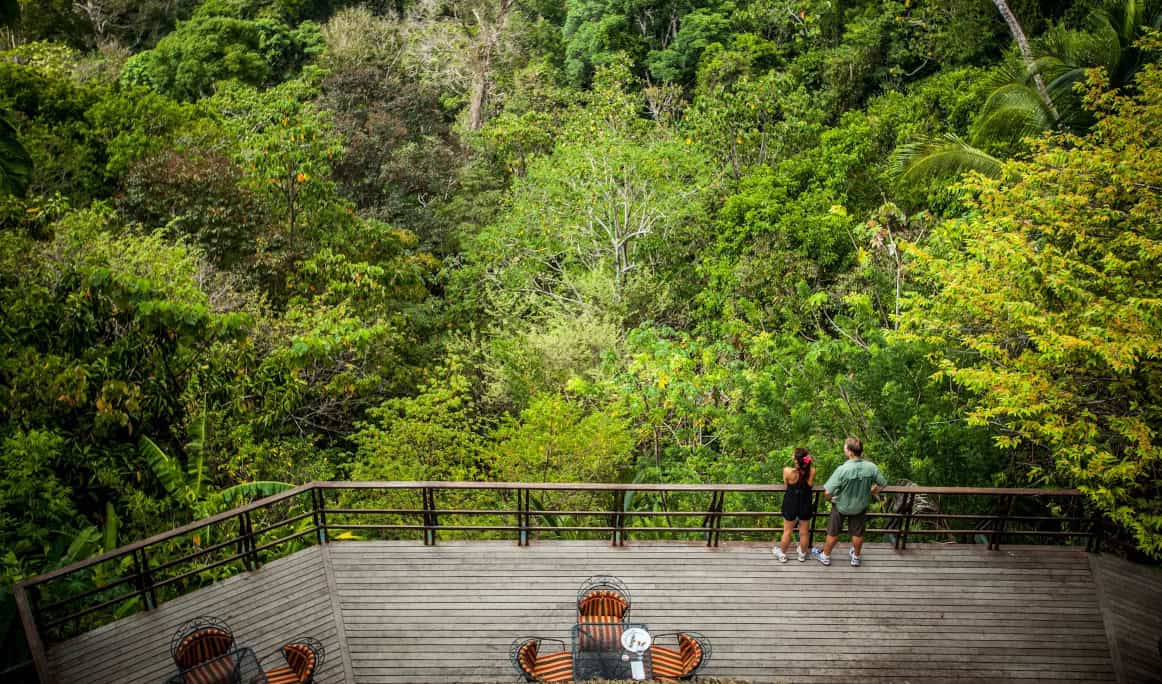
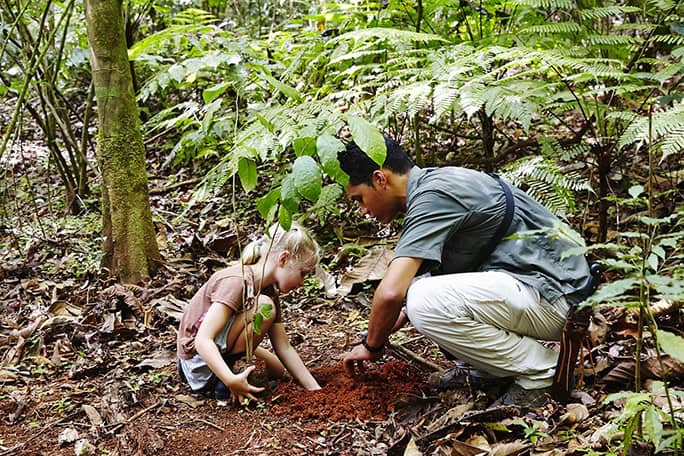
- At our partner lodge in Costa Rica, plant an indigenous tree and contribute to reforestation.
- In Madagascar, join holistic conservation volunteering programs that support local communities, climate action, and sustainable commerce.
By joining the rewilding revolution through choosing sustainable tourism practices like these, we can work together to protect our planet’s precious ecosystems and ensure a thriving future for all.
2. Dive Into the Blue Planet Too
As we reach the midpoint of the UN Ocean Decade (2021-2030) of Ocean Science for Sustainable Development, we’re working towards a vision of a “clean, healthy, productive, predicted, safe, and accessible” “ocean we want”.
Coastal and marine tourism plays a vital role in achieving this goal, accounting for over 50% of global tourism – a staggering $2.9 trillion in 2021, projected to reach $5.0 trillion by 2030 (WTTC, 2023). The coral reef tourism sector alone is valued at $36 billion annually, with over 350 million people visiting coral reef coasts worldwide each year. (The Nature Conservancy, 2017)
For many small island developing states, tourism is not only their largest economic driver contributing not only to Life Below Water (SDG 14) but also vitally Decent Work and Economic Growth (SDG 8).
By managing tourism sustainably and for positive impact, we can harness its power to support conservation efforts and protect our oceans.
Get Involved
- Set Sail for Adventure: We’re thrilled that our partner ocean expeditions are coming to European shores in 2025! Usually sailing in the Americas, this summer they’ll explore the UK, Ireland, Scotland, Iceland, the Lofoten Islands and Norway before heading back to the UK and south to the Canaries for some autumn warmth. Be part of a low/zero-carbon, learning-focused journey that combines marine exploration, conservation, education and join one of these exceptional sailing expeditions >
- Visit a Marine Conservation Pioneer: Head to our partner’s UN-accredited private island sanctuary home to a stunning coral reef and forest reserve. You’ll be directly contributing to the protection of this incredible ecosystem and the livelihoods of the local community.
Be part of a community that’s passionate about ocean conservation and sustainability. Join us on an unforgettable adventure that will leave you inspired and connected to our incredible planet.

3. Accelerating Progress: SDG Pledges to Progress
We’re halfway through the 2020s and the UN “Decade of Action” to mobilise governments, society, businesses and individual efforts to drive transformative change. With only 5 years left to achieve the UN’s 17 Sustainable Development Goals (SDGs) by 2030, the urgency to act is palpable, with
- Global action via greater leadership and resources;
- Local action to embed transitions in policies and frameworks and
- People action to create an unstoppable movement.
Covid-19 gave the world a huge set-back, creating a delayed, more urgent imperative to reach the goals for holistic planetary health with many sectors waking to the action required.
The travel industry, in particular, underwent a significant shift with international lockdowns. Pre-pandemic, our conversations with sector organisations about sustainable tourism development were often met with confusion. Today, everyone wants to be seen as a sustainability champion.
Get Involved
- Tourist boards: With the travel sector nearing full recovery in 2024, we’re excited to collaborate with forward-thinking to highlight sustainable value over volume, quality over quantity: Contact Us
- Evidence-orientation: We’ve always prioritised impact. To make this more visible, we’ve introduced a dedicated SDGs section on our Places pages, featuring the recognisable SDG logos for each goal, and as a sub-section on the Purpose blog. Who ticks every box for positive impact contributions? Check out our ecolodge partner in South Africa!
4. Fuel for Thought: The Energy for Sustainability
While it may not be the most glamorous topic, having the literal energy for sustainability is crucial.
As one of the largest economic sectors globally, tourism is also a significant consumer of energy, and with tourist numbers increasing annually, consumption is only set to rise. It is vital, therefore, that the hospitality industry accelerates its transition to renewable energy sources. Research by Expedia4 reveals that 90% of consumers now seek sustainable travel options and are willing to pay an average of 38% more to ensure their experiences do not negatively impact the planet.
Ironically not only is energy often the biggest contributor to emissions, it is also vital for sustainable development, helping address major global challenges like poverty eradication, health, education and climate change adaptation, and affects economic, social, and environmental aspects of sustainability. So ensuring universal access to affordable and clean electricity (SDG7) by 2030 is a critical development objective.
Alternative energy sources are vital for transition away from fossil fuels, especially in areas requiring light, refrigeration and mobility solutions, and the infrastructure build to create them.
With many of our rural travel partners having important energy requirements and installing vital energy systems, it is often they who literally empower local communities by providing access to energy.
Moreover, renewable energy installations can become tourist attractions in their own right, such as wind energy hiking trails. These initiatives educate visitors about clean energy while offering unique experiences.
Get Involved
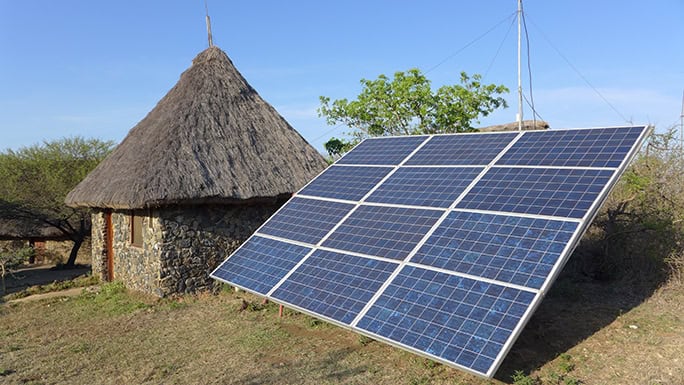
- Bright outlook: Have you ever seen solar panels look as good as these in Indonesia and Kenya, below?! Keep an eye out for more surreptitious solar, or other alternative energy infrastructure, at our partner Places!
- Plug in: We’ve also included a section on energy developments in our Country Guides, due to the importance of national policies.

5. Decarbonisation Dynamics Driving Change
The tourism sector is taking tangible steps towards decarbonisation, with measurable outcomes and impacts for climate change mitigation and adaptation.
The first thematic day on tourism at COP29 in Baku, Azerbaijan, marked a significant milestone. With the sector contributing around 10% of global GDP, jobs, and emissions, it’s high time for action! (Though aviation was covered by ICAO at COP28, and aerospace at COP26, but excluded from the Paris Agreement at COP21, 2015).
Key developments include:
- Growing support, including Ministerial, for the Declaration on Enhanced Action in Tourism, endorsed by 50 countries and 8 non-state entities.
- Countries considering incorporating tourism into climate plans and nationally determined contributions (NDCs).
- The tourism sector committing to reduce emissions by 50% by 2030 and achieve net-zero emissions by 2050.
Sustainable Aviation Fuel (SAF) discussions also saw significant progress:
- The SAF Mandate became law, with a target of 22% of all jet fuel from sustainable sources by 2040.
- A predicted reduction of CO2 emissions from aviation by 5% by 2030 through SAF use.
- Substantial growth in SAF production, from ~1 million tonnes in 2024 to 26.8 million/year by 2030.
- The number of airports distributing SAF to exponentially grow from 136 now with 350 SAF production facilities (ICAO).
- SAF blending with conventional jet fuel will grow from the 50% approved now to 100% SAF in the future.
With initiatives like Travalyst covening common standards for big sustainability data and its promotion for flights (accommodation to come) on global platforms like Google and Skyscanner, consumers are no doubt increasingly aware of carbon impacts.
And with nearly two thirds worried about climate change (as Euromonitor’s Eco Logical 2025 Trend suggests5), they’re opting for shorter hauls, less frequent travel, and more discerning options that positively impact the environment.
Industry decarbonisation and conscious consumers may not significantly reduce demand (yet) but pragmatically nudge to shorter haul, less regular and more discerning to look for better impact options:
Get Involved
- Support the movement: over 370 action plans have been developed by 900 signatories to the Glasgow Declaration on Climate Action in Tourism – including us and our partners. Here’s our reporting.

6. Accountability Acceleration
Policy developments are ramping up sustainability regulations, making it essential for tourism operations to provide tangible evidence for their sustainability claims, so consumers are protected from greenwashing.
New EU developments include:
- Packaging: Revised legislation aims to minimise waste and increase recyclability.
- Mandatory sustainability reporting: Under the Corporate Sustainability Reporting Directive (CSRD) for large companies and listed SMEs.
- Supply chain regulations: via the Corporate Sustainability Due Diligence Directive (CSDDD) based on with phased implementation based on company size.
- EU Taxonomy Regulation: Classifies environmentally sustainable economic activities to promote transparency.
- Deforestation-free products: Imposes due diligence obligations on companies importing critical commodities.
For tourism consumers, the most significant development is:
- The Green Claims Directive: Sets rules to prevent greenwashing and ensure accurate environmental claims, including:
- Substantiation of claims with scientific evidence and life-cycle assessments.
- Prohibition of vague claims like “eco-friendly” or “sustainable” without verifiable data.
- Transparent offsetting on carbon neutrality and emission reductions with certified carbon credits.
- Third-party verification of environmental claims by accredited third-party assessment bodies.
- Prevention of early obsolescence, such as for electronics goods.
Non-compliance can result in severe penalties, including fines up to 4% of annual turnover and exclusion from procurement processes. Companies must evaluate the environmental impact of their products from a lifecycle perspective, but Micro-SMEs (fewer than 10 employees or less than €2 million annual turnover) are exempt.
The measures aim to provide consumers with accurate, reliable information about the environmental impact of products and services in the EU market. However, the EU Directive applies not only to companies based in the EU but also to those targeting customers in the EU who travel elsewhere.
As Euromonitor’s 2025 Eco Logical Trend5 points out, the right audience will be more alert to ensuring the right claims match the right products!
Although, with more regulation and administration, companies may end up ‘greenhushing’ key sustainability information for fear of criticism – particularly pertinent for travellers searching dis/allowed key phrases.
Get Involved
- Rinse & repeat: Understanding Greenwashing, and Green claims data regulations in tourism.
- Green thumbs up: At Earth Changers we are committed to transparency and accuracy. Places are researched and curated on the basis of sustainability. We publish impact report information to which you might not otherwise have access, and will continue to do so – safe in the knowledge we discern our partners on the basis of evidenced impacts. We believe that by providing clear information, we can empower travellers to make informed choices that positively impact the environment. Join us in supporting sustainable tourism practices and travel with us!
7. Consolidation in Sustainability ‘Labels’
The EU is set to regulate the multitude of sustainable tourism certifications, currently over 200, to improve consumer understanding and protection. This move aims to put an end to the ‘free for all’ approach, where travel companies could create their own sustainability ‘labels’.
From now on, only authorised certification will be permitted. To achieve this, certification bodies will need to provide clear documentation and verification of sustainability practices for certified businesses. They will likely have to comply with international standards set by organisations such as the United Nations. The EU plans to introduce a system of regular reviews and re-accreditation to maintain high standards among certification bodies.
As a result, we can expect a more standardised approach to sustainable tourism certification, with ‘own’ ratings schemes dropped and existing certifications consolidating for credibility, efficiency and viability. The EU will establish a certification-authorising body, although plans are still unclear for 2025.
The Global Sustainable Tourism Council (GSTC) may play a key role as an umbrella ‘standard of standards’. Historically, GSTC has accredited Certification Bodies that certify tourism destinations, accommodations, and tour operators, and Recognized standards, rather than conducting certifications directly – though this is changing…
Booking.com have already dropped their own sustainability ratings for GSTC-Recognized certifications. This shift towards credibility is positive. But GSTC have set up as their ‘own’ label (certifying Singapore and Turkiye), and by the end of 2024 wanted existing GSTC-Recognized Standards to either formally open an application to pursue accreditation by GSTC; or enter into a formal arrangement as a “Certification Scheme” Body… We’ll see how their Recognized standards respond!
Get Involved
- Green light: We are certified by GSTC-Recognized Travelife and highlight our partners’ certifications on their Places page. We’re also a vetted travel partner for The Long Run whose private protected area members are measured against their Global Ecosphere Retreat GSTC-Recognized standard. While certification helps us develop our own sustainability practices, we don’t make it a prerequisite for partnerships – we focus on demonstrating their real impact.
8. Cost of Living Crisis > Savvy & “Sensibly Green”
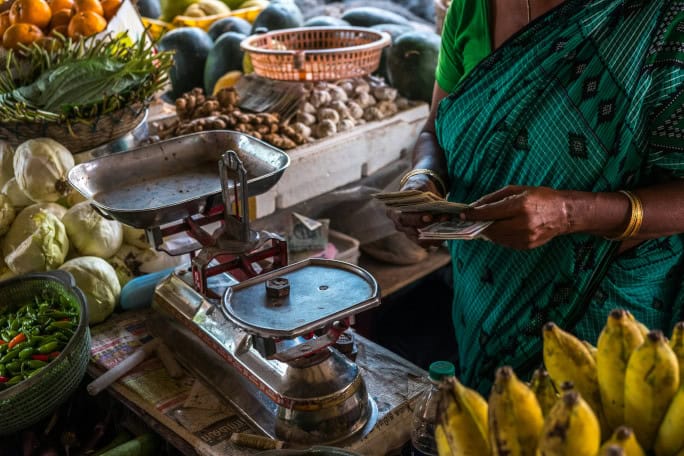
As sustainable tourism certification becomes more standardised and information more accessible, consumers are becoming increasingly empowered to make informed choices. They’re no longer just opting for the cheapest options, but instead prioritising quality, value, and sustainability.
Research by Marriot Bonvoy6 reveals that 77% of UK travellers book off-peak to secure better deals, avoid crowds (55%), and enjoy a cooler climate (21%). This trend is further supported by Lemongrass Annual Travel Trend Report 20253, which notes a 300% increase in Google searches for “cooler holidays” compared to 12 months ago.
Consumers are now seeking more than just a product or service to meet their immediate needs; they want brands to deliver meaningful incentives with long-term impact. (Euromonitor Wiser Wallets trend5).
With 72% of consumers concerned about rising everyday costs, they’re making strategic spending decisions that weigh up personal priorities and principles with the worth of their purchases.
Booking.com1 suggests embracing a thrifty vintage shopping mindset when travelling isn’t just about finding a bargain, but immersing in a place’s history and heritage, treating the shop-local experience as a souvenir in itself, providing deeper cultural connections with destinations than pre-trip globalised consumerism.
A significant 60% of consumers believe that spending money on experiences is important, and this is particularly true for travel. Moreover, 63% have tried to have a positive impact on the environment in 2024 (Euromonitor5).
American Express7 found that 79% of Millennials + Gen Z, 75% of Gen X, and 72% of Baby Boomers care more about the right travel experience than about the cost of the trip.
“Awareness is evident. For intent to turn into action, switching to a sustainable option needs to be easy.”
– and 50% of consumers are willing to spend money to save time. (Euromonitor Wiser Wallets5)
A focus on sustainability enhances quality
“Luxury brands are increasingly recognising that sustainability is not a compromise but an enhancement of their value proposition.” (Globetrender via Lemongrass3)
Marriot Bonvoy6 reports that over seven in ten (72%) consumers consider the environmental impact of their travel plans (64% last year), with 65% citing sustainability as a key accommodation consideration.
Omio’s NowNext ’24 Travel Report8 reveals that 58% of consumers prefer destinations that incentivise sustainable tourism, with Gen Z being the most likely generation (69%), while 44% seek to vitally support local businesses.
Get Involved
- The green grind is on us: At Earth Changers, we do the hard work for you. We research, curate, and publish sustainable tourism options so you can save time, get real quality over quantity (local, authentic, organic, reduced carbon, plastic-free, staff-supportive etc.) and enjoy amazing travel experiences safe in the knowledge you are contributing an evidence-based positive impact to community, culture, and conservation. You can enquire to travel with us anywhere! We have a little black book of worldwide positive impact tourism behind the scenes, you pay public price – not more – and with Earth Changers+, receive a free sustainability value-add in destination! Check out our Places for specific details.
9. AI Ascendancy: Promises and Pitfalls
The global Artificial Intelligence market is set to grow by 38% in 2025, with 55% of companies already using AI and 45% exploring implementation (Teneo.ai) and there’s no getting away from AI in sustainable tourism either!
As Euromonitor5 puts it, the travel community has an “AI ambivalent” attitude, recognising imperfect intelligence in both the benefits and drawbacks of this technology.
On the positive side AI can:
- In conservation and community development, help manage big data sets to better manage ecosystems, health, education and wildlife. eg. Drone tracking poachers, or monitoring wildlife migrations
- In destinations, use predictive analytics to manage tourist flows, reducing overtourism and suggesting alternative routes and quieter sites of interest for better destination management.
- In destinations and accommodations, optimise energy and water consumption, manage waste efficiently, and traffic levels.
- For accessibility, support inclusivity of people with different needs, through contactless check-ins and voice-controlled (HBX Group9)
- For baggage tracking, Airports and logistics can improve efficiency ditching paper tags to sort luggage. (BBC Travel10)
- In transportation, monitor emissions and suggest low-impact alternatives, as we’ve seen with Google’s AI-powered reduced carbon flight routes.
In fact, 44% of people said they would use AI to plan and book travel in 2025, compared to 27% in 2024 (Omio8). But, they might want to carefully consider AI’s significant limitations:
- Carbon consumption: AI systems and data centres consume significant energy, contributing to footprints
- Data legalities: AI raises concerns about personal data protection, and copyright infringement
- Information overload: the AI-generated content influx adds to the confusion between real and fake information (Euromonitor, “Filtered focus”5)
- Job displacement: Automation of tasks may lead to job losses in tourism, eg. driverless taxis or AI-tours.
- Over-tourism risks: AI’s ability to suggest alternative destinations could lead to overcrowding and environmental damage in previously less-visited or inappropriate areas
- Cultural homogenisation: AI-driven tourism experiences may lose cultural uniqueness
- Inaccuracy: Local data may be limited, where information is not published up to date online
- Incomplete: Local information is often scant, especially on sustainability where data is not public
- Incorrect: suggestions may be made, due to fake information, “Chatbot hallucinations” or reality distortion (Euromonitor5).
- Inequalities: Through disparities in Ai-adoption between regions and businesses.
While it appears to offer a level-playing field of access to information, it’s often bigger businesses who have the resources to implement AI for efficiencies, elevating consumer expectations of small specialist companies who deliver a personal approach with real knowledge and detail.
To maximize the benefits of AI while minimizing its challenges, a balanced approach that considers environmental, social, and economic factors is crucial. This includes responsible AI implementation, addressing privacy concerns, and ensuring that technological advancements support rather than replace local communities and cultures.
Get Involved
- Intelligence + Heart = At Earth Changers, we are starting to use AI to help us craft messages, offer creative suggestions, and optimise business processes. However, we remain personally connected to our partners, providing real-time reliable local information through live channels of communication, and to you our audience.
- Talk to us in person! Find us on Facebook 📱, Instagram 📸, LinkedIn 💼, Pinterest 📌, Threads 🧵, BlueSky 🦋, X/Twitter 𝕏 (though the latter’s robots seem to be taking over in 2025!)

10. Digital Detox: Human Renaissance
As AI explodes into our lives, a counter-movement is emerging: a desire for humanity and personal connection in a world saturated with technology. This human-centric pushback against over-automation and technological overload especially with intricate details (Euromonitor5), like sustainability, is driving a need for emotional intelligence, human creativity and genuine interaction, even to the point of romance renaissance and “Connections IRL” of all things! (Amadeus/Globetrotter11)
The trend for wellness retreats and outdoor activities is evolving into active regeneration – not just restorative experiences, but a holistic approach to rejuvenating ourselves and the environment.
Euromonitor5 highlights the rise of “Healthspan plans” – longevity journeys focused on living longer, healthier lives: “People want to feel good—physically, mentally, emotionally—at every stage of life” including travel.
Booking.com1 calls it a “Passport to Immortality”, where wellness and adventure drive travel choices, with cutting-edge experiences blurring the lines between wellness and medical tourism, with our health the ‘ultimate journey’.
According to Skift12, Eco-Conscious Explorers are actually the largest segment (11%) of big spenders in the wellness market
In an increasingly algorithmic world, humans crave the simplicity of authentic experiences, and genuine emotional interaction and connection – which Earth Changers delivers in responsible, sustainable, regenerative travel form.
As work life becomes more automated, leisure desire will seek digital disconnection and conscious revival of human-driven interpersonal dynamics. BBC Travel10 call it ‘’Calmcations”, Expedia13 coins it “JOMO travel” – The Joy of Missing Out – where 62% of travellers seek stress and anxiety reduction through tranquillity and, for nearly half, through reconnecting with loved ones.
Get Involved
- Travellers will seek out destinations and accommodations that offer tech-free environments, encouraging deeper personal connections. Many of our Places offer wifi-free zones, promoting mental health and mindfulness.
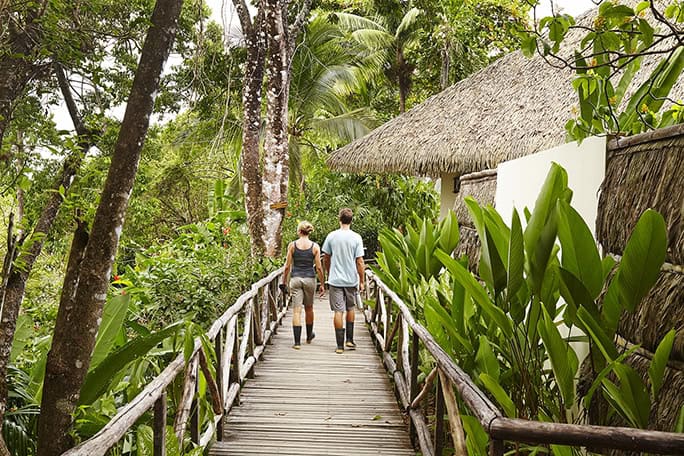
- Join us at Chumbe Island’s stunning natural setting. This private island offers tech-free environments, encouraging deeper connections with nature and yourself.
- As travellers, we’re embracing the concept of travelling less frequently but with greater returns: staying longer at each destination, allowing for more meaningful cultural immersion, reducing emissions, moving away from typical tourist routes and supporting local economies.
Through responsible, sustainable, and regenerative travel, we’ll continue to find peak experiences engaging with nature, connecting with communities, savouring gourmet culture, getting a taste for diverse people and places to re-find our natural selves .
And so we return in circular-economy fashion to apply our #1 Rewilding Revolution to ourselves.
References:
- Travel Reinvented: Booking.com’s 2025 Travel Predictions https://www.booking.com/articles/travelpredictions2025.en-gb.html
- WTTC: Global wildlife tourism generates five times more revenue than illegal wildlife trade annually https://wttc.org/news-article/global-wildlife-tourism-generates-five-times-more-revenue-than-illegal-wildlife-trade-annually
- Lemongrass Annual Travel Trend Report 2025: https://www.lemongrassmarketing.com/about-us/trend-report
- RegionDo: Why sustainable tourism matters for tour and activity providers https://pro.regiondo.com/blog/why-sustainable-tourism-matters-for-tour-and-activity-providers/
- Euromonitor Top global consumer trends 2025: https://go.euromonitor.com/white-paper-2025-global-consumer-trends.html
- Marriot Bonvoy: Ticket to Travel research report https://marriott.pressarea.com/en/news/19112024/uk-travellers-to-prioritise-value-heritage-bold-adventures-and-exclusive-luxury-in-2025-marriott-bonvoys-new-research-reveals
- American Express: 2024 Global Travel Trends Report https://www.americanexpress.com/en-gb/travel/discover/get-inspired/global-travel-trends-en-gb
- Omio: NowNext ’24 Travel report https://www.omio.com/c/travel-trends-report-2024/
- HBX Group: Travel Trends 2025 https://www.hbxgroup.com/news-room/press-release/memooner-ai-and-astrotourism-keys-will-transform-tourism-2025
- BBC Travel: The seven travel trends that will shape 2025 https://www.bbc.com/travel/article/20250106-the-seven-travel-trends-that-will-shape-2025
- Amadeus/Globetrotter: Travel Trends 2025 https://globetrender.com/2024/11/27/amadeus-reveals-five-defining-travel-trends-2025/
- Skift: Here’s What the New Wellness Traveler Looks Like – And How Much They Spend https://skift.com/2025/01/09/heres-what-the-new-wellness-traveler-looks-like-and-how-much-they-spend/
- Expedia: Unpack ’25, The Trends in Travel https://www.expedia.co.uk/unpack-travel-trends/