


If we use food resource carefully and have fair distribution systems, we should never be in need, and achieve zero hunger.
Food is an integral part of travel. Food draws people together, represents the local culture and has stories to tell. We try different foods, cultural dining experiences, and sometimes watch and learn how our food is prepared and made as part of our travel experience. How we produce food is a reflection of our values and the joy that food can bring. But the way much of society is currently producing and consuming food is disrespectful. Reducing our excessive demands on this Earth’s resources is a necessary thing for us to do, and that includes in tourism.

At Earth Changers, we focus on maximum positive impacts through travel. With food a key component in tourism, where food is produced at scale, how can waste be minimised? Can tourism help us to respect the work that goes into food more and encourage us all to waste less at home? And how can it be used to support communities and actually contribute to global Sustainable Development Goal 2, Zero Hunger?
“There are so many who have so much, and so many who simply do not.”
— Ben Elliot, UK Government’s Food Surplus and Waste Champion
Food Waste: The Big Picture
Food waste is an issue of which many of us are aware, and perhaps try to be conscious, at home. But it’s not just a waste of food that is the issue:
-
It’s food that someone else could be eating.
-
It’s throwing away money.
-
It’s a waste of the resources used throughout the supply chain, in the growth, production, processing, distribution, preparation, cooking and the disposal of the food. This includes the use of land, soil, biodiversity, water, energy, fuel, fertiliser, labour, time and investment – and carbon footprint thereof.
-
It’s not just about carbon emissions. Food that goes to landfill gets converted to methane, a greenhouse gas 34 times more intense than CO2. It also creates nitrous oxide, through refrigeration and fertilisers. In terms of emissions, food is the equivalent of every third car on the road.
And all this comes from our leftovers, which need not go to waste. In short, food waste is a completely unnecessary environmental, financial and social disaster.
When you start adding up those cumulative environmental, social and financial impacts that occur throughout the supply chain, the result is a huge global sustainability issue, significantly contributing to Climate Change – SDG 13 and the disastrous weather patterns we see. These destroy crop yields, changing species and the global food supply chain, of vital importance to creating Zero Hunger – SDG 2 and ensuring Sustainable Consumption and Production – SDG 12. In fact, SDG 12.3 target is:
“By 2030, halve per capita global food waste at the retail and consumer levels and reduce food losses along production and supply chains, including post-harvest losses”.
The Size of the Food Waste Mountain
Global food loss and waste are estimated to amount to up to 40% of all food produced (WWF & Tesco, 2021). That’s up to two in ten shopping bags!
The UN’s Food and Agriculture Organization (FAO) that leads international efforts to defeat hunger estimated in a baseline study (2011) that one third of all the food produced for human consumption never reached the consumer’s plate or bowl. That included more than 50% of all the fruits and vegetables produced globally and around 25% of all meat produced – a vital source of protein, equivalent to 75 million cows. (FAO, 2018). To be more precise and track SDG 12.3, they since split the loss data into two:
- The Food Loss Index (managed by FAO): From post-harvest (storage, processing, transport) up to, but not including, retail: 13.4%
- The Food Waste Index (managed by UNEP): At retail, food service, and household levels: 19%
Tracking indicates that the billions of tonnes of food wasted annually actually contains enough calories to feed 2 to 3 billion people – at least a billion means wasted ever day. All this while 783 million people face hunger and 1/3 of the global population is food insecure (UNEP, 2026)
Initially, FAO found (2011, 2015) that consumers in rich countries waste almost as much food as the entire net food production of sub-Saharan Africa. Since, UNEP’s Food Waste Index (2024, 2022 data) found that average household food waste differed by only 7 kg per person per year across high-income, upper-middle-income and lower-middle-income countries: Food waste is therefore a global problem, not confined to wealthy nations, although food loss in the pre-consumer supply chain is highest in Sub-Saharan Africa – 23% in 2023.
- The current global estimate is 132 kg of food waste per person per year across households, food service and retail;
- households alone account for 79 kg per person per year.
FAO Food Wastage Footprint (2013) estimated that ~1.4 billion hectares/28% of agricultural land is used to produce food never eaten.
In the UK alone, WRAP (2021/22 data) estimates:
- 10.7 million tonnes of food waste across in 2021 across households, farms, manufacturing, hospitality and retail.
- 6.4 million tonnes generated by households, the largest source, of which
- 4.7 million tonnes edible – food that could have been eaten, and was
- worth £17 billion: around £80/month for an average 4-person household, or £1,000/year.
- 8 Wembley Stadiums would be filled, and associated with
- GHGs: ~18 million tonnes of greenhouse-gas emissions.
- 4.7 million tonnes edible – food that could have been eaten, and was
According to the UN FAO, food waste is responsible for:
-
8-10% of global man-made greenhouse gas emissions. That’s the same as the entire global tourism supply chain’s emissions, – or ~3-5 times that of aviation! (UNFCCC, 2024; UNEP, 2021)
On a relative scale of country emissions, food waste would come out as the third highest country emitter, after the US and China (FAO, 2013). - 250 km3 global blue water used for food loss or waste: the amount that flows annually through the Volga or 3 times Lake Geneva (FAO, 2007).
“Food – we need it to survive, but we take it for granted”
— Dr Emily Shuckburgh, OBE, British Antarctic Survey Climate Scientist
And this, in a world where ~645 million people experienced hunger in 2025 – about 1 in 13 people, or 7.8% of the 8.3 billion population – (FAO et al., SOFI 2026). A further 2.1 billion people faced moderate or severe food insecurity, and healthy diets remained unaffordable for around 2.7 billion people. Poor diets are also a major health burden: the Global Burden of Disease Study estimated that dietary risks contributed to 11 million deaths in 2017, equivalent to 22% of deaths among adults. Yet the world produces enough food for roughly 10 billion people. Hunger is therefore not simply a problem of production: it is driven by poverty, conflict, inequality, access and affordability, alongside avoidable food loss and waste.

We have centralised systems that move us away from buying food from local sources, and inadequate systems for distribution: so, food loss dramatically reduces the food that reaches people.
With the global population estimated to reach 9.7 billion by 2050 (+1.4 billion from now), we need to ensure the world has the food resources available to feed everyone, yet cut food’s negative impact on the planet and develop sustainable ways to reduce waste from the farm to fork.
We can prioritize the reduction of food loss and waste as a way of improving people’s access to nutritious and healthy food: it represents a huge opportunity for individuals, companies, and society for a more circular economy.
What is Food Waste?
The UN’s Save Food initiative, the FAO, UNEP, and stakeholders agree:
-
Food Loss
refers to a decrease in quantity or quality of food in the supply chain between the producer and the market. This production, processing or distribution loss may be due to pests, problems in harvesting, handling, storage, packing, transportation or even institutional and legal frameworks.
-
Food Waste (a component of food loss)
is any removal of food from the food supply chain which was fit for human consumption, or which has spoiled or expired. This is mainly caused by economic behaviour, poor stock management or neglect. For example, in the UK, up to 30% of vegetable crops are not harvested because their physical appearance fails to meet what is considered optimal in terms of shape, size and colour. Food may also be unnecessarily wasted due to “best before” quality suggestion.

Food: When is it Wasted?
Food Waste and loss may occur at any of the four stages of the food supply chain: production, processing, retailing, and consumption.
In lower-income countries, most food waste happens early on at the farm, during crop production and after harvest. Poor harvesting equipment leaves crops on the field, and poor infrastructure and inefficiencies in supply chain systems lead to post-harvest spoilage. Food may also be rejected due to high specifications of retailers only wanting specific standards. During storage and handling, foods may be affected by time delays in distribution, fungus and pests. People also spend a much higher proportion of their incomes on food than in developed countries, making it less likely that they will waste food at home (Environment reports).
As countries develop, supply chains become longer and more complex, but also more efficient and effective in harvesting, storage, transportation, and packaging. A lower percentage of food is wasted during production and processing, but as food availability improves, there is more waste during consumption. Food can reach the market but is thrown out before being used, for example if food is past the (safely) “use by” or “best before” dates. Unfortunately, these labels are not regulated and ‘best before’ does not always relate to food safety, but to manufacturers’ quality standards. We may end up wasting food unnecessarily; we prepare too much and don’t eat leftovers. This happens at all points of consumption, whether at home, school, hospitals, restaurants, catered events or tourism.
Where is Food Wasted?
Countries’ food waste differs, but not simply according to wealth. Average household food waste varies by only 7 kg per person per year across high-, upper-middle- and lower-income countries, although the types of food wasted and their environmental impacts can differ substantially (Food Waste Index, 2024, UNEP).
Where diets contain more meat and dairy, the climate and land-use impact of wasted food tends to be greater, because livestock production requires more resources per kilogram than most plant-based foods. Rice is a notable exception among staples: flooded paddy cultivation can generate substantial methane emissions.
Locally, food waste can differ further on a wealth basis. In South Africa, food insecurity – where 49% of the population potentially live in food scarcity conditions and experience hunger within a day – remains severe despite the country producing enough food. In households, food waste may be the same in volume, but lower-income households may be more likely to waste staple foods such as maize or rice, while higher-income households may waste more fresh produce, but the composition and volume of waste vary by household and should not be generalised without local evidence. (UNEP, 2024; Shoprite/University of Stellenbosch, South African Food Security Index 2026.)
What Food Goes to Waste?
Food of higher cost may be wasted less due to its perceived value, whereas cheaper, perishable and more readily available foods may tend to be wasted more often. Across the whole supply chain including food loss and food waste, the FAO (2011) estimated:
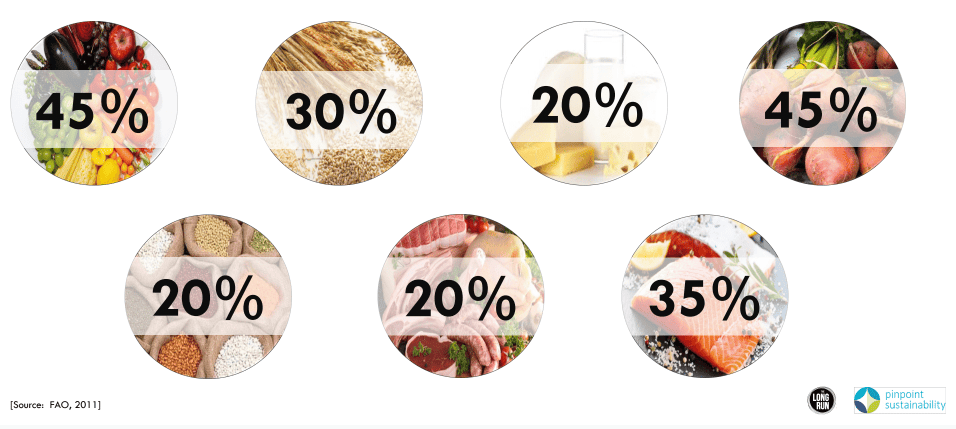
- Fruits and vegetables: 25.4%
- Roots, tubers and oil-bearing crops: 12.3%
- Cereals and pulses: 8.4%
- Meat and animal products: 14.0%
- Fish and seafood: now monitored through country/commodity loss data rather than a single global percentage.
Distribution and location can be a factor of waste, especially with fruit and vegetables, for example having bounced in trucks for a long time on bad roads to be delivered.
Storage can also be a factor. For example, food will spoil more easily in hot climates unless refrigerated, but refrigeration is not always accessible or on, such as in destinations with government-controlled load-shedding, such as occurs in South Africa, Nepal or other countries.
Food Waste in Tourism
Tourism comes into contact with the food supply chain at most of its stages:
Food production
Many destinations rely on subsistence agriculture, particularly in less developed countries. This may support and be supported by tourism suppliers (retailers) buying locally to feed tourist consumers (consumption).
There is even a whole niche of travel dedicated to agritourism, for example, wine, champagne, coffee or specific regional foods’ tourism:
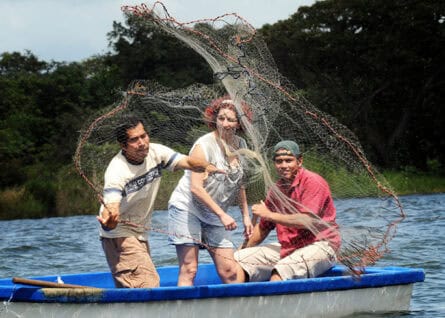
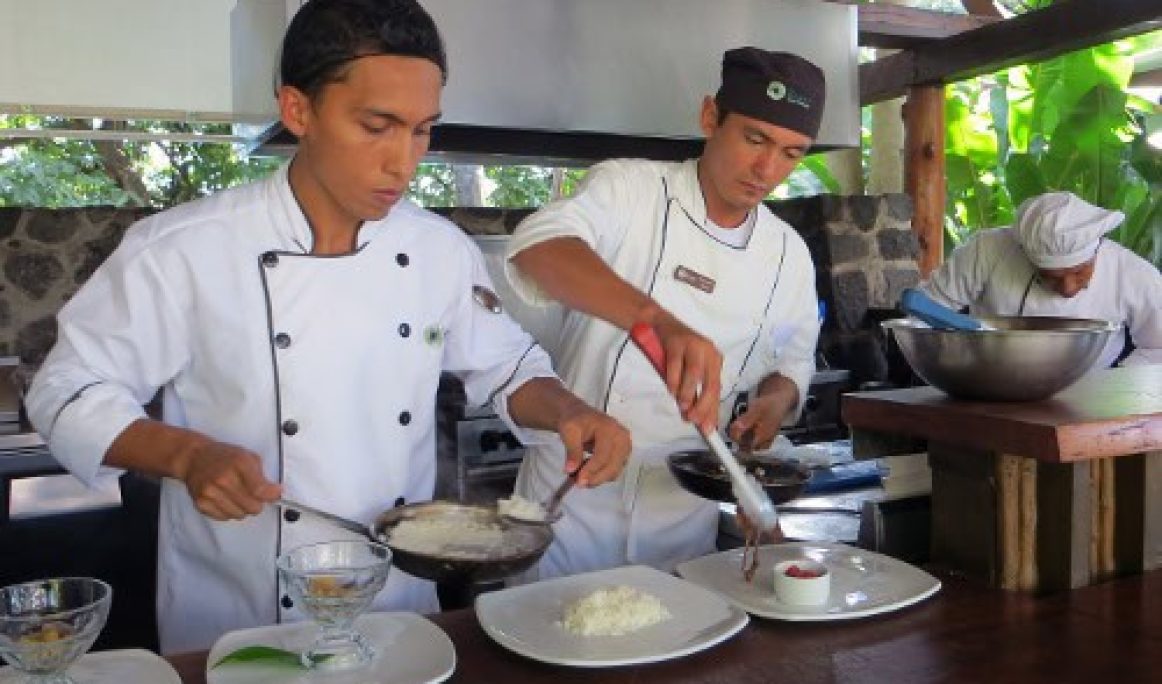
- At Jicaro Island in Nicaragua, you can observe and learn the local and traditional methods of fishing, and watch the master chef in the open kitchen overlooking Lake Nicaragua. The freshly caught seafood supports the local fishermen economically, helps teach about sustainability, and creates opportunity for the cultural exchange with guests.
Many of our tourism supplier partners produce their own food so are involved in its processing, and/or buy local and organic, reducing food processing:
- Lapa Rios in Costa Rica offers a gourmet local culinary experience which has been developed based on cultural tastes and local and community-planted home-grown Central American endemic fruits and vegetables.
Likewise, tourism has different variables relating to food waste due to location: a city hotel has a very different set of requirements to a lodge in a rainforest or on a small island.
Zero Waste in hotels reports suggest 34% of food waste comes from customer plates, but the majority is from kitchens in preparation (45%) and spoilage (21%). Now, cameras on waste bins, internet-of-things and AI can help hospitality businesses audit their waste where manual physical counting was required in the past.
That said, there are typical ‘hotspots’ for waste where tourism operators can focus to reduce food waste, that you might like to be aware of to lessen your food waste impact:
Food Preparation
such as greater trimmings, peelings, especially in high-end, luxury establishments for a more ‘particular’ look. Yet these are more likely to be used in stocks and sauces compared to lower budget hospitality.
Food Serving
A buffet can significantly increase food waste compared to an a la carte restaurant where quantities are more controlled. On the other hand, more discerning, higher-end customers might demand more choices, which can also result in unintended food waste. Side dishes and condiments can be offered as options.

- At Nikoi Island in Indonesia, the menu is fixed to reduce food waste and focus on seasonality. It is home-made, organic and guideline-compliant, such as WWF sustainable seafood.
Spoiled food
Storage facilities and practices, stock control and purchasing practices, can all affect food waste levels. For example, can food be stored better, such as in resealable containers? Is food stored in the correct place? Need it take up space and energy in the fridge? Is there enough refrigeration space? Can things be frozen? (Did you know eggs can actually be frozen, in liquid form as opposed to in shells?!) Is produce stored at the correct temperature? (It’s cooler at the bottom of the fridge.) Could you buy less? Do beverages like carbonated drinks or sparkling wine go flat or go off? Can you get a stopper to prevent that happening, or buy wine on-tap? Do you date food so that you know whether you can use it? AI is now being used to help stock management to prevent food spoiling.
Leftover plate waste
Does serving give overly large portion sizes? The US is well known for this, and it also happens more in medium and large-scale operations. With a more discerning clientele, higher end restaurants usually offer smaller-size portions, so waste less. Perhaps your hotel or restaurant offers different portion sizes or taster menus?
Ask for a small portion if you know you won’t want more or refuse the breadbasket if you don’t need it!
In a hotel, if you’re unable to finish a meal, you can always ask to take it back to your room, or ask the kitchen to keep it for you for later, discreetly if need be!
Alternatively, some businesses work with surplus-food redistribution platforms and support charities – although in many environments have to be careful legally, due to the litigious nature of potential food allergy implications. A safe alternative is to ensure appropriate food is composted – especially useful if a hotel has their own kitchen garden!
Love Food, Hate Waste – in Tourism
It’s important for tourism operations to understand where waste is coming from in order to manage and prevent it. They can follow the following process, as can you at home!
1. Measure and monitor food waste
Collecting waste separately helps management understand where waste is arising. Is it in the kitchen? Is it spoilage? Is it behaviour oriented, such as serving overly large portions? Could that be reduced with training? Is it waste from consumers, maybe even the same common foods? Is it mainly meat, fish or perishables? Or is it a technical issue, such as an electrical chopper where edible food is not maximally used, for example the ends of courgettes or cucumbers? Once an operation has this data, they can convert it to financial cost to the waste.
2. Enable contributions
by others of questions and suggestions to learn.
3. Create an action plan
to address the largest volumes and cost ‘lowest hanging fruit’.
The Food & Drink Material Hierarchy
Prioritisation for Reducing Food Waste
Recycling or composting doesn’t come first! This diagram for the EU Directive on Waste (by WRAP: Waste & Resources Action Programme) shows the priority steps for dealing with waste to minimise the impact on the environment.
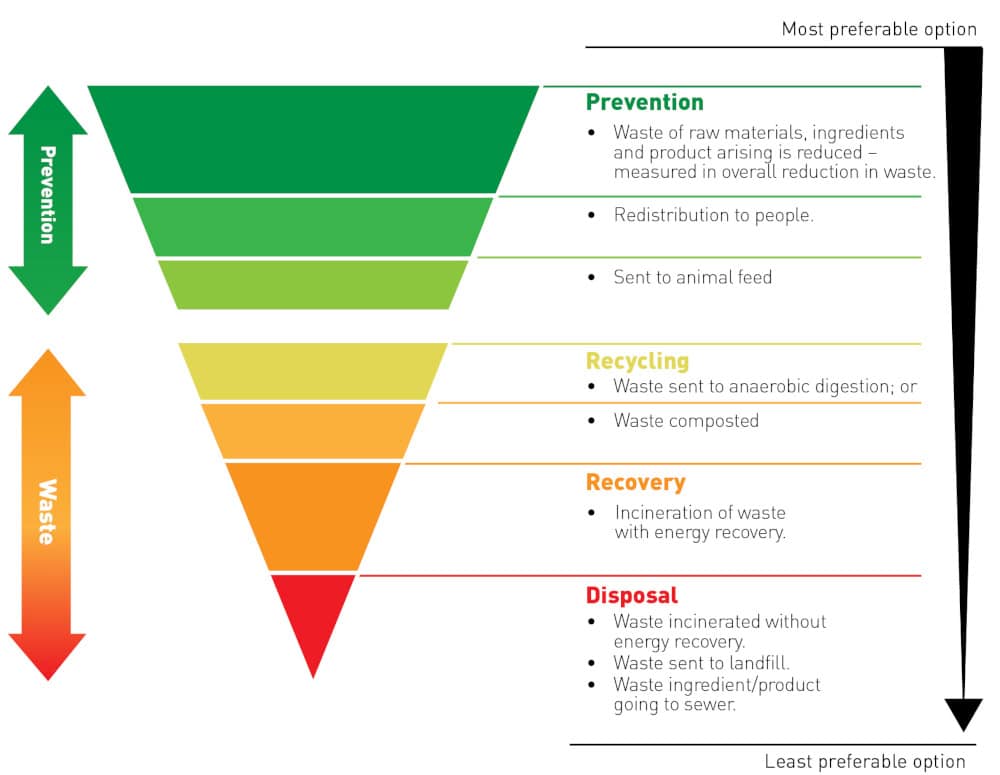
1. Prevent
This can also reduce cost of food purchasing, delivery and storage.
Ordering and planning can help prevent waste of ingredients, as can using pre-prepared, frozen or dried ingredients where feasible e.g. dried or frozen lemon slices in gin, or more imaginative menu options!
If you have a food preference such as vegetarianism, veganism, intolerance or allergy, by letting a hotel or restaurant know upfront you can help to limit waste.
2. Reuse
If food waste is not preventable, is it still edible? Surplus food can be separated from waste and redistributed to support a local community, staff or charity, especially important given the UN Global Goal 2 for improved nutrition, food security and zero hunger. The vein of a spinach leaf is highly nutritious, even if not used in high-end restaurants.
In turn, this supports communities to better Health & Well Being, SDG 3, and Education, SDG 4. Other surplus can be given to animals for feed.
For example, Grootbos in South Africa grow their own food, contribute to the local community and support local small holder farmers who produce food for them.
However, not all destinations are able to grow their own food due to their terrain or environment. And unfortunately, not all destinations are able to give leftover food to local people for reasons of litigation should someone experience health issues. In this case, tourism operations can challenge legislation to create a “Good Samaritan Act”.
3. Recycle
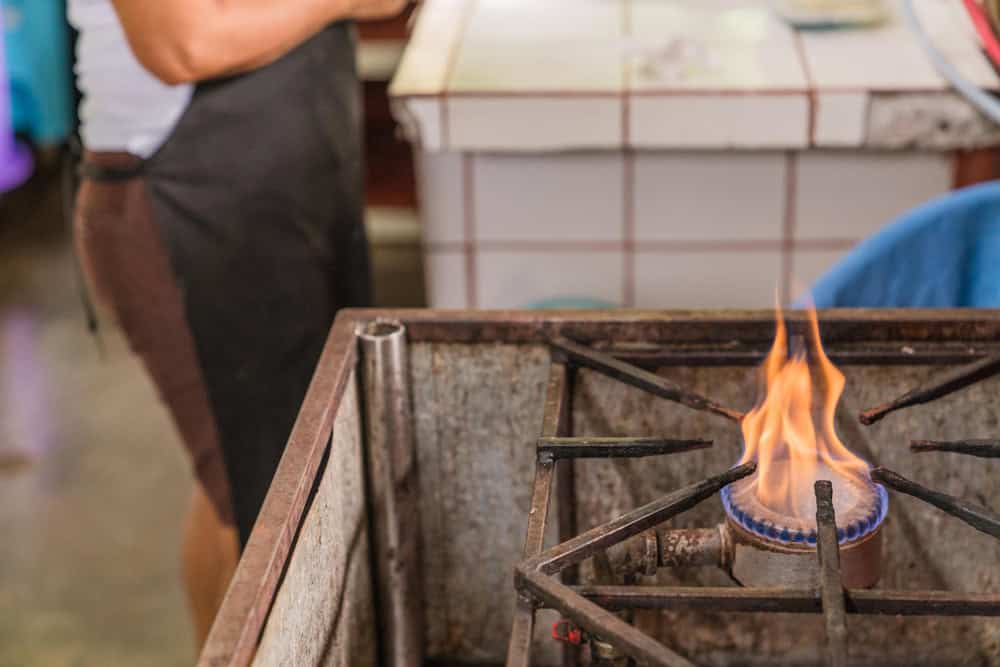
Send appropriate waste to compost or anaerobic digestion and create your own fertiliser to spread on land. This may be appropriate for inedible, uncontaminated fruit and vegetables. ‘Clean’ food waste can also be fed to animals.
Both Lapa Rios in Costa Rica and Jicaro Island in Nicaragua have had programmes to feed scraps to pigs. The methane produced from the pigs can even be captured and stored to use for cooking staff meals!
4. Recover
You can incinerate contaminated and other remaining food waste (including meat) with a small-scale digester or send to an Energy from Waste (EfW) facility. This will burn the food waste to generate electricity and heat. Incineration without energy recovery is preferred to sending food waste to sewer or landfill due to environmental impacts and costs of treatment.
5. Dispose
Send to landfill and sewers. This is the least preferred option, and hopefully one completely avoided by following the above points, especially for destinations where waste facilities are limited, such as on an island or in a sensitive ecological area.
Changing Behaviour
In the UK, #GuardiansOfGrub – a campaign by WRAP to cut food waste from farm to fork – aimed at empowering professionals from across hospitality and the food service sector to reduce the amount of food thrown away in their establishments and about making simple, low-cost changes to the way food is bought, prepared and served. The sector was responsible for 10-12% or ~1 million tonnes of the total food wasted in the UK each year, valued over £3 billion, with the cost of avoidable food waste varying between 38p and £1 for every meal it serves.
Where ever you want to create behaviour change in others, make it EATS!:

E – Easy. For example, make plates smaller, especially for buffets, or, just by removing plastic trays from canteens, you can reduce food waste by 18%, simply because people don’t load up their tray excessively. Equating to (endangered) species in weight can help understanding.
A – Attractive. Get people’s attention! Incorporate understanding of food waste in to design. E.g. The 50/50 bread packet suggests freezing 50% to defrost when required rather than it go to waste.
T – Timely. Planning helps translate good intentions into action.
S – Social. Tell people what others are doing, it brings out our human competitive streak!
Food Waste Targets
The FAO and the UN’s SDG Target 12.3 call for halving per capita global food waste at retail and consumer levels and reducing food losses along production and supply chains by at least 25% by 2030.
To meet current needs, this means we need to grow less than we do now. The UK aims to eliminate food waste to landfill, and a 50% cut is the European Union’s goal for reducing food wastage by 2030.
Halving food waste would also roughly halve its environmental impacts. This could save an area of cropland equivalent to the size of all of Brazil’s cropland (78 Mha), as well as the same amount of fertilizer as used in all of Brazil (12 Mt per year) (Environment Reports).
What can you do to halve – or more – your food waste?

With thanks for contributions to Nicola Jenkin of Pinpoint Sustainability, The Long Run, Defra and WRAP.