



Affordable & Clean Energy
Reliable and affordable electricity saves and improves lives. Among its many benefits, electricity powers computers, schools, charges phones, keeps food cold and businesses and essential infrastructure functioning. But, energy is also the main contributor to climate change, producing more than 73% of greenhouse gases (WRI), requiring investment and development in renewable sources.
For this reason, Goal 7 of the UN 17 Global Goals of the 2030 Agenda for Sustainable Development, fundamental to human prosperity, is:
SDG #7
“Ensure access to affordable, reliable, sustainable and modern energy for all”.

Progress on Sustainable Development Goal 7 Affordable & Clean Energy?
-
666 million people lack electricity: ~8.5% of world population (2025 Tracking SDG 7 / World Bank).
-
At least 1.18 billion people are “energy poor” and unable to access electricity meaningfully, with limited or unreliable access. (World Bank, 2024)
-
570 million people (~85% of the global total) lack electricity in sub-Saharan Africa, where electrification is lowest (2025 Tracking SDG 7 / World Bank).
-
91.5% of world population have access to electricity, up from 78% in 2000.
-
84% average coverage in rural areas lags Latin America, the Caribbean, Asia And Middle East regions, all over 93% (2021, World Bank):
-
In developed regions like North America, Europe and Central Asia, rural electrification rates reach 100%.
-
Central and Southern Asia had a rural electrification rate above 95% (2022), East Asia and Pacific’s rate is above 98%.
-
Latin America and the Caribbean rate above 96%, and the Middle East and North Africa above 93%.
-
Sub-Saharan Africa lags significantly behind, with only 30.4% of the rural population having access to electricity (2022)
-
-
73.2%: the proportion of human-caused greenhouse gases attributed to energy (IEA, 2024)
-
40%: The potential emissions savings from energy efficiency alone, without requiring new technology (IEA, 2024)
-
2.1 billion: people rely on polluting and unhealthy fuels for cooking and heating, almost 1/3 of the world’s population (WHO, 2022).
-
71%: Have access to clean cooking fuels, rising from 57% in 2010 (2022). But progress is slow: In sub-Saharan Africa in particular, advances in clean fuels and fuel-efficient cooking systems have not kept pace with population growth by 1 9million people/year.
-
3.2 million deaths are attributed to indoor air pollution from combustible fuels for household energy (especially of woman & girls) (WHO, 2020).
-
19.1%: The renewable energy share of total final energy consumption (2021), increasing from 17.7% in 2019. Much faster change is required to meet Paris climate goals (IEA).
-
The highest share of modern renewable energy in total energy consumption is found in the European Union (EU), with 24.5% of its gross final energy consumption coming from renewable sources in 2023.
-
$10.8 billion (down nearly 24% on 2018) international public financial flow to developing countries to support clean energy (2021). Mostly hydropower, 45%.
-
1.3%: The global energy intensity improvement rate (main metric for energy efficiency), currently far short of the 3.2-4%/year 2030 target (2022).
-
16.2 million: record employment in the renewable energy sector; , with 2.5 million jobs created in 2023 alone. The sector has doubled from 7.3 million jobs in 2012. (2023)
-
645-660 million people are projected to still lack access to electricity in 2030, 7.5%-8% of the world’s population.
-
5%: Global demand for energy expected increase by 5% (IEA, 2024), driven primarily by expanding economies in non-OECD Asia, especially India and China, and by the electrification of sectors such as transport and industry.
-
4% annual growth through 2027: Electricity demand, likely outpacing total energy demand, accelerating electrification.
-
+20%: Renewable energy capacity growth margin, above electricity, will help meet rising demand with cleaner energy sources.
-
Covid-19 (2020-2022) put additional pressures on affordable and reliable energy:
-
Critical for health services: facilities need to be electrified without un/scheduled outages, affecting capacity; Communities need to pump clean water, communications and IT services are needed to connect people to health advice and vital information, as well as out-of-school children learning remotely, for mental well-being, while maintaining social distancing.
-
Renewable energies’ growth was also discouraged: SDG7 progress was also disrupted: energy supply chains and services, jobs and income to pay for them, the price of oil cut due to falling demand. Lockdowns showed a 7% drop of emissions is possible with the cut of industrial activity and transport mobility, but it bounced back in 2021 where 7%+ emissions cut is required each year until 2030 to meet Paris targets.
-
Challenges of SDG7, Clean Energy
Finite Fossil Fuels
The fossil fuels we have used historically, such as coal, oil and natural gas, still the world’s primary energy sources, are finite in supply. It’s not a matter of if they run out, but when: We are using them much faster than they can reproduce, formed as they are over millions of years compressing organic material, including carbon which gives off emissions when combusted.
We may be already at ‘peak oil’ around the mid to late 2020s, reflecting a shift driven by increasing renewable energy adoption and electric vehicle use, which reduce oil demand growth rather than a geological depletion peak. At current usage it may be gone by 2052.
Switching to gas could then extend fossil fuel energy 8 further years to ~2060; filling its gap with coal could maybe last until ~2090. During that time, we may find more reserves of fossil fuels, but they’re likely smaller than the rate at which our world’s developing population is consuming them. (MAHB).

Climate Change
The energy sector, dominated by fossil fuels, causes greenhouse gas emissions: burning fossil fuel emits carbon dioxide into the atmosphere, creating a man-made greenhouse effect for the world, whose insulation creates global warming. By 2030 global demand for energy is expected to rise by 5% (IEA, 2024). Stabilizing global temperature will require de-carbonising energy consumption, a shift to renewable or nuclear power from fossil fuels, significant energy efficiency and large-scale deployment of carbon capture and storage (CCS) for remaining fossil fuel use.
Energy Poverty
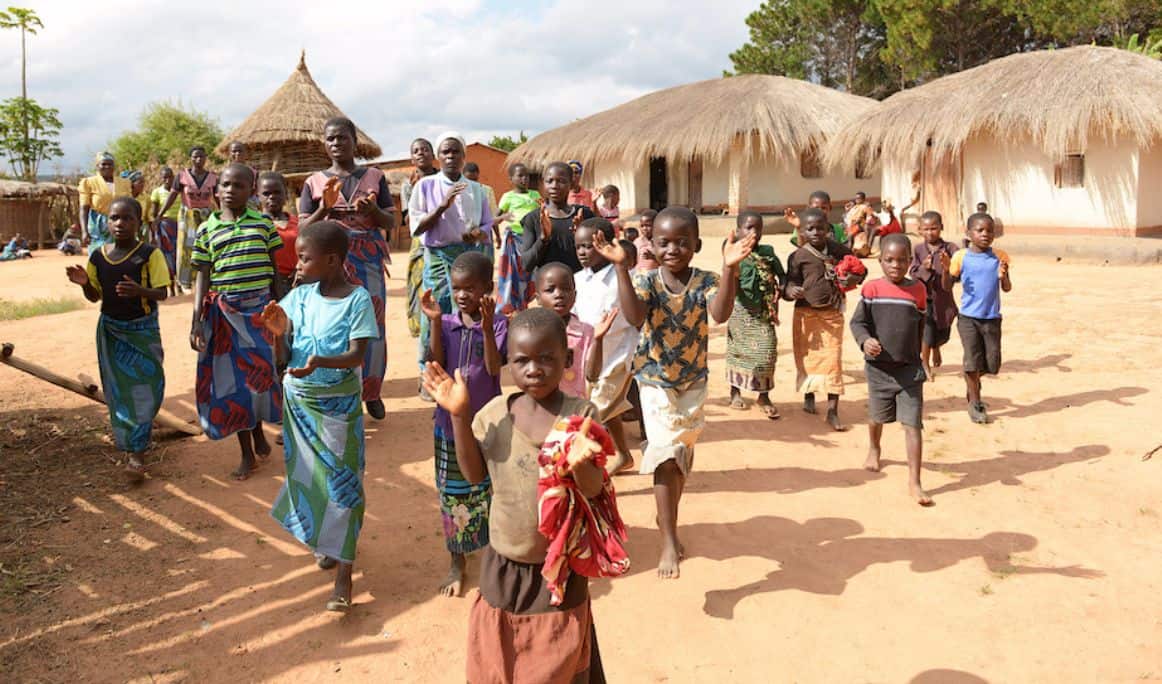
The poorest in the world are the least likely to have access to a source of power, and are much more likely to remain poor as long as they are not connected.
Poor access to energy in developing countries slows the growth of GDP, constrains businesses, healthcare, education, and overall economic productivity – the most effective means of reducing poverty, yet impossible without adequate, reliable and competitively priced modern energy. Even countries with access to energy often have highly unreliable service with frequent, even daily, outages, which last hours, and when power is available, may be expensive.
Politics
As a result, governments subsidise demand for fossil fuels to the tune of:
- $1.53 trillion in 2022 (UN Stats) – including direct subsidies and implicit costs of unpriced externalities such as pollution and climate damage
- $620 billion in 2023 (IEA) direct government subsidies to fossil fuels – primarily in emerging and developing economies.
Subsidies make energy access a highly political issue, creating a significant opportunity cost diverting public funds away from investments in sustainable development, including renewable energy infrastructure and energy efficiency, distorting energy markets, reducing fossil fuel energy prices, discouraging clean energy adoption, and slowing the energy transition.
Health and Well-Being
Switching from fossil fuels to renewable and nuclear power would not only reduce the risk of climate change, but also reduce pollution, reducing mortality, disease, and ecosystem and biodiversity damage, for a healthier world.
Energy Economy
Energy intensity is the ratio of units of energy per unit of GDP: how efficiently an economy uses energy to produce economic output.
Globally this has shown a declining trend, meaning economies are generally becoming more energy efficient. But the rate of improvement has slowed in recent years. In 2023 and 2024, global energy intensity declined by about 1% per year (Enerdata, IEA), well below the 2010–2019 average annual decline of around 1.8–2%, and significantly lower than the 2.5% decrease in 2022. This is attributed to factors such as economic recoveries in energy-intensive sectors, and higher energy demand due to extreme weather.
Despite better regional variations, it is insufficient to meet the goal set at COP28 in Dubai in late 2023 to double the progress in energy intensity, let alone the 3.8-4% annual improvement required to meet target 3 of Sustainable Development Goal 7 for 2030.
To stay on track for net zero in 2050,, the annual rate of improvement in energy intensity (energy per unit GDP) would need to nearly triple from historical averages, implying a massive, coordinated global effort (IEA, 2021).
Investment
The financing requirement to meet the target for SDG 7 —across renewable energy, energy efficiency and universal energy access – is estimated at US$ 1.3 to 1.4 trillion per year until 2030 (IEA/World Bank, UN SDG reports, 2024–2025; World Energy Outlook, 2020; Financing SDG 7, United Nations, 2019), particularly to close the access gap in developing countries and scale up renewables and efficiency globally.
Some estimates put the total SDG financing gap at $2.5-$4.3 trillion annually for developing countries alone, with energy being the largest single category (~$2.2 trillion). The challenge is compounded by declining Official Development Assistance (ODA) and rising borrowing costs, especially for low-income countries.
To meet a +2C limit to global warming, the cost of electricity could rise by 30-50% by 2050. To limit the cost increase we must invest in technology innovation to lower the cost of generation, renewables, storage, grid modernisation and energy efficiency.
To decarbonise the global electricity supply, 70-90% must be generated from renewables by 2050 (International Energy Agency).
Most growth in renewable energy has been concentrated in electricity, due to rapid expansion of wind and solar power, and prompted by policy support and cost reductions, but electricity makes up only 20% of final energy use. The majority 80% is concentrated in the heat (50%) and transport sectors; modern renewables (solar, wind, hydro, geothermal, ocean) and bioenergy have penetrated respectively 5.7% and 6.5% of the global market. Despite record growth in renewables, they still provide less than 30% of total final energy consumption globally, because electricity is only a fraction of total energy use.
Improving energy efficiency, increasing energy access and affordability, are core to the global goal of reducing greenhouse gas emissions. The heat and transport sectors remain heavily reliant on fossil fuels, with slower penetration of renewables due to technological and infrastructure challenges.
What’s that got to do with Tourism?
Tourism, as one of the largest economic global sectors, is one of the largest energy-consuming sectors. Tourists also use energy (and water) with a greater intensity than local people, often to local detriment where scarcity exists.
With billions of trips a year set to continue increasing, tourism’s energy consumption looks only set to grow. So how hospitality gets its fuel needs provided, and how that affects and is affected by the processes of the world’s climate and ecosystem, is vital.
Tourism is both a victim of, and contributor to climate change: Rising sea levels, melting glaciers, floods, avalanches, water scarcity, deforestation, biodiversity loss, desertification, wildfires, drought and diseases hurt the tourism economy.
But these impacts are in part created by tourism’s operations, which contribute around 9% of global greenhouse gas emissions: from aviation, accommodations, restaurants, activities and other transportation. The consequences of tourism not utilising renewables can seriously impact a business, industry and world.

As such, tourism can be incentivised to help accelerate the shift toward renewable energy, increase its share in the global energy mix, help reduce greenhouse gas emissions, contribute to innovative energy solutions in urban, regional and remote areas and provide reliable energy for guests.
Customers and investors are increasingly expecting tourism businesses to be responsible and held accountable for their carbon emissions and reports. Responsible organisations voluntarily follow codes of conduct and certification schemes, such as we highlight in our Places information.
A carbon neutral travel and tourism sector has to be a long-term goal of the industry. Therefore, how do tourism businesses not create negative impacts, and preferably create positive impacts, with regards to energy?
Alternative energies for sustainable tourism & the future
Tourism and energy need not be opposed to each other: With renewables, sustainable energy and tourism can complement each other.

Sustainable energy is that which is collected from renewable sources, meaning those which are naturally replenished, such as solar from sunlight, wind, water from rain, tides, waves, and geothermal heat: natural resources to which many tourism establishments have access.
With its large consumption of energy, tourism has a great cost incentive to utilise renewable energy for greater efficiencies and longer term cost savings – the purely economic ‘business case’ for sustainable tourism makes sense, as well as for the planet. Initial outlay may be required to change but over time works out much cheaper than previously-used energy sources. By measuring and monitoring consumption, organisations (and guests!) can become more aware of managing consumption, efficiencies and thus longer term impacts.
Tourism is thus at the forefront of many innovative sustainable energy solutions. Whether it’s airlines making aircraft lighter, using biofuels or fuel-efficient taxi-ing, hotels saving energy with key-cards or towel reuse, or hospitality supporting local communities with energy services and related economic opportunities, the tourism industry knows it has to reduce its carbon emissions for a sustainable future. But with a billion and a half tourist trips per year, more must be done.
What are some innovative tourism organisations doing to set the bar higher?
How Can Tourism Help with SDG 7, Clean Energy?
Energy efficiency
Using less energy to perform the same task (eliminating energy waste), is often the most immediate, and cheap, way to reduce the use of fossil fuels. If we applied all the energy efficiency technologies available today, we could cut energy consumption straight away.
The IEA’s 2021 Net Zero scenario projects that by 2030, the global economy could be 40% larger while using 7% less energy than today, thanks largely to energy efficiency and electrification. Longer term, global primary energy demand could fall by up to 33% by 2050 compared to 2023, if all efficiency and decarbonization measures are maximally deployed.

There are great opportunities for using less energy in tourism and transport, eg:
– choosing LED light bulbs and energy efficient appliances like fridges and washing machines.
– refurbishing to upgrade heating, insulation, windows and cooling systems.
– using energy efficient vehicles, especially electric.
– changing standard operating procedures to decrease energy use.
– offering incentives to guests to use less than average energy.
-
At Nikoi Island, there’s no televisions, dvds, telephones or mini bar fridges. There’s low voltage fans, LED or CFL lighting, with recycled cooking oil tiki lamps along pathways so as not to disorientate nightlife such as nesting turtles.
Energy Innovation
Continual growth in air travel due to lower costs has shown reducing emissions by reducing consumption is not likely, despite efficiency innovations to airframes, engines, aerodynamics and flight operations: air travel is set to increase, despite a plan to offset carbon emissions, but only voluntarily on increased from international flights after a base year of 2020.
-
If you go to Lapa Rios in Costa Rica or Jicaro Island Ecolodge in Nicaragua, from Costa Rica’s international airport, you can fly Nature Air, a carbon neutral domestic Costa Rican Airline.
The reliance on offsetting (eg. tree planting to reduce equivalent CO2 in the atmosphere) leads to questions over effectiveness for climate change mitigation. But where land transport has alternatives (rail, fuel cells and electric cars) to reduce carbon, aviation does not.
Energy Generation
Despite rapid growth in recent years, renewable energy still makes up a relatively minor share of total energy consumption. The challenge is to increase the share of energy generated through renewable sources in the transport and heat sectors, which together account for 80% of the total.
It’s also important to balance demand and supply, in total quantity and source, eg. using more or less from wind when there’s a spike in demand or little wind, balanced by alternative energy sources.
Solar
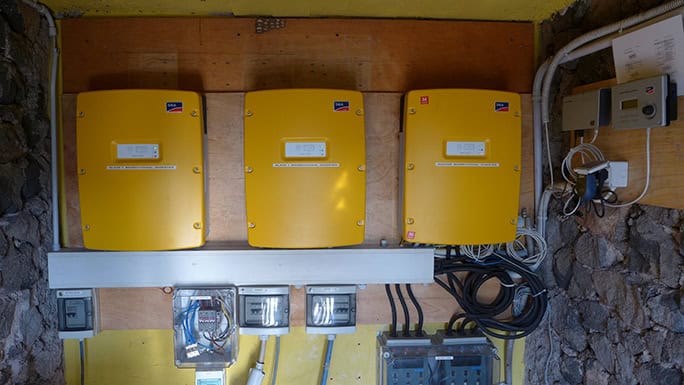
‘Photovoltaics’ (PV) is the conversion of light into electricity using semiconducting materials. A typical photovoltaic system employs solar panels, each comprising a number of solar cells, which generate the electrical power. PV installations may be ground-mounted, rooftop mounted or wall mounted, and may be fixed, or use a solar tracker to follow the sun across the sky. Solar PV generates no pollution and no greenhouse gas emissions once installed, with simple scalability. Cells don’t need direct sunlight to work – just daylight – they can still generate electricity on a cloudy day.
Low-cost small-scale solar power systems can dramatically accelerate energy access, helping countries like Bangladesh to bring electricity energy access to over 20 million people since 2003, through its Solar Home System (SHS) programme – primarily in rural and remote areas where grid extension was not feasible – the largest off-grid solar initiative in the world.
As of 2023, Bangladesh has achieved near-universal electricity access, with 99.5% of the total population and 99.6% of the rural population having access to electricity, thanks in large part to both grid expansion and off-grid solar programmes.
-
Campi ya Kanzi only uses renewable energies, with photovoltaic panels for electricity and solar boilers for hot water, contributing to minimising carbon footprint. Energy consumption is measured and monitored monthly, with sub-meters in all guest rooms. The limited emissions that occur are offset in the MWCT REDD+ Chyulu Carbon Project with all guests charged a nominal fee for carbon generated during their stay. Carbon footprint zero is achieved. In addition, The Maasai Wilderness Conservation Trust has enabled solar power for Iltilal Primary School’s 1000 children with $250,000 investment, part of MWCT’s broader efforts to improve infrastructure and sustainability in local education – 25 schools with nearly 9,000 pupils!

-
Lapa Rios’ solar system provides for all water heating and lighting needs having installed over 220–240 solar panels and solar water heaters. The property also uses energy storage units and installed 10 nano hydro-turbines.
-
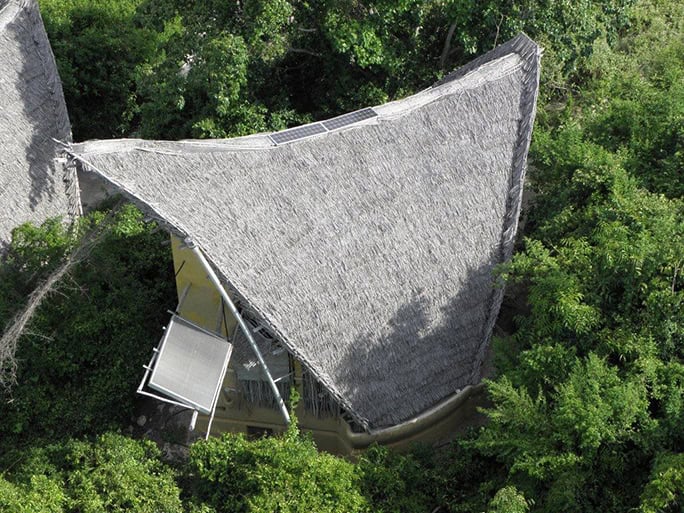
Chumbe Island’s conservation ethos-friendly unobtrusive banda roof solar panels, providing charge for battery storage for lighting, water heating, and basic energy needs, including powering the office and wifi.
-
At Nikoi Island, solar panels provide hot water and create an excess of energy for battery storage so that generators can be switched off 12 hours per day.
-
Jicaro Island’s solar thermal system not only allows the lodge and its guests to have hot water without the need for fossil fuel, but solar panels have also enabled the community to have electricity they didn’t have before, such as for the clean water pumps Jicaro also installed, for making the school usable after dark for adult education, and for a new community health centre.
Wind
Wind has been used for centuries for power, such as windmills to convert the energy of wind into rotational energy by means of vanes (sails) to mill grain in agriculture and pump water. Likewise, modern wind turbines are used to generate electricity, or windpumps used to pump water, either for land drainage or to extract groundwater.

-
At Lapa Rios, wind is used to cool most rooms through architectural design – open-air structures, ocean breezes, and ceiling fans.
-
Our Ocean Tours boat’s extensive sails for primary propulsion, plus 400 watts of solar panels and 400 watts of wind turbine power, coupled with over 14 kWh of battery storage, total almost 1 kW of renewable generation and power long-range unsupported journeys at substantially lower cost than traditional research voyages.
When the wind isn’t blowing, grid operators have to find ways to adjust: Capturing wind’s electricity as it is generated, storing and saving it for use when demand is high, could make a big difference as the technology develops. Wind farms may be spaced out so as wind shifts, one can power up as another powers down. Transmission systems now carry wind electricity from remote places with plenty of it to big cities that may be even thousands of miles away.
Hydropower
Water-powered hydroelectricity has been created since ancient times, using the power derived from the energy of falling water or fast running water, for useful purposes, such as watermills for irrigation.
Whilst hydropower may not add large amounts of carbon to the atmosphere or emit pollution, dams can also have significant negative social and environmental impacts, for example altering a river’s flow, creating floods or deepening riverbeds, transforming upstream and downstream ecosystems, thus species, blocking fish migrations, affecting deltas, barrier islands, fertile floodplains, coastal wetlands and their populations. Submerged plant life can decay anaerobically (in the absence of oxygen) generating greenhouse gases like methane.
Electricity generated by hydro-electric power plants is often the cheapest electricity as large scale. Hydropower supplies 14.3% of global electricity generation (2024), the largest single source of renewable electricity worldwide, representing 5.7% global total energy, and 47% renewable electricity. That said, with increasing droughts, the global share of hydropower is decreasing. Solar overtook hydropower in 2023 as the largest renewable technology by installed capacity, though hydropower still generates more electricity annually because of higher capacity factors; its long-term share of global electricity is expected to decline as solar and wind expand more rapidly.
-
At Tiger Mountain Pokhara Lodge, solar power is used for heating water in staff areas and some guest rooms, but not for the main electricity supply, as the Nepal Electricity Board supplies via hydropower. However, regular power cuts mean the Lodge is forced to run a backup diesel generator.
-
At Nikoi Island, water filtering, treating and pressurising accounts for around 30% total energy use, but highly efficient shower heads reduce water consumption by 20% thus energy consumption too.
-
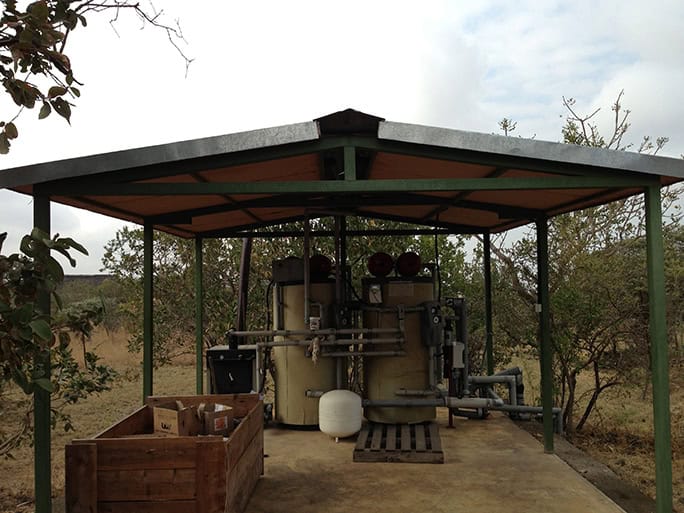
At the Global Development workshops in Malawi you can witness hydro-electric power in real-life working action at a grassroots level and how it interacts with local communities.
Biomass
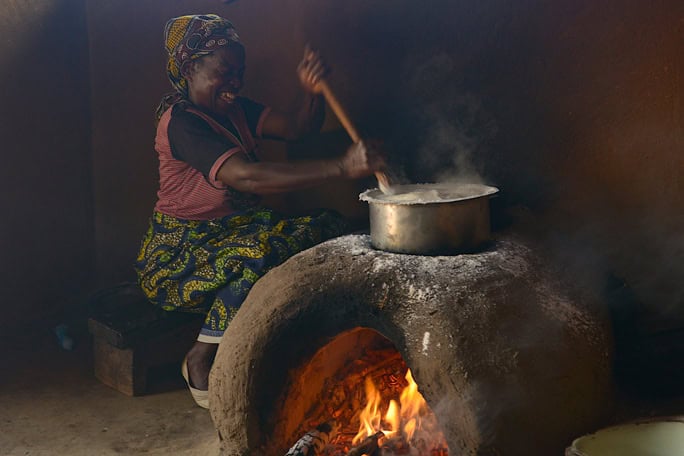
Biomass means getting energy by burning wood and other organic matter. Biomass most often refers to plants or plant-based materials that are not used for food or feed, specifically called ‘lignocellulosic biomass’.
As an energy source, biomass can either be used directly via combustion to produce heat, or indirectly after converting it to various forms of biofuel, in solid, liquid or gas form. Burning biomass releases carbon emissions, around a quarter higher than burning coal, but has been classed as a “renewable” energy source in the EU and UN, because plants can be regrown.
-
At Campi Ya Kanzi, Kenya, all food is cooked in stoves using briquettes, a biomass made from coffee husks as an alternative to charcoal, approved by the UN Environment Programme (UNEP), supporting both sustainable cooking and local livelihoods.
-
SEED Madagascar is supporting people to build fuel-efficient stoves to reduce wood and charcoal use and pressure on endangered littoral forests plus lower indoor air pollution and so improve well-being by minimising smoke, especially for women and children.
-
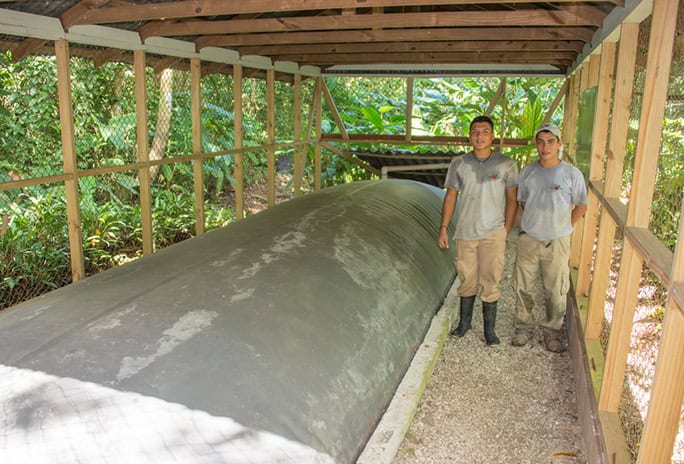
At Lapa Rios in Costa Rica, food scraps fed to pigs creates methane gas to fuel the staff kitchen stove. See this on the “Twigs, Pigs and Garbage” behind-the-scenes tour of the premises to witness the commitment to a more sustainable way of life, a unique experience.
-
Jicaro Island Ecolodge, Nicaragua also supports community biogas and clean cooking projects.
Geothermal
Geothermal energy is the energy stored in the form of heat beneath the earth’s surface. From hot springs, geothermal energy has been used for bathing since Paleolithic times and for space heating since ancient Roman times, but it is now better known for electricity generation.
With 99.9% of the planet at a temperature greater than 100°C beneath the crust, geothermal energy is a significant carbon-free, sustainable resource: Geothermal is one of the few baseload renewable energy sources, meaning it can operate 24/7, unlike solar or wind which are intermittent, and so provide a reliable, uninterrupted supply of heating and cooling for buildings (low temperature required eg. ground-source heat pumps) and to generate electricity (requires less common higher-temperature resources: typically >150°C).
Whilst geothermal wells can emit greenhouse gases naturally stored underground, these emissions are minimal per energy unit compared to those from fossil fuels, making geothermal a cleaner energy source.
However, while geothermal energy is abundant beneath the Earth’s surface, economically viable geothermal resources are not evenly distributed. High-temperature geothermal systems are typically found in tectonically active regions (e.g., Iceland, parts of the U.S., Indonesia). Other countries which obtain significant amounts (>10%) of their electricity from geothermal sources include El Salvador, Kenya, Costa Rica, The Philippines and New Zealand. (British Geological Survey)
Energy Storage
Energy storage is now recognized as a critical enabler for integrating high shares of variable renewables (solar and wind) into power grids, addressing intermittency and enabling reliable, round-the-clock clean energy supply.
Big breakthroughs – including new battery chemistries (like potassium-ion, sodium-ion, and solid-state batteries), flow batteries, marine and sand-based storage, and large-scale pumped hydro – are rapidly transforming the renewable energy storage landscape, making it feasible for countries and regions to aim for at least 50% renewable electricity—and in some cases, much higher—over the next decade, provided grid upgrades and supportive policies keep pace.
Energy efficient design
From the outset, design can make a big difference to energy consumption. For example, reducing room sizes can reduce energy use per guest night, and resorts can be designed to reduce the need for gas-guzzling vehicles.

-
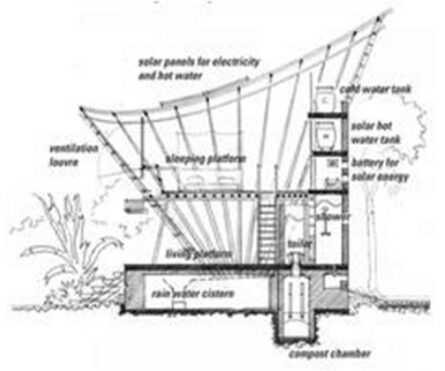
At Nikoi Island, Chumbe Island, Jicaro Island and Lapa Rios the accommodation is designed to encourage air-flow, so as to avoid air conditioning and minimise energy consumption.
Human Behaviour
Places also encourage guests to change their behaviour to be more energy-wise, for example by switching off lights, quick showers to use less water, driving in a more efficient manner, and using public transport or pedal power.
Sustainable Energy links with the other Global Goals
Energy is central to nearly every major challenge and opportunity the world faces, thus access to energy crucial for achieving almost all of the Sustainable Development Goals.
Goal 1 – End poverty: Will be helped by putting an end to energy poverty.
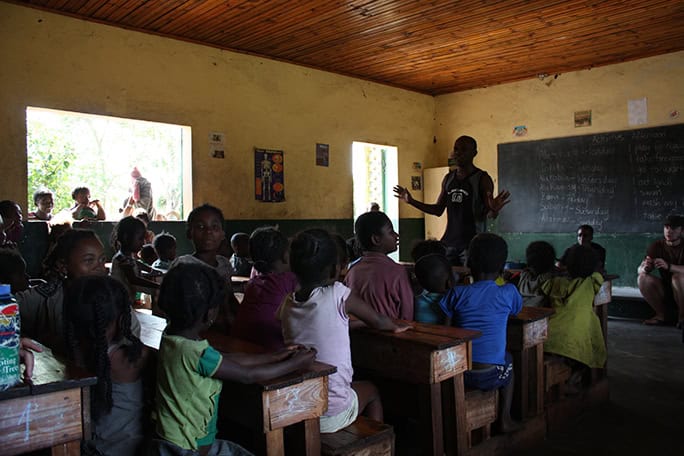
Goal 4 – Quality education: Can continue with light to study, where lack of traditional energy ended the day’s education.
Goal 6 – Water: Energy provides power to pump water for irrigation, to process crops, for clean drinking and hygienic sanitation.
Goal 7 – Health services & infrastructure require sustainable energy; health and energy access vulnerability often go together.
Goal 8 – Decent work & economic growth: can be empowered with energy supply previously inaccessible.
Goal 10 – Reduced inequalities: Energy access is not equal around the world or within nations.
Goal 12 – Responsible consumption and production: Sustainable energy can decouple economic growth from environmental degradation.
Goal 13 – Climate action: We must de-link energy use from emissions by decarbonising our power sources, and reducing emissions from energy to reduce rising global temperatures.
Goal 15 – Life on land: Less logging for firewood means reduced deforestation and its effects.
Goal 16 – Peace and justice: Energy is vital for re-development in post-conflict settings.